Love this? Save it for later!
Share the inspiration with your friends
I was elbows-deep in a pile of vintage vinyl records at a dusty flea market last October when the man behind the counter—a retired postal worker named Frank with a handlebar mustache—started talking about beef stew. I wasn’t expecting cooking advice from a guy who spends his weekends selling old 45s, but there I was, holding a scratched Fleetwood Mac album, listening to him describe exactly how to make the most soul-warming red wine beef stew I’d ever imagined. He told me his wife had scribbled the recipe on a torn envelope years ago, and he’d been making it every autumn since she passed. Honestly, I almost cried right there between the mismatched teacups and the dusty board games. I bought the record (it skipped anyway) and left with something far better—the mental blueprint for this cozy red wine beef stew that has become my own chilly autumn ritual.
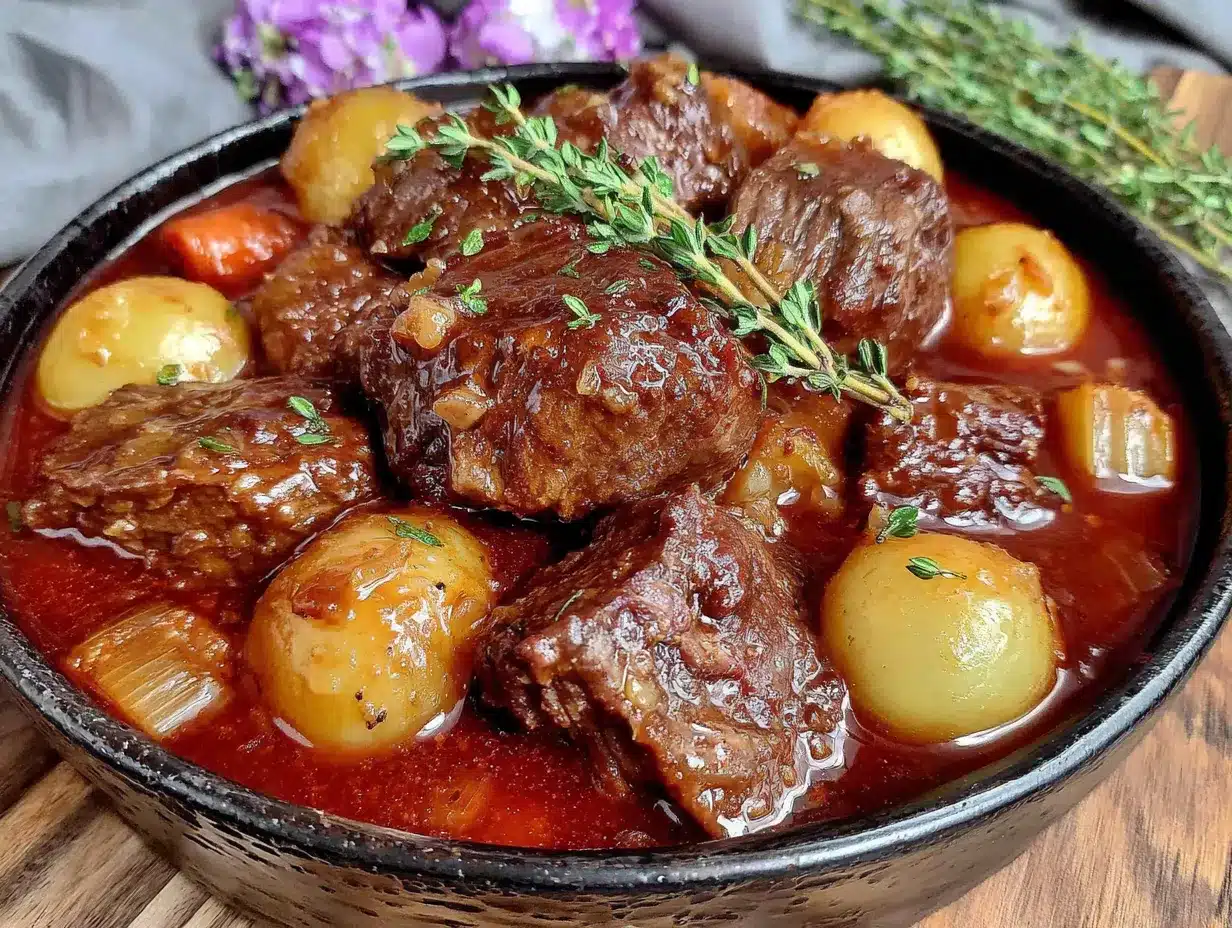
The first time I made it, I forgot to buy fresh thyme and used dried oregano instead. It was still incredible. That’s the beauty of this dish—it forgives your mistakes and rewards your patience. The beef gets impossibly tender, the wine reduces into this velvety, rich broth that clings to every vegetable, and the whole house smells like you’ve been cooking for hours (you have, but it’s worth it). You know that feeling when you walk inside on a cold, rainy night and the warmth just wraps around you? That’s this stew in a bowl.
This cozy red wine beef stew has become my go-to for those crisp evenings when the leaves are falling and all you want is something hearty that takes its time. It’s the recipe I make when I want to slow down, pour a glass of the same wine I’m cooking with, and remember that the best things in life come from unexpected places—like a chatty postal worker at a flea market.
Why You’ll Love This Recipe
I’ve tested this cozy red wine beef stew more times than I can count, tweaking the wine ratio, the cooking time, and the vegetable sizes until everything landed just right. This isn’t just another stew recipe—it’s the version I’d serve to anyone who thinks they don’t have time for slow cooking. Let me tell you why it works so well.
- Rich, Complex Flavor Without the Fuss: The red wine does the heavy lifting here. It adds depth that you’d normally need hours of simmering to achieve. I use a decent Cabernet Sauvignon or Merlot—nothing fancy, just something you’d happily drink.
- Simple Ingredients, Big Results: You don’t need a specialty grocery store for this one. Beef chuck, carrots, potatoes, onions, garlic, and a bottle of wine. That’s it. Most of these things are probably in your kitchen right now.
- Perfect for Chilly Autumn Nights: This stew was made for sweater weather. It’s the kind of meal that makes you want to light a candle, put on some mellow music, and eat straight from the pot.
- Crowd-Pleaser Guaranteed: I’ve served this at dinner parties, family gatherings, and quiet nights in. Every single time, someone asks for the recipe. It’s one of those dishes that makes people think you’re a much better cook than you actually are.
- Gets Even Better the Next Day: Honestly, this cozy red wine beef stew tastes even better after a night in the fridge. The flavors meld together into something almost magical. Make it a day ahead if you can.
What makes this recipe different? It’s the balance. The wine isn’t too sharp, the beef isn’t too tough, and the vegetables aren’t mushy. I sear the beef in batches to get that deep brown crust, deglaze the pan with wine (never skip this step), and let it all bubble away in the oven until everything is fork-tender. It’s comfort food that feels sophisticated but acts humble. The kind of stew that makes you close your eyes after the first bite and forget about whatever stress you were carrying.
What Ingredients You Will Need
This cozy red wine beef stew uses simple, hearty ingredients that come together to create something far greater than the sum of their parts. Most of these are pantry staples or easy to find at any grocery store. Here’s what you’ll need and why each one matters.
For the Beef and Marinade
- 2 pounds beef chuck, cut into 1.5-inch cubes (chuck is ideal—it has enough marbling to stay tender during long cooking; avoid lean cuts like sirloin)
- 1 teaspoon salt (I use kosher salt for better control)
- 1/2 teaspoon black pepper (freshly ground is best)
- 2 tablespoons all-purpose flour (helps thicken the stew and gives the beef a nice crust when searing)
For the Aromatics and Vegetables
- 2 tablespoons olive oil (or any neutral oil with a high smoke point)
- 1 large yellow onion, diced (sweet onions work too)
- 3 cloves garlic, minced (adds that savory backbone)
- 4 large carrots, peeled and cut into 1-inch chunks (they soften beautifully and add natural sweetness)
- 3 celery stalks, sliced (adds subtle earthiness)
- 1.5 pounds Yukon Gold potatoes, cut into 1.5-inch chunks (they hold their shape better than russets)
For the Liquid Base
- 1.5 cups dry red wine (Cabernet Sauvignon, Merlot, or a bold Zinfandel—something you’d actually drink; avoid cooking wines)
- 2 cups beef broth (low-sodium so you can control the salt; I prefer Swanson or Better Than Bouillon for richer flavor)
- 1 tablespoon tomato paste (adds umami and helps thicken the broth)
- 2 bay leaves (removed before serving)
- 3 sprigs fresh thyme (or 1 teaspoon dried thyme if that’s what you have)
- 1 teaspoon dried rosemary (crushed between your fingers to release the oils)
Optional Finishing Touches
- 1 cup frozen peas (stir in during the last 10 minutes for a pop of color and sweetness)
- Fresh parsley, chopped (for garnish)
- Crusty bread (absolutely mandatory for sopping up the broth)
Substitution Notes: If you’re avoiding gluten, swap the all-purpose flour for cornstarch (mix 1 tablespoon cornstarch with 2 tablespoons cold water and stir it in at the end). For a dairy-free version, skip the butter and use extra olive oil. You can also swap potatoes for parsnips or sweet potatoes if you want a slightly different flavor profile. And if you don’t have red wine on hand, use an extra cup of beef broth plus 2 tablespoons of balsamic vinegar for acidity—it won’t be the same, but it’ll still be delicious.
Equipment Needed
You don’t need a fancy kitchen to make this cozy red wine beef stew. Here’s what I use and what you can substitute if needed.
- Dutch oven or heavy-bottomed pot (5-6 quart): This is the star tool. The heavy cast iron or enameled pot holds heat evenly and goes from stovetop to oven without fuss. I use a Le Creuset that I saved up for years ago, but a Lodge enameled pot works just as well for a fraction of the price. No Dutch oven? Use a large stainless steel pot with a tight-fitting lid.
- Sharp chef’s knife: You’ll be chopping a lot of vegetables and trimming beef. A dull knife makes everything harder and more dangerous. I love my Victorinox Fibrox—it’s affordable and stays sharp.
- Cutting board: Wood or plastic, just make sure it’s stable. I prefer wood because it’s gentler on knives.
- Wooden spoon or spatula: For stirring and scraping up the brown bits from the bottom of the pot (that’s where the flavor lives).
- Measuring cups and spoons: For accuracy, especially with the wine and broth.
- Tongs: For turning the beef while searing. Much easier than a fork.
- Oven-safe lid or aluminum foil: If your pot doesn’t have a lid, you can cover it tightly with foil.
Budget-Friendly Tip: You can find perfectly good enameled Dutch ovens at thrift stores or discount home goods stores. I found my backup pot for $15 at a garage sale, and it works beautifully. Don’t feel pressured to buy expensive equipment—your stew won’t know the difference.
Preparation Method
This cozy red wine beef stew takes about 2.5 to 3 hours from start to finish, but most of that time is hands-off. The actual work is about 30 minutes. Let me walk you through it step by step.
- Preheat your oven to 325°F (160°C). Yes, we’re using the oven for this stew. It provides gentle, even heat that makes the beef incredibly tender. No hot spots, no burning on the bottom.
- Pat the beef cubes dry with paper towels. This is crucial—wet beef won’t brown properly. Season generously with salt and pepper, then toss with the flour until every piece is lightly coated. Shake off any excess flour.
- Heat 1 tablespoon of olive oil in your Dutch oven over medium-high heat. When the oil shimmers, add half the beef in a single layer. Don’t crowd the pot—the beef needs room to brown. Let it cook undisturbed for 3-4 minutes until a deep brown crust forms. Flip and brown the other side for another 2-3 minutes. Transfer to a plate. Repeat with the remaining oil and beef. I know this takes extra time, but trust me—browning is where the flavor comes from.
- Reduce heat to medium. Add the diced onion and a pinch of salt. Cook for 4-5 minutes, stirring occasionally, until the onion is soft and translucent. Scrape up any brown bits from the bottom of the pot—that’s liquid gold. Add the minced garlic and cook for 30 seconds until fragrant.
- Pour in the red wine. Stand back a little—it might sizzle and steam. Use your wooden spoon to scrape up every last bit of browned goodness from the bottom of the pot. Let the wine bubble and reduce for 3-4 minutes. It should smell rich and slightly sweet, not sharp or alcoholic.
- Add the tomato paste, beef broth, bay leaves, thyme, and rosemary. Stir everything together. Return the beef and any accumulated juices to the pot. Bring the liquid to a gentle simmer—you should see small bubbles breaking the surface, not a rolling boil.
- Cover the pot with the lid and transfer to the preheated oven. Let it cook for 1 hour. During this time, the beef is tenderizing and the flavors are mingling. Your kitchen will start smelling incredible about 30 minutes in.
- After 1 hour, remove the pot from the oven and add the carrots, celery, and potatoes. Stir gently to submerge the vegetables in the liquid. Cover and return to the oven for another 45 minutes to 1 hour, or until the beef is fork-tender and the vegetables are soft but not falling apart.
- Check for doneness: The beef should shred easily with a fork. If it’s still tough, give it another 20-30 minutes. Every cut of beef is different, so trust your senses more than the timer.
- Remove the bay leaves and thyme sprigs. If using frozen peas, stir them in now and let the stew sit for 5 minutes off the heat—they’ll warm through without turning mushy. Taste and adjust salt and pepper. I usually add another pinch of salt at this stage because the potatoes absorb a lot.
- Let the stew rest for 10-15 minutes before serving. This allows the flavors to settle and the broth to thicken slightly. Serve in wide bowls with crusty bread for dipping.
Pro Tip: If the stew seems too thin at the end, you can thicken it by mashing a few of the cooked potato chunks against the side of the pot and stirring them in. No extra flour needed.
Cooking Tips & Techniques
After making this cozy red wine beef stew more times than I can count—including a few memorable failures—I’ve learned some things the hard way. Let me save you the trouble.
Don’t skip the browning step. I know it’s tempting to just dump everything in the pot and walk away. I’ve done it. The result is a stew that tastes flat and one-dimensional. That brown crust on the beef is pure umami—it’s what gives the stew that deep, savory richness. Take the extra 10 minutes. Your taste buds will thank you.
Use the right wine. I made the mistake of using a cheap “cooking wine” once, and the stew had a weird, metallic aftertaste. Use a wine you’d actually drink. It doesn’t need to be expensive—a $10 bottle of Cabernet Sauvignon is perfect. The rule is simple: if you wouldn’t drink it, don’t cook with it.
Cut your vegetables uniformly. This is one of those things that sounds fussy but actually matters. If your potato chunks are different sizes, some will be mushy while others are still crunchy. I aim for 1.5-inch chunks for everything except the onions and garlic. It takes an extra minute of knife work and makes a huge difference.
Layer your flavors. Notice how we add ingredients in stages? Onions first, then garlic, then wine, then broth, then vegetables later. Each addition builds on the last. If you dump everything in at once, you lose that complexity. Cooking is like building a song—you want different instruments coming in at different times.
Be patient with the oven time. The first time I made this, I pulled it out after 90 minutes because I was hungry. The beef was edible but chewy. Low and slow is the secret. That extra 30 minutes transforms tough chuck into butter-soft perfection. Set a timer and resist the urge to peek—every time you open the oven, you lose heat and add cooking time.
One mistake I’ll never make again: I once added the potatoes at the beginning with the beef. They turned into complete mush. Potatoes need less time than beef, so adding them halfway through is the sweet spot. Learn from my impatience.
Variations & Adaptations
This cozy red wine beef stew is wonderfully adaptable. Here are some ways I’ve tweaked it over the years.
Dietary Variations
- Gluten-Free: Skip the flour when coating the beef. Instead, sear the beef without flour, and at the end, mix 1 tablespoon cornstarch with 2 tablespoons cold water and stir it into the simmering stew. Let it cook for 5 minutes to thicken.
- Low-Carb/Keto: Replace the potatoes with cauliflower florets or turnips. Add them in the last 30 minutes of cooking. The broth is already rich and satisfying without the carbs.
- Dairy-Free: This recipe is naturally dairy-free if you skip any butter-based finishing. Use olive oil for searing and you’re golden.
Flavor Twists
- Herbaceous Version: Add a Parmesan rind to the broth while it simmers (remove before serving). Stir in a handful of fresh basil or parsley at the end.
- Smoky Twist: Use smoked paprika instead of regular paprika, and add 4 ounces of chopped smoked bacon when you cook the onions. The smokiness pairs beautifully with the red wine.
- Mushroom Lover’s Stew: Sauté 8 ounces of cremini or shiitake mushrooms after removing the beef. They’ll soak up the wine and add an earthy depth that’s incredible.
Cooking Method Variations
- Slow Cooker: Brown the beef and cook the onions on the stovetop first, then transfer everything (including the wine and broth) to a slow cooker. Cook on low for 7-8 hours or high for 4-5 hours. Add the potatoes and carrots during the last 2 hours so they don’t turn to mush.
- Instant Pot: Use the sauté function to brown the beef and cook the onions. Add the wine and scrape up the bits, then add the broth, tomato paste, and herbs. Pressure cook on high for 35 minutes with a natural release. Add the vegetables and cook for another 5 minutes under pressure. Quick release and serve.
- Stovetop Only: After browning and adding liquids, simmer on the lowest possible heat with the lid slightly ajar for 2-2.5 hours. Stir occasionally and add more broth if it reduces too much.
I once made a version with leftover red wine from a party—it was a blend of three different bottles. Honestly, it was one of the best batches I’ve ever made. Don’t be afraid to experiment.
Serving & Storage Suggestions
This cozy red wine beef stew is a meal in itself, but the right accompaniments can make it even better.
Serving Temperature: Serve piping hot in wide, shallow bowls. The broth should be steaming but not boiling. Let it rest for 10 minutes off the heat so the flavors settle and it’s not too hot to eat.
What to Serve With It: A thick slice of crusty sourdough or a warm baguette is non-negotiable in my house. The bread soaks up every last drop of that wine-infused broth. A simple green salad with a lemony vinaigrette cuts through the richness beautifully. For drinks, pour the same red wine you cooked with—it’s a perfect pairing.
Storage Instructions: Let the stew cool completely before storing. Transfer to an airtight container and refrigerate for up to 4 days. The flavors actually improve after a day or two—the beef gets even more tender and the broth thickens slightly. I often make this stew on a Sunday and eat it for lunches all week.
Freezing: This stew freezes like a dream. Portion it into freezer-safe containers or zip-top bags (lay flat to save space). Freeze for up to 3 months. Thaw overnight in the refrigerator before reheating.
Reheating: Reheat gently on the stovetop over medium-low heat, stirring occasionally. Add a splash of beef broth or water if it’s too thick. You can also reheat individual portions in the microwave—cover the bowl and heat in 1-minute intervals, stirring between each. The stew will be just as delicious as the day you made it.
Flavor Development: Here’s something I love about this stew—it tastes even better on day two. The wine mellows out, the beef absorbs more of the broth, and the vegetables become infused with all those savory flavors. If you have the foresight, make this a day ahead and reheat it for dinner. Your future self will thank you.
Nutritional Information & Benefits
This cozy red wine beef stew is hearty and satisfying, but it also has some nutritional perks worth noting. Here’s an approximate breakdown per serving (based on 6 servings).
| Nutrient | Amount Per Serving |
|---|---|
| Calories | 420-480 |
| Protein | 35g |
| Fat | 18g |
| Carbohydrates | 32g |
| Fiber | 6g |
| Sugar | 8g |
| Sodium | 680mg (varies with broth) |
| Iron | 25% DV |
| Vitamin A | 120% DV (from carrots) |
| Vitamin C | 20% DV (from potatoes) |
Health Benefits: Beef chuck is rich in protein, iron, and B vitamins—especially B12, which supports energy and brain function. Carrots provide beta-carotene for eye health, and potatoes offer potassium and vitamin C. The red wine contains antioxidants like resveratrol, which some studies suggest may support heart health (in moderation, of course).
Dietary Considerations: This stew is naturally dairy-free and can easily be made gluten-free. It’s not low-carb due to the potatoes, but you can swap them for lower-carb vegetables. It’s also relatively low in added sugars—the sweetness comes naturally from the carrots and wine.
My Personal Take: I love that this stew feels indulgent but is actually pretty balanced. It’s real food made from real ingredients. No weird additives, no processed shortcuts. Just good, honest cooking that happens to be good for you too.
Conclusion
This cozy red wine beef stew has become my autumn anchor—the recipe I turn to when the air turns crisp and the days get shorter. It came from an unexpected source (thanks again, Frank), but it’s made a permanent home in my kitchen. There’s something deeply satisfying about a dish that asks for your patience and rewards you with warmth, flavor, and the kind of comfort that settles into your bones.
I hope you give this stew a try, whether you’re cooking for a crowd or just for yourself on a quiet Tuesday night. Don’t be afraid to make it your own—swap in your favorite vegetables, experiment with different wines, or add a pinch of something unexpected. That’s what cooking is all about.
I’d love to hear how it turns out for you. Did you add mushrooms? Use a different wine? Forget an ingredient and improvise? Drop a comment below and tell me about your version. And if you snap a photo of your stew bubbling away on the stove, tag me—I want to see your cozy autumn nights in action. Happy cooking, friends. Stay warm.
Frequently Asked Questions
Can I make this stew in a slow cooker instead of the oven?
Absolutely. Brown the beef and cook the onions on the stovetop first, then transfer everything to a slow cooker. Cook on low for 7-8 hours or high for 4-5 hours. Add the potatoes and carrots during the last 2 hours so they don’t overcook.
What’s the best cut of beef for stew?
Beef chuck is my top choice. It has enough marbling to stay tender during long cooking and it’s usually affordable. Avoid lean cuts like sirloin or round—they’ll turn tough and dry. Look for chuck with visible fat streaks running through it.
Can I use frozen vegetables in this recipe?
You can use frozen carrots and peas, but I don’t recommend frozen potatoes—they get mushy and waterlogged. If using frozen vegetables, add them directly to the pot without thawing. Frozen peas should go in during the last 10 minutes of cooking.
How do I thicken the stew if it’s too thin?
There are a few easy fixes. You can mash a few of the cooked potato chunks against the side of the pot and stir them in. Or mix 1 tablespoon cornstarch with 2 tablespoons cold water and stir it into the simmering stew. Let it cook for 5 minutes to thicken. You can also just simmer it uncovered for 10-15 minutes to let some liquid evaporate.
Can I use white wine instead of red?
You can, but the flavor will be completely different. White wine makes a lighter, more delicate stew that’s closer to a pot roast. If you only have white wine, add a tablespoon of balsamic vinegar or Worcestershire sauce to deepen the color and add some of that savory richness you’d get from red wine.
Pin This Recipe!
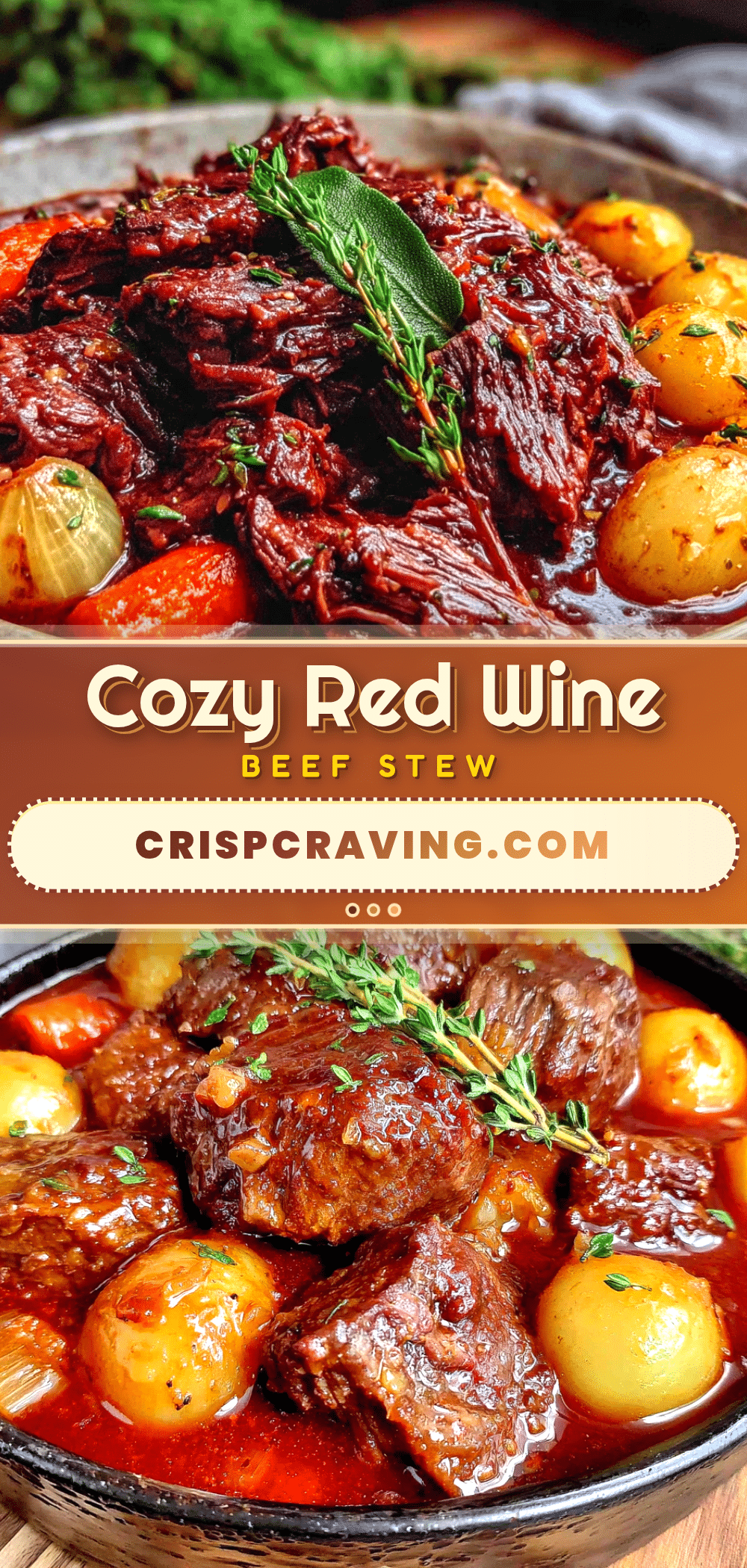
Cozy Red Wine Beef Stew: Best Easy Autumn Recipe
A soul-warming red wine beef stew with tender beef, hearty vegetables, and a velvety rich broth. Perfect for chilly autumn nights, this forgiving recipe rewards patience with deep, complex flavor.
- Prep Time: 30 minutes
- Cook Time: 2 hours 15 minutes
- Total Time: 2 hours 45 minutes
- Yield: 6 servings 1x
- Category: Main Course
- Cuisine: American
Ingredients
- 2 pounds beef chuck, cut into 1.5-inch cubes
- 1 teaspoon kosher salt
- 1/2 teaspoon black pepper, freshly ground
- 2 tablespoons all-purpose flour
- 2 tablespoons olive oil
- 1 large yellow onion, diced
- 3 cloves garlic, minced
- 4 large carrots, peeled and cut into 1-inch chunks
- 3 celery stalks, sliced
- 1.5 pounds Yukon Gold potatoes, cut into 1.5-inch chunks
- 1.5 cups dry red wine (Cabernet Sauvignon, Merlot, or Zinfandel)
- 2 cups low-sodium beef broth
- 1 tablespoon tomato paste
- 2 bay leaves
- 3 sprigs fresh thyme (or 1 teaspoon dried thyme)
- 1 teaspoon dried rosemary, crushed
- 1 cup frozen peas (optional)
- Fresh parsley, chopped (for garnish)
- Crusty bread (for serving)
Instructions
- Preheat your oven to 325°F (160°C).
- Pat the beef cubes dry with paper towels. Season generously with salt and pepper, then toss with the flour until every piece is lightly coated. Shake off any excess flour.
- Heat 1 tablespoon of olive oil in your Dutch oven over medium-high heat. When the oil shimmers, add half the beef in a single layer. Cook undisturbed for 3-4 minutes until a deep brown crust forms. Flip and brown the other side for another 2-3 minutes. Transfer to a plate. Repeat with the remaining oil and beef.
- Reduce heat to medium. Add the diced onion and a pinch of salt. Cook for 4-5 minutes, stirring occasionally, until the onion is soft and translucent. Scrape up any brown bits from the bottom of the pot. Add the minced garlic and cook for 30 seconds until fragrant.
- Pour in the red wine. Use your wooden spoon to scrape up every last bit of browned goodness from the bottom of the pot. Let the wine bubble and reduce for 3-4 minutes.
- Add the tomato paste, beef broth, bay leaves, thyme, and rosemary. Stir everything together. Return the beef and any accumulated juices to the pot. Bring the liquid to a gentle simmer.
- Cover the pot with the lid and transfer to the preheated oven. Let it cook for 1 hour.
- After 1 hour, remove the pot from the oven and add the carrots, celery, and potatoes. Stir gently to submerge the vegetables in the liquid. Cover and return to the oven for another 45 minutes to 1 hour, or until the beef is fork-tender and the vegetables are soft but not falling apart.
- Check for doneness: the beef should shred easily with a fork. If still tough, give it another 20-30 minutes.
- Remove the bay leaves and thyme sprigs. If using frozen peas, stir them in now and let the stew sit for 5 minutes off the heat. Taste and adjust salt and pepper.
- Let the stew rest for 10-15 minutes before serving. Serve in wide bowls with crusty bread for dipping.
Notes
For a gluten-free version, skip the flour when coating the beef and instead mix 1 tablespoon cornstarch with 2 tablespoons cold water and stir into the simmering stew at the end. Let cook for 5 minutes to thicken. The stew tastes even better the next day. If the stew seems too thin, mash a few cooked potato chunks against the side of the pot and stir them in.
Nutrition
- Serving Size: 1 bowl (about 1.5 cu
- Calories: 450
- Sugar: 8
- Sodium: 680
- Fat: 18
- Saturated Fat: 6
- Carbohydrates: 32
- Fiber: 6
- Protein: 35
Keywords: beef stew, red wine beef stew, autumn stew, cozy stew, beef stew recipe, easy beef stew, hearty stew, comfort food