Love this? Save it for later!
Share the inspiration with your friends
I wasn’t expecting baking advice from a plumber, but there I was, standing in the hardware aisle at the local hardware store, listening to Mr. Kowalski describe exactly how to make the perfect Irish soda bread. He was holding a pipe wrench in one hand and gesturing so enthusiastically with the other that I was genuinely worried he might accidentally knock over a display of PVC pipes. Honestly, I had just asked him a simple question about fixing a leaky faucet—I had no idea I was about to get a masterclass in Irish baking.
“You’re making it too complicated,” he said, shaking his head when I mentioned I was looking for a good soda bread recipe. “The best ones are simple. My grandmother used to make it on the farm in County Cork, and she never measured a thing. It’s about the feel of the dough, not the numbers.” I mean, when a plumber starts channeling his Irish grandmother and giving you baking advice in the middle of a hardware store, you pay attention. He scribbled the recipe on the back of a receipt, and I tucked it into my pocket, half-convinced I’d never actually use it.
But then St. Patrick’s Day rolled around, and I had a group of friends coming over for a casual dinner party. I wanted something that felt authentic, something that would make my guests think I had spent hours in the kitchen. That’s when I remembered the crumpled receipt in my coat pocket. Let me tell you, that first loaf came out of the oven looking like a rustic masterpiece—golden brown, craggy on top, with the most incredible aroma filling my entire apartment. I almost burned my fingers slicing into it because I couldn’t wait. And when I served it with a generous slab of butter and a pot of strong tea? My friend Sarah actually closed her eyes after the first bite. That’s the moment I knew this recipe was something special. It’s been my go-to for every gathering ever since, and honestly, I don’t see that changing anytime soon. Maybe you’ve been there—looking for that one dish that makes you look like a hero without actually having to work for it. This is that recipe.
This classic Irish soda bread with raisins and caraway is the kind of recipe that feels like a secret weapon in your hosting arsenal. It’s rustic, hearty, and surprisingly simple to pull together. The combination of sweet raisins and aromatic caraway seeds creates a flavor profile that’s both familiar and unexpected—it’s comfort food with a little bit of personality. And let’s face it, when you’re hosting a gathering, you want something that looks impressive but doesn’t have you sweating in the kitchen while your guests are having fun. This bread delivers on all fronts. It’s the perfect centerpiece for a St. Patrick’s Day spread, a cozy addition to a fall soup dinner, or just a lovely excuse to have warm bread and butter on a random Tuesday.
Why You’ll Love This Recipe
Let me be honest with you—I’ve tested this recipe more times than I can count, and each time I’m reminded why it’s the one I keep coming back to. There’s something about the way the buttermilk reacts with the baking soda that creates this incredibly tender crumb, and the raisins add little pockets of sweetness that make every bite interesting. Over the years, I’ve tweaked Mr. Kowalski’s original instructions, testing different ratios of flour to buttermilk, experimenting with oven temperatures, and even trying out different types of raisins. This version is the result of all that trial and error, and I can confidently say it’s the best I’ve ever made.
- Quick & Easy: From mixing to cooling, this bread comes together in under an hour. No yeast, no rising time, no complicated techniques. It’s perfect for those moments when you realize you need bread for a dinner party and you have about 45 minutes.
- Simple Ingredients: You probably already have most of these in your pantry. Flour, sugar, salt, baking soda, buttermilk, raisins, and caraway seeds. That’s it. No fancy grocery trips required.
- Perfect for Hosting: This bread is a showstopper on any table. It looks like you spent hours on it, but it’s actually one of the easiest things you can make. Your guests will be impressed, and you’ll be relaxed enough to actually enjoy the party.
- Crowd-Pleaser: I’ve served this at brunches, potlucks, and casual dinner parties, and it always gets rave reviews. Even people who think they don’t like caraway seeds end up reaching for seconds.
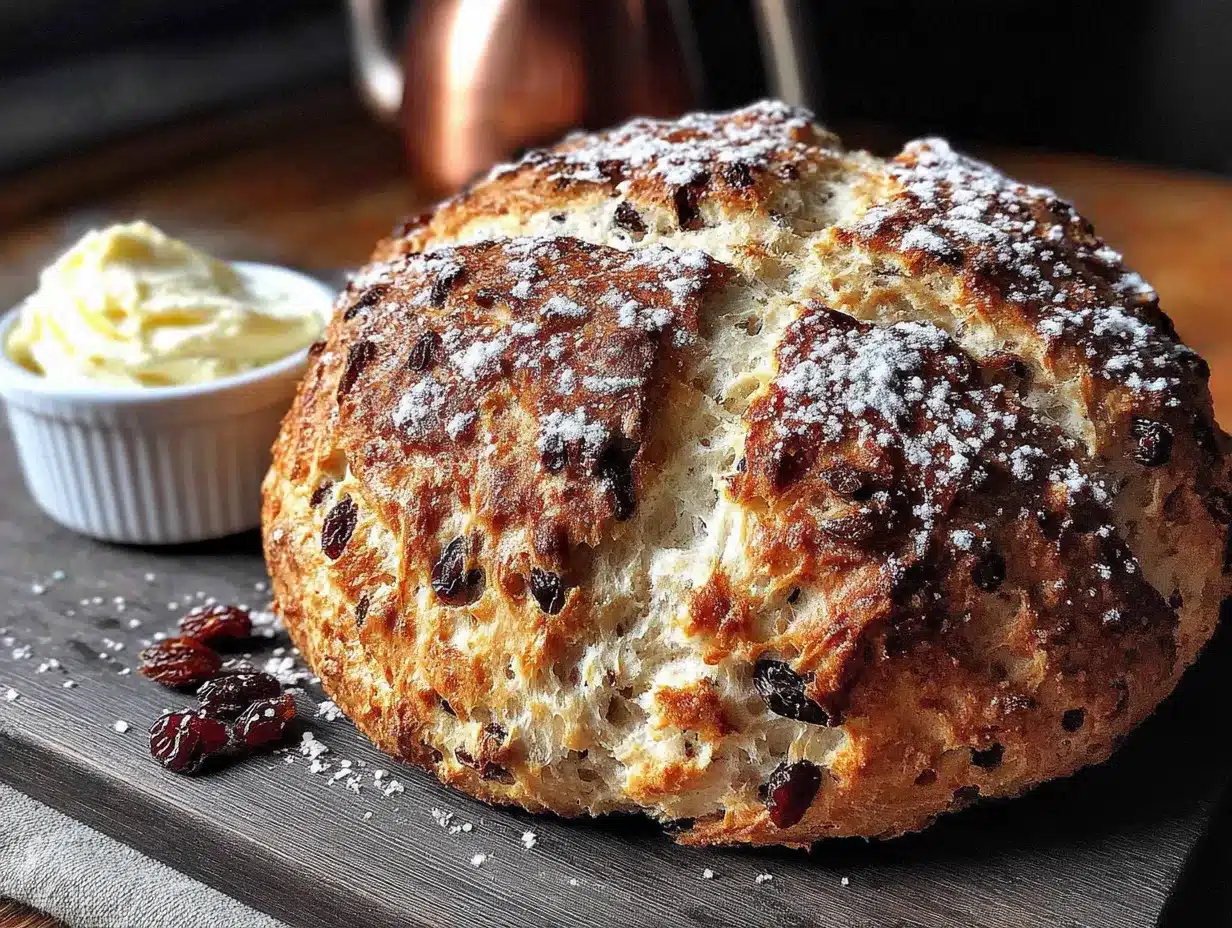
- Unbelievably Delicious: The texture is what really gets me. The crust is crisp and golden, while the inside is soft and tender. The raisins add a pop of sweetness, and the caraway seeds give it that distinctive, slightly peppery flavor that makes Irish soda bread so memorable.
What makes this recipe different from all the others out there? It’s the balance. I’ve tried versions that were too dense, too dry, or just plain bland. This one hits that sweet spot where the bread is substantial enough to hold up to a generous spread of butter, but tender enough that you don’t feel like you’re chewing on a brick. The key is in the technique—handling the dough just enough to bring it together without overworking it. That’s the secret that Mr. Kowalski’s grandmother knew, and it’s the secret that makes this bread work every single time.
This recipe isn’t just good—it’s the kind that makes you close your eyes after the first bite. It’s comfort food reimagined, with that same soul-soothing satisfaction that comes from something baked with love. And when you’re hosting a gathering, that’s exactly the energy you want to bring to the table. Perfect for impressing guests without stress, or turning a simple meal into something memorable.
What Ingredients You Will Need
This recipe uses simple, wholesome ingredients to deliver bold flavor and satisfying texture without the fuss. Most of these are pantry staples, which is part of what makes this bread so reliable when you need it in a pinch.
- All-purpose flour (4 cups / 480g): The backbone of the bread. I prefer Gold Medal or King Arthur Flour for consistent results. Don’t use bread flour—it has too much protein and will make the bread tough.
- Granulated sugar (3 tablespoons / 36g): Just enough to balance the tanginess of the buttermilk and complement the raisins. You can reduce it to 2 tablespoons if you prefer a less sweet bread.
- Baking soda (1 teaspoon / 5g): This is the leavening agent that makes the bread rise. Make sure it’s fresh—old baking soda won’t give you the lift you need.
- Salt (1 teaspoon / 6g): Use fine sea salt or table salt. Kosher salt can be used, but you might need to increase the amount slightly.
- Unsalted butter (4 tablespoons / 56g), cold and cut into small cubes: This adds richness and tenderness to the crumb. If you only have salted butter, reduce the added salt to ½ teaspoon.
- Buttermilk (1 ½ cups / 360ml), cold: The acid in the buttermilk reacts with the baking soda to create carbon dioxide bubbles, which gives the bread its rise and tender texture. If you don’t have buttermilk, you can make a quick substitute by adding 1 ½ tablespoons of lemon juice or white vinegar to 1 ½ cups of regular milk and letting it sit for 5 minutes.
- Raisins (1 cup / 150g): I prefer golden raisins for their milder flavor, but dark raisins work beautifully too. If your raisins are very dry, soak them in hot water for 10 minutes, then drain and pat dry before using.
- Caraway seeds (1 ½ tablespoons / 12g): This is the signature flavor of classic Irish soda bread. The seeds have a slightly peppery, anise-like taste that pairs perfectly with the sweetness of the raisins. If you’re not a fan, you can reduce the amount or leave them out entirely, but I really encourage you to try them at least once.
For the buttermilk, I’ve found that the full-fat version gives the best texture, but low-fat works in a pinch. If you’re dairy-free, you can use a plant-based buttermilk substitute made with unsweetened almond or oat milk and lemon juice. Just keep in mind that the texture might be slightly different.
One thing I’ve learned from making this bread over and over is that the quality of your raisins really matters. Cheap, overly dry raisins can end up tasting like little pebbles in the bread. I like to use Thompson seedless raisins or, when I can find them, golden sultanas. They’re plumper and have a more delicate sweetness that doesn’t overpower the caraway.
Equipment Needed
You don’t need a lot of fancy equipment to make this bread, which is part of its charm. Here’s what you’ll need:
- Large mixing bowl: Any big bowl will do. I use a ceramic mixing bowl that my grandmother gave me, but a stainless steel one works just as well.
- Whisk or fork: For mixing the dry ingredients together.
- Pastry cutter or two knives: To cut the cold butter into the flour. You can also use your fingertips, but work quickly so the butter doesn’t warm up too much.
- Wooden spoon or spatula: For stirring the dough together.
- Baking sheet: A standard half-sheet pan works perfectly. Line it with parchment paper for easy cleanup.
- Sharp knife or bench scraper: To score the top of the loaf before baking. This isn’t just for decoration—it helps the bread expand properly in the oven.
- Cooling rack: Essential for letting the bread cool evenly. If you don’t have one, you can use the rack from your oven, but let it cool completely first.
If you don’t have a pastry cutter, don’t worry. You can use two knives in a crisscross motion, or simply rub the butter into the flour with your fingers. Just make sure your hands are cold—run them under cold water first if you need to. I’ve also used a food processor in a pinch to cut the butter into the flour, pulsing just a few times until the mixture looks like coarse crumbs. It works, but be careful not to over-process.
Preparation Method
- Preheat your oven to 400°F (200°C). Position a rack in the middle of the oven. Line a baking sheet with parchment paper and set it aside.
- In a large mixing bowl, whisk together the flour, sugar, baking soda, and salt. Make sure everything is evenly distributed. I like to give it a good 10-15 seconds of whisking to aerate the flour a bit.
- Add the cold butter cubes to the flour mixture. Using a pastry cutter or your fingertips, work the butter into the flour until the mixture resembles coarse crumbs with some pea-sized butter pieces remaining. This should take about 2-3 minutes. Don’t overdo it—you want some visible butter bits, as they’ll create flaky pockets in the finished bread.
- Stir in the raisins and caraway seeds. Toss them gently with the flour mixture so they’re evenly distributed. This also helps coat the raisins in flour, which prevents them from sinking to the bottom of the bread.
- Make a well in the center of the flour mixture and pour in the cold buttermilk. Using a wooden spoon or your hands, stir until the dough just comes together. It will be shaggy and a bit sticky—that’s exactly what you want. Don’t overmix, or the bread will be tough.
- Turn the dough out onto a lightly floured surface. Gently bring it together with your hands, kneading just 2-3 times until it forms a cohesive ball. If the dough is too sticky, add a little more flour, but be sparing. The dough should feel soft and slightly tacky.
- Shape the dough into a round loaf, about 7-8 inches (18-20 cm) in diameter. Place it on the prepared baking sheet.
- Using a sharp knife, score a deep “X” on top of the loaf, cutting about ½ inch (1 cm) deep. This isn’t just for aesthetics—it helps the bread expand evenly in the oven and allows the heat to penetrate the center. Some people say it’s to “let the fairies out,” and honestly, I like that explanation better.
- Bake for 35-40 minutes, until the bread is golden brown and sounds hollow when tapped on the bottom. If you have an instant-read thermometer, the internal temperature should be around 190°F (88°C). The crust should be firm and deeply colored.
- Transfer the bread to a cooling rack and let it cool for at least 20 minutes before slicing. I know it’s tempting to cut into it right away, but the bread continues to cook internally as it cools, and slicing too soon can make it gummy.
One thing I’ve learned the hard way: don’t skip the scoring step. The first time I made this bread, I forgot to score it, and the loaf cracked in a completely unpredictable way. It still tasted fine, but it looked like a geological disaster. The “X” gives you control over where the bread expands, and it creates those beautiful, rustic quadrants that make soda bread so recognizable.
Also, keep an eye on the color. Ovens vary, and I’ve had loaves that were perfectly done at 35 minutes and others that needed the full 40. If the top is browning too quickly, tent the loaf loosely with aluminum foil for the last 10 minutes of baking.
Cooking Tips & Techniques
After making this bread more times than I can count, I’ve picked up a few tricks that make a real difference. First, the temperature of your ingredients matters more than you might think. Cold butter and cold buttermilk are crucial—they help create that tender crumb. If your buttermilk is at room temperature, the butter will melt into the dough before it even hits the oven, and you’ll end up with a denser loaf.
One common mistake is overmixing the dough. I’ll be the first to admit that I’ve done this more than once. When you overwork the dough, you develop the gluten too much, and the bread becomes tough and chewy instead of tender and crumbly. The trick is to mix just until the ingredients are combined and the dough holds together. It should look shaggy and uneven—that’s a good sign.
Another lesson I learned the hard way: don’t use a metal bowl if you can help it. I once made this bread in a stainless steel bowl on a cold day, and the dough just wouldn’t come together. The metal was conducting the cold from the buttermilk and making the butter seize up. A ceramic or glass bowl holds the temperature more evenly.
For the best results, let the bread cool completely before storing it. I know it’s hard to resist a warm slice with butter melting into it, but if you wrap it while it’s still warm, the crust will get soft and the bread can become soggy. If you want a warm slice, just pop a piece in the toaster or microwave for a few seconds.
Finally, if you’re making this bread for a gathering, consider baking it earlier in the day and reheating it just before serving. The flavor actually improves after a few hours, and a quick 5-minute blast in a 350°F (175°C) oven will revive that crisp crust.
Variations & Adaptations
One of the things I love about this recipe is how adaptable it is. Over the years, I’ve tried several variations, and here are a few of my favorites:
- Whole Wheat Version: Substitute 2 cups (240g) of the all-purpose flour with whole wheat flour. You’ll need to add an extra 2-3 tablespoons of buttermilk, as whole wheat flour absorbs more liquid. The bread will be denser and nuttier, but still delicious.
- Gluten-Free Option: Use a high-quality gluten-free all-purpose flour blend that contains xanthan gum. I’ve had good results with Bob’s Red Mill 1-to-1 Baking Flour. Keep in mind that the texture will be slightly different, and you might need to add a bit more buttermilk.
- Savory Soda Bread: Omit the raisins and caraway seeds, and add 1 cup (100g) of shredded cheddar cheese, 2 tablespoons of fresh rosemary, and ½ teaspoon of black pepper. This version is incredible served alongside a bowl of tomato soup or a hearty stew.
- Dried Fruit Medley: Swap the raisins for a mix of dried cranberries, chopped dried apricots, and golden raisins. The tartness of the cranberries balances the sweetness beautifully.
- Herb and Onion Version: Add 2 tablespoons of dried chives or finely chopped fresh chives, 1 tablespoon of dried parsley, and ½ cup (80g) of finely diced caramelized onions. This is a lovely savory option that pairs well with roasted meats.
I once tried a version with orange zest and dried cherries, and it was honestly fantastic. The citrus brightened up the whole loaf, and the cherries added a nice tartness. If you’re feeling adventurous, that’s a great place to start.
Serving & Storage Suggestions
This bread is best served warm, with a generous spread of good-quality butter. I like to use Kerrygold salted butter—it’s rich and creamy, and the salt complements the sweetness of the raisins perfectly. For a more indulgent treat, serve it with a dollop of clotted cream or a drizzle of honey.
If you’re hosting a gathering, this bread is wonderful alongside a bowl of hearty soup or stew. It’s also fantastic with a cheese board—try it with a sharp cheddar, a creamy brie, or a tangy goat cheese. For a St. Patrick’s Day spread, pair it with corned beef and cabbage or a traditional Irish stew.
To store leftovers, wrap the bread tightly in plastic wrap or aluminum foil and keep it at room temperature for up to 3 days. The crust will soften slightly, but it will still be delicious. If you want to keep it longer, slice the bread and freeze it in a zip-top bag for up to 3 months. To reheat, simply toast a slice directly from the freezer, or let it thaw at room temperature and warm it in a 350°F (175°C) oven for 5-7 minutes.
One thing I’ve noticed is that the flavor of this bread actually improves after a day or two. The caraway seeds have time to mellow, and the raisins become more evenly distributed in their sweetness. So if you’re planning a party, feel free to make this bread a day ahead—it will still be wonderful.
Nutritional Information & Benefits
Per serving (1 slice, based on 12 servings):
- Calories: 245
- Total Fat: 5g
- Saturated Fat: 3g
- Cholesterol: 13mg
- Sodium: 320mg
- Total Carbohydrates: 45g
- Dietary Fiber: 2g
- Sugars: 14g
- Protein: 6g
This bread offers some surprising nutritional benefits. The caraway seeds are a good source of fiber and have been traditionally used to aid digestion. Raisins provide natural sweetness along with iron and potassium. The buttermilk adds calcium and probiotics, especially if you use traditional cultured buttermilk.
For those with dietary concerns, this recipe can be adapted to be lower in sugar by reducing the added sugar to 1 tablespoon. It’s also naturally vegetarian and can be made dairy-free with plant-based buttermilk and vegan butter. Note that it contains gluten and dairy in its standard form.
I personally love that this bread feels like a treat but isn’t overly indulgent. It’s substantial enough to be satisfying, but not so heavy that you feel like you need a nap after eating it. That balance is something I really appreciate, especially when I’m hosting and want to offer my guests something delicious without overdoing it.
Conclusion
This classic Irish soda bread with raisins and caraway has become a staple in my kitchen, and I have a feeling it will become one in yours too. It’s the kind of recipe that feels like a gift—simple to make, deeply satisfying, and always impressive. Whether you’re serving it at a St. Patrick’s Day gathering, a cozy fall dinner, or just because you want a warm slice of bread with your morning coffee, it never disappoints.
I encourage you to make this bread your own. Adjust the raisins and caraway to your taste, try one of the variations, or experiment with your own additions. The beauty of soda bread is that it’s forgiving—it wants you to succeed. And when you pull that golden loaf out of the oven and your kitchen smells like a warm hug, you’ll understand why this recipe has been passed down through generations.
If you make this recipe, I’d love to hear about it. Leave a comment below and let me know how it turned out, or share your own twist on the classic. And if you’re looking for more hosting inspiration, be sure to check out our hearty beef stew recipe that pairs perfectly with this bread. Happy baking, and remember—sometimes the best recipes come from the most unexpected places.
Frequently Asked Questions
Can I make this bread without buttermilk?
Yes, absolutely. If you don’t have buttermilk on hand, you can make a quick substitute by adding 1 ½ tablespoons of lemon juice or white vinegar to 1 ½ cups of regular milk. Let it sit for 5 minutes, and it will thicken and curdle slightly, mimicking the acidity of buttermilk. It works perfectly in this recipe.
Why did my soda bread turn out dense and heavy?
This usually happens for one of three reasons: overmixing the dough, using old baking soda, or not enough buttermilk. Overmixing develops the gluten too much, making the bread tough. Old baking soda loses its leavening power, so the bread doesn’t rise properly. And if the dough is too dry, it won’t have enough moisture to create steam and lift the bread. Next time, mix just until combined, check your baking soda’s expiration date, and make sure your dough is soft and slightly sticky.
Can I freeze Irish soda bread?
Yes, it freezes beautifully. Let the bread cool completely, then wrap it tightly in plastic wrap and aluminum foil, or place it in a freezer-safe bag. It will keep for up to 3 months. To thaw, leave it at room temperature for a few hours, then reheat in a 350°F (175°C) oven for 5-7 minutes to crisp up the crust.
Do I have to use caraway seeds?
Not at all. While caraway seeds are traditional in classic Irish soda bread, they’re not for everyone. You can leave them out entirely, or substitute them with fennel seeds for a milder anise flavor, or poppy seeds for a nutty crunch. The bread will still be delicious.
How do I know when the bread is fully baked?
The best way to tell is by tapping the bottom of the loaf—it should sound hollow. You can also use an instant-read thermometer; the internal temperature should be around 190°F (88°C). The crust should be deep golden brown and feel firm to the touch. If you’re unsure, it’s better to bake it a few minutes longer than to underbake it, as underbaked soda bread can be gummy in the center.
Pin This Recipe!
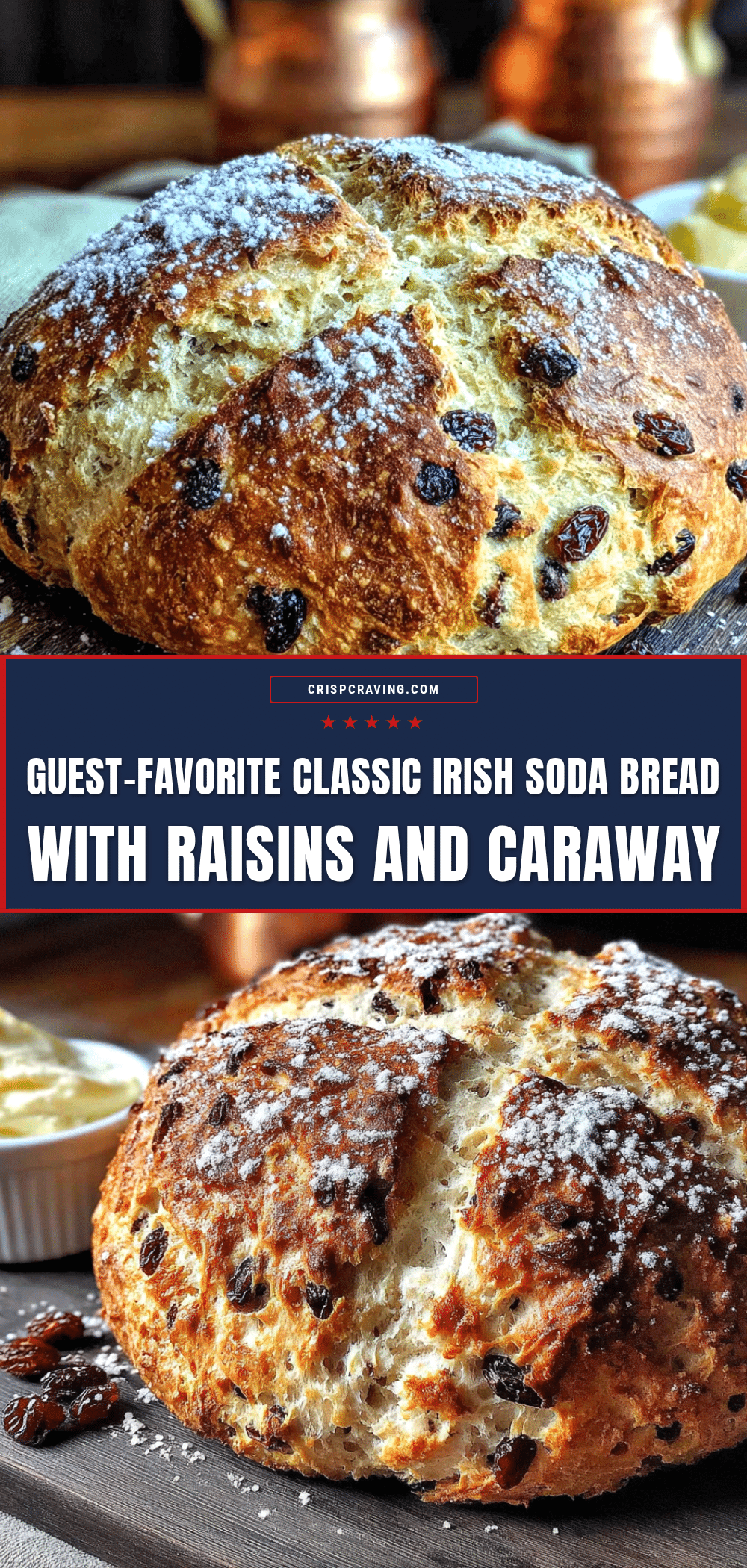
Best Classic Irish Soda Bread with Raisins & Caraway

This classic Irish soda bread with raisins and caraway is a rustic, hearty, and surprisingly simple bread that comes together in under an hour. It’s the perfect centerpiece for a St. Patrick’s Day spread or a cozy addition to any meal.
- Prep Time: 15 minutes
- Cook Time: 35-40 minutes
- Total Time: 50-55 minutes
- Yield: 12 servings 1x
- Category: Bread
- Cuisine: Irish
Ingredients
- 4 cups (480g) all-purpose flour
- 3 tablespoons (36g) granulated sugar
- 1 teaspoon (5g) baking soda
- 1 teaspoon (6g) fine sea salt
- 4 tablespoons (56g) unsalted butter, cold and cut into small cubes
- 1 ½ cups (360ml) cold buttermilk
- 1 cup (150g) raisins (golden or dark)
- 1 ½ tablespoons (12g) caraway seeds
Instructions
- Preheat your oven to 400°F (200°C). Position a rack in the middle of the oven. Line a baking sheet with parchment paper and set it aside.
- In a large mixing bowl, whisk together the flour, sugar, baking soda, and salt until evenly distributed.
- Add the cold butter cubes to the flour mixture. Using a pastry cutter or your fingertips, work the butter into the flour until the mixture resembles coarse crumbs with some pea-sized butter pieces remaining (about 2-3 minutes).
- Stir in the raisins and caraway seeds, tossing gently to distribute evenly.
- Make a well in the center of the flour mixture and pour in the cold buttermilk. Using a wooden spoon or your hands, stir until the dough just comes together. It will be shaggy and a bit sticky.
- Turn the dough out onto a lightly floured surface. Gently bring it together with your hands, kneading just 2-3 times until it forms a cohesive ball. If too sticky, add a little more flour sparingly.
- Shape the dough into a round loaf, about 7-8 inches (18-20 cm) in diameter. Place it on the prepared baking sheet.
- Using a sharp knife, score a deep ‘X’ on top of the loaf, cutting about ½ inch (1 cm) deep.
- Bake for 35-40 minutes, until the bread is golden brown and sounds hollow when tapped on the bottom. Internal temperature should be around 190°F (88°C).
- Transfer the bread to a cooling rack and let it cool for at least 20 minutes before slicing.
Notes
Cold butter and cold buttermilk are crucial for a tender crumb. Do not overmix the dough; mix just until combined. Score the top of the loaf to allow for even expansion. If the top browns too quickly, tent with foil for the last 10 minutes. Let the bread cool completely before storing to maintain a crisp crust.
Nutrition
- Serving Size: 1 slice
- Calories: 245
- Sugar: 14
- Sodium: 320
- Fat: 5
- Saturated Fat: 3
- Carbohydrates: 45
- Fiber: 2
- Protein: 6
Keywords: Irish soda bread, soda bread, raisin bread, caraway bread, St. Patrick's Day, quick bread, no yeast bread