Love this? Save it for later!
Share the inspiration with your friends
I was standing in the middle of a hardware store last February when it hit me. Not literally, of course—I mean the smell. Someone had walked past with one of those pine-scented candles, and for a split second, it wasn’t the fluorescent lights and linoleum aisles I was seeing. I was six years old, sitting on a cracked linoleum floor in my Aunt Clara’s sunroom, the winter sun streaming through windows that hadn’t been washed since the 80s. She was pulling a cake out of the oven, and that smell—bright and floral and somehow warm all at once—filled every corner of that room. I couldn’t place it then. I just knew it made me feel safe.
It took me years to figure out that the smell was Meyer lemons. Not the tart, grocery store kind that make you pucker. The sweet, almost perfumed ones that my aunt grew in a pot on her porch, bringing them inside whenever the temperature dropped. She’d roll them between her palms, slice them paper-thin, and press them into an olive oil cake that seemed to glow from the inside out. I never got the recipe from her. By the time I thought to ask, she had moved to Arizona and the sunroom was just someone else’s memory.
So I spent a good chunk of last winter trying to recreate it. I mean, honestly—I went through maybe eight versions before I got close. The first one was too dense. The second one tasted like I’d used the wrong olive oil (I had). The third one? Let’s not talk about the third one. But somewhere around attempt number five, I stopped trying to replicate the cake exactly and started trying to replicate the feeling. And that, my friend, is where this Cozy Meyer Lemon Olive Oil Cake with Honey Glaze was born. Maybe you’ve been there—chasing a taste you can’t quite describe, hoping a recipe will unlock a door you left open years ago.
Why You’ll Love This Recipe
This isn’t just another lemon cake recipe. Honestly, I’ve tested enough of those to know the difference between good and “close your eyes after the first bite.” This one falls firmly in the latter category, and here’s why you need it in your life:
- Quick & Easy: From start to finish, this cake comes together in about an hour. Most of that is hands-off baking time, so you can actually enjoy your afternoon while the kitchen fills with that incredible Meyer lemon scent.
- Simple Ingredients: You probably already have most of what you need. No weird extracts, no specialty flours—just good olive oil, fresh Meyer lemons, and a few pantry staples. The honey glaze uses ingredients you likely have in your cupboard right now.
- Perfect for Cozy Evenings: This cake was made for cold weather, slow Sundays, and days when you need a little extra warmth. It’s the kind of dessert that pairs perfectly with a cup of tea and a blanket.
- Crowd-Pleaser: I’ve brought this to three different gatherings now, and every single time, someone asks for the recipe. Kids love the sweetness, adults appreciate the sophistication—it’s a win-win.
- Unbelievably Delicious: The texture is where this cake shines. The olive oil keeps it incredibly moist without making it greasy, and the Meyer lemons add a floral brightness that regular lemons just can’t match. The honey glaze seeps into the top layer, creating this subtle sweetness that lingers.
What makes this recipe different from the rest is the technique. Instead of creaming butter and sugar, we’re using the emulsion method—whisking the olive oil into the eggs and sugar until it’s thick and glossy. This creates a cake that’s tender, almost velvety, with a crumb that holds together beautifully. It’s not dry. It’s not dense. It’s just right.
This is comfort food reimagined—lighter than a pound cake, more interesting than a standard lemon loaf, but with the same soul-soothing satisfaction. The first time I made the final version, I actually teared up a little. Not kidding. It tasted like coming home.
What Ingredients You Will Need
This recipe uses simple, wholesome ingredients to deliver that bright, cozy flavor without any fuss. Most of these are pantry staples, though you’ll want to seek out Meyer lemons specifically—they’re the secret to this cake’s magic.
For the Cake
- 1 ½ cups all-purpose flour (spooned and leveled—don’t scoop straight from the bag)
- 1 teaspoon baking powder
- ½ teaspoon baking soda
- ½ teaspoon salt (I use fine sea salt)
- 3 large eggs, room temperature (this matters for the emulsion)
- 1 cup granulated sugar
- ½ cup extra-virgin olive oil (use a good-quality, mild one—I like California Olive Ranch for baking)
- ½ cup plain Greek yogurt, room temperature (full-fat works best for moisture)
- ¼ cup fresh Meyer lemon juice (from about 2-3 lemons)
- 2 tablespoons Meyer lemon zest (from those same lemons)
- 1 teaspoon vanilla extract
For the Honey Glaze
- ½ cup powdered sugar, sifted
- 2 tablespoons honey (use a mild honey like clover or orange blossom)
- 1-2 tablespoons fresh Meyer lemon juice
- Pinch of salt
Ingredient Notes & Substitutions
If you can’t find Meyer lemons, you can use regular lemons—just reduce the juice slightly and add an extra teaspoon of zest for that floral note. For a gluten-free version, swap the all-purpose flour with a good 1:1 gluten-free baking blend. I’ve tested this with Bob’s Red Mill and it works beautifully. The Greek yogurt can be replaced with dairy-free coconut yogurt if needed, though the texture will be slightly less tender. And please, please use a mild olive oil—something you’d happily dip bread in but not so peppery that it overpowers the lemons. I learned that lesson the hard way.
Equipment Needed
You don’t need a fancy kitchen to make this cake, but a few specific tools make the process smoother:
- 9-inch round cake pan (or an 8×4-inch loaf pan—just adjust the baking time)
- Parchment paper (for lining the pan—trust me, it’s worth it)
- Microplane or fine grater (for zesting the lemons without getting bitter pith)
- Citrus juicer (a simple handheld one works perfectly)
- Large mixing bowl and medium bowl
- Whisk (a hand whisk is fine, but an electric mixer speeds up the emulsion)
- Rubber spatula (for folding and scraping every last bit of batter)
- Cooling rack (essential for even cooling)
- Small saucepan (for the glaze, if you want to warm the honey slightly)
If you don’t have a Microplane, a box grater’s finest side works—just be careful not to grate your knuckles. And if you’re using an electric mixer, a hand mixer is actually better than a stand mixer here; you want more control over the whisking.
Preparation Method
- Preheat and prep your pan. Set your oven to 350°F (175°C). Grease your 9-inch round cake pan with a little olive oil, then line the bottom with a circle of parchment paper. This step is non-negotiable—I’ve had cakes stick even with greasing, and parchment saves the day every time.
- Whisk the dry ingredients. In a medium bowl, whisk together the flour, baking powder, baking soda, and salt. Set this aside. Give it a good whisk to aerate the flour—it makes a difference in the final texture.
- Zest and juice your lemons. Before you do anything else, zest your Meyer lemons. I cannot stress this enough—zest first, then juice. If you juice first, you’ll be fighting with slippery lemons and a grater. Ask me how I know. You’ll need about 2 tablespoons of zest and ¼ cup of juice for the cake, plus extra juice for the glaze.
- Start the emulsion. In a large bowl, whisk together the eggs and sugar until they’re pale and thick, about 2-3 minutes by hand or 1-2 minutes with an electric mixer. You’re looking for a ribbon stage—when you lift the whisk, the mixture should fall back in a thick ribbon that holds its shape for a moment.
- Add the wet ingredients slowly. With the mixer running (or while whisking vigorously), drizzle in the olive oil in a slow, steady stream. This is where the magic happens. The mixture will become thick, glossy, and almost mayonnaise-like. Then add the Greek yogurt, Meyer lemon juice, lemon zest, and vanilla extract. Mix until just combined—don’t overmix here.
- Fold in the dry ingredients. Add the flour mixture to the wet ingredients in two additions, folding gently with a rubber spatula. Stop as soon as you no longer see streaks of flour. A few small lumps are fine—overmixing will make the cake tough.
- Pour and bake. Pour the batter into your prepared pan and smooth the top with the spatula. Bake for 35-40 minutes, or until a toothpick inserted in the center comes out clean or with just a few moist crumbs. The top should be golden brown and spring back when lightly touched.
- Cool completely. Let the cake cool in the pan for 10 minutes, then run a knife around the edges and turn it out onto a cooling rack. Remove the parchment paper and let it cool completely—at least 30 minutes. Don’t skip this step, or your glaze will just slide right off.
- Make the glaze. While the cake cools, whisk together the powdered sugar, honey, Meyer lemon juice, and salt in a small bowl. You’re looking for a consistency that’s thick but pourable—add more lemon juice a teaspoon at a time if it’s too stiff, or more powdered sugar if it’s too thin.
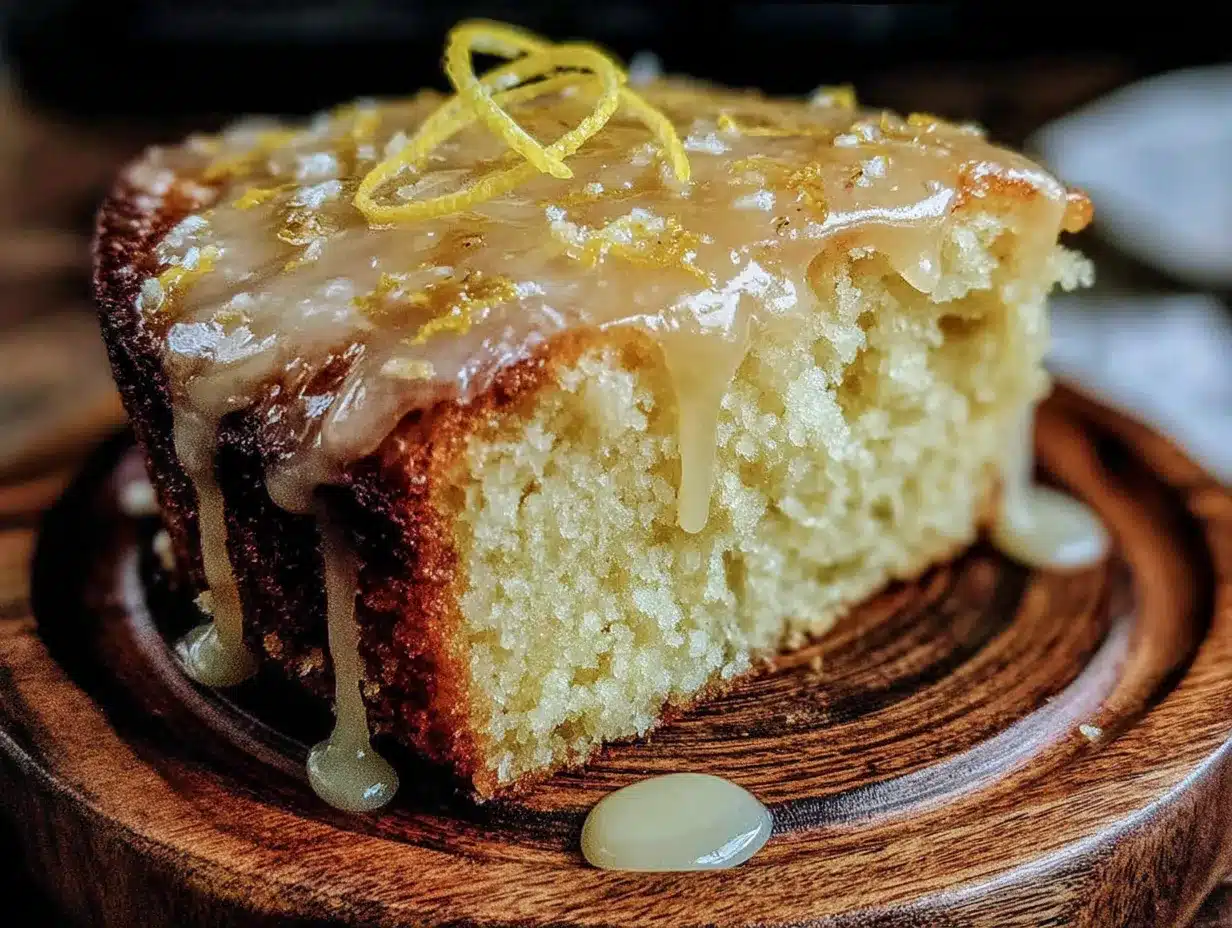
- Glaze and serve. Once the cake is completely cool, place it on your serving plate. Pour the glaze over the top, letting it drip down the sides. Let it set for about 10 minutes before slicing. The glaze will form a thin, crackly shell that’s absolutely divine.
Cooking Tips & Techniques
After making this cake more times than I care to admit, I’ve collected a few hard-won tips that will save you from my mistakes:
Room temperature ingredients are not optional. I know, I know—you’re in a hurry. But cold eggs and cold yogurt will break your emulsion, leaving you with a greasy, dense cake. Take them out of the fridge 30 minutes before you start. If you forgot, place the eggs in a bowl of warm water for 5 minutes and microwave the yogurt for 10 seconds.
Don’t use a peppery olive oil. The first time I made this, I used a fancy Tuscan oil I’d been saving. It was a disaster—the cake tasted like a salad. Use a mild, buttery olive oil. I’ve had great success with Kirkland Signature’s organic extra-virgin olive oil, believe it or not. It’s mild, affordable, and perfect for baking.
Watch your baking time. Every oven runs differently. Start checking at 30 minutes, and if the top is browning too quickly, tent it loosely with foil. I’ve had cakes that were done at 33 minutes and others that needed the full 40. Trust the toothpick, not the timer.
Let the glaze set. I know you want to dig in immediately. I get it. But if you slice into the cake while the glaze is still wet, you’ll end up with a sticky mess. Give it those 10 minutes. Use the time to make tea, light a candle, or just stand there inhaling the lemon scent. It’s worth it.
Variations & Adaptations
One of the best things about this cake is how adaptable it is. Here are a few ways I’ve made it my own:
Gluten-Free Version: I swapped the all-purpose flour for a 1:1 gluten-free blend, added an extra tablespoon of yogurt, and it came out beautifully. The texture was slightly more tender, but the flavor was spot-on. I’ve also tried it with almond flour—don’t. It’s too dense and the oil makes it greasy.
Blueberry Meyer Lemon Cake: This was a happy accident. I had a handful of frozen blueberries and threw them into the batter before baking. They sank to the bottom and created this gorgeous purple layer that looked like stained glass when I sliced into it. Use ½ cup fresh or frozen blueberries, tossed in a tablespoon of flour so they don’t sink completely.
Vegan Adaptation: Replace the eggs with flax eggs (1 tablespoon ground flaxseed + 3 tablespoons water per egg) and use a dairy-free yogurt. The texture is slightly more cake-like and less tender, but the flavor is still incredible. I’d recommend adding an extra tablespoon of olive oil to compensate for the missing fat from the eggs.
Lavender Honey Glaze: Steep 1 teaspoon of dried culinary lavender in the honey for 10 minutes before making the glaze. Strain it out, then proceed as usual. The floral notes pair beautifully with the Meyer lemons. I made this for a spring brunch and people lost their minds.
Serving & Storage Suggestions
This cake is at its absolute best served slightly warm, about 20 minutes after it comes out of the oven—but let it cool completely before glazing, then pop it in a 300°F oven for 5 minutes to rewarm. The contrast between the warm, tender cake and the cool, crackly glaze is pure magic.
For serving, I love pairing it with a dollop of lightly sweetened whipped cream or a scoop of vanilla bean ice cream. The creaminess balances the bright lemon flavor perfectly. A cup of Earl Grey tea or a glass of cold milk are also excellent companions.
Storage: This cake keeps beautifully at room temperature for up to 3 days, covered loosely with foil or plastic wrap. The glaze will soften slightly, but the cake stays incredibly moist thanks to the olive oil. Do not refrigerate it—the cold will dry it out and dull the lemon flavor.
Freezing: You can freeze the unglazed cake for up to 3 months. Wrap it tightly in plastic wrap, then foil. When you’re ready to serve, thaw it at room temperature, then make the glaze fresh. I’ve done this for holiday prep, and it works like a charm.
One thing I’ve noticed: the lemon flavor actually deepens after a day. The cake tastes even better on day two, as the olive oil and lemon have time to marry. So don’t feel bad if you don’t finish it in one sitting—it’s even better tomorrow.
Nutritional Information & Benefits
Per slice (based on 8 servings): approximately 320 calories, 14g fat, 45g carbohydrates, 5g protein, 2g fiber, 28g sugar. These are estimates and will vary based on your specific ingredients.
This cake offers some surprising nutritional benefits. Olive oil is rich in heart-healthy monounsaturated fats and antioxidants, while Meyer lemons provide a good dose of vitamin C and flavonoids. The Greek yogurt adds protein and probiotics, and honey offers natural antibacterial properties. It’s not health food, but it’s certainly more wholesome than your average bakery cake.
For those watching their sugar intake, you can reduce the granulated sugar to ¾ cup and use a sugar-free honey substitute in the glaze. The texture will be slightly less tender, but the flavor will still shine. This cake is naturally vegetarian and can be made gluten-free and vegan with the substitutions listed above.
Conclusion
This Cozy Meyer Lemon Olive Oil Cake with Honey Glaze has become my go-to for so many occasions—rainy afternoons, quiet mornings, dinner parties where I want to impress without stress. It’s the cake I bring to new neighbors and the one I make when I need a little comfort myself. Every time I bake it, I think of Aunt Clara’s sunroom, even though I’ve long since stopped trying to replicate that exact moment. This cake is its own memory now.
I really hope you give this recipe a try. Don’t be afraid to make it your own—add the blueberries, try the lavender glaze, or just enjoy it exactly as written. The best recipes are the ones that become part of your story, and I’d love for this one to become part of yours.
If you make it, I’d love to hear about it. Drop a comment below and let me know how it turned out—did you make any substitutions? Did it remind you of something? Did you, like me, find yourself standing in the kitchen with your eyes closed after the first bite? Share your story. And if you’re looking for more cozy baking inspiration, check out my cozy winter desserts collection or this blood orange olive oil cake for another citrusy twist. Happy baking, friend.
Frequently Asked Questions
Can I use regular lemons instead of Meyer lemons?
Absolutely. Meyer lemons are sweeter and more floral, but regular lemons work perfectly. Just reduce the juice by about a tablespoon and add an extra teaspoon of zest to compensate for the missing floral notes.
Why did my cake sink in the middle?
This usually happens when the oven door is opened too early or the cake is underbaked. Resist the urge to peek until at least 30 minutes have passed. Also, make sure your baking powder and baking soda are fresh—they lose potency over time.
Can I make this cake in a loaf pan?
Yes! Use an 8×4-inch loaf pan and bake for 45-55 minutes. The cake will be slightly taller and may need a foil tent after 35 minutes to prevent over-browning. Check with a toothpick as usual.
How do I know when the emulsion is ready?
You’re looking for a ribbon stage—when you lift the whisk, the mixture falls back in a thick ribbon that holds its shape for a few seconds. It should look pale, thick, and glossy. If it’s still runny, keep whisking. This usually takes 2-3 minutes by hand.
Can I use a different oil?
You can, but the texture and flavor will change. Avocado oil works well as a neutral substitute. Coconut oil will add a subtle coconut flavor and make the cake slightly denser. Vegetable oil will work but won’t add any flavor complexity. I really recommend sticking with a mild olive oil for the best results.
Pin This Recipe!

Cozy Meyer Lemon Olive Oil Cake with Honey Glaze

A tender, moist olive oil cake infused with bright Meyer lemon and topped with a crackly honey glaze. This comforting dessert is perfect for cozy evenings and pairs beautifully with tea or coffee.
- Prep Time: 20 minutes
- Cook Time: 35-40 minutes
- Total Time: 1 hour 10 minutes (including cooling)
- Yield: 8 servings 1x
- Category: Dessert
- Cuisine: American
Ingredients
- 1 ½ cups all-purpose flour (spooned and leveled)
- 1 teaspoon baking powder
- ½ teaspoon baking soda
- ½ teaspoon fine sea salt
- 3 large eggs, room temperature
- 1 cup granulated sugar
- ½ cup extra-virgin olive oil (mild, like California Olive Ranch)
- ½ cup plain Greek yogurt, room temperature (full-fat)
- ¼ cup fresh Meyer lemon juice (from about 2–3 lemons)
- 2 tablespoons Meyer lemon zest
- 1 teaspoon vanilla extract
- ½ cup powdered sugar, sifted
- 2 tablespoons honey (mild, like clover or orange blossom)
- 1–2 tablespoons fresh Meyer lemon juice (for glaze)
- Pinch of salt
Instructions
- Preheat oven to 350°F (175°C). Grease a 9-inch round cake pan with olive oil and line the bottom with parchment paper.
- In a medium bowl, whisk together flour, baking powder, baking soda, and salt. Set aside.
- Zest and juice the Meyer lemons. You need 2 tablespoons zest and ¼ cup juice for the cake, plus extra juice for the glaze.
- In a large bowl, whisk eggs and sugar until pale and thick, about 2-3 minutes by hand or 1-2 minutes with an electric mixer, until the mixture reaches ribbon stage.
- With the mixer running or while whisking vigorously, slowly drizzle in the olive oil until the mixture is thick and glossy. Add Greek yogurt, Meyer lemon juice, lemon zest, and vanilla extract. Mix until just combined.
- Fold the flour mixture into the wet ingredients in two additions using a rubber spatula. Stop when no streaks of flour remain; a few small lumps are fine.
- Pour batter into the prepared pan and smooth the top. Bake for 35-40 minutes, or until a toothpick inserted in the center comes out clean or with a few moist crumbs.
- Let the cake cool in the pan for 10 minutes, then run a knife around the edges and turn it out onto a cooling rack. Remove parchment and cool completely, at least 30 minutes.
- For the glaze: In a small bowl, whisk together powdered sugar, honey, 1-2 tablespoons Meyer lemon juice, and a pinch of salt until thick but pourable. Adjust consistency with more lemon juice or powdered sugar as needed.
- Once cake is completely cool, place on a serving plate and pour glaze over the top, letting it drip down the sides. Let set for 10 minutes before slicing.
Notes
Room temperature ingredients are essential for a proper emulsion. Use a mild olive oil to avoid overpowering the lemon. For gluten-free, use a 1:1 gluten-free baking blend. The lemon flavor deepens after a day, making this cake even better on day two. Store at room temperature for up to 3 days; do not refrigerate.
Nutrition
- Serving Size: 1 slice (1/8 of cake
- Calories: 320
- Sugar: 28
- Sodium: 180
- Fat: 14
- Saturated Fat: 2
- Carbohydrates: 45
- Fiber: 2
- Protein: 5
Keywords: Meyer lemon cake, olive oil cake, honey glaze, lemon dessert, easy cake, citrus cake, cozy dessert