Love this? Save it for later!
Share the inspiration with your friends
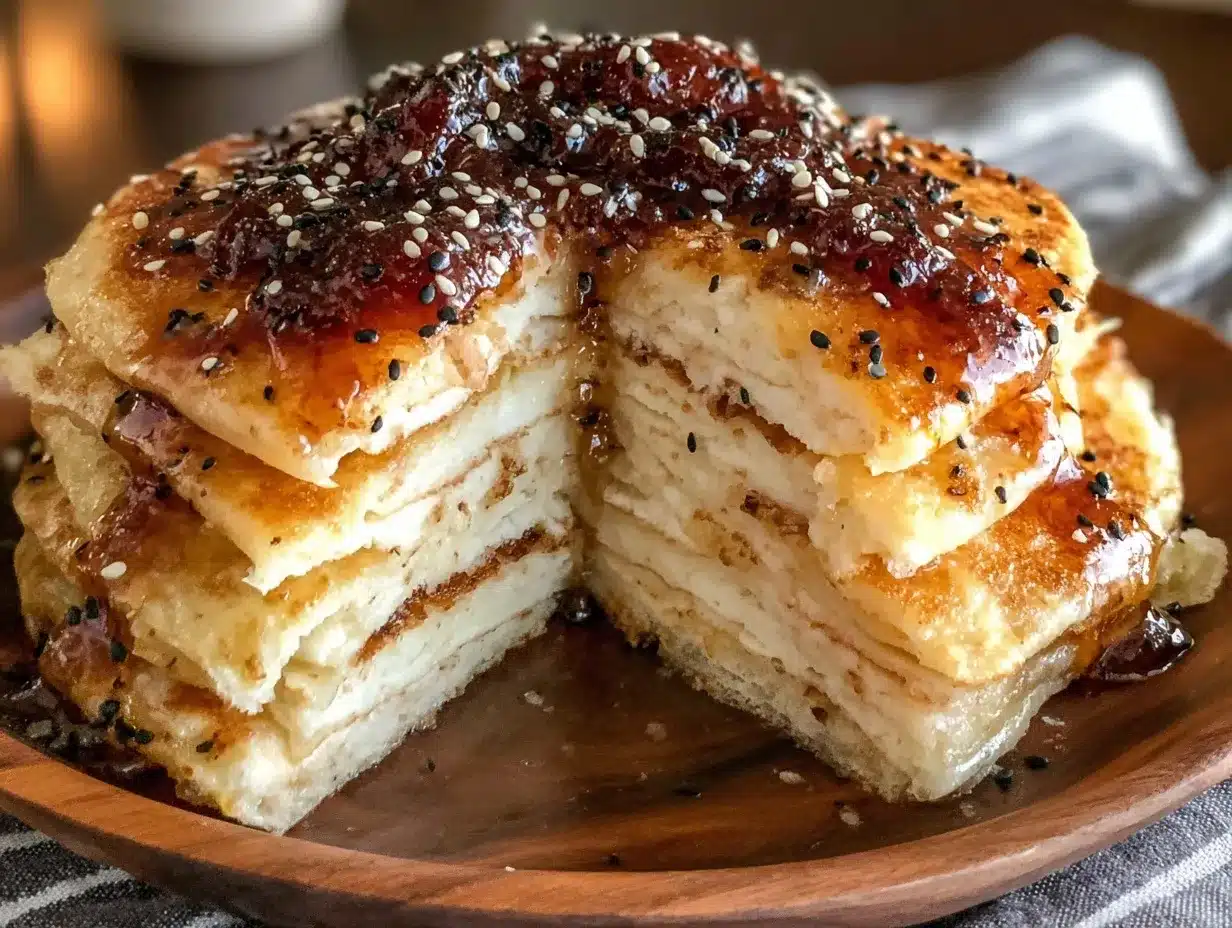
“You won’t believe what I stumbled upon at the little spice market tucked behind the old souk,” my friend Leila said, her eyes sparkling with excitement as she handed me a crumpled, flour-dusted recipe card. It was an impromptu visit last spring when I found myself wandering those narrow alleys of Sana’a, Yemen’s historic capital. The air was thick with the scent of cardamom and fresh bread, and amidst that sensory symphony, I was introduced to the magic of Delicious Yemeni Bint Al-Sahn Honey Butter Bread Layers with Nigella Seeds.
Honestly, I wasn’t expecting much at first. I mean, how special could a layered bread be? But as Leila carefully explained the art behind each buttery fold and the drizzle of golden honey that followed, I knew I’d be making this recipe for years to come. There’s something about the way the dough creates these airy, flaky layers, each kissed with fragrant nigella seeds, that feels both humble and outright luxurious.
Maybe you’ve been there—wandering a market, smelling something unfamiliar, and suddenly transported somewhere else entirely. That cracked recipe card, scribbled in a mix of Arabic and English, reminded me how food connects us. I got a bit messy trying to copy the technique on my first attempt (honestly, I forgot to grease my pan once), but the sweet, buttery bites made every little disaster worth it. This Bint Al-Sahn recipe isn’t just bread; it’s a little slice of Yemeni hospitality that I’m thrilled to share with you.
Why You’ll Love This Recipe
After making this Yemeni Bint Al-Sahn honey butter bread layers recipe several times, I can say it’s a kitchen winner, no doubt. The balance of simple ingredients with traditional technique means it’s accessible yet special.
- Quick & Easy: The dough comes together quickly, and while the layering takes a little patience, it’s well worth the effort—perfect if you want something impressive but not overwhelming.
- Simple Ingredients: You probably already have everything in your pantry—flour, butter, honey, and those aromatic nigella seeds.
- Perfect for Sharing: Whether it’s a cozy family breakfast or a welcoming gesture for guests, this bread brings people together.
- Crowd-Pleaser: I’ve seen even the pickiest eaters reach for seconds, especially when the honey melts into those flaky layers.
- Unbelievably Delicious: The texture is light, buttery, and slightly crisp on the outside, with a subtle hint of earthiness from the nigella seeds. It’s like a warm hug in bread form.
What sets this recipe apart? The secret is in the delicate layering and generous butter—each fold traps air and flavor, creating a texture that’s both crisp and tender. Plus, the nigella seeds aren’t just decoration; they add a unique, slightly peppery note that keeps things interesting.
Honestly, this isn’t just another honey bread—it’s a recipe that makes you pause, savor, and maybe even close your eyes after the first bite. You don’t need to be a bread expert to make it, but the results will make you feel like one.
What Ingredients You Will Need
This Bint Al-Sahn recipe uses straightforward, wholesome ingredients to create those signature flaky layers and that irresistible honey-butter finish. Most are pantry staples, and substitutions are simple if needed.
- All-purpose flour: 3 cups (360g) – For best results, use a trusted brand like King Arthur for consistent texture.
- Warm water: 1 cup (240ml) – Helps activate the dough and makes it soft.
- Active dry yeast: 2 tsp (7g) – The magic behind the bread’s rise.
- Sugar: 1 tbsp (12g) – Balances the honey sweetness and feeds the yeast.
- Salt: 1 tsp (5g) – Enhances flavor without overpowering.
- Unsalted butter: 1 cup (225g), melted – The key to those buttery layers. Use a high-quality butter like Plugrá for richness.
- Honey: ½ cup (120ml) – Drizzled on top for that classic Yemeni sweetness. Raw or wildflower honey works best.
- Nigella seeds: 2 tbsp (about 20g) – Also called black cumin seeds, these add a subtle peppery flavor and beautiful visual contrast.
- Optional: A pinch of ground cardamom or cinnamon can be added to the dough for a warm, spiced undertone.
If you’re gluten-free, you could try a gluten-free flour blend, but the texture won’t be quite the same. For a dairy-free option, swap the butter with coconut oil, though again, the flavor shifts slightly.
Equipment Needed
- Mixing bowl: Large enough to combine and let the dough rise comfortably.
- Whisk or fork: For activating yeast in water.
- Rolling pin: Essential for rolling out the thin layers of dough. If you don’t have one, a clean wine bottle works in a pinch!
- Nonstick or cast iron skillet: For cooking the bread layers evenly. I’ve found cast iron gives the best crispness.
- Basting brush: To generously apply melted butter between layers.
- Measuring cups and spoons: For accurate ingredient portions.
Personally, I love using a silicone pastry brush because it holds butter well and cleans easily. If you don’t have a cast iron skillet, a heavy-bottomed frying pan will do. Just keep an eye on the heat to avoid burning.
Preparation Method
- Activate the yeast: In a small bowl, combine 1 cup (240ml) warm water (about 110°F/43°C) with 1 tbsp (12g) sugar and 2 tsp (7g) active dry yeast. Stir gently and let sit for 5–10 minutes until foamy. If it doesn’t foam, your yeast might be old—start over with fresh yeast.
- Mix the dough: In a large mixing bowl, whisk together 3 cups (360g) all-purpose flour and 1 tsp (5g) salt. Gradually pour in the yeast mixture, stirring with a wooden spoon or your hand until a shaggy dough forms.
- Knead: Turn the dough onto a lightly floured surface and knead for about 8–10 minutes until smooth and elastic. The dough should be tacky but not sticky. If it sticks to your hands, lightly dust with flour.
- First rise: Place dough in a lightly oiled bowl, cover with a damp cloth or plastic wrap, and let rise in a warm spot for 1 to 1.5 hours, or until doubled in size.
- Divide and rest: Punch down the dough and divide into 6 equal balls (about 130g each). Cover and let rest for 15 minutes to relax the gluten, making rolling easier.
- Roll out layers: On a floured surface, roll each ball into a very thin circle (about 8 inches/20cm diameter). Brush each layer with melted butter generously, then sprinkle with a pinch of nigella seeds.
- Stack and cook: Stack the layers one on top of the other, keeping butter and nigella seeds between each. Heat your skillet over medium heat and carefully transfer the stack. Cook for 3–4 minutes on each side until golden and crisp. Press gently with a spatula to help layers meld.
- Honey drizzle: Remove from skillet and immediately pour ½ cup (120ml) honey over the top, letting it soak into every nook and cranny.
- Serve warm: Slice into wedges and enjoy while still warm for the best texture and flavor.
Pro tip: If the dough tears while rolling, just patch it with a little extra flour and reseal. The layering process is forgiving—don’t stress. Also, keep your butter melted but not hot, so it spreads easily without cooking the dough prematurely.
Cooking Tips & Techniques
Making Bint Al-Sahn is as much about the technique as the ingredients. Here are some tips I’ve picked up along the way:
- Patience with dough rest: Letting the dough rest after dividing is crucial. It relaxes the gluten, which means easier rolling and those beautiful, flaky layers.
- Butter temperature: Melted butter should be warm but not hot. If it’s too hot, it’ll start cooking the dough when you brush it on, which makes layering tougher.
- Layering is key: Be generous with butter and nigella seeds between each layer. It’s the secret to flaky, flavorful bread.
- Heat control: Use medium heat on your skillet to avoid burning. If you notice dark spots quickly forming, lower the heat.
- Don’t rush flipping: Let one side get golden and set before flipping to keep layers intact.
- Honey drizzle timing: Pour honey right after cooking while the bread is hot so it soaks in nicely.
I once tried skipping the second rest and ended up with a tough, not-so-flaky bread—lesson learned! Also, don’t underestimate nigella seeds; they add a subtle but unmistakable pop of flavor.
Variations & Adaptations
This recipe is wonderfully adaptable depending on your taste or dietary needs:
- Spiced Variation: Add ¼ tsp ground cardamom or cinnamon to the dough for a warm, aromatic twist. I love this version during cooler months.
- Whole Wheat Swap: Replace half the all-purpose flour with whole wheat flour for a nuttier flavor and extra fiber. The texture will be a little denser but still delicious.
- Vegan Option: Use coconut oil or vegan butter in place of unsalted butter, and swap honey with maple syrup or date syrup. The texture changes slightly but stays moist and tasty.
- Cooking Method: Instead of skillet cooking, you can bake the stacked layers at 375°F (190°C) for 15–20 minutes until golden and crisp. Just brush the top with butter before baking.
- Seed Substitutes: If you don’t have nigella seeds, black sesame seeds or toasted cumin seeds can offer a different but lovely flavor.
My favorite variation is adding a sprinkle of crushed pistachios on top with the honey drizzle—adds a delightful crunch and a bit of color. I highly recommend trying it when you want to impress without extra fuss.
Serving & Storage Suggestions
Bint Al-Sahn is best served warm, straight from the skillet, when the layers are tender and the honey glistens. It pairs beautifully with a cup of strong Yemeni coffee or spiced tea.
For a complete meal, offer alongside fresh fruit, labneh, or a simple yogurt dip to balance the sweetness.
To store leftovers, wrap the bread tightly in plastic wrap or place it in an airtight container. It keeps well at room temperature for up to 24 hours or refrigerated for 2–3 days. Reheat gently in a skillet over low heat or in a toaster oven to revive crispness.
Freezing is also an option—wrap well and freeze for up to a month. Thaw at room temperature and reheat before serving. Keep in mind, the honey-soaked layers might soften over time, but the flavor remains delightful.
Interestingly, the flavors tend to deepen after a few hours as the honey seeps more into the bread, so making it a few hours ahead can actually improve the experience if you don’t mind sacrificing some crispness.
Nutritional Information & Benefits
This Yemeni Bint Al-Sahn honey butter bread is an indulgent treat but also offers nourishment with its simple ingredients.
| Nutrient | Per Serving (1/6 of recipe) |
|---|---|
| Calories | 320 kcal |
| Carbohydrates | 38g |
| Fat | 16g |
| Protein | 5g |
| Sugar | 8g |
Key ingredients like honey offer antioxidants and natural sweetness without refined sugars. Nigella seeds are known for their anti-inflammatory properties and add a dose of fiber and minerals.
While this bread isn’t low-calorie, it’s made from recognizable, natural ingredients. For those mindful of gluten, remember this recipe contains wheat flour. However, it’s free from preservatives and artificial additives.
From my experience, enjoying this bread in moderation feels like a comforting, wholesome treat rather than an empty indulgence—a little piece of Yemeni tradition that nourishes both body and soul.
Conclusion
Making this Delicious Yemeni Bint Al-Sahn Honey Butter Bread Layers with Nigella Seeds recipe is more than just baking; it’s a way to connect with a rich culinary heritage and share something truly special with those around you.
Whether you stick to the classic method or try one of the fun variations, this recipe invites you to slow down, savor each layer, and appreciate the simple joy of homemade bread with a sweet twist.
I love this recipe because it’s approachable yet impressive, and every time I make it, I’m reminded of that bustling spice market and the warmth of Yemeni hospitality. I hope it finds a happy place in your kitchen, too.
If you give this recipe a try, please share your experience or any twists you added—I’d love to hear how your Bint Al-Sahn turned out!
Now, roll up your sleeves, grab that butter, and let’s make some magic happen.
FAQs
What is Bint Al-Sahn?
Bint Al-Sahn is a traditional Yemeni layered honey butter bread known for its flaky texture and sweet honey finish, often sprinkled with nigella seeds for added flavor.
Can I make Bint Al-Sahn without nigella seeds?
Yes, you can omit the nigella seeds or substitute them with black sesame or toasted cumin seeds, though the flavor will vary slightly from the traditional version.
How do I store leftover Bint Al-Sahn?
Wrap leftovers tightly and store at room temperature for up to 24 hours or in the refrigerator for 2–3 days. Reheat gently in a skillet or toaster oven before serving.
Is Bint Al-Sahn gluten-free?
Traditional Bint Al-Sahn is made with wheat flour and is not gluten-free. You could try gluten-free flour blends, but the texture won’t be quite the same.
Can I prepare the dough in advance?
Yes! You can prepare the dough and refrigerate it overnight. Bring it to room temperature before rolling and layering for best results.
Pin This Recipe!
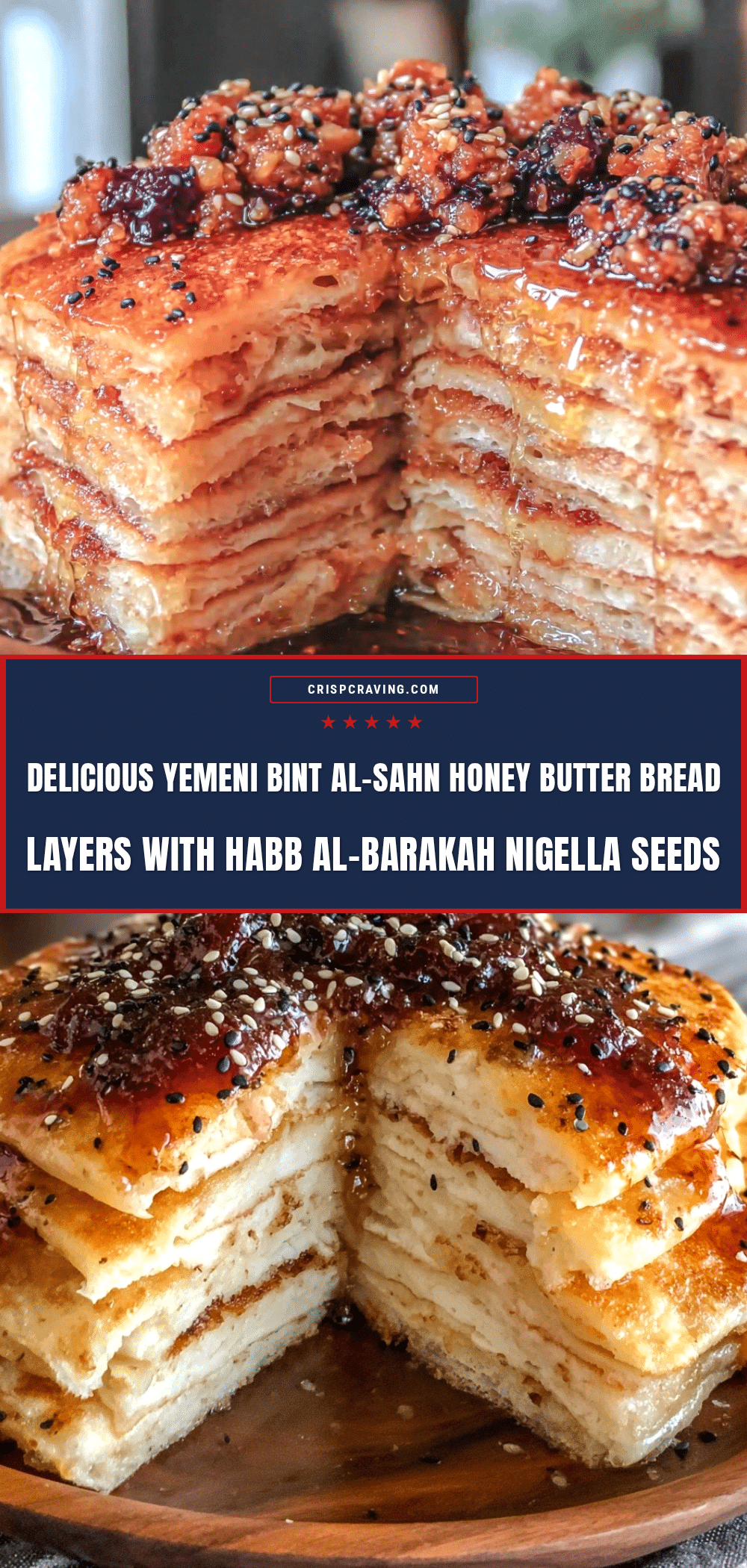
Delicious Yemeni Bint Al-Sahn Honey Butter Bread Layers with Nigella Seeds
A traditional Yemeni layered honey butter bread known for its flaky texture and sweet honey finish, sprinkled with aromatic nigella seeds. This recipe is approachable yet impressive, perfect for sharing and enjoying warm.
- Prep Time: 20 minutes
- Cook Time: 15 minutes
- Total Time: 1 hour 35 minutes
- Yield: 6 servings 1x
- Category: Bread
- Cuisine: Yemeni
Ingredients
- 3 cups (360g) all-purpose flour
- 1 cup (240ml) warm water (about 110°F/43°C)
- 2 tsp (7g) active dry yeast
- 1 tbsp (12g) sugar
- 1 tsp (5g) salt
- 1 cup (225g) unsalted butter, melted
- ½ cup (120ml) honey
- 2 tbsp (about 20g) nigella seeds
- Optional: pinch of ground cardamom or cinnamon
Instructions
- Activate the yeast: In a small bowl, combine 1 cup warm water (about 110°F/43°C) with 1 tbsp sugar and 2 tsp active dry yeast. Stir gently and let sit for 5–10 minutes until foamy.
- Mix the dough: In a large mixing bowl, whisk together 3 cups all-purpose flour and 1 tsp salt. Gradually pour in the yeast mixture, stirring until a shaggy dough forms.
- Knead: Turn the dough onto a lightly floured surface and knead for about 8–10 minutes until smooth and elastic. The dough should be tacky but not sticky.
- First rise: Place dough in a lightly oiled bowl, cover with a damp cloth or plastic wrap, and let rise in a warm spot for 1 to 1.5 hours, or until doubled in size.
- Divide and rest: Punch down the dough and divide into 6 equal balls (about 130g each). Cover and let rest for 15 minutes.
- Roll out layers: On a floured surface, roll each ball into a very thin circle (about 8 inches diameter). Brush each layer generously with melted butter and sprinkle with a pinch of nigella seeds.
- Stack and cook: Stack the layers one on top of the other, keeping butter and nigella seeds between each. Heat a skillet over medium heat and cook the stack for 3–4 minutes on each side until golden and crisp, pressing gently with a spatula.
- Honey drizzle: Remove from skillet and immediately pour ½ cup honey over the top, letting it soak in.
- Serve warm: Slice into wedges and enjoy while still warm.
Notes
If the dough tears while rolling, patch with extra flour and reseal. Use warm but not hot melted butter to avoid cooking the dough prematurely. Cook on medium heat to prevent burning and flip only when one side is golden and set. Pour honey immediately after cooking while bread is hot for best absorption. Dough can be prepared in advance and refrigerated overnight.
Nutrition
- Serving Size: 1/6 of the recipe (1
- Calories: 320
- Sugar: 8
- Fat: 16
- Carbohydrates: 38
- Protein: 5
Keywords: Bint Al-Sahn, Yemeni bread, honey butter bread, nigella seeds, layered bread, traditional Yemeni recipe, flaky bread, easy bread recipe