Love this? Save it for later!
Share the inspiration with your friends
“I wasn’t expecting much when I stopped by the little roadside farm stand last July,” I said to myself, juggling a basket of sun-ripened tomatoes and a slightly squished cucumber. See, it was one of those blazing hot afternoons where the idea of cooking felt like climbing a mountain. Honestly, I just wanted something light but filling enough to get me through the day without crashing. That’s when the vendor, a cheerful woman named June, started telling me about her “volume eating” salads — big, crunchy, colorful bowls packed with fresh veggies that somehow left you full without weighing you down. I was skeptical at first, but she handed me a small scoop of this vibrant, zesty salad she called “Summer Crunch.” The first bite was such a surprise — crisp, juicy, and deeply satisfying. I mean, sure, I’ve tasted salads before, but this had a different kind of staying power. Maybe you’ve been there too, craving something fresh yet filling when the last thing you want is a heavy meal. Since that day, I’ve been experimenting with volume eating summer salads, turning June’s wisdom into easy, delicious recipes that anyone can whip up — no stress, no fuss, just fresh flavors and that wonderful full feeling. And yes, there was a minor kitchen disaster the first time I tried to make the dressing (who knew lemons could slip so dramatically off a cutting board?), but hey, it all adds to the charm. These salads stuck with me because they’re perfect for those hot days when you want to eat well and feel good. Let me tell you, once you get the hang of them, they become your summer staples.”
Why You’ll Love This Recipe
After testing these fresh volume eating summer salads over countless lunches and dinners, I can confidently say they’re a game-changer for anyone looking to enjoy light yet satisfying meals. Here’s why these salads stand out:
- Quick & Easy: Each salad comes together in under 20 minutes, perfect for those busy summer afternoons or last-minute meal prep.
- Simple Ingredients: No need for fancy or hard-to-find items—most ingredients are pantry staples or easy to source at local markets.
- Perfect for Summer: These salads showcase seasonal produce at their peak, making them ideal for backyard picnics, potlucks, or cooling off after a day in the sun.
- Crowd-Pleaser: Whether you’re feeding kids, friends, or picky eaters, the textures and flavors always get rave reviews.
- Unbelievably Delicious: The balance of crunchy veggies, fresh herbs, and tangy dressings creates a taste combo that’s both refreshing and hearty.
What sets these recipes apart? It’s the volume eating philosophy—filling your plate with plenty of fiber-rich, water-packed veggies that bulk up the salad without extra calories. For example, blending creamy avocado into the dressing adds richness without heaviness, while a sprinkle of toasted seeds brings in crunch and healthy fats. Honestly, this approach isn’t just about nutrition; it’s about feeling full and happy after every bite. If you want to impress guests or simply enjoy a meal that feels like a treat without the guilt, these salads will become your go-to. Plus, they’re a brilliant way to sneak more greens into your day without ever feeling like you’re eating rabbit food.”
What Ingredients You Will Need
These fresh volume eating summer salads rely on wholesome, vibrant ingredients that come together effortlessly. Most are easy to find in your local grocery or farmer’s market. Here’s a breakdown grouped by their roles in the recipes:
- Fresh Vegetables and Greens:
- English cucumber, thinly sliced (adds crispness and hydration)
- Cherry tomatoes, halved (burst of sweetness)
- Bell peppers, assorted colors, diced (for vibrant crunch)
- Romaine or butter lettuce, torn into bite-sized pieces (base for volume)
- Shredded carrots (natural sweetness and texture)
- Radishes, thinly sliced (peppery bite)
- Fresh herbs like parsley, mint, or cilantro (aromatic freshness)
- Proteins & Add-ins:
- Cooked chickpeas or black beans (fiber and protein boost)
- Feta cheese, crumbled (salty creaminess; use dairy-free feta if needed)
- Toasted pumpkin or sunflower seeds (nutty crunch and healthy fats)
- Avocado, diced or mashed (adds creaminess and richness)
- Cooked quinoa or bulgur wheat (optional for extra bulk and protein)
- Dressings and Flavor Enhancers:
- Extra virgin olive oil (I prefer Colavita for its smooth flavor)
- Fresh lemon juice (bright acidity)
- Apple cider vinegar or balsamic vinegar (depth and tang)
- Dijon mustard (emulsifies dressing and adds zing)
- Honey or maple syrup (balances acidity; optional)
- Garlic, minced (punch of flavor)
- Salt and freshly cracked black pepper
Seasonal swaps work beautifully here — in summer, fresh berries or grilled corn can sneak in for a sweet crunch. For gluten-free options, skip bulgur and load up on quinoa or beans. And if you’re allergic to nuts or seeds, toasted oats or crispy chickpeas can offer a similar texture. The key is fresh, bright ingredients that fill your plate and your belly.
Equipment Needed
- A large mixing bowl – to toss all your salad ingredients without making a mess. Honestly, a big, sturdy ceramic or glass bowl works best here.
- Sharp chef’s knife – crucial for slicing veggies thinly, especially cucumbers and radishes. I keep my knife razor-sharp with a quick hone before starting.
- Cutting board – preferably wood or plastic, cleaned well to avoid cross-flavors.
- Measuring spoons and cups – for precise dressing measurements. Eyeballing works too, but I find this keeps the balance just right.
- Whisk or fork – to blend vinaigrette ingredients smoothly.
- Salad spinner (optional) – helps dry leafy greens thoroughly, which keeps your salad from getting soggy. If you don’t have one, patting dry with paper towels works fine.
If you don’t have a salad spinner, no worries! I once used a clean kitchen towel to wring out greens, and it worked like a charm—just be gentle. For budget-friendly options, many stores carry inexpensive plastic salad bowls with lids that double as spinners. Also, a good-quality knife really makes prep faster and safer, so it’s worth investing in one you love.
Preparation Method
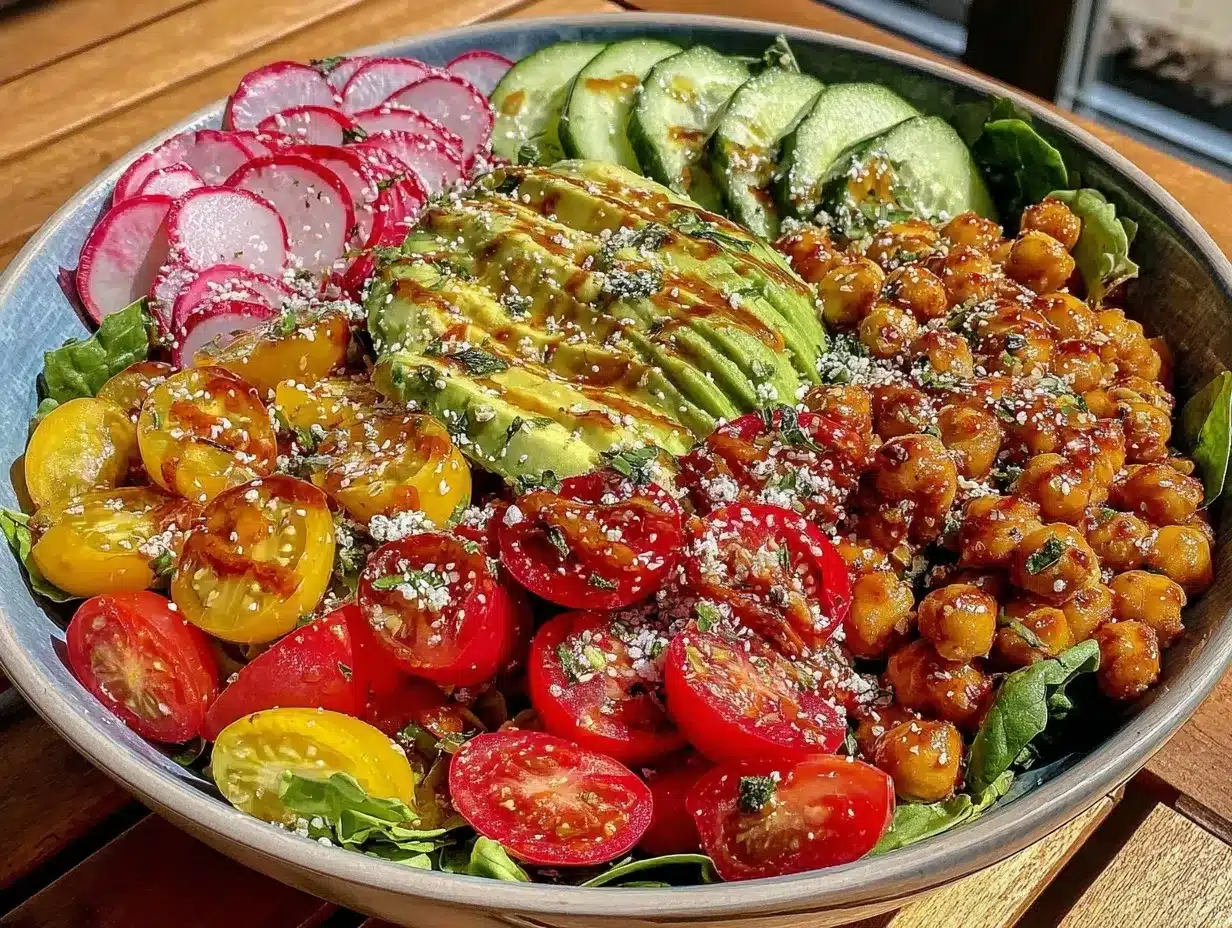
- Prepare the Vegetables (10 minutes): Wash all veggies thoroughly. Use a sharp knife to thinly slice cucumbers and radishes, halve cherry tomatoes, and dice bell peppers. Tear lettuce into bite-sized pieces. Tip: Keep veggies uniform in size for even mixing and texture. If using carrots, shred them finely using a box grater or food processor attachment.
- Toast the Seeds (5 minutes): Heat a dry skillet over medium heat. Add pumpkin or sunflower seeds and toast, stirring frequently, until lightly browned and fragrant (about 3-4 minutes). Watch closely to avoid burning. Set aside to cool.
- Cook Optional Grains or Beans (if using) (15-20 minutes): Rinse quinoa or bulgur wheat under cold water. Cook according to package directions—usually about 15 minutes for quinoa, 12 minutes for bulgur. Drain any excess water and fluff with a fork. If using canned beans, rinse and drain them thoroughly.
- Make the Dressing (5 minutes): In a small bowl, whisk together 3 tablespoons (45 ml) of extra virgin olive oil, 2 tablespoons (30 ml) fresh lemon juice, 1 teaspoon (5 ml) Dijon mustard, 1 teaspoon (5 ml) honey or maple syrup (optional), minced garlic clove, and salt and pepper to taste. Adjust acidity by adding a splash more lemon or vinegar if needed. The dressing should be bright and balanced, not too oily or sharp.
- Toss the Salad (5 minutes): In your large mixing bowl, combine all prepared veggies, grains, beans, and herbs. Drizzle with dressing and toss gently but thoroughly until everything is evenly coated. Taste and adjust seasoning—sometimes a pinch more salt or pepper makes all the difference.
- Add Final Touches (2 minutes): Sprinkle crumbled feta and toasted seeds over the top just before serving for texture contrast. For extra creaminess, add diced avocado on the side or fold it in gently if serving immediately.
- Serve or Chill: Serve right away at room temperature or chill for 15-30 minutes to let flavors meld. If chilling, keep dressing separate until just before serving to avoid sogginess.
Quick tip: If you’re prepping ahead, keep wet ingredients separate and add just before eating. Also, let your knife do the work—don’t rush chopping or you might end up with bruised veggies. I once distractedly chopped while on a phone call and, well, let’s say the uneven pieces were a little quirky but still tasty!
Cooking Tips & Techniques
Making fresh summer salads that truly fill you up is about more than just tossing ingredients together. Here are some kitchen-tested tips to get the best results:
- Use crisp, fresh veggies: The crunch factor is key to volume eating. Stale or wilted greens won’t hold up well, so always pick the freshest you can find.
- Balance textures: Combine crunchy (cucumbers, radishes), soft (avocado, beans), and creamy (feta, dressing) elements to keep every bite interesting.
- Don’t overdress: Too much dressing can weigh down the salad and make it soggy. Start with less and add more if needed. The goal is a light coating that enhances, not drowns.
- Toast seeds or nuts: This step might seem small but adds a whole new layer of flavor and crunch. I’ve skipped it before and always felt like the salad missed a little something.
- Chill ingredients when possible: Cold veggies and dressing come together nicely for a refreshing bite, especially on hot days.
- Prep efficiently: I like to chop all veggies first, then make the dressing, and finally toss everything. It keeps the process smooth and mess-free.
- Layer flavors: Fresh herbs are your friend—they brighten the salad and add complexity. Don’t skimp!
One time, I forgot to toast the seeds and it felt like the salad was missing that final crunch punch. Lesson learned: don’t skip steps you think are optional. Also, keep your knives sharp and cut veggies uniformly for the best texture and appearance. And honestly, don’t stress if things aren’t perfect—salads are forgiving and deliciously flexible.
Variations & Adaptations
One of the best things about fresh volume eating summer salads is how easily you can tweak them to suit your tastes or dietary needs. Here are some of my favorite ways to mix things up:
- Protein Boost: Swap chickpeas for grilled chicken, shrimp, or tofu to turn the salad into a full meal. For a vegetarian option, add hard-boiled eggs or tempeh cubes.
- Seasonal Flavors: In early fall, try roasted sweet potatoes or apples for a cozy twist. Summer berries like blueberries or raspberries add a sweet pop. I once added grilled peaches to one salad and it was heavenly.
- Dressings: Try a creamy Greek yogurt-based dressing instead of vinaigrette for a tangier, richer flavor. Or use tahini and lemon for a nutty, Middle Eastern vibe.
- Grain-Free: Skip quinoa or bulgur for a lower-carb version, and bulk up with extra veggies and seeds instead.
- Allergen-Friendly: Use dairy-free cheeses or omit cheese altogether. Substitute nuts and seeds with crispy chickpeas if allergies are a concern.
I once made a version inspired by Mediterranean flavors with kalamata olives, sun-dried tomatoes, and a drizzle of balsamic glaze — my guests couldn’t get enough! Feel free to experiment with whatever fresh produce you have on hand. The beauty of these salads is their flexibility and the way they adapt to your pantry.
Serving & Storage Suggestions
These fresh summer salads are best enjoyed chilled or at room temperature. Serve them as a light main course or a vibrant side dish alongside grilled meats or crispy garlic chicken for a balanced meal.
Presentation-wise, layering the salad in clear glass bowls or colorful ceramic dishes really makes the bright veggies pop. Sprinkle a few extra fresh herbs or a wedge of lemon on the side to invite guests to customize their bowls.
To store leftovers, transfer the salad to an airtight container and keep it in the refrigerator for up to 2 days. If you added avocado or cheese, it’s best to eat it sooner. Keep any extra dressing separate until ready to serve to avoid sogginess.
When reheating isn’t an option, you can give the salad a quick toss to refresh the flavors. I’ve noticed that flavors actually deepen and meld beautifully after a few hours in the fridge — just don’t let it sit too long or the greens start to lose their snap.
Nutritional Information & Benefits
These fresh volume eating summer salads are packed with fiber, vitamins, and minerals while being relatively low in calories. A typical serving provides approximately:
| Calories | Protein | Fat | Carbohydrates | Fiber |
|---|---|---|---|---|
| 250-300 kcal | 8-12 g | 12-15 g | 25-30 g | 7-10 g |
Key health benefits come from the fiber-rich vegetables and beans that support digestion and satiety. Healthy fats from olive oil, avocado, and seeds contribute to heart health and nutrient absorption. These salads fit well into gluten-free, vegetarian, and low-sugar eating plans, though some variations include grains or cheese. If you have allergies to nuts or dairy, simple swaps keep these salads both safe and satisfying.
Personally, I find these salads nourish my body and keep me energized on sweltering days without the sluggish feeling heavy meals bring. They’re perfect for mindful eating that doesn’t sacrifice flavor or fullness.
Conclusion
Fresh volume eating summer salads are one of those rare recipes that combine simplicity, nutrition, and deliciousness all in one bowl. They’re quick to prepare, use everyday ingredients, and keep you feeling full and refreshed even on the hottest days. Whether you’re looking for a solo lunch, a picnic dish, or something to share with friends, these salads fit the bill beautifully.
Don’t hesitate to customize the recipes to your liking—swap veggies, add your favorite proteins, or try new dressings. I love these salads because they remind me of that unexpected roadside stand and the joy of discovering something fresh and satisfying on a lazy summer afternoon. Honestly, once you try them, you’ll see why they keep showing up in my kitchen.
If you make any of these salads, I’d love to hear how you tweaked them or what your favorite combo is! Drop a comment below and share your thoughts — it’s always fun to swap salad stories.
FAQs
What is volume eating and how does it help with feeling full?
Volume eating focuses on consuming foods that have low calories but high volume, like fresh vegetables and fruits. This approach helps fill your stomach without excess calories, leading to better satiety and weight management.
Can I prepare these salads ahead of time?
Yes, you can prep most ingredients a day ahead. Keep dressings separate and add just before serving to prevent sogginess. Store chopped veggies and greens in airtight containers in the fridge.
Are these salads suitable for gluten-free diets?
Absolutely. Just omit grains like bulgur or swap with gluten-free options like quinoa to keep the salads gluten-free.
How do I keep the salad from getting soggy if I pack it for lunch?
Pack the dressing separately and add it only when ready to eat. Keep wetter ingredients like tomatoes away from leafy greens until serving.
Can I add cooked proteins like chicken or tofu to these salads?
Definitely! Adding grilled chicken, tofu, or boiled eggs can turn these salads into a more substantial meal while keeping the fresh, light feel.
Pin This Recipe!
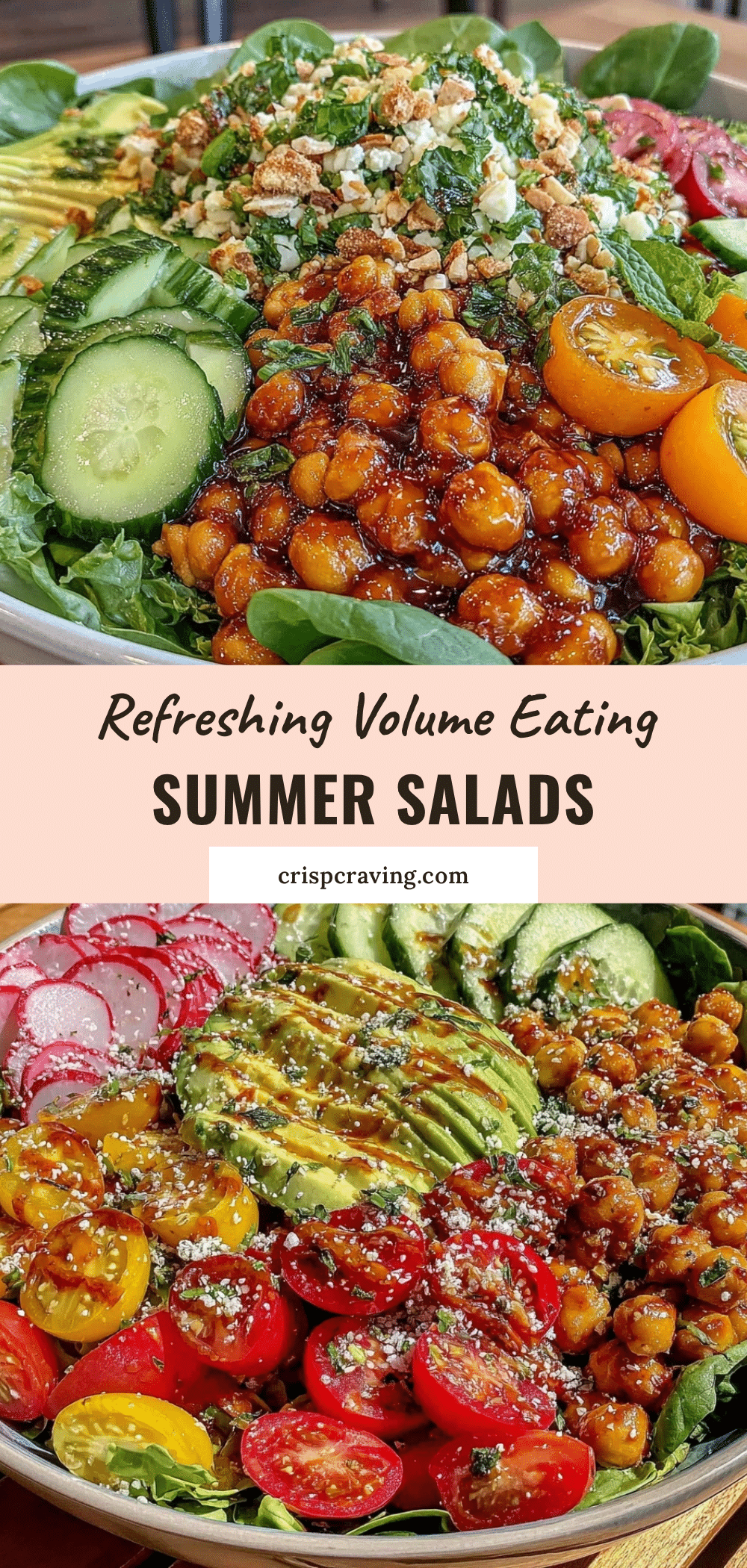
Fresh Volume Eating Summer Salads
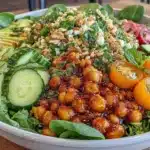
These fresh volume eating summer salads are light, filling, and packed with fiber-rich, water-packed veggies that keep you full without weighing you down. Perfect for hot days, they come together quickly with simple, seasonal ingredients.
- Prep Time: 10 minutes
- Cook Time: 20 minutes
- Total Time: 30 minutes
- Yield: 4 servings
- Category: Main Course, Salad
- Cuisine: American, Summer
Ingredients
- English cucumber, thinly sliced
- Cherry tomatoes, halved
- Bell peppers, assorted colors, diced
- Romaine or butter lettuce, torn into bite-sized pieces
- Shredded carrots
- Radishes, thinly sliced
- Fresh herbs like parsley, mint, or cilantro
- Cooked chickpeas or black beans
- Feta cheese, crumbled (use dairy-free feta if needed)
- Toasted pumpkin or sunflower seeds
- Avocado, diced or mashed
- Cooked quinoa or bulgur wheat (optional)
- Extra virgin olive oil
- Fresh lemon juice
- Apple cider vinegar or balsamic vinegar
- Dijon mustard
- Honey or maple syrup (optional)
- Garlic, minced
- Salt and freshly cracked black pepper
Instructions
- Prepare the Vegetables (10 minutes): Wash all veggies thoroughly. Thinly slice cucumbers and radishes, halve cherry tomatoes, dice bell peppers, and tear lettuce into bite-sized pieces. Shred carrots finely if using.
- Toast the Seeds (5 minutes): Heat a dry skillet over medium heat. Add pumpkin or sunflower seeds and toast, stirring frequently, until lightly browned and fragrant (about 3-4 minutes). Set aside to cool.
- Cook Optional Grains or Beans (if using) (15-20 minutes): Rinse quinoa or bulgur wheat under cold water. Cook according to package directions (about 15 minutes for quinoa, 12 minutes for bulgur). Drain and fluff with a fork. Rinse and drain canned beans if using.
- Make the Dressing (5 minutes): Whisk together 3 tablespoons extra virgin olive oil, 2 tablespoons fresh lemon juice, 1 teaspoon Dijon mustard, 1 teaspoon honey or maple syrup (optional), minced garlic, and salt and pepper to taste. Adjust acidity as needed.
- Toss the Salad (5 minutes): In a large mixing bowl, combine all prepared veggies, grains, beans, and herbs. Drizzle with dressing and toss gently until evenly coated. Taste and adjust seasoning.
- Add Final Touches (2 minutes): Sprinkle crumbled feta and toasted seeds over the top. Add diced avocado on the side or fold in gently if serving immediately.
- Serve or Chill: Serve immediately at room temperature or chill for 15-30 minutes to let flavors meld. Keep dressing separate if chilling to avoid sogginess.
Notes
Keep dressing separate if preparing ahead to avoid sogginess. Toast seeds for added crunch and flavor. Use fresh, crisp vegetables for best texture. Adjust dressing acidity to taste. Substitute proteins or grains to suit dietary needs.
Nutrition
- Serving Size: 1 salad bowl (approx
- Calories: 275
- Sugar: 6
- Sodium: 350
- Fat: 13.5
- Saturated Fat: 2.5
- Carbohydrates: 27.5
- Fiber: 8.5
- Protein: 10
Keywords: summer salad, volume eating, fresh salad, healthy salad, light meal, fiber-rich, gluten-free, vegetarian, easy salad recipe