Love this? Save it for later!
Share the inspiration with your friends
“You wouldn’t believe the pile of zucchini I found behind the shed last Saturday,” my neighbor Jenna chuckled as she handed me a basket overflowing with the green beauties. It was one of those mornings where the garden seemed to have a mind of its own—bursting at the seams with fresh produce, and me scrambling to figure out how not to waste a single bite. Honestly, I wasn’t sure what to do with the mountain of tomatoes, kale, and carrots crowding my countertops, but that’s when the magic happens. You know that feeling when you look at all those veggies and think, “Okay, challenge accepted”? That’s exactly how this collection of Wholesome Garden Harvest Glut Meal Ideas for Every Season came to life.
Last fall, the unexpected overflow from my community garden plot had me improvising every night. I made soups thick enough to spoon out with a loaf of crusty bread, tossed vibrant salads that made even the pickiest eaters smile, and baked savory tarts filled with whatever was on hand. I even managed to sneak in a few moments of calm amidst the kitchen chaos, despite dropping a jar of homemade pesto on the floor (don’t ask!). Maybe you’ve been there—facing a fridge full of fresh gifts from the earth and wondering how to turn it all into simple, satisfying meals that feel both nourishing and exciting.
What stuck with me was how these recipes, born from a glut of garden goodness, weren’t just about using up ingredients—they were about celebrating the seasons, the rhythms of planting and harvest, and the pure joy of sharing wholesome food with those around you. So whether you’re staring down a basket of eggplants in summer or a pile of root vegetables in winter, I promise these meal ideas will inspire you to cook with confidence and a little creativity. Let me tell you, these dishes have become my go-to when the harvest is abundant and the days get busy. They’re the kind of meals that make you close your eyes after the first bite, savoring the simple, honest flavors that come from the garden’s best.
Why You’ll Love This Recipe
After countless experiments with garden glut meals (and a few kitchen misfires), I’ve crafted these recipes to make the most of whatever your garden—or farmer’s market—gives you. Here’s why I think you’ll fall for these dishes as much as I have:
- Quick & Easy: Each meal idea comes together in under 45 minutes, perfect for busy weeknights or those surprise veggie overloads.
- Simple Ingredients: No need for exotic spices or specialty stores; these recipes rely on pantry staples and fresh garden finds you already have.
- Perfect for Every Season: From crisp spring greens to hearty winter roots, these meal ideas flex with whatever is fresh and abundant.
- Crowd-Pleaser: Whether it’s a family dinner or a casual potluck, these dishes consistently earn rave reviews — even from the “I’m-picky-about-my-veggies” crowd.
- Unbelievably Delicious: The balance of textures and flavors—from savory to subtly sweet—brings out the best in every ingredient.
What sets these recipes apart? It’s the little touches that make each dish sing—like roasting vegetables to caramelized perfection or blending fresh herbs into a vibrant sauce. I’ve tested these meals over and over, tweaking seasonings and techniques to bring out the freshest, most natural flavors without fuss. Honestly, it’s not just food; it’s comfort and creativity rolled into one, perfect for those moments when your garden’s bounty feels a bit overwhelming but also completely inspiring.
What Ingredients You Will Need
These wholesome garden harvest glut meal ideas use straightforward, wholesome ingredients that highlight fresh produce and easy pantry basics. You’ll find that most ingredients are staples or easy to swap based on what’s in season or what’s lurking in your fridge.
- Fresh Vegetables: zucchini, eggplant, tomatoes, kale, spinach, carrots, bell peppers, green beans, beets, onions, garlic, potatoes, sweet potatoes
- Herbs & Greens: basil, parsley, thyme, rosemary, chives, mint (fresh is best for bright flavor)
- Pantry Staples: olive oil (I like Colavita for its rich flavor), sea salt, black pepper, dried oregano, cumin, smoked paprika
- Proteins: canned beans (chickpeas, cannellini, black beans), eggs, feta or goat cheese (optional, adds creaminess)
- Grains & Breads: quinoa, brown rice, crusty bread for serving (sourdough works wonders here)
- Nuts & Seeds: toasted pine nuts or sunflower seeds for garnish and crunch
- Extras: lemon juice (freshly squeezed for brightness), balsamic vinegar, honey or maple syrup (just a touch to balance acidity)
These ingredients come together to create meals that are colorful, nutritious, and deeply satisfying. If you want to switch things up, try almond flour for a gluten-free option in baked dishes or swap Greek yogurt with coconut yogurt for a dairy-free twist. And here’s a little tip: when buying tomatoes, I always pick firm, ripe ones with a little give to the touch—that’s where the flavor hides.
Equipment Needed
- Large mixing bowls – for tossing veggies and mixing ingredients
- Baking sheets or roasting pans – roasting is key to bringing out deep flavors
- Sharp chef’s knife – makes chopping a breeze and safer
- Cutting board – I prefer wooden boards for veggies; they’re gentle on knives
- Medium saucepan – for cooking grains or simmering sauces
- Non-stick skillet or sauté pan – useful for quick cooking or wilting greens
- Measuring cups and spoons – to keep seasoning balanced (though eyeballing works once you get comfortable!)
- Optional: food processor – great for making herb sauces or quick pestos
If you don’t have a food processor, no worries—finely chopping herbs with a knife works just as well (and feels kind of therapeutic). For roasting pans, a rimmed baking sheet works perfectly, and if you’re on a budget, glass or ceramic dishes can double as roasting trays. Keeping your knives sharp makes prepping these meals faster and safer, so a quick hone before you start will save you some frustration.
Preparation Method
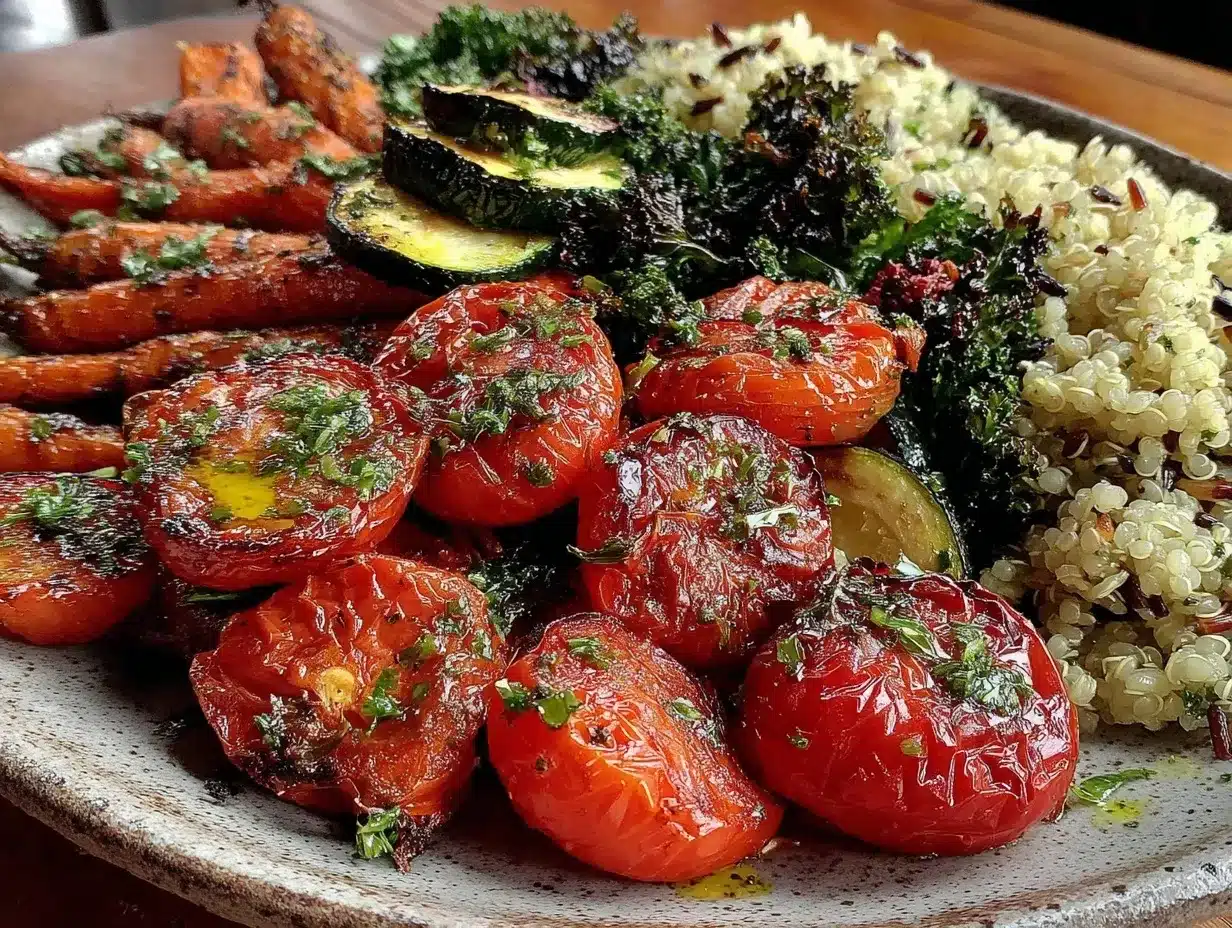
- Preheat your oven to 400°F (200°C). This temperature is just right for roasting root veggies and getting that lovely caramelization.
- Wash and chop your vegetables. Cut zucchini, eggplant, and bell peppers into roughly 1-inch pieces. Slice carrots and potatoes into similar sizes so they cook evenly. For leafy greens like kale or spinach, roughly chop and set aside.
- Toss the chopped veggies with 2–3 tablespoons of olive oil, 1 teaspoon of sea salt, ½ teaspoon black pepper, and your choice of herbs (rosemary and thyme work beautifully here). Spread them out evenly on your baking sheet to avoid steaming.
- Place the vegetables in the oven and roast for 25–30 minutes, flipping halfway through. Look for golden edges and a tender bite—this is when the flavors really deepen.
- While the veggies roast, prepare your grain base. Rinse 1 cup (190 g) of quinoa or brown rice and cook according to package instructions—usually about 15 minutes for quinoa, 40 minutes for brown rice. Fluff with a fork once done.
- If using beans, drain and rinse 1 can (15 oz/425 g) of chickpeas or black beans. Sauté them lightly with garlic and cumin in a skillet for 5 minutes, adding a pinch of salt and pepper.
- Make a simple herb sauce or dressing. In a small bowl, whisk 2 tablespoons olive oil, juice of half a lemon, a teaspoon of honey or maple syrup, and finely chopped fresh herbs like basil and parsley. Adjust seasoning to taste.
- Combine everything. In a large bowl, mix the roasted vegetables, cooked grains, sautéed beans, and drizzle with the herb dressing. Toss gently so the ingredients mingle without breaking down.
- Optional step: Crumble feta or goat cheese over the top and sprinkle toasted pine nuts or sunflower seeds for texture contrast.
- Serve warm or at room temperature. These meals hold up well, making them perfect for leftovers or packed lunches.
Pro tip: If your roasted veggies start to brown too quickly, tent loosely with foil and check every 5 minutes. And don’t forget to taste as you go—adjust the dressing or seasoning after mixing to get that perfect balance.
Cooking Tips & Techniques
Roasting vegetables is honestly my favorite way to coax out deep flavors with minimal effort. The trick is to avoid overcrowding the pan—give each piece room to breathe so it crisps instead of steams. You know that sound when the veggies hit a hot pan or oven tray? That’s the sizzle of flavor developing, so don’t rush it.
When working with leafy greens like kale, quick sautéing or massaging (yes, massaging!) with a bit of lemon juice and olive oil softens them just enough without losing that fresh bite. I learned this the hard way after a batch of kale salad that was way too tough to enjoy.
For grains, rinsing quinoa thoroughly removes its natural bitterness, making for a cleaner, nuttier flavor. And trust me, using good quality olive oil makes a noticeable difference—not just in taste but in the mouthfeel.
Timing can be your best friend here. While the veggies roast, get your grains cooking and prep the beans or proteins. Multitasking in the kitchen is a dance, but with practice, it feels less like juggling and more like a smooth rhythm.
Variations & Adaptations
- Seasonal Swaps: Swap zucchini and tomatoes in summer for Brussels sprouts and sweet potatoes in fall or winter. Root veggies roast beautifully and add a cozy, earthy flavor.
- Protein Variations: Add grilled chicken, pan-seared tofu, or even a fried egg on top for extra protein. I once tossed in leftover shredded rotisserie chicken, and it was a game-changer for a quick dinner.
- Flavor Twists: Try adding a spoonful of harissa or a sprinkle of smoked paprika for a smoky, spicy kick. Or mix in some fresh ginger and soy sauce for an Asian-inspired flair.
- Allergen-Friendly Options: For nut allergies, swap pine nuts for toasted pumpkin seeds. For dairy-free, skip the cheese or use a plant-based alternative.
One personal favorite variation I tried last summer was mixing in roasted corn kernels and fresh basil to the grain bowl, which added a sweet pop that balanced the savory elements beautifully.
Serving & Storage Suggestions
These garden harvest meals are best served warm or at room temperature, making them perfect for casual family dinners or picnic-friendly dishes. I like to plate them with a sprinkle of fresh herbs and a drizzle of extra virgin olive oil just before serving for that final touch of freshness.
They pair beautifully with a crisp white wine or a refreshing iced herbal tea, depending on your mood and occasion. For a heartier meal, serve alongside a light soup or a simple green salad.
Store leftovers in airtight containers in the refrigerator for up to 4 days. The flavors actually deepen overnight, making for even tastier next-day lunches. To reheat, microwave gently or warm in a skillet with a splash of water or broth to keep things moist.
Nutritional Information & Benefits
This recipe is naturally packed with fiber, vitamins, and antioxidants thanks to the variety of fresh vegetables. The combination of complex carbs from quinoa or brown rice and plant-based protein from beans makes it balanced and sustaining. It’s also easy to adjust for gluten-free or vegetarian diets.
Using olive oil and fresh herbs adds heart-healthy fats and anti-inflammatory benefits, while the seasonal vegetables provide a wide range of nutrients that support overall wellness. Personally, I find these meals give me steady energy without that heavy, sluggish feeling some dishes leave behind.
Conclusion
Whether you’re blessed with a garden glut or just want to celebrate seasonal produce in a simple and satisfying way, these wholesome garden harvest glut meal ideas are here to rescue your kitchen and your taste buds. I love how flexible they are—you can tailor them to whatever’s fresh, whatever you have on hand, and whatever your mood calls for. Honestly, these recipes have become a kitchen staple for me, turning abundant harvests into meals that feel like a warm hug.
Give these ideas a try, and don’t be afraid to make them your own. I’d love to hear how you adapt them or what veggies you’ve included in your version. Share your thoughts and stories in the comments—let’s keep celebrating the joy of cooking with fresh, wholesome ingredients together!
Frequently Asked Questions
What can I do if I have too many zucchinis or tomatoes from my garden?
Roasting or sautéing them with herbs and olive oil is a great way to use them up quickly. You can also freeze cooked tomatoes for sauces or spiralize zucchini for salads and stir-fries.
Can I make these recipes ahead of time?
Absolutely. These meals store well in the fridge for up to 4 days and often taste even better the next day as flavors meld together.
Are these meal ideas suitable for vegetarians and vegans?
Yes! Most of the recipes are naturally plant-based, and you can easily omit or substitute cheese and other animal products to make them vegan-friendly.
How do I adjust the seasoning if my veggies taste bland?
Try adding a squeeze of fresh lemon juice, a pinch of sea salt, or a drizzle of balsamic vinegar to brighten the flavors. Fresh herbs also make a big difference.
What grains work best as a base for these meals?
Quinoa and brown rice are my favorites for their texture and nutrition, but farro, barley, or couscous can also work well depending on your preference.
Pin This Recipe!
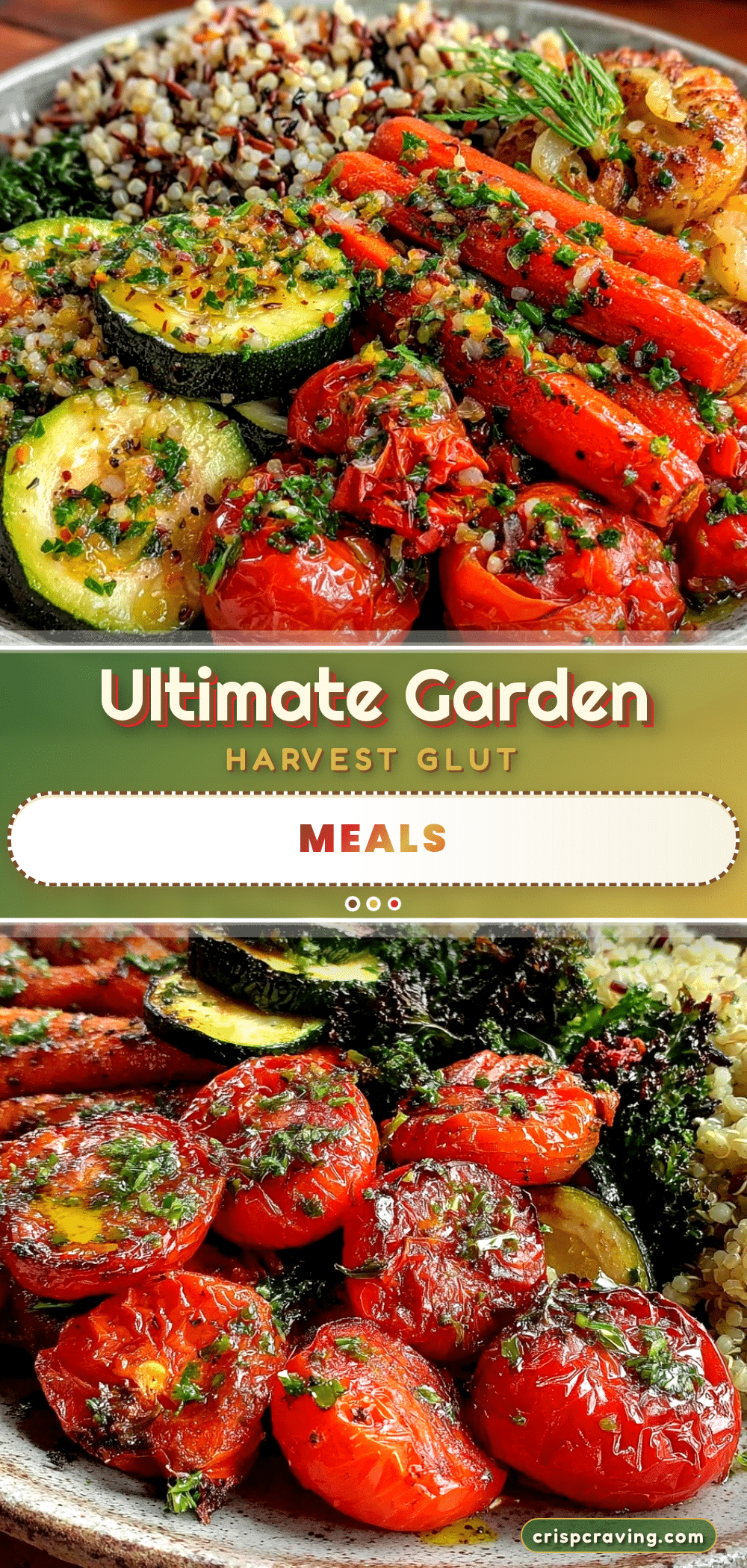
Wholesome Garden Harvest Glut Meal Ideas
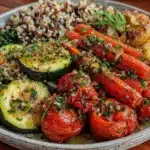
A collection of easy, seasonal meal ideas designed to make the most of abundant garden produce with simple ingredients and quick preparation.
- Prep Time: 15 minutes
- Cook Time: 30 minutes
- Total Time: 45 minutes
- Yield: 4 servings
- Category: Main Course
- Cuisine: American
Ingredients
- zucchini
- eggplant
- tomatoes
- kale
- spinach
- carrots
- bell peppers
- green beans
- beets
- onions
- garlic
- potatoes
- sweet potatoes
- basil
- parsley
- thyme
- rosemary
- chives
- mint
- olive oil
- sea salt
- black pepper
- dried oregano
- cumin
- smoked paprika
- canned beans (chickpeas, cannellini, black beans)
- eggs
- feta or goat cheese (optional)
- quinoa
- brown rice
- crusty bread (sourdough recommended)
- toasted pine nuts or sunflower seeds
- lemon juice
- balsamic vinegar
- honey or maple syrup
Instructions
- Preheat your oven to 400°F (200°C).
- Wash and chop your vegetables: cut zucchini, eggplant, and bell peppers into roughly 1-inch pieces; slice carrots and potatoes similarly; roughly chop leafy greens like kale or spinach and set aside.
- Toss the chopped veggies with 2–3 tablespoons of olive oil, 1 teaspoon of sea salt, ½ teaspoon black pepper, and herbs such as rosemary and thyme. Spread evenly on a baking sheet.
- Roast the vegetables for 25–30 minutes, flipping halfway through, until golden and tender.
- While veggies roast, rinse 1 cup of quinoa or brown rice and cook according to package instructions (about 15 minutes for quinoa, 40 minutes for brown rice). Fluff with a fork.
- If using beans, drain and rinse 1 can (15 oz) of chickpeas or black beans. Sauté with garlic and cumin in a skillet for 5 minutes, seasoning with salt and pepper.
- Make a simple herb sauce by whisking 2 tablespoons olive oil, juice of half a lemon, 1 teaspoon honey or maple syrup, and finely chopped fresh basil and parsley. Adjust seasoning to taste.
- Combine roasted vegetables, cooked grains, sautéed beans, and herb dressing in a large bowl. Toss gently.
- Optionally, crumble feta or goat cheese over the top and sprinkle toasted pine nuts or sunflower seeds for texture.
- Serve warm or at room temperature.
Notes
Avoid overcrowding the pan when roasting to ensure vegetables crisp instead of steam. Rinse quinoa thoroughly before cooking to remove bitterness. Use good quality olive oil for better flavor. If roasted veggies brown too quickly, tent loosely with foil and check every 5 minutes. Adjust seasoning after mixing for perfect balance.
Nutrition
- Serving Size: 1 bowl (approximatel
- Calories: 350
- Sugar: 7
- Sodium: 450
- Fat: 14
- Saturated Fat: 2
- Carbohydrates: 45
- Fiber: 9
- Protein: 12
Keywords: garden harvest, seasonal recipes, vegetable meals, gluten-free, vegetarian, plant-based, easy dinner, healthy meals