Love this? Save it for later!
Share the inspiration with your friends
Introduction
My friend Sam had sworn off pickles for years—claimed they were always too soggy or overly vinegary to be worth the fuss. Then one rainy Saturday afternoon, I found him sneaking into the kitchen, jar in hand, crunching away on my very first batch of extra crunchy refrigerator dill pickles with grape leaves. Honestly, I wasn’t expecting much when I tossed in those odd-looking leaves from the backyard grapevine, but it turned out to be a total game-changer.
Let me tell you, the sound of that first bite—loud, crisp, and oddly satisfying—was so unexpected that I caught myself pausing, fork halfway to mouth, just to savor the surprise. Maybe you’ve been there: skeptical about a food that’s always let you down, only to have one perfect version flip the script completely. It’s like finding a secret ingredient that just works, without much effort, and suddenly, you’re hooked.
That cracked ceramic bowl I used to mix the brine still sits on my counter, a little reminder of that day. Between interruptions from a phone call and a spilled jar (classic me), this recipe stuck because it’s simple, reliable, and honestly, the crunch combined with the subtle earthy hint from the grape leaves feels like magic. So yeah, Sam’s pickle aversion is history, and I’ll keep making these for anyone who thinks pickles just aren’t their thing.
Why You’ll Love This Recipe
After testing countless pickle recipes, tweaking brine ratios, and experimenting with grape leaves, I can say this one stands out — and here’s why:
- Quick & Easy: Ready to eat in just a few days, perfect for last-minute cravings or a spontaneous snack attack.
- Simple Ingredients: You probably have most of these in your pantry already, no specialty stores needed.
- Perfect for Entertaining: Great for picnics, potlucks, or just jazzing up your sandwich game.
- Crowd-Pleaser: Even the most stubborn pickle skeptics (like Sam) find themselves reaching back for more.
- Unbelievably Delicious: The grape leaves help lock in that legendary crunch while adding a subtle, earthy flavor that’s surprisingly fresh.
What sets this recipe apart? It’s the little twist of grape leaves combined with a balanced dill and garlic brine that isn’t overpowering but just right. I’ve tried thicker slices, thinner slices, different vinegars—you name it. This version keeps the cucumbers snap-tender, bursting with flavor but not overpowered by salt or sourness.
Honestly, this recipe isn’t just about making pickles; it’s about turning a simple, humble vegetable into a snack that makes you pause and smile. You might not believe me until you try it, but this is the kind of pickle that makes you close your eyes after the first bite and say, “Yep, that’s the one.”
What Ingredients You Will Need
This recipe calls for straightforward, wholesome ingredients that work together to deliver that perfect crunch and bright flavor. You can find everything easily at your local grocery store or farmer’s market, and many are pantry staples.
- Pickling Cucumbers: About 2 pounds (900 g) of fresh, firm cucumbers (Kirby or pickling cucumbers are ideal for crunch).
- Fresh Dill: 3-4 sprigs of dill with heads, for that signature dill flavor.
- Garlic Cloves: 4-5 large cloves, peeled and slightly crushed (adds a nice aromatic punch).
- Grape Leaves: 6-8 fresh grape leaves (or preserved in brine) – these are the secret to extra crunch by reducing enzymatic softening.
- Water: 4 cups (1 liter) filtered water, to keep the brine clean-tasting.
- White Vinegar: 2 cups (480 ml), 5% acidity (don’t substitute with apple cider vinegar if you want classic pickle tang).
- Pickling Salt: 3 tablespoons (coarse kosher salt or canning salt, no iodine) – essential for proper fermentation and crispness.
- Black Peppercorns: 1 tablespoon (whole) – for mild spice and aroma.
- Mustard Seeds: 1 teaspoon, optional for extra depth.
- Red Pepper Flakes: ½ teaspoon, optional if you like a little heat.
Pro Tip: If you can’t find fresh grape leaves, some grocery stores carry jars of pickled grape leaves in the Mediterranean section—rinse them to remove excess salt before use.
For a gluten-free version, all ingredients here are naturally gluten-free, but always double-check the spice packaging just in case.
Equipment Needed
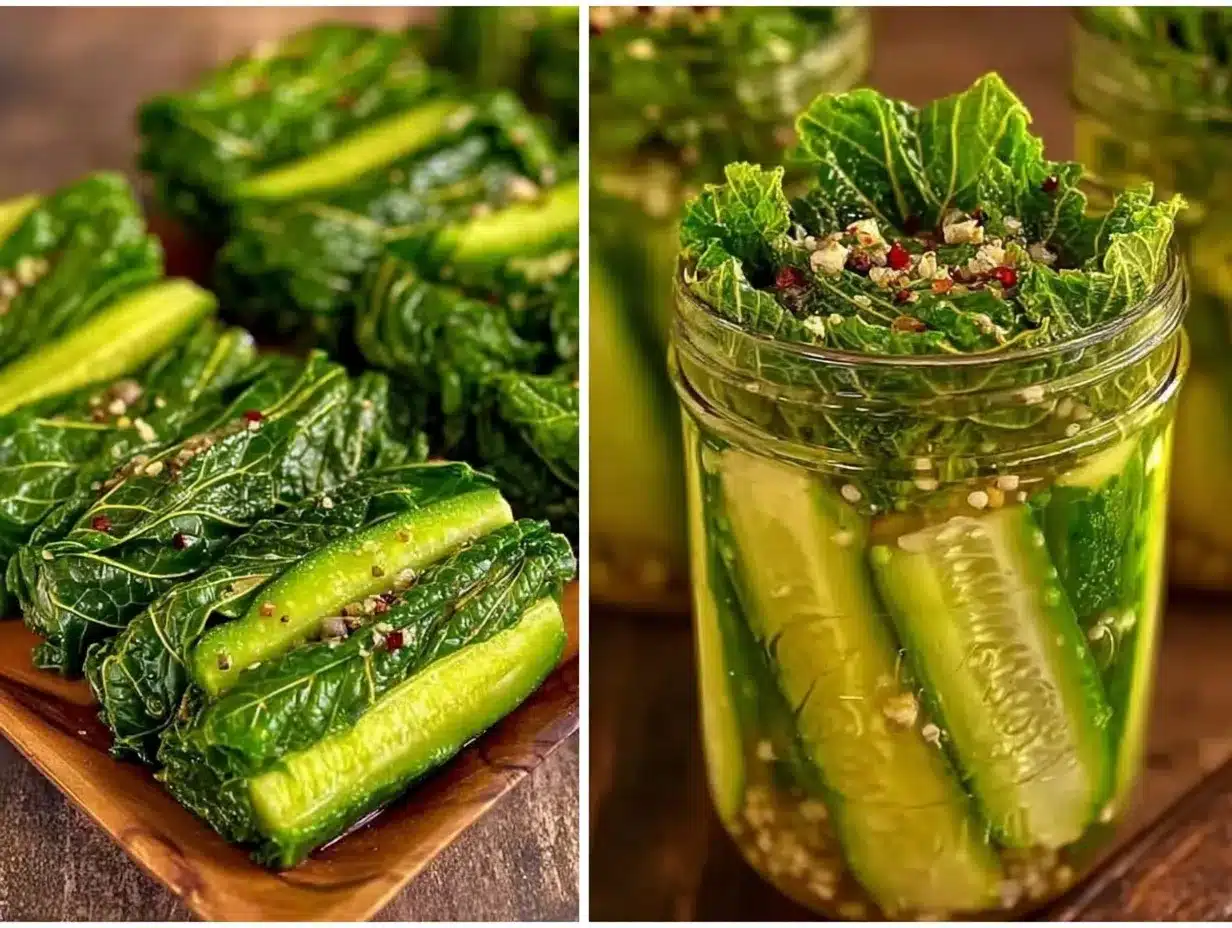
- Large Mason Jars or Glass Containers: At least two 1-quart (1-liter) jars with lids. Glass is best for pickling to avoid any off-flavors.
- Measuring Cups and Spoons: For precise brine ratios.
- Mixing Bowl: To combine the brine ingredients.
- Knife and Cutting Board: For slicing cucumbers and preparing garlic.
- Kitchen Tongs or Chopsticks: Useful for packing cucumbers and leaves tightly into jars without bruising.
- Non-metal Spoon or Spatula: To stir salt and vinegar into water (metal can react with vinegar).
If you don’t have Mason jars, any clean, food-safe glass container with a tight lid will work. I’ve even used old pickle jars with good results! Just make sure everything is sterilized to avoid any funky fermentation.
Preparation Method
- Prepare the Cucumbers: Wash and scrub 2 pounds (900 g) of cucumbers thoroughly to remove any dirt. Trim the blossom ends slightly—this helps reduce enzymatic softening and keeps them crisp. Slice them into spears or rounds about ¼ to ½ inch thick (6-12 mm), depending on your preference. Allow them to sit in a colander with a sprinkle of salt for about 30 minutes to draw out excess moisture.
- Make the Brine: In a mixing bowl, combine 4 cups (1 liter) filtered water, 2 cups (480 ml) white vinegar, and 3 tablespoons pickling salt. Stir gently with a non-metal spoon until the salt dissolves completely. Add 1 tablespoon black peppercorns, 1 teaspoon mustard seeds (if using), and ½ teaspoon red pepper flakes (optional) to the brine.
- Prepare the Jars: Rinse your glass jars in hot water and let them air dry or dry with a clean towel. Place 3-4 grape leaves at the bottom of each jar (these will line the jar and help keep the cucumbers crunchy).
- Pack the Jars: Add a few sprigs of fresh dill and 2-3 garlic cloves to each jar. Tightly pack the cucumber slices into the jars, leaving about ½ inch (1.3 cm) headspace at the top. Add a couple more grape leaves on top before pouring the brine.
- Pour the Brine: Slowly pour the prepared brine over the cucumbers, ensuring they are fully submerged. Use a clean utensil to press the cucumbers down if needed. Seal the jars tightly with lids.
- Refrigerate and Wait: Place the jars in the refrigerator. The pickles will start to develop flavor within 2 days but reach peak crunch and flavor around day 5 to 7. They can keep for up to 4 weeks refrigerated.
Tip: If you notice any floating cucumbers, weigh them down with a small clean glass weight or a folded grape leaf to keep everything submerged and prevent spoilage.
Cooking Tips & Techniques
Here’s where a bit of pickle experience pays off. I learned that the grape leaves aren’t just for show—they contain tannins that help maintain the pickles’ snap. Without them, you might end up with mushy results after a week.
Also, don’t skip trimming the blossom ends of the cucumbers. I made the mistake once and ended up with soggy pickles that no one wanted to eat. It’s a small step but makes a big difference.
Use pickling salt, not regular table salt. Table salt often contains anti-caking agents that can cloud brine or affect fermentation. Kosher or canning salt is your best bet here.
Timing-wise, the longer they sit in the fridge (up to 4 weeks), the more intense the flavor. But if you prefer a lighter crunch and fresher taste, start tasting at day 3.
One last thing: keep everything clean and avoid metal lids touching the brine for long periods (plastic or porcelain-lined lids are safe). Metal can react and ruin your pickles’ flavor over time.
Variations & Adaptations
- Spicy Pickles: Add more red pepper flakes, or a sliced jalapeño for a fiery kick.
- Herb-Infused: Swap or add fresh herbs like tarragon, thyme, or oregano for a different flavor profile.
- Low Sodium: Cut the salt by half and increase refrigeration time slightly to compensate for flavor development.
- Fermented Version: Skip the vinegar and ferment cucumbers in salted water with grape leaves for several days at room temperature to get probiotic-rich pickles.
- Seasonal Twist: In summer, throw in a handful of fresh sliced baby carrots or green beans for a crunchy veggie medley.
Personally, I once tried a batch with smoked garlic instead of fresh, and while it was intriguing, I prefer the bright, clean flavor of fresh garlic for this recipe.
Serving & Storage Suggestions
These pickles are best served cold straight from the fridge. They pair wonderfully with hearty sandwiches, burgers, or a cheese platter. For a comforting snack, try them alongside some creamy hummus or as a tangy topping on potato salad.
Store your pickles in the refrigerator for up to 4 weeks. Always use a clean fork or tongs to remove them—double-dipping can introduce bacteria and spoil your batch prematurely.
If you want to keep them longer, you can freeze the brine separately, but the texture will change. For best crunch, refrigeration is key.
Flavors tend to meld and mellow over time, so if you’re patient, the pickles develop a more complex, balanced taste after a week or two.
Nutritional Information & Benefits
These refrigerator dill pickles are low in calories (roughly 10 calories per spear), fat-free, and a good source of vitamin K from the dill. The vinegar and garlic contribute to digestion and immunity support.
Because no sugar is added, this recipe is suitable for those watching their carb intake, diabetic-friendly, and naturally gluten-free.
While not fermented, the fresh ingredients and vinegar help preserve the cucumbers and add antioxidants.
From a wellness perspective, I find these pickles a refreshing, guilt-free snack that satisfies crunchy cravings without any artificial preservatives.
Conclusion
This recipe for extra crunchy refrigerator dill pickles with grape leaves isn’t just a quick fix; it’s one that keeps on giving. Whether you’re a longtime pickle lover or someone who’s dodged them for years like Sam, this version has something special.
Give it a try, and don’t be afraid to tweak the seasonings to your taste. I still make mine with a little extra garlic and always toss in those grape leaves—they’re the quiet heroes in this crunchy story.
Let me know how yours turn out or if you’ve found your own twist! After all, making pickles is part science, part art, and all about sharing a tasty moment.
Frequently Asked Questions
- Q: Can I use regular cucumbers instead of pickling cucumbers?
A: You can, but pickling cucumbers have a firmer texture and fewer seeds, which helps keep your pickles crunchy. - Q: What if I don’t have grape leaves?
A: You can omit them, but expect less crunch. Some use oak or horseradish leaves as alternatives. - Q: How long do refrigerator pickles last?
A: Stored in the fridge, they stay good for about 4 weeks. - Q: Can I make these pickles spicy?
A: Absolutely! Add red pepper flakes, jalapeños, or even a pinch of cayenne to the brine. - Q: Do I need to sterilize the jars?
A: While not strictly necessary for refrigerator pickles, it’s a good practice to prevent any unwanted bacteria or spoilage.
Pin This Recipe!
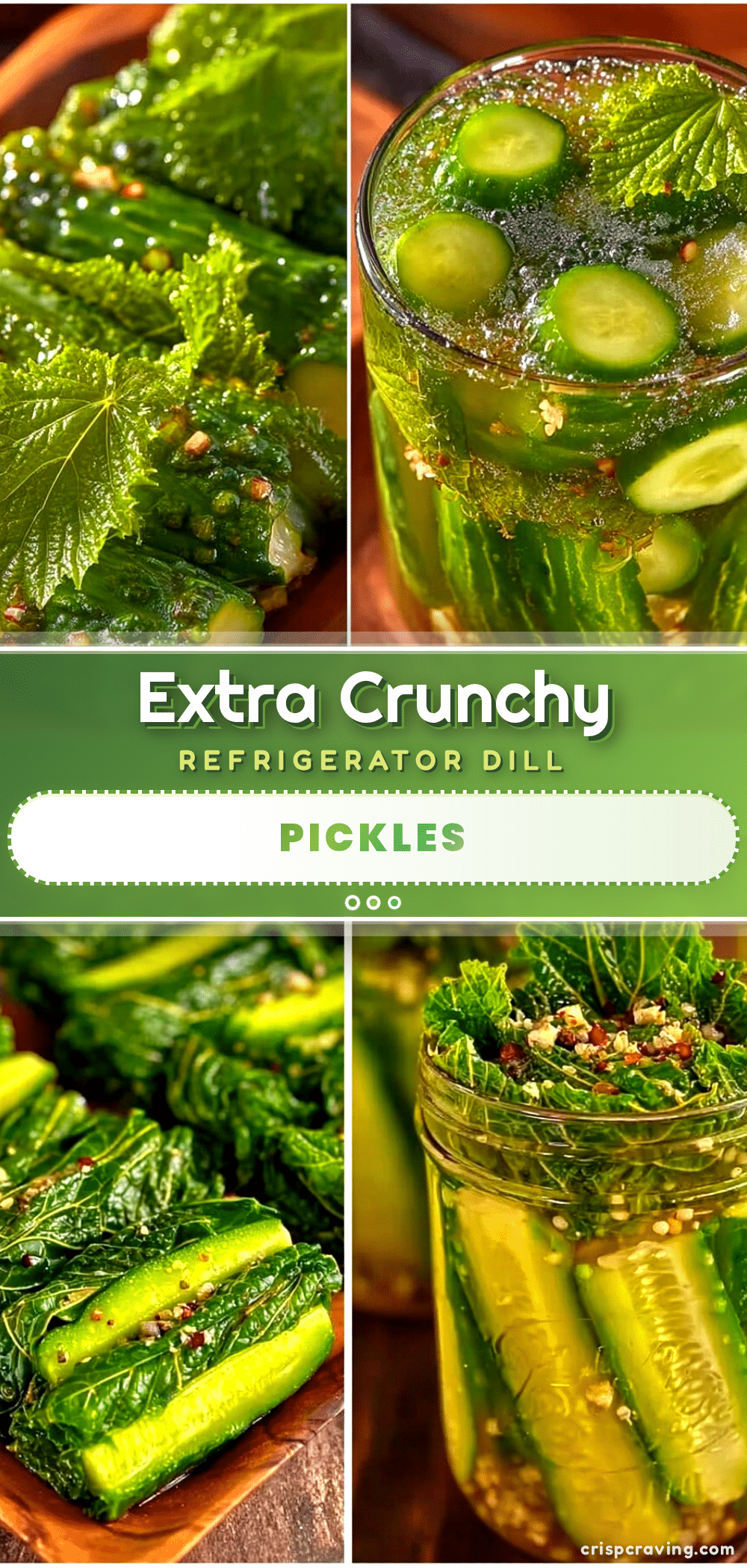
Extra Crunchy Refrigerator Dill Pickles with Grape Leaves
A quick and easy homemade recipe for extra crunchy refrigerator dill pickles enhanced with grape leaves for a perfect snap and subtle earthy flavor.
- Prep Time: 40 minutes
- Cook Time: 0 minutes
- Total Time: 40 minutes plus 2-7 days refrigeration
- Yield: About 2 quarts (2 liters) of pickles, approximately 8 servings 1x
- Category: Condiment
- Cuisine: American
Ingredients
- 2 pounds (900 g) pickling cucumbers (Kirby or pickling cucumbers preferred)
- 3–4 sprigs fresh dill with heads
- 4–5 large garlic cloves, peeled and slightly crushed
- 6–8 fresh grape leaves (or preserved in brine)
- 4 cups (1 liter) filtered water
- 2 cups (480 ml) white vinegar, 5% acidity
- 3 tablespoons pickling salt (coarse kosher salt or canning salt, no iodine)
- 1 tablespoon whole black peppercorns
- 1 teaspoon mustard seeds (optional)
- ½ teaspoon red pepper flakes (optional)
Instructions
- Wash and scrub 2 pounds (900 g) of cucumbers thoroughly to remove any dirt. Trim the blossom ends slightly to reduce enzymatic softening and keep them crisp. Slice into spears or rounds about ¼ to ½ inch thick (6-12 mm). Let sit in a colander with a sprinkle of salt for about 30 minutes to draw out excess moisture.
- In a mixing bowl, combine 4 cups (1 liter) filtered water, 2 cups (480 ml) white vinegar, and 3 tablespoons pickling salt. Stir gently with a non-metal spoon until salt dissolves. Add 1 tablespoon black peppercorns, 1 teaspoon mustard seeds (if using), and ½ teaspoon red pepper flakes (optional).
- Rinse glass jars in hot water and air dry or dry with a clean towel. Place 3-4 grape leaves at the bottom of each jar.
- Add a few sprigs of fresh dill and 2-3 garlic cloves to each jar. Tightly pack cucumber slices into jars, leaving about ½ inch (1.3 cm) headspace. Add a couple more grape leaves on top.
- Slowly pour the prepared brine over the cucumbers, ensuring they are fully submerged. Use a clean utensil to press cucumbers down if needed. Seal jars tightly with lids.
- Place jars in the refrigerator. Pickles develop flavor within 2 days and reach peak crunch and flavor around day 5 to 7. Keep refrigerated up to 4 weeks.
Notes
Trim blossom ends of cucumbers to prevent sogginess. Use pickling salt, not table salt, to avoid cloudiness and off-flavors. Grape leaves contain tannins that help maintain crunch. Keep cucumbers fully submerged in brine to prevent spoilage. Refrigerate for at least 2 days before eating; best flavor at 5-7 days. Store refrigerated up to 4 weeks. Avoid metal lids touching brine for long periods.
Nutrition
- Serving Size: 1 spear (approximate
- Calories: 10
- Sugar: 1
- Sodium: 600
- Carbohydrates: 2
- Fiber: 1
Keywords: refrigerator pickles, dill pickles, crunchy pickles, grape leaves, homemade pickles, easy pickles, quick pickles, pickling cucumbers