Love this? Save it for later!
Share the inspiration with your friends
There used to be a tiny French bakery tucked into a strip mall off Highway 9 that made the most incredible fig and thyme jam I have ever tasted. When they closed suddenly two summers ago—just a handwritten sign on the door saying “Merci, c’est fini”—I honestly felt a little lost. That jam was my secret weapon for everything from morning toast to last-minute cheese boards, and I knew I had to figure out how to make it myself. After seven tries—some burnt, some too runny, one that my husband politely called “aggressively herbal”—I finally got it.
Let me tell you, this homemade small-batch fig jam with thyme is the one. It’s that perfect balance of sweet, earthy figs and fragrant, slightly woodsy thyme that makes you slow down and actually taste what you’re eating. I remember standing over the stove on a humid Tuesday afternoon, stirring this batch, when my neighbor knocked on the door. “Something smells like a fancy brunch place,” she said. I handed her a spoonful, and she stood there in my kitchen, eyes closed, not saying a word. That’s the kind of reaction this jam gets.
You know that feeling when you find a recipe that feels like a secret? Like you’ve stumbled onto something that should cost twenty dollars at a farmers’ market, but instead you’re making it in your own kitchen with five ingredients? That’s this fig jam. No pectin, no complicated techniques, and no need to hunt down special equipment. Just fresh figs, a few pantry staples, and a sprig of thyme doing its quiet magic.
I keep making this jam because it reminds me that the best things don’t have to be complicated. It’s the kind of recipe that makes you feel like you’ve got a little piece of that bakery back, even if it’s just on your morning scone. And honestly? That’s enough.
Why You’ll Love This Recipe
This small-batch fig jam with thyme isn’t just another fruit preserve recipe. After testing this more times than I care to admit (including one batch where I forgot the sugar entirely—don’t ask), I can tell you exactly why this version works so well.
- No Pectin Required: Figs are naturally high in pectin, so you get that perfect jammy consistency without adding anything artificial. It sets beautifully every single time.
- Small Batch, Big Flavor: This recipe makes just about 2 cups of jam. No massive canning operation, no overflowing pots, no pressure to give away jars you secretly want to keep for yourself.
- Simple Ingredients: Five ingredients. That’s it. You probably already have the sugar, lemon, and salt in your pantry right now.
- Perfect for Gifting: A jar of homemade fig jam tied with a bit of twine? That’s the gift that makes people think you spent hours in the kitchen when really it took about 40 minutes.
- Unbelievably Versatile: This jam works on toast, yes, but it also shines on cheese boards, over roasted pork, swirled into yogurt, or spooned straight from the jar at midnight (I won’t judge).
What makes this recipe different from every other fig jam out there is the thyme. It’s not an afterthought or a garnish—it’s a key player that transforms ordinary fig jam into something that tastes intentional and sophisticated. The lemon brightens everything up, the thyme adds this subtle savory note, and the figs do what figs do best: get gloriously jammy with zero fuss.
This is the kind of jam that makes you close your eyes after the first bite. It’s comfort food reimagined—simpler, more thoughtful, and deeply satisfying. Perfect for impressing brunch guests without breaking a sweat, or turning a Tuesday morning into something that feels a little bit special.
What Ingredients You Will Need
This recipe uses simple, wholesome ingredients to deliver big flavor without any fuss. The magic happens when fresh figs meet fragrant thyme and a touch of lemon—that’s really all you need.
- Fresh figs, stemmed and quartered (about 1 pound or 450g): Look for figs that are ripe but still firm—they should give slightly when gently squeezed but not feel mushy. Black Mission or Brown Turkey figs work beautifully here. If you can find them at a farmers’ market, even better.
- Granulated sugar (¾ cup or 150g): Regular white sugar is perfect. It helps the figs release their natural pectin and creates that lovely glossy texture. I’ve tried this with coconut sugar, and while it works, the flavor is noticeably different—stick with granulated for the classic result.
- Fresh lemon juice (2 tablespoons, from about 1 lemon): Fresh is non-negotiable here. Bottled lemon juice has a flat, almost metallic taste that throws off the whole balance. The acidity brightens the figs and helps the jam set.
- Fresh thyme sprigs (4-5 sprigs, plus extra for garnish): Use fresh thyme, not dried. The dried stuff can get woody and overpowering. I like to use whole sprigs that I can fish out later—it infuses the jam without leaving tiny leaves in your teeth.
- Pinch of fine sea salt (about ⅛ teaspoon): Just enough to balance the sweetness and make the fig flavor pop. Don’t skip it—it’s the difference between good jam and great jam.
That’s genuinely everything you need. No pectin powder, no commercial pectin, no special preserving sugar. Just five ingredients that come together to make something that tastes far more complicated than it actually is.
For the figs, I recommend checking your local farmers’ market in late summer or early fall when they’re at their peak. If you don’t have access to fresh figs, frozen figs can work in a pinch—just thaw them completely and drain off any excess liquid before cooking. The texture will be slightly softer, but the flavor is still lovely.
A quick note on sugar: this recipe is designed to be balanced, not overly sweet. The figs themselves bring plenty of natural sweetness, so don’t be tempted to reduce the sugar further. It’s not just about sweetness—the sugar is what helps the jam thicken and preserve properly.
Equipment Needed
You don’t need a fancy canning setup for this small-batch fig jam. Here’s what you’ll actually use:
- Medium heavy-bottomed saucepan or Dutch oven (2-3 quart size): A heavy pot distributes heat evenly and prevents scorching. My go-to is a stainless steel saucepan, but enameled cast iron works beautifully too.
- Wooden spoon or heat-resistant silicone spatula: You’ll be stirring fairly often, so something comfortable to hold matters more than you’d think.
- Sharp knife and cutting board: For prepping the figs. A dull knife will just squish them.
- Measuring cups and spoons: Standard set for sugar, lemon juice, and salt.
- Fine-mesh strainer: For fishing out the thyme sprigs at the end. You could also use tongs, but the strainer catches any stray leaves.
- Glass jars with lids: One 16-ounce jar or two 8-ounce jars work perfectly. Make sure they’re clean and dry before you start.
- Small plate (optional but helpful): For testing if the jam is set. Pop it in the freezer before you start cooking.
If you don’t have a heavy-bottomed saucepan, just keep a closer eye on the heat and stir more frequently. I’ve made this jam in a thin nonstick pan before, and it worked—I just had to watch it like a hawk to prevent burning.
Preparation Method
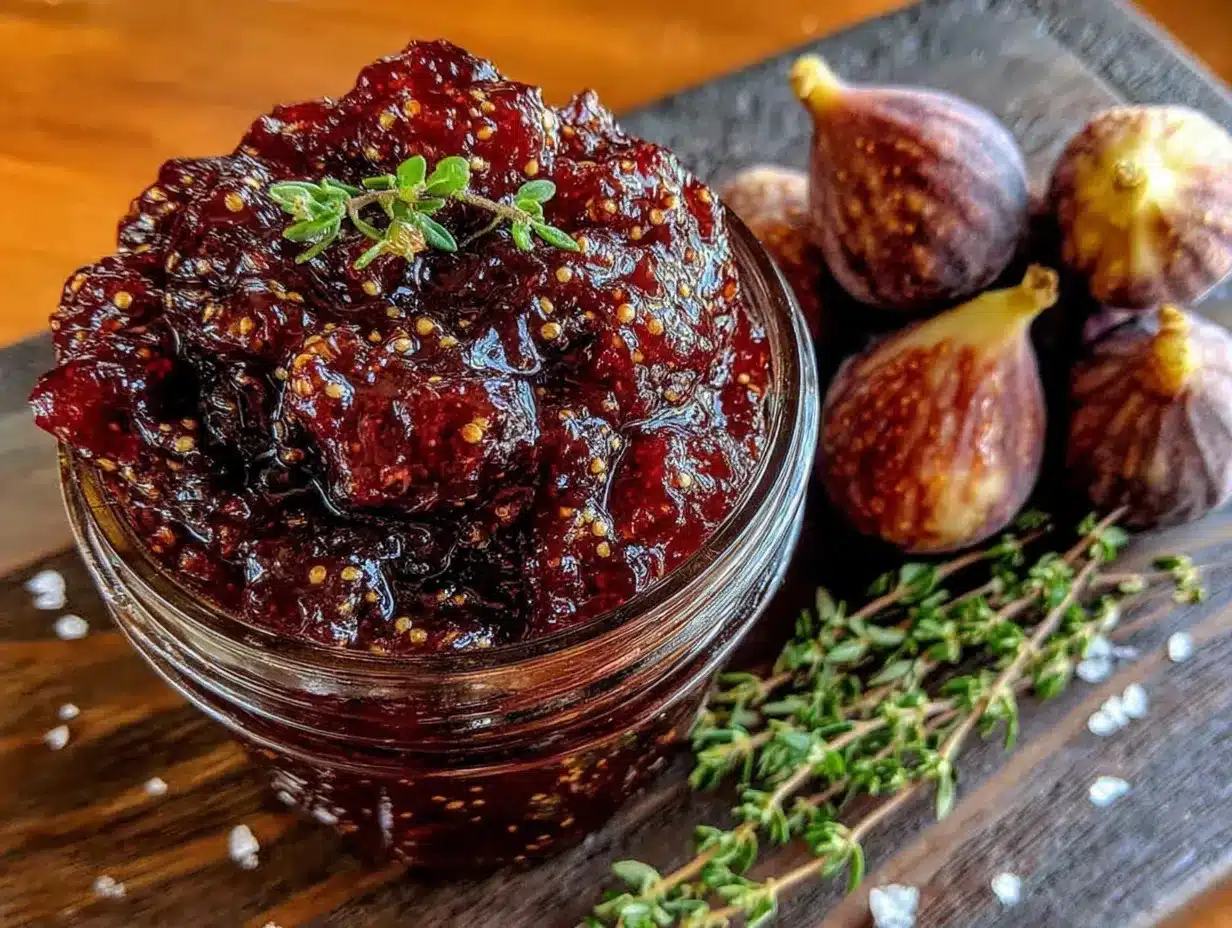
Let me walk you through this step by step. I’ve made this jam so many times that I could do it in my sleep, but I’ll share all the little details that make the difference between good jam and “I can’t believe I made this” jam.
- Prep your figs (5 minutes): Rinse your figs gently under cool water and pat them dry. Cut off the tough little stems, then quarter each fig. If you have really large figs, you can cut them into sixths—the goal is uniform pieces so they cook evenly. Don’t worry if they’re a bit irregular; this is jam, not a geometry project.
- Combine everything in the pot (2 minutes): Add your quartered figs, sugar, lemon juice, and that pinch of salt to your saucepan. Tuck the thyme sprigs in among the figs so they’re submerged. Give everything a gentle stir to coat the figs in sugar.
- Let it macerate (15-20 minutes): This is the step people often skip, and it makes a real difference. Let the fig mixture sit at room temperature for 15-20 minutes. The sugar will draw out the figs’ natural juices, creating a syrupy base that helps everything cook evenly. You’ll see the sugar start to dissolve and the figs look glossy.
- Bring to a boil (5-7 minutes): Place your pot over medium heat and stir gently as the mixture heats up. Once it reaches a full boil—bubbles breaking all across the surface, not just around the edges—let it boil for 1 minute without stirring.
- Reduce and simmer (20-25 minutes): Turn the heat down to medium-low so the jam is at a steady, gentle simmer. You want soft bubbles, not a violent boil. Stir occasionally, scraping the bottom and sides of the pot to prevent sticking. The jam will start to thicken and the figs will break down into a gorgeous, jammy texture.
- Test for doneness (1 minute): Here’s where that frozen plate comes in. Drop a small spoonful of jam onto the cold plate and let it sit for 30 seconds. Tilt the plate—if the jam moves slowly and wrinkles when you push it with your finger, it’s ready. If it runs freely, keep simmering for another 3-5 minutes and test again.
- Remove the thyme (1 minute): Fish out the thyme sprigs with tongs or pour the jam through a fine-mesh strainer into a heat-safe bowl. I usually leave one small sprig in for looks, but that’s optional.
- Let it rest (10 minutes): Let the jam sit in the pot for about 10 minutes. This allows it to thicken slightly more and makes it easier to transfer to jars without burning yourself.
- Jar it up (5 minutes): Carefully ladle the warm jam into your clean jars, leaving about ¼ inch of headspace at the top. Wipe the rims clean, screw on the lids, and let the jars cool completely at room temperature.
A few things I’ve learned the hard way: don’t walk away during the simmering stage. I once got distracted by a phone call, and let me tell you, burnt fig jam is not a pleasant smell. Also, the jam will look looser in the pot than it will after cooling—trust the process and don’t overcook it trying to get it thicker.
You’ll know you’ve nailed it when the jam has a deep, jewel-toned color and a texture that’s spreadable but not runny. The figs should be tender but still have a little bit of texture—you’re making jam, not fig paste.
Cooking Tips & Techniques
After making this small-batch fig jam more times than I’d like to count, I’ve collected a few tricks that make the process smoother and the results more consistent.
Don’t rush the maceration step. I know it’s tempting to skip ahead, but letting the figs sit with the sugar for 15-20 minutes does two important things: it draws out natural juices that help the jam cook evenly, and it starts breaking down the figs so they soften faster. I’ve made this jam both ways, and the macerated version always has a better texture.
Watch your heat like a hawk. Fig jam has a tendency to scorch if you look away for too long, especially toward the end of cooking. Keep the heat at a gentle simmer, not a rolling boil, once you’ve passed the initial boiling stage. If you see the jam starting to stick to the bottom, turn the heat down immediately and stir more frequently.
Use the frozen plate test, not a thermometer. I know some recipes tell you to cook jam to 220°F, but honestly, the plate test is more reliable for small batches. The jam sets differently depending on the exact ripeness of your figs and the humidity in your kitchen. Trust your eyes and your instincts over a number on a thermometer.
One mistake I’ll never make again: I once tried to double this recipe in the same pot. Big mistake. The jam took forever to cook down, the figs broke down unevenly, and I ended up with a batch that was simultaneously burnt on the bottom and too runny on top. Small batches work because the proportions are right for the pot size. Trust the small batch.
Timing tip: Start your jam after you’ve already cleaned the kitchen and put away the dishes. That way, when the jam is done, you can focus on jarring it up without a sink full of dirty bowls distracting you.
Variations & Adaptations
Once you’ve mastered the basic recipe, here are some ways to make it your own:
Spiced Fig Jam: Add 1 cinnamon stick and 2 whole star anise along with the thyme sprigs. The warm spices complement the figs beautifully, especially in fall and winter. Just remember to remove them before jarring.
Balsamic Fig Jam: Stir in 1 tablespoon of good balsamic vinegar during the last 5 minutes of cooking. The acidity and sweetness of the balsamic adds a complex, almost savory depth that’s incredible on cheese boards.
Rosemary Fig Jam: Swap the thyme for fresh rosemary. Use 2 small sprigs instead of 4-5, since rosemary is more potent. This version is particularly good paired with roasted meats or spread on crusty bread with goat cheese.
Lower Sugar Version: You can reduce the sugar to ½ cup if you prefer a less sweet jam, but be aware that the texture will be looser and it won’t keep as long in the fridge. This version is best eaten within 2-3 weeks.
Vegan Variation: This recipe is already vegan! No adjustments needed. Just make sure your sugar is certified vegan if that’s a concern (some refined sugars use bone char in processing).
I’ve personally tried the balsamic variation and ended up giving away half the batch because I couldn’t stop eating it straight from the jar. It’s that good.
Serving & Storage Suggestions
This fig jam is at its best when you let it shine in simple, thoughtful ways.
Serving temperature: I prefer this jam at room temperature or slightly cool. If it’s been in the fridge, let it sit out for about 15 minutes before serving so it softens to a spreadable consistency.
Classic pairings: Spread it thick on warm buttered toast, scones, or English muffins. It’s also spectacular on a cheese board with aged cheddar, blue cheese, or soft goat cheese. For a quick appetizer, spoon some over a block of cream cheese and serve with crackers.
Savory uses: This jam makes an excellent glaze for roasted pork or chicken. Brush it on during the last 10 minutes of cooking for a gorgeous, caramelized finish. It’s also wonderful stirred into salad dressings or used as a topping for baked brie.
Storage: Keep the jam in an airtight container in the refrigerator for up to 3 weeks. Because this is a small-batch, no-pectin recipe, it’s not designed for long-term shelf storage. If you want to keep it longer, you can freeze it in small containers for up to 6 months—just thaw in the refrigerator overnight before using.
Reheating: If the jam thickens too much in the fridge, microwave it for 10-15 seconds or let it sit at room temperature for 20 minutes. Stir well before using.
One thing I love about this jam is how the flavors develop over time. It’s delicious the day you make it, but after a day or two in the fridge, the thyme and fig flavors meld together in a way that’s truly magical. If you can resist eating it all immediately, you’ll be rewarded.
Nutritional Information & Benefits
This small-batch fig jam is a treat, but it also brings some surprising nutritional benefits to the table.
Estimated nutrition per tablespoon (15g):
- Calories: 35
- Total Fat: 0g
- Sodium: 5mg
- Total Carbohydrates: 9g
- Sugars: 8g
- Fiber: 0.5g
- Protein: 0g
Health highlights: Figs are a good source of dietary fiber, which supports digestive health. They also contain potassium, magnesium, and antioxidants that help fight inflammation. Thyme is rich in vitamin C and has antimicrobial properties—it’s been used in traditional medicine for centuries.
Dietary considerations: This jam is naturally gluten-free, dairy-free, vegan, and contains no added pectin or preservatives. The only potential allergen concern is the figs themselves, which are generally well-tolerated but can cause reactions in people with certain fruit allergies.
My perspective: I think of this jam as a way to enjoy something sweet without the processed additives found in many store-bought jams. Yes, it has sugar, but it’s balanced by real fruit and herbs. A tablespoon on your morning toast is a perfectly reasonable way to start the day.
Conclusion
This homemade small-batch fig jam with thyme is the kind of recipe that makes you feel like you’ve discovered a secret. It’s simple enough for a Tuesday afternoon but special enough to gift to people you really like. No pectin, no fuss, no complicated techniques—just five ingredients and a little bit of patience.
I hope you’ll make this your own. Maybe you’ll add a splash of vanilla, swap the thyme for rosemary, or serve it alongside your favorite cheese. That’s the beauty of a simple recipe—it leaves room for your own touches.
Honestly, this jam has become a staple in my kitchen. I make a batch whenever I find good figs, and I always keep a jar in the fridge for those mornings when I need something a little special on my toast. It reminds me of that little bakery that closed, but more than that, it reminds me that the best things in life are often the ones we make ourselves.
I’d love to hear how yours turns out! Drop a comment below and let me know what you paired it with, or share your own twist on the recipe. And if you’re looking for another simple preserve to try, you might enjoy this quick strawberry rhubarb jam or these honey roasted figs for another way to use up fresh figs. Happy cooking!
Frequently Asked Questions
Can I use dried figs instead of fresh?
You can, but the results will be different. Dried figs need to be rehydrated in warm water for about 30 minutes before cooking, and the jam will be much thicker and sweeter. I recommend fresh figs for the best texture and flavor.
How do I know when the jam is done?
Use the frozen plate test. Drop a small spoonful of jam onto a cold plate and wait 30 seconds. If it wrinkles when you push it with your finger and doesn’t run, it’s ready. Trust this method over a timer—every batch is slightly different.
Can I can this jam for long-term storage?
This recipe is designed for small-batch refrigerator storage, not water bath canning. If you want to can it, you’ll need to adjust the recipe to ensure proper acidity and follow safe canning guidelines. For most home cooks, refrigerator storage for up to 3 weeks is plenty.
Why did my jam turn out too runny?
This usually happens if the jam wasn’t cooked long enough or if the figs were very ripe and watery. Next time, cook it a few minutes longer and use the frozen plate test before deciding it’s done. You can also try cooking down the jam for an additional 5-10 minutes if it’s too thin.
Can I reduce the sugar in this recipe?
You can reduce it to ½ cup, but the jam will be looser and won’t keep as long. Sugar isn’t just for sweetness—it helps with texture and preservation. If you reduce it, plan to eat the jam within 2 weeks and store it in the fridge.
Pin This Recipe!
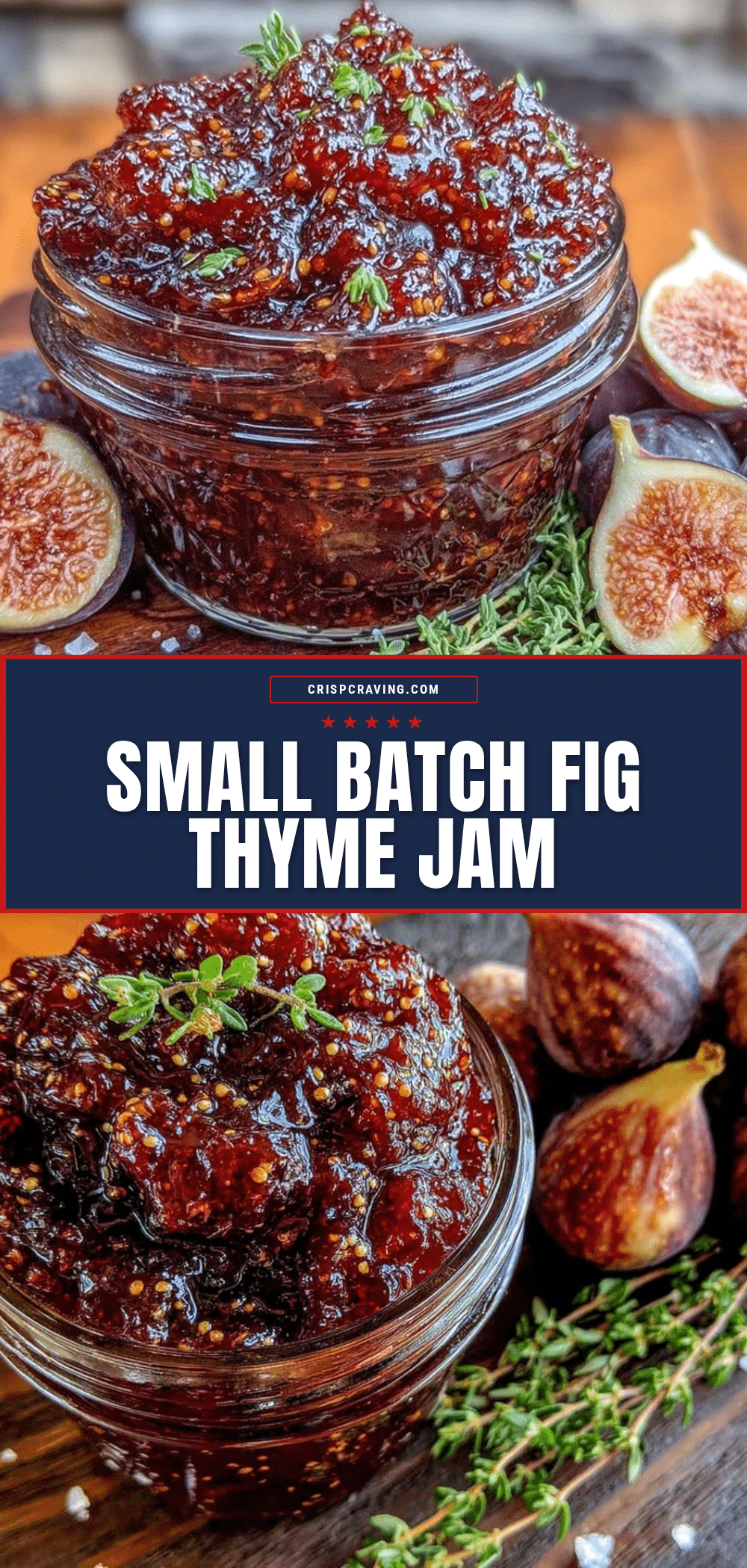
Easy Small-Batch Fig Jam with Thyme (No Pectin)
This homemade small-batch fig jam with thyme is the perfect balance of sweet, earthy figs and fragrant, slightly woodsy thyme. No pectin required, just five simple ingredients and about 40 minutes to create a sophisticated jam that’s perfect for toast, cheese boards, or gifting.
- Prep Time: 20 minutes
- Cook Time: 25 minutes
- Total Time: 45 minutes
- Yield: 2 cups (about 32 servings of 1 tablespoon each) 1x
- Category: Condiment
- Cuisine: French
Ingredients
- 1 pound (450g) fresh figs, stemmed and quartered
- 3/4 cup (150g) granulated sugar
- 2 tablespoons fresh lemon juice (from about 1 lemon)
- 4–5 sprigs fresh thyme, plus extra for garnish
- 1/8 teaspoon fine sea salt
Instructions
- Prep your figs: Rinse figs gently under cool water and pat dry. Cut off tough stems, then quarter each fig. For large figs, cut into sixths for uniform pieces.
- Combine everything in the pot: Add quartered figs, sugar, lemon juice, and salt to a medium heavy-bottomed saucepan. Tuck thyme sprigs in among the figs. Stir gently to coat figs in sugar.
- Let it macerate: Let the fig mixture sit at room temperature for 15-20 minutes until sugar draws out natural juices and figs look glossy.
- Bring to a boil: Place pot over medium heat and stir gently as mixture heats. Once it reaches a full boil (bubbles across entire surface), let it boil for 1 minute without stirring.
- Reduce and simmer: Turn heat to medium-low for a steady, gentle simmer. Stir occasionally, scraping bottom and sides to prevent sticking. Cook for 20-25 minutes until jam thickens and figs break down.
- Test for doneness: Drop a small spoonful of jam onto a frozen plate. Let sit for 30 seconds. Tilt plate—if jam moves slowly and wrinkles when pushed with finger, it’s ready. If it runs freely, simmer 3-5 more minutes and test again.
- Remove the thyme: Fish out thyme sprigs with tongs or pour jam through a fine-mesh strainer into a heat-safe bowl. Optionally leave one small sprig for looks.
- Let it rest: Let jam sit in pot for about 10 minutes to thicken slightly and cool enough for safe handling.
- Jar it up: Carefully ladle warm jam into clean glass jars, leaving 1/4 inch headspace. Wipe rims clean, screw on lids, and let cool completely at room temperature.
Notes
Don’t rush the maceration step—it helps draw out juices for even cooking. Watch heat carefully to prevent scorching, especially toward end of cooking. Use the frozen plate test rather than a thermometer for doneness. Jam will look looser in the pot than after cooling. Flavors develop and meld after a day or two in the fridge. This recipe is designed for small batches; doubling may cause uneven cooking.
Nutrition
- Serving Size: 1 tablespoon (15g)
- Calories: 35
- Sugar: 8
- Sodium: 5
- Carbohydrates: 9
- Fiber: 0.5
Keywords: fig jam, small batch jam, no pectin jam, thyme jam, homemade jam, fig preserve, easy jam recipe, small batch preserving