Love this? Save it for later!
Share the inspiration with your friends
My daughter asked why I couldn’t just toss the chicken and veggies in the oven without separating them first. I started to explain why that wouldn’t work — then stopped. She was staring at the roasting pan with the intensity of a scientist watching a reaction, waiting for me to say no. I mean, honestly, it’s the most basic cooking rule in the book: meat needs space to breathe, and vegetables need direct heat to caramelize. But I looked at the clock, looked at her hopeful face, and decided to let her try her chaotic method. The result was a soggy mess, sure, but it taught me something I had forgotten in my years of strict meal prep.
That failure was the exact moment I realized I had become too rigid with my crispy herb-roasted chicken recipe. I was so focused on the perfect skin that I forgot the soul of the meal is in the shared experience. Now, I don’t separate everything. I let the juices from the chicken mingle with the carrots and parsnips. It’s a messier process, but the flavor is infinitely deeper. You know that feeling when you overthink a simple task and miss the point? I lived that. But the trade-off was worth it because this dish became less about perfection and more about warmth.
There is a specific magic in the smell of rosemary and thyme hitting hot oil, followed by the sweet scent of roasted carrots. It’s the kind of aroma that pulls people out of their rooms and into the kitchen. I remember leaving the door open that evening, and my husband walked in smelling the herbs before he even saw the food. He didn’t say anything, just pulled out a chair. That’s the power of this crispy herb-roasted chicken. It doesn’t just feed you; it gathers you.
I keep making it because it grounds me. In a world of quick fixes and delivery apps, spending two hours watching a chicken turn golden brown is a form of meditation. It’s slow, deliberate, and rewarding. And yes, sometimes the veggies get a little soft, but that’s part of the charm. It reminds me that cooking isn’t about following rules perfectly. It’s about creating something that feels like home. If you’ve ever felt like you’re doing dinner wrong, this recipe is your permission slip to relax.
Why You’ll Love This Recipe
There are a thousand chicken recipes online, but this one sticks with you. It’s not just another way to cook a bird; it’s a lesson in patience and flavor layering. I’ve tested this method so many times that I can do it with my eyes closed, and the results are consistently incredible. It’s the kind of dish that proves you don’t need fancy techniques to get restaurant-quality results. You just need good ingredients and a little bit of love.
- Quick & Easy Prep: While the roast takes time, the actual hands-on work is minimal. You spend about 15 minutes chopping and seasoning, then you walk away. It’s perfect for busy weeknights when you want something better than takeout but don’t want to spend your evening scrubbing pots.
- Simple Ingredients: You likely already have everything in your kitchen. Olive oil, fresh herbs, garlic, and root vegetables are pantry staples in most homes. No need for a specialty grocery run. This accessibility makes it a go-to for any night of the week.
- Perfect for Family Dinners: This is a one-pan wonder (mostly). It’s great for potlucks, holiday mornings, or just a cozy Tuesday. The presentation is rustic and inviting, which makes even a simple meal feel special. Kids usually love the sweet roasted carrots, and adults appreciate the savory herbs.
- Crowd-Pleaser: I’ve served this to picky eaters and food critics alike, and the response is always the same: they ask for the recipe. The combination of crispy skin and tender meat is universally loved. It’s comfort food reimagined—healthier, faster, but with the same soul-soothing satisfaction.
- Unbelievably Delicious: The texture contrast is key. The skin shatters when you cut it, while the meat stays juicy. The vegetables absorb the chicken drippings, becoming savory and sweet. It’s the kind of meal that makes you close your eyes after the first bite and just savor it.
What makes this recipe different is the herb butter rub. Most recipes just season the outside, but I massage a mixture of softened butter, minced garlic, and fresh herbs under the skin. This ensures every bite is flavorful, not just the surface. It’s a small step that makes a huge difference. It’s not just good—it’s the kind of recipe that reminds you why you started cooking in the first place. It’s perfect for impressing guests without stress, or turning a simple meal into something memorable.
What Ingredients You Will Need
This recipe uses simple, wholesome ingredients to deliver bold flavor and satisfying texture without the fuss. The beauty of a roast chicken dinner lies in the quality of the few components you use. Since there are so few elements, each one plays a critical role. I recommend sourcing the best chicken you can find, preferably organic or pasture-raised, as the flavor difference is noticeable. For the vegetables, look for firm, uniform pieces that will cook at the same rate. If you can, buy your herbs fresh rather than dried; the aroma is significantly brighter and more complex.
For the Chicken
- Whole Chicken: One 4-5 pound bird, patted dry. (Patting it dry is crucial for crispy skin. If the skin is wet, it steams instead of roasts.)
- Unsalted Butter: 4 tablespoons, softened. (Softened butter spreads easier under the skin. I prefer Kerrygold for its rich color and flavor.)
- Fresh Rosemary: 2 large sprigs, leaves stripped and chopped. (Fresh rosemary has a piney scent that pairs perfectly with poultry.)
- Fresh Thyme: 1 large sprig, leaves stripped. (Thyme adds an earthy, subtle background note.)
- Garlic: 4 cloves, minced. (Don’t use jarred garlic; the flavor is too sharp and metallic. Fresh is best.)
- Lemon: 1 whole, halved. (The acid cuts through the richness of the butter and chicken fat.)
- Sea Salt and Black Pepper: To taste. (Use kosher salt for easier handling and better distribution.)
For the Root Vegetables
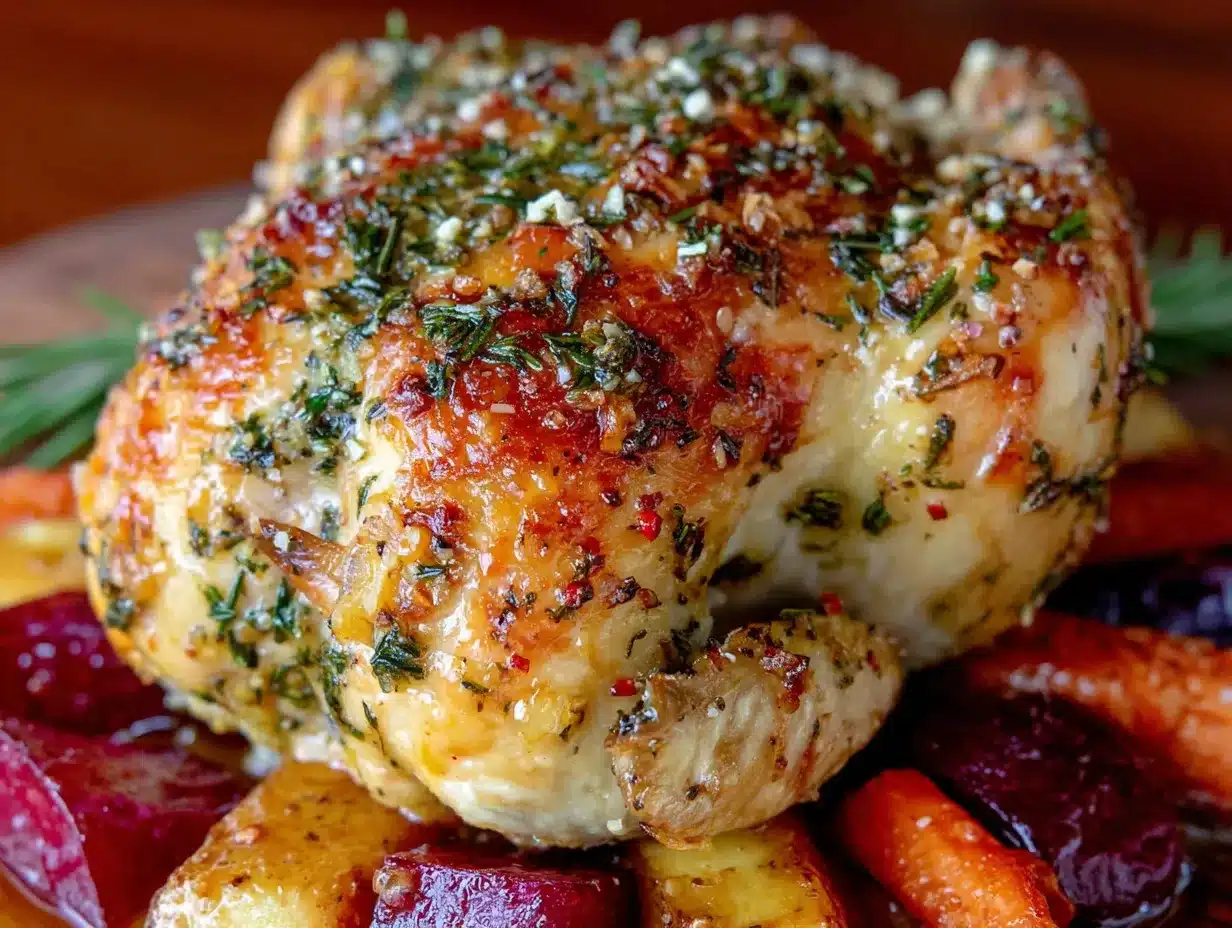
- Carrots: 1 pound, peeled and cut into large chunks. (Large chunks prevent them from turning to mush.)
- Parsnips: 1 pound, peeled and cut into large chunks. (Parsnips add a natural sweetness that balances the herbs.)
- Red Onion: 1 large, cut into wedges. (Red onions caramelize beautifully and add a mild sweetness.)
- Extra Virgin Olive Oil: 3 tablespoons. (Use a high-quality oil for the best flavor.)
- Dried Oregano: 1 teaspoon. (A little goes a long way for an earthy base note.)
For substitutions, you can swap parsnips for sweet potatoes if you prefer a different texture. You can also use chicken thighs instead of a whole bird for a quicker cook time, though the skin won’t get as crispy. If you are gluten-free, this recipe is naturally safe, but always check your spice blends for hidden additives. The simplicity of these ingredients allows their natural flavors to shine, creating a dish that feels both elegant and approachable.
Equipment Needed
You don’t need a fancy kitchen to make this, but having the right tools helps. A large roasting pan is essential. I use a heavy-gauge stainless steel pan because it distributes heat evenly. Glass pans work too, but they don’t brown the vegetables as well. A sharp chef’s knife is your best friend here. Dull knives slip and can be dangerous, especially when dealing with round vegetables like onions and potatoes. I recommend keeping your knives sharpened; it makes prep feel like a meditative process rather than a chore.
A meat thermometer is non-negotiable. I know it feels like cheating, but it’s the only way to guarantee juicy meat. Guessing leads to dry chicken every time. Look for an instant-read thermometer that gives you a reading in seconds. If you don’t have one, you can check by piercing the thickest part of the thigh; the juices should run clear, not pink. Also, have a large cutting board ready. I use a thick wooden one because it doesn’t slip. Just remember to sanitize it thoroughly after handling raw chicken to avoid cross-contamination.
Budget-friendly options include using a rimmed baking sheet instead of a roasting pan. It’s easier to store and clean. You can also use aluminum foil to line the pan for easy cleanup, though it might affect browning slightly. For the herb butter, a small mixing bowl and a fork are all you need. Nothing too specialized. The key is having sturdy tools that can handle the heat and the prep work. Good equipment lasts a lifetime and makes cooking more enjoyable.
Preparation Method
Start by preheating your oven to 425°F (220°C). This high heat is crucial for getting that crispy skin. While the oven heats, take your chicken out of the fridge and let it come to room temperature for about 30 minutes. This helps it cook more evenly. Pat the chicken dry with paper towels. Seriously, get it as dry as possible. Moisture is the enemy of crispiness. If the skin is wet, it will steam in the oven. I usually spend a good five minutes drying it, and it’s worth the effort.
Step 1: Prepare the Herb Butter.
In a small bowl, combine the softened butter, minced garlic, chopped rosemary, thyme leaves, and a generous pinch of salt and pepper. Mix it until it forms a fragrant paste. This is the flavor bomb of the dish. The garlic should be finely minced so it distributes evenly. If you have large chunks of garlic, you’ll get a hot bite that’s unpleasant. Mix it well until the herbs are fully incorporated into the butter.
Step 2: Season the Chicken.
Gently loosen the skin over the breast and thighs using your fingers. Be careful not to tear the skin. Slide your fingers under the skin and push the herb butter mixture underneath. Spread it around so the meat is coated. Then, rub the remaining butter over the outside of the skin. Season the outside generously with salt and pepper. Place the halved lemon inside the cavity of the chicken. This infuses the meat with citrus flavor from the inside out. Truss the legs with kitchen twine if you like, but it’s not strictly necessary.
Step 3: Prep the Vegetables.
On a large cutting board, chop the carrots, parsnips, and red onion into large, uniform chunks. Toss them in a large bowl with olive oil, dried oregano, salt, and pepper. You want them well-coated but not drowning in oil. Spread them out on a separate baking sheet or in the bottom of the roasting pan. If using a roasting pan, arrange the veggies around where the chicken will sit. This allows them to catch the drippings.
Step 4: Roast the Chicken.
Place the chicken on a rack over the roasting pan, or directly on the vegetables if you prefer a messier, juicier result. Put it in the oven and roast for 20 minutes. Then, reduce the heat to 375°F (190°C) and continue roasting for another 45-60 minutes. The total time depends on the size of the bird. You are looking for an internal temperature of 165°F (74°C) in the thickest part of the thigh. Use your meat thermometer to check. Avoid piercing the breast meat too much, or you’ll lose the juices.
Step 5: Rest and Serve.
Once the chicken is done, remove it from the oven. Transfer it to a cutting board and tent it loosely with foil. Let it rest for at least 15 minutes. This is the most important step. Resting allows the juices to redistribute throughout the meat. If you cut it immediately, all the juice will run out, and the meat will be dry. While the chicken rests, you can toss the vegetables in the pan juices and give them a final stir. Carve the chicken and serve with the roasted vegetables. The skin should be golden and crispy, and the meat should be tender.
Cooking Tips & Techniques
Getting crispy skin is an art form, and it comes down to dryness and heat. I’ve made the mistake of skipping the drying step before, and the result was rubbery skin. Always pat your chicken dry. If you have time, leave the uncovered chicken in the fridge overnight. This air-dries the skin further, leading to even better crispiness. It’s a pro tip that makes a huge difference. Also, don’t be afraid of high heat. Starting at 425°F helps render the fat and crisp the skin quickly.
Another common mistake is overcrowding the pan. If your vegetables are too close together, they will steam instead of roast. Make sure there is space between the pieces so air can circulate. If you are roasting a large amount of veggies, use two baking sheets. It’s better to roast in batches than to have soggy vegetables. Also, turn the vegetables halfway through the cooking time. This ensures they brown evenly on all sides. I usually check on them when I flip the chicken.
Multitasking is key here. While the chicken rests, you can make a quick pan sauce. Deglaze the roasting pan with a cup of white wine or chicken broth. Scrape up the brown bits (fond) from the bottom. That’s where all the flavor is. Simmer it for a few minutes until it reduces slightly. Pour this over the carved chicken for an extra layer of taste. It’s a simple technique that elevates the dish from good to great. Don’t throw away those drippings!
Timing is everything. If your vegetables are smaller than the chicken cook time, add them later. Root vegetables like carrots and parsnips take about 45-60 minutes to roast. If you put them in at the start with the chicken, they might overcook. I often add them to the pan during the last 30 minutes of roasting. This ensures they are tender but still have some bite. Adjust based on your preference. Some people like mushy veggies, but I prefer a little texture.
Variations & Adaptations
This recipe is very flexible, so don’t be afraid to experiment. For a gluten-free option, just ensure your spices are certified gluten-free. Most are, but it’s good to check. If you want a lower-carb version, swap the root vegetables for broccoli, cauliflower, or zucchini. These cook faster, so add them in the last 20 minutes. They absorb the herb flavors beautifully. I’ve tried this with Brussels sprouts, and they get amazing crispy edges.
For a different flavor profile, try swapping the herbs. Lemon thyme and garlic work well together. Or go Mediterranean with oregano, lemon, and olives. I once added sun-dried tomatoes to the vegetable mix, and it was delicious. The tanginess cut through the richness of the chicken. You can also add potatoes. Yukon Gold potatoes are great because they stay creamy inside and crisp outside. Cut them into similar-sized pieces as the carrots for even cooking.
If you are cooking for a smaller family, use chicken thighs and breasts instead of a whole bird. Season them the same way and roast them on a baking sheet. They will cook in about 30-40 minutes. This is a great weeknight alternative. For a vegetarian version, you can skip the chicken and roast a large head of cauliflower with the herbs. It gets a meaty texture and soaks up the flavors. I’ve even tried it with tofu, marinated in the herb butter beforehand.
Seasonal variations are fun. In summer, add bell peppers and corn to the mix. In winter, stick to root vegetables and hearty greens like kale. The key is to match the vegetables to the season. It makes the meal feel timely and fresh. You can also adjust the spice level by adding red pepper flakes to the herb butter. It adds a nice kick that pairs well with the sweetness of the carrots. Experiment until you find your perfect combination.
Serving & Storage Suggestions
Serve this chicken hot, right out of the oven. The skin is best when it’s fresh and crispy. Pair it with a simple green salad or steamed green beans to balance the richness. A glass of white wine, like a Sauvignon Blanc or Pinot Grigio, complements the herbs and lemon nicely. For a heartier meal, serve with crusty bread to soak up the pan juices. The presentation should be rustic. Just pile everything onto a large platter and pass it around. It’s inviting and communal.
Leftovers are great, but the skin will lose its crispiness. Store the chicken and vegetables in an airtight container in the refrigerator for up to 3 days. To reheat, use an oven or air fryer at 350°F (175°C) for about 10-15 minutes. This helps restore some of the crispiness. Avoid the microwave, as it will make the skin soggy and the meat tough. The vegetables reheat well in the oven too. They actually taste better the next day as the flavors meld together.
You can also freeze the chicken, but the texture of the skin might change. Wrap it tightly in plastic wrap and foil. It will keep for up to 3 months. Thaw it in the refrigerator before reheating. For the vegetables, freezing is not recommended as they can become mushy upon thawing. It’s best to enjoy the veggies fresh. If you have a lot of leftovers, consider making a chicken salad or soup with the meat. It’s a great way to use up the carcass for stock.
The flavors develop over time, especially in the vegetables. The carrots and parsnips become sweeter as they sit in the chicken juices. It’s a comforting meal that gets better with time. I often eat leftovers for lunch the next day. It’s satisfying and easy to reheat. Just remember to store everything properly to maintain freshness. Label your containers with the date so you know how long they’ve been sitting. Food safety is important, but so is minimizing waste.
Nutritional Information & Benefits
This recipe is a balanced meal with lean protein, healthy fats, and fiber-rich vegetables. A typical serving includes about 400-500 calories, depending on the size of the portion and the amount of skin consumed. The chicken provides high-quality protein, which is essential for muscle repair and satiety. The olive oil and butter contribute healthy fats, which help absorb fat-soluble vitamins from the vegetables. The root vegetables are rich in vitamins A and C, as well as potassium and fiber.
Herbs like rosemary and thyme have antioxidant properties, adding a health boost to the dish. Garlic is known for its immune-boosting benefits. Overall, this is a nutrient-dense meal that supports overall wellness. It’s not a diet food, but it’s certainly not unhealthy. It’s about moderation and balance. I enjoy this as a weekly treat, not an everyday staple. It’s a way to nourish your body with wholesome, real food. If you have specific dietary needs, adjust the ingredients accordingly, but the core recipe is quite versatile.
Conclusion
This crispy herb-roasted chicken is more than just a meal; it’s a reminder to slow down and enjoy the process. It’s easy to make, incredibly delicious, and perfect for any occasion. I hope you try it and find your own way to make it yours. Don’t be afraid to tweak the herbs or vegetables. Cooking is about experimentation. Share your results with me in the comments below. I love hearing how people adapt recipes to their tastes. And if you make this, snap a photo and tag me. I’d love to see your creations. Happy cooking!
FAQs
Can I use frozen vegetables?
It’s not recommended. Frozen vegetables release a lot of water, which will steam them instead of roasting them. You’ll end up with soggy, mushy veggies. Fresh vegetables are best for achieving that caramelized, crispy texture. If you must use frozen, thaw them completely and pat them dry before roasting, but the results won’t be the same.
How do I know when the chicken is done?
The best way is to use a meat thermometer. Insert it into the thickest part of the thigh without touching the bone. It should read 165°F (74°C). If you don’t have a thermometer, pierce the thigh. The juices should run clear, not pink. Also, the leg should wiggle freely in the joint. This indicates the connective tissues have broken down.
Can I make this in an Instant Pot?
You can cook the chicken in an Instant Pot, but you won’t get crispy skin. The pressure cooking method steams the meat. For crispy skin, roasting in the oven is essential. If you use an Instant Pot, you can broil the chicken for a few minutes at the end to crisp up the skin, but it’s not as effective as roasting from the start.
What herbs work best with chicken?
Classic pairings include rosemary, thyme, sage, and parsley. Lemon thyme is particularly nice. You can also use dried herbs if fresh aren’t available, but use half the amount. Dried herbs are more potent. Experiment with different combinations to find your favorite. Garlic and onion powder also add great flavor.
Can I stuff the chicken with other things?
Yes, you can stuff the cavity with onions, garlic, and citrus fruits. Just avoid stuffing it with bread or sausage, as this can affect cooking time and safety. The goal is to infuse flavor from the inside, not to create a dense stuffing that might not cook thoroughly. Lemon halves and herb bundles are safe and effective choices.
Pin This Recipe!
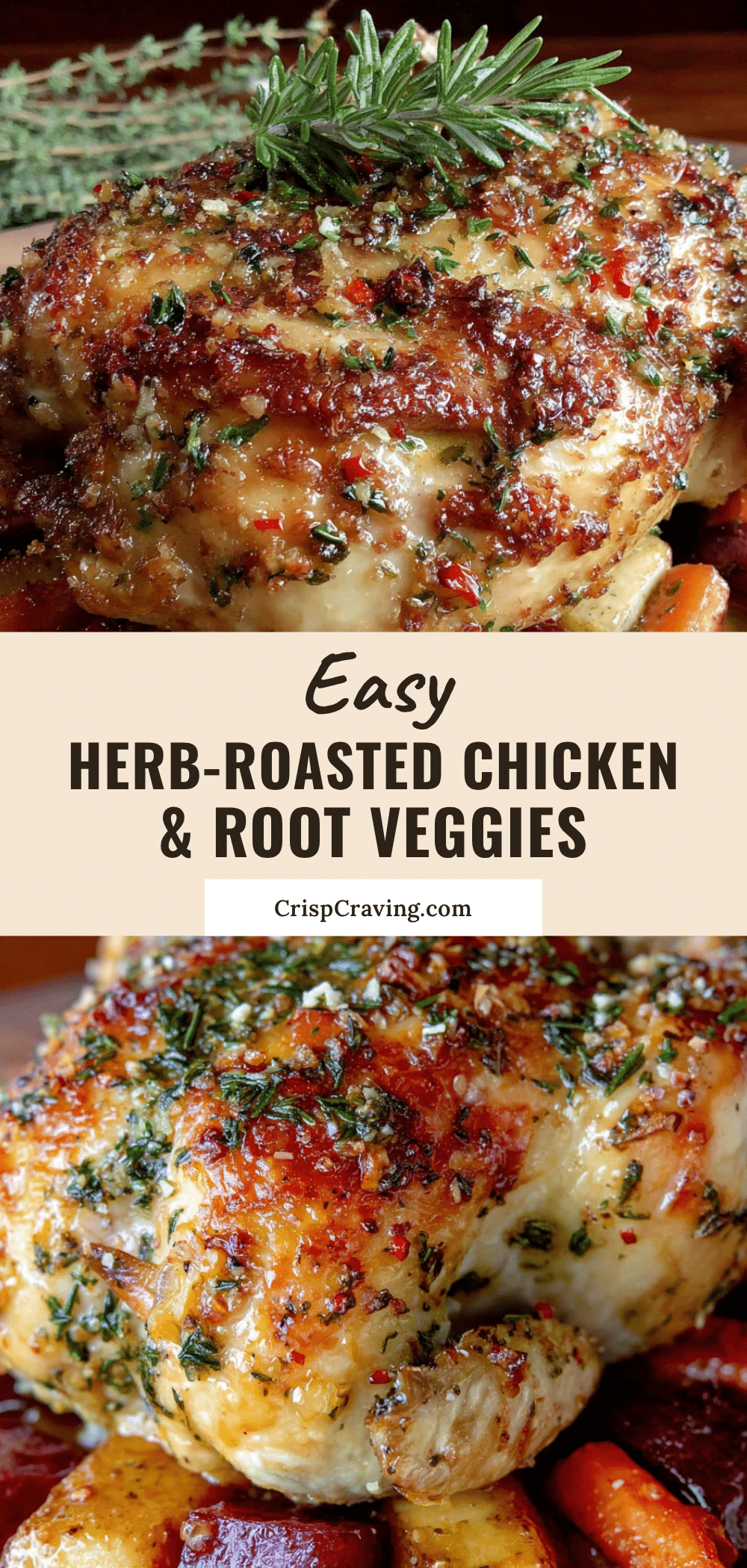
Crispy Herb-Roasted Chicken: Best Easy Weeknight Dinner
A flavorful and crispy herb-roasted whole chicken with root vegetables, featuring a secret herb butter rub under the skin for maximum taste and texture.
- Prep Time: 15 minutes
- Cook Time: 65-80 minutes
- Total Time: 80-95 minutes
- Yield: 4 servings 1x
- Category: Main Course
- Cuisine: American
Ingredients
- 1 whole chicken (4–5 pounds), patted dry
- 4 tablespoons unsalted butter, softened
- 2 large sprigs fresh rosemary, leaves stripped and chopped
- 1 large sprig fresh thyme, leaves stripped
- 4 cloves garlic, minced
- 1 whole lemon, halved
- Sea salt and black pepper, to taste
- 1 pound carrots, peeled and cut into large chunks
- 1 pound parsnips, peeled and cut into large chunks
- 1 large red onion, cut into wedges
- 3 tablespoons extra virgin olive oil
- 1 teaspoon dried oregano
Instructions
- Preheat oven to 425°F (220°C). Let chicken come to room temperature for 30 minutes and pat dry thoroughly.
- In a small bowl, mix softened butter, minced garlic, chopped rosemary, thyme leaves, salt, and pepper to form a paste.
- Gently loosen the skin over the breast and thighs. Slide the herb butter mixture under the skin, spreading it evenly. Rub remaining butter on the outside of the skin.
- Season the outside of the chicken generously with salt and pepper. Place halved lemon inside the cavity.
- Toss carrots, parsnips, and red onion with olive oil, dried oregano, salt, and pepper. Arrange vegetables in the bottom of a roasting pan.
- Place chicken on a rack over the pan (or directly on veggies). Roast at 425°F for 20 minutes.
- Reduce heat to 375°F (190°C) and roast for another 45-60 minutes, until internal temperature reaches 165°F (74°C).
- Remove chicken from oven and tent loosely with foil. Rest for at least 15 minutes before carving and serving with vegetables.
Notes
Patting the chicken dry is crucial for crispy skin. If you have time, leave the uncovered chicken in the fridge overnight to air-dry the skin further. Do not overcrowd the pan with vegetables to ensure they roast rather than steam. Resting the chicken for 15 minutes is essential to retain juices.
Nutrition
- Serving Size: 1/4 of the chicken w
- Calories: 450
- Sugar: 8
- Sodium: 600
- Fat: 28
- Saturated Fat: 10
- Carbohydrates: 25
- Fiber: 5
- Protein: 30
Keywords: roasted chicken, herb butter, crispy skin, weeknight dinner, root vegetables, easy chicken recipe, family dinner