Love this? Save it for later!
Share the inspiration with your friends
Last Tuesday, I stood in my kitchen staring at a rotisserie chicken like it held the secrets to the universe. The weather had turned—that sharp, biting cold that sneaks into your bones no matter how many sweaters you pile on—and I was supposed to be making a complicated Thai curry from scratch. I had the lemongrass, the galangal, the kaffir lime leaves all laid out on the counter. But honestly, my hands were freezing, the wind was howling outside, and I just couldn’t bring myself to do all that chopping and pounding.
So I grabbed the wrong pot—a massive Dutch oven instead of the wok I needed—and threw in some onions I found rolling around in the bottom of the pantry. I was already annoyed at myself for giving up on the curry plan. Then I realized I had no ginger left because I’d used it all last weekend. That’s when I spotted the rotisserie chicken, still in its plastic container from the grocery store run I’d made two days prior. I tore it apart with my bare hands—kind of aggressively, I’ll admit—and tossed the bones into the pot with the onions. I figured at least I’d have some decent stock for tomorrow’s lunch. You know that feeling when you’re already defeated by dinner before you even start cooking? That was me.
An hour later, the apartment smelled like my grandmother’s house on a snow day. I had noodles bubbling away, shreds of that chicken floating in a broth that had turned golden and rich without me really trying. I grabbed a ladle, tasted it, and honestly, I let out this little laugh. It was better than the curry would have been. I mean, the curry would have been great—but this was something else. This was the kind of soup that makes you close your eyes and forget about the cold for a minute. And I’ve been making it every Tuesday since, because some things are too good to be a one-time accident.
Why You’ll Love This Recipe
Let me tell you why this soup keeps showing up in my kitchen week after week. First off, it’s built around a rotisserie chicken, which means you get that deep, slow-cooked flavor without spending all day watching a pot. The chicken is already cooked and seasoned, so you’re really just coaxing the goodness out of it.
- Quick & Easy: This soup comes together in about 45 minutes, most of which is hands-off simmering. Perfect for those evenings when you walk in the door cold and hungry.
- Simple Ingredients: You probably have most of this stuff already—onions, carrots, celery, garlic, noodles. The rotisserie chicken does the heavy lifting.
- Perfect for Chilly Days: This is the soup you want when the wind is biting and you need something that warms you from the inside out. It’s like a hug in a bowl, honestly.
- Crowd-Pleaser: I’ve served this to picky kids, soup snobs, and people who swear they don’t like chicken noodle soup. Empty bowls every single time.
- Unbelievably Delicious: The secret is simmering the chicken bones right in the broth. That extra step—which isn’t really extra because you’re just letting it bubble—gives you a stock that tastes like you’ve been cooking it for hours.
What makes this different from every other chicken noodle soup recipe? It’s the way the rotisserie chicken infuses the broth with its roasted, slightly smoky flavor. You don’t get that from raw chicken breasts. And the noodles soak up all that goodness without turning mushy because we add them at just the right moment. This isn’t just another soup—it’s your new cold-weather ritual.
What Ingredients You Will Need
This recipe uses simple, wholesome ingredients that work together to create something truly comforting. Most of these are pantry staples, which makes this soup an easy weeknight win.
For the Broth Base:
- 1 whole rotisserie chicken (about 2-3 pounds) — the star of the show, already seasoned and roasted
- 2 tablespoons olive oil or butter — for sautéing the vegetables
- 1 large yellow onion, diced — adds sweetness and depth
- 3 medium carrots, peeled and sliced into rounds — for sweetness and color
- 3 celery stalks, sliced — that classic savory note
- 4 cloves garlic, minced — because everything needs garlic
- 8 cups chicken broth (low-sodium, preferably) — I like Swanson or Kitchen Basics for consistent flavor
- 2 cups water — helps stretch the broth without diluting flavor
- 1 teaspoon dried thyme — earthy and warming
- 1 bay leaf — adds subtle complexity
- Salt and black pepper to taste — go easy at first, the rotisserie chicken is already salty
For the Noodles and Chicken:
- 8 ounces wide egg noodles — they hold up better than thin noodles and catch the broth beautifully
- Meat from the rotisserie chicken, shredded (about 3-4 cups) — save the bones for simmering
- 2 tablespoons fresh parsley, chopped — for brightness at the end
- 1 tablespoon fresh lemon juice (optional) — brightens everything up
Ingredient Tips: When you pick up your rotisserie chicken, look for one that’s still warm if possible—the meat shreds more easily and the flavor is at its peak. I usually grab mine from Costco or the local grocery store deli. For the noodles, I’ve found that Reames frozen egg noodles are incredible if you can find them, but any wide egg noodle works. If you’re watching your sodium, use low-sodium broth and adjust the salt at the end—the rotisserie chicken adds plenty on its own.
Substitution Guidance: Need this gluten-free? Swap the egg noodles for your favorite gluten-free pasta or even rice noodles—just adjust the cooking time. Want it dairy-free? Use olive oil instead of butter. For a lighter version, you can use half the chicken and add more vegetables like zucchini or green beans. If you don’t have fresh parsley, a teaspoon of dried works fine. And if you’re out of thyme, try a pinch of poultry seasoning or dried rosemary—just go easy, rosemary is strong.
Equipment Needed
You don’t need a fancy kitchen to make this soup, which is part of its beauty. Here’s what you’ll need:
- Large Dutch oven or heavy-bottomed pot (at least 6 quarts) — I use my trusty Lodge enameled cast iron, but any large pot works. The heavy bottom helps distribute heat evenly so nothing scorches.
- Sharp chef’s knife — for dicing vegetables and shredding chicken. A dull knife makes everything harder, trust me.
- Cutting board — preferably a big one so you’re not working in a tiny space
- Wooden spoon or silicone spatula — for stirring without scratching your pot
- Measuring cups and spoons — for getting the broth and seasonings right
- Tongs or two forks — for shredding the chicken while it’s still warm
- Fine-mesh strainer (optional but helpful) — if you want to strain the broth for an extra-clear soup
- Ladle — for serving
If you don’t have a Dutch oven, a regular stockpot works just fine. I’ve made this soup in a cheap aluminum pot at a friend’s cabin, and it still came out amazing. The key is just having something big enough to hold everything. And if you don’t have a fine-mesh strainer, no worries—just use a slotted spoon to fish out the bones before adding the noodles.
Preparation Method
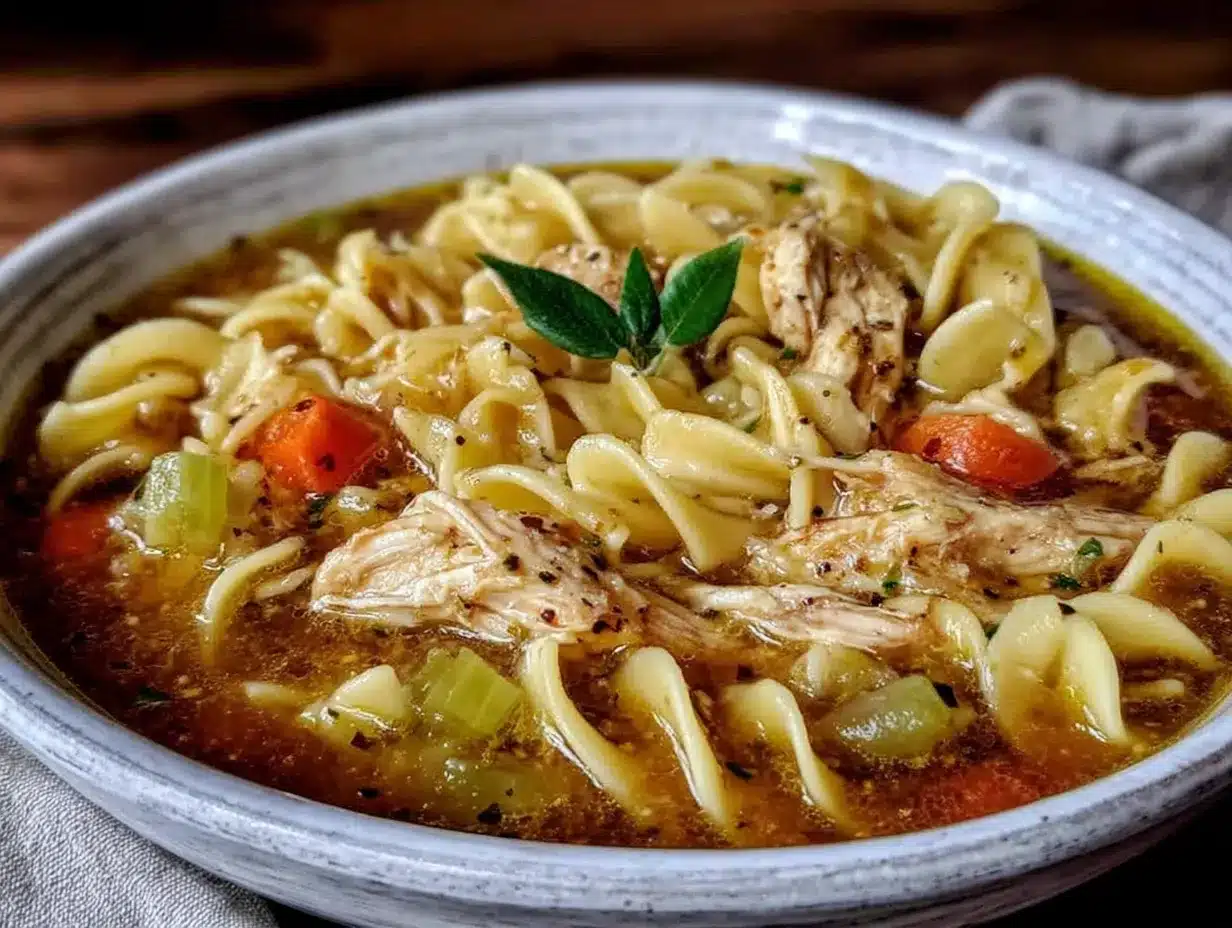
Let’s get cooking. This soup comes together in stages, but none of them are complicated. Take your time, and don’t rush the simmering part—that’s where the magic happens.
- Prep the chicken. Remove all the meat from the rotisserie chicken. I like to do this while the chicken is still warm—it’s easier and less messy. Shred the meat into bite-sized pieces and set it aside in a bowl. Don’t throw away the bones or the skin! You’ll use them to flavor the broth. (I usually save the wings and backbone for extra richness.)
- Sauté the vegetables. Heat the olive oil or butter in your Dutch oven over medium heat. Add the diced onion and cook for 4-5 minutes until it turns translucent and starts to soften. Add the carrots and celery, and cook for another 5 minutes, stirring occasionally. You want them to start softening but still have a little bite—they’ll finish cooking in the broth. Add the minced garlic and cook for 30 seconds until fragrant. Don’t let the garlic burn, or it’ll turn bitter.
- Build the broth. Pour in the chicken broth and water, then add the dried thyme, bay leaf, and a pinch of black pepper. Here’s the trick: add the chicken bones and skin to the pot. Yes, right in there. They’ll release all that roasted flavor into the broth as it simmers. Bring everything to a boil, then reduce the heat to low and let it simmer uncovered for 20 minutes. You’ll see the broth turn a deeper golden color—that’s the gelatin and flavor from the bones working their magic.
- Remove the bones. After 20 minutes, use tongs or a slotted spoon to carefully remove the chicken bones and any large pieces of skin from the pot. Take your time—you don’t want to leave any small bones behind. If you want an extra-clear broth, you can strain the whole thing through a fine-mesh strainer at this point, but I usually just fish them out. The broth should look rich and smell incredible.
- Cook the noodles. Bring the broth back to a gentle boil. Add the egg noodles and cook according to the package directions, usually about 6-8 minutes. Stir occasionally to prevent the noodles from sticking to the bottom. You want them tender but still firm—they’ll continue to soften slightly in the hot broth. (If you’re meal-prepping, cook the noodles separately and add them when serving to keep them from getting mushy.)
- Add the chicken. Once the noodles are cooked, reduce the heat to low and stir in the shredded chicken. Let it warm through for 2-3 minutes. You don’t want to boil the chicken or it’ll get tough and dry—just a gentle reheat is perfect.
- Finish and season. Remove the bay leaf and discard it. Stir in the fresh parsley and lemon juice if using. Taste the soup and adjust the seasoning—you’ll likely need some salt, but go slowly. The rotisserie chicken and broth already have salt, so add a pinch at a time until it tastes right to you. I usually end up adding about ½ teaspoon of salt and another ¼ teaspoon of pepper.
- Serve immediately. Ladle the soup into bowls and garnish with extra parsley if you’re feeling fancy. The noodles will continue to absorb broth as the soup sits, so if you’re not serving it all at once, consider keeping the noodles separate.
Sensory Cues: When the onions hit the hot oil, you should hear a gentle sizzle—if it’s silent, your pan isn’t hot enough. The broth should smell deeply savory and slightly herbal from the thyme. When the noodles are done, they should be tender but offer a slight resistance when you bite into them. And the final soup should look golden and inviting, with the carrots and celery peeking through the broth like little treasures.
Cooking Tips & Techniques
After making this soup more times than I can count—including that first accidental batch—I’ve picked up a few tricks that make a real difference. Let me share them with you.
Don’t skip the bone-simmering step. I know it seems fussy, but this is what separates good chicken noodle soup from great chicken noodle soup. The bones release collagen and gelatin into the broth, giving it body and richness that you just can’t get from boxed stock alone. I learned this the hard way after making a batch that tasted thin and watery. Now I never skip it.
Season in layers. Add a little salt at the beginning when you sauté the vegetables, a little more when you add the broth, and then adjust at the end. This builds flavor gradually instead of dumping it all in at once. I once added all the salt at the end and ended up with soup that was salty on the surface but bland underneath—not my finest moment.
Watch your noodle timing. Nothing ruins a good soup faster than mushy noodles. Cook them just until al dente, and remember they’ll continue to soften in the hot broth. If you’re making this soup ahead of time, here’s what I do: cook the noodles separately, rinse them with cold water to stop the cooking, and add them to individual bowls before ladling the hot soup over them. It works like a charm.
Use the whole chicken. Don’t just use the breast meat—the dark meat from the thighs and legs adds more flavor and stays moist in the soup. I used to only use breast meat because I thought it was healthier, but honestly, the dark meat makes the soup taste so much better. Now I use it all.
Let it rest. If you have time, let the soup sit for 10-15 minutes after it’s done before serving. The flavors meld together and the broth becomes even more cohesive. I know it’s hard to wait when you’re hungry, but it’s worth it.
Variations & Adaptations
One of the best things about this soup is how flexible it is. Here are some ways to make it your own.
Herb Swap: If you’re not a thyme fan—or you just want to mix it up—try using fresh dill instead. Add it at the end with the parsley for a bright, almost pickly note that’s amazing with the chicken. I made this version last spring and it was a total game-changer.
Vegetable Boost: Add a cup of frozen peas or corn in the last 5 minutes of cooking for extra color and sweetness. Or throw in some chopped zucchini or spinach right before serving. I sometimes add a handful of baby spinach at the end and let it wilt into the broth—it’s an easy way to sneak in some greens.
Spicy Twist: If you like a little heat, add a pinch of red pepper flakes along with the garlic, or stir in some sriracha or chili oil at the end. I made a spicy version for a friend who loves heat, and she said it was the best soup she’d ever had. Just go easy—you can always add more heat, but you can’t take it out.
Dairy-Free Option: Use olive oil instead of butter, and you’re good to go. The soup is naturally dairy-free otherwise. I’ve made it this way for a friend with a dairy allergy, and she couldn’t tell the difference.
Low-Carb Adaptation: Skip the noodles and add extra vegetables like zucchini noodles, cauliflower rice, or even just more carrots and celery. The broth is so flavorful that you won’t miss the noodles. I tried this with spiralized zucchini once, and it was surprisingly satisfying.
Serving & Storage Suggestions
This soup is at its best when served piping hot, with a crusty piece of bread or a simple side salad. I love to serve it with a grilled cheese sandwich for the ultimate comfort meal—the crispy bread and melty cheese are the perfect companions to the savory broth.
For presentation, ladle the soup into wide, shallow bowls so you can see all the good stuff—the noodles, the vegetables, the shreds of chicken. Sprinkle a little fresh parsley on top for color, and serve with a lemon wedge on the side if you want that extra brightness.
Storing Leftovers: Store the soup in an airtight container in the refrigerator for up to 4 days. Keep in mind that the noodles will continue to absorb broth as they sit, so the soup will thicken over time. If you’re planning to have leftovers, I recommend storing the noodles separately and adding them when reheating.
Freezing: This soup freezes beautifully for up to 3 months. Let it cool completely, then transfer to freezer-safe containers or zip-top bags. Leave a little room for expansion. When you’re ready to eat, thaw overnight in the refrigerator and reheat gently on the stovetop. Add a splash of broth or water if it’s too thick.
Reheating: Reheat individual portions in the microwave for 2-3 minutes, stirring halfway through. For larger portions, reheat on the stovetop over medium-low heat, stirring occasionally. If the soup has thickened too much, add a little chicken broth or water to thin it out. The flavors actually get better after a day or two in the fridge—it’s one of those soups that tastes even better the next day.
Nutritional Information & Benefits
Here’s an approximate nutritional breakdown for one serving (about 1.5 cups) of this soup:
- Calories: 320
- Protein: 28g
- Carbohydrates: 28g
- Fat: 12g
- Fiber: 3g
- Sodium: 780mg (varies based on broth and rotisserie chicken)
This soup is packed with protein from the chicken, which helps keep you full and satisfied. The carrots and celery provide vitamins A and C, plus fiber for digestive health. The broth is hydrating and warming—perfect for when you’re feeling under the weather or just need a little comfort.
The bone-simmering step also adds collagen and gelatin to the broth, which is great for joint health and skin elasticity. And because this soup is made with whole ingredients, it’s free from the preservatives and additives you’d find in canned versions. It’s a wholesome, nourishing meal that you can feel good about eating.
Dietary Considerations: This soup can be made gluten-free by using gluten-free noodles or rice. It’s naturally dairy-free if you use olive oil instead of butter. For a lower-sodium version, use low-sodium broth and skip the added salt—the rotisserie chicken will still provide plenty of flavor.
Conclusion
This cozy rotisserie chicken noodle soup started as a complete accident—a moment of frustration and a wrong turn in the kitchen that somehow led to something truly special. And honestly, that’s why I love it. It reminds me that you don’t need a perfect plan or fancy ingredients to create something wonderful. Sometimes the best meals come from just working with what you have and trusting the process.
I hope you give this soup a try, especially on one of those chilly days when you need something warm and comforting. And don’t be afraid to make it your own—swap in your favorite vegetables, add a little heat, or throw in some fresh herbs. The beauty of this recipe is that it’s forgiving and flexible, just like the best kitchen accidents always are.
If you make this soup, I’d love to hear about it! Leave a comment below and let me know how it turned out, or share your own twist on the recipe. And if you’re looking for more cozy soup ideas, check out my creamy tomato basil soup or this hearty beef stew—they’re perfect for those cold-weather cravings. Until next time, happy cooking, and stay warm out there!
Frequently Asked Questions
Can I use a different type of noodle?
Absolutely! Wide egg noodles are classic, but you can use any pasta you have on hand—spaghetti broken into pieces, bowtie pasta, or even rice noodles. Just adjust the cooking time according to the package directions.
How do I prevent the noodles from getting mushy?
The best trick is to cook the noodles separately and add them to individual bowls when serving. If you’re storing leftovers, keep the noodles in a separate container and add them when reheating. This keeps them from absorbing too much broth and turning soft.
Can I make this soup in a slow cooker?
Yes! Sauté the vegetables on the stovetop first, then transfer them to the slow cooker with the broth, seasonings, and chicken bones. Cook on low for 6-8 hours or high for 3-4 hours. Remove the bones, then add the shredded chicken and cooked noodles at the end.
What if I don’t have a rotisserie chicken?
You can use leftover cooked chicken or even poach raw chicken breasts in the broth. Just add the raw chicken at the beginning and cook until tender, then shred it. The flavor won’t be quite as rich, but it’ll still be delicious.
Can I add more vegetables?
Definitely! This soup is very forgiving. Try adding frozen peas, corn, green beans, or even chopped kale or spinach in the last few minutes of cooking. Just be careful not to overcrowd the pot—you want the broth to still be the star.
Pin This Recipe!
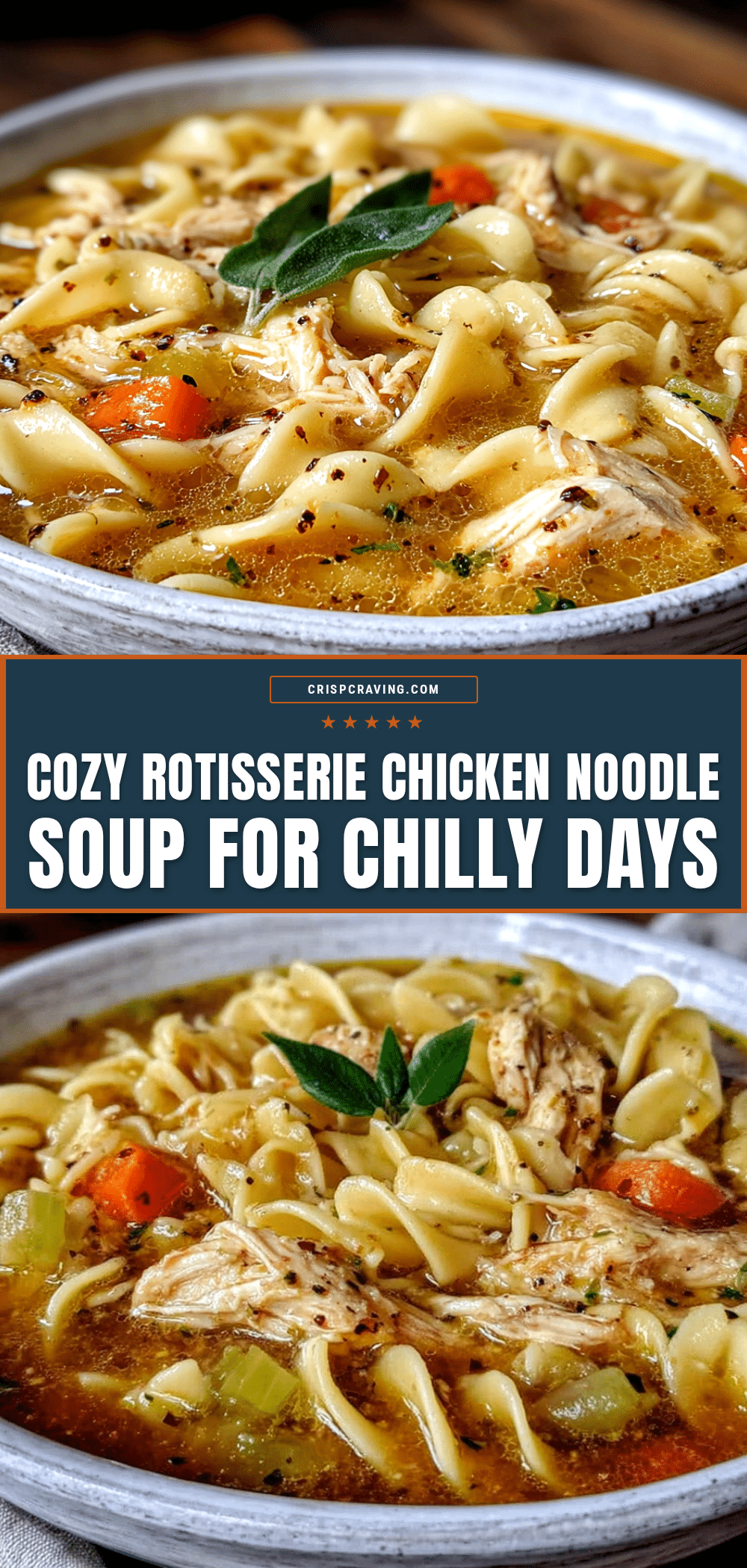
Cozy Rotisserie Chicken Noodle Soup for Chilly Days

A quick and easy chicken noodle soup made with a rotisserie chicken, simmered with bones for deep flavor. Perfect for cold days when you need something warm and comforting.
- Prep Time: 15 minutes
- Cook Time: 30 minutes
- Total Time: 45 minutes
- Yield: 6 servings 1x
- Category: Main Course
- Cuisine: American
Ingredients
- 1 whole rotisserie chicken (about 2–3 pounds)
- 2 tablespoons olive oil or butter
- 1 large yellow onion, diced
- 3 medium carrots, peeled and sliced into rounds
- 3 celery stalks, sliced
- 4 cloves garlic, minced
- 8 cups low-sodium chicken broth
- 2 cups water
- 1 teaspoon dried thyme
- 1 bay leaf
- Salt and black pepper to taste
- 8 ounces wide egg noodles
- Meat from the rotisserie chicken, shredded (about 3-4 cups)
- 2 tablespoons fresh parsley, chopped
- 1 tablespoon fresh lemon juice (optional)
Instructions
- Remove all the meat from the rotisserie chicken while still warm. Shred into bite-sized pieces and set aside. Save the bones and skin for the broth.
- Heat olive oil or butter in a large Dutch oven over medium heat. Add diced onion and cook for 4-5 minutes until translucent. Add carrots and celery, cook for another 5 minutes. Add minced garlic and cook for 30 seconds until fragrant.
- Pour in chicken broth and water. Add dried thyme, bay leaf, and a pinch of black pepper. Add the chicken bones and skin to the pot. Bring to a boil, then reduce heat to low and simmer uncovered for 20 minutes.
- Remove the chicken bones and skin from the pot using tongs or a slotted spoon. Optionally strain the broth through a fine-mesh strainer for a clearer soup.
- Bring the broth back to a gentle boil. Add egg noodles and cook according to package directions (about 6-8 minutes), stirring occasionally.
- Reduce heat to low and stir in the shredded chicken. Let warm through for 2-3 minutes.
- Remove the bay leaf and discard. Stir in fresh parsley and lemon juice if using. Taste and adjust seasoning with salt and pepper.
- Serve immediately, garnished with extra parsley if desired.
Notes
For best results, simmer the chicken bones in the broth for 20 minutes to extract maximum flavor. Cook noodles separately if meal-prepping to prevent them from getting mushy. The soup can be stored in the refrigerator for up to 4 days or frozen for up to 3 months.
Nutrition
- Serving Size: 1.5 cups
- Calories: 320
- Sugar: 5
- Sodium: 780
- Fat: 12
- Saturated Fat: 3
- Carbohydrates: 28
- Fiber: 3
- Protein: 28
Keywords: chicken noodle soup, rotisserie chicken, comfort food, easy soup, cold weather soup