Love this? Save it for later!
Share the inspiration with your friends
My daughter swore she hated squash for seven years. Seven. Years. That’s basically a lifetime when you’re talking about a kid who measures time in birthday parties and lost teeth. She’d scrunch up her nose at butternut soup, push acorn squash rings to the side of her plate, and declare with absolute certainty that “orange vegetables are for bunnies, not people.”
Then last October, I was making this brown sugar roasted acorn squash with pecans for a potluck. Just for the potluck, you understand. I wasn’t trying to prove anything. I wasn’t on some secret mission to convert a squash-hater. I was just making a dish I genuinely loved, humming along to some podcast, minding my own business.
I turned around from the sink to grab a dish towel and caught her. She was standing at the counter, fingers hovering over the baking sheet like she was about to commit a crime. She grabbed a piece, blew on it frantically, and ate it. Then another. Then she looked at me with these huge eyes and said, “Mom, this is candy.”
That’s the thing about this recipe, honestly. It tricks you. The squash gets all tender and caramelized, the brown sugar melts into the nooks and crannies, and the pecans toast up all buttery and crunchy. It tastes like something you should be eating for dessert, but it’s actually just vegetables doing their best impression. Maybe you’ve been there — trying to get a picky eater to eat something that’s actually good for them without it turning into a whole negotiation. This dish just skips the negotiation entirely.
I’ve made it every single week since that night. It’s the one vegetable dish that nobody argues about. Not my husband, not my squash-hating daughter, not even my mother-in-law who once told me squash was “depressing.” This recipe changed her mind too. I keep making it because it reminds me that sometimes the best wins aren’t the ones you were even trying for.
Why You’ll Love This Recipe
Let me tell you why this brown sugar roasted acorn squash with pecans has become my most-requested side dish. It’s not fancy or complicated, but it delivers every single time.
- Quick & Easy : This comes together in about 40 minutes, and most of that is hands-off oven time. You can prep it while the main dish is cooking.
- Simple Ingredients : You need acorn squash, brown sugar, butter, pecans, and a few pantry staples. No weird specialty items or expensive ingredients.
- Perfect for Family Dinners : It works for weeknight meals, Thanksgiving, Christmas, or just a regular Tuesday when you want something special.
- Crowd-Pleaser : Kids love it because it’s sweet. Adults love it because it’s sophisticated. Everybody wins.
- Unbelievably Delicious : The combination of soft, caramelized squash with crunchy, toasty pecans is honestly addictive. I’ve seen people eat this straight off the baking sheet.
What makes this recipe different from all the others? It’s the ratio. I’ve tested this about a dozen times to get the perfect balance of sweet and savory. The brown sugar doesn’t overwhelm the squash’s natural flavor — it just coaxes it out. And the pecans? They get tossed in halfway through so they toast perfectly without burning. That’s the kind of detail that comes from making this dish over and over until you get it just right.
This is the kind of recipe that makes you close your eyes after the first bite. It’s comfort food that somehow feels both indulgent and wholesome. And honestly? It’s the easiest way I know to make vegetables disappear at a family dinner.
What Ingredients You Will Need
This recipe uses simple, honest ingredients that work together to create something magical. Most of these are probably already in your kitchen, which is exactly how I like my recipes.
- Acorn squash, 2 medium (about 2 pounds total) — Look for squash that feels heavy for its size and has a deep green color with some orange patches. That orange means it’s ripe and sweet.
- Unsalted butter, 4 tablespoons (1/2 stick), melted — I use unsalted so I can control the salt level. If you only have salted, just skip the extra salt in the recipe.
- Brown sugar, 1/4 cup packed — Light or dark both work. Dark brown sugar gives a deeper, almost molasses flavor. Light is milder. I usually use light because that’s what I keep on hand.
- Pecans, 1/2 cup chopped — I buy pecan halves and chop them myself. Pre-chopped pecans can be stale and uneven. Toast them lightly before adding for extra flavor.
- Maple syrup, 2 tablespoons — Pure maple syrup, not pancake syrup. The real stuff makes a difference here. It adds complexity that corn syrup just can’t match.
- Cinnamon, 1/2 teaspoon — Fresh cinnamon is nice, but ground works perfectly. It adds warmth without overpowering the squash.
- Salt, 1/4 teaspoon — Just enough to balance the sweetness. I use fine sea salt.
- Vanilla extract, 1/2 teaspoon — Pure vanilla extract, not imitation. It rounds out all the flavors beautifully.
- Optional garnish: Fresh thyme leaves or a pinch of flaky sea salt — These add a lovely savory note that cuts through the sweetness.
I really recommend using a good-quality butter here. I know that sounds fussy, but butter is the backbone of this dish. I use Kerrygold when I can find it on sale, but any unsalted butter works fine. The pecan brand matters less — just make sure they smell fresh and not rancid when you open the bag.
For the brown sugar, I’ve tested this with both light and dark. My personal preference is light brown sugar because it lets the squash’s natural sweetness shine through. But if you want a richer, more caramel-like flavor, go dark. You really can’t go wrong either way.
One substitution note: if someone in your family has a nut allergy, you can leave out the pecans entirely or swap them for pepitas (pumpkin seeds). The texture will be different, but it’ll still be delicious. I’ve made it both ways and it works.
Equipment Needed
You don’t need a lot of fancy equipment for this recipe. That’s one of the things I love about it.
- Baking sheet, 1 large (13×18 inches) — A rimmed baking sheet is best so the butter and sugar don’t drip off. I use my old Nordic Ware sheet that’s seen better days but still works perfectly.
- Parchment paper or aluminum foil — Lining the pan makes cleanup so much easier. The sugar can get sticky and caramelized, and scraping that off a bare pan is no fun.
- Sharp chef’s knife — Acorn squash is tough. A sharp knife makes cutting it safely much easier. I learned this the hard way after nearly losing a finger to a dull blade.
- Large spoon or ice cream scoop — For scooping out the seeds and strings. An ice cream scoop works surprisingly well for this.
- Small bowl — For mixing the butter, brown sugar, maple syrup, and spices.
- Pastry brush — For brushing the mixture onto the squash. A silicone brush works great and is easy to clean.
- Measuring cups and spoons — Standard set for measuring ingredients accurately.
If you don’t have a pastry brush, you can just use a spoon to drizzle the mixture over the squash. It won’t be as evenly distributed, but it’ll still taste great. I’ve done it that way plenty of times when my brush was in the dishwasher.
One tip: if you’re buying a new baking sheet, get one with a rim. I learned that lesson when I used a flat cookie sheet once and ended up with butter and sugar all over the bottom of my oven. The smoke alarm did not appreciate it.
Preparation Method
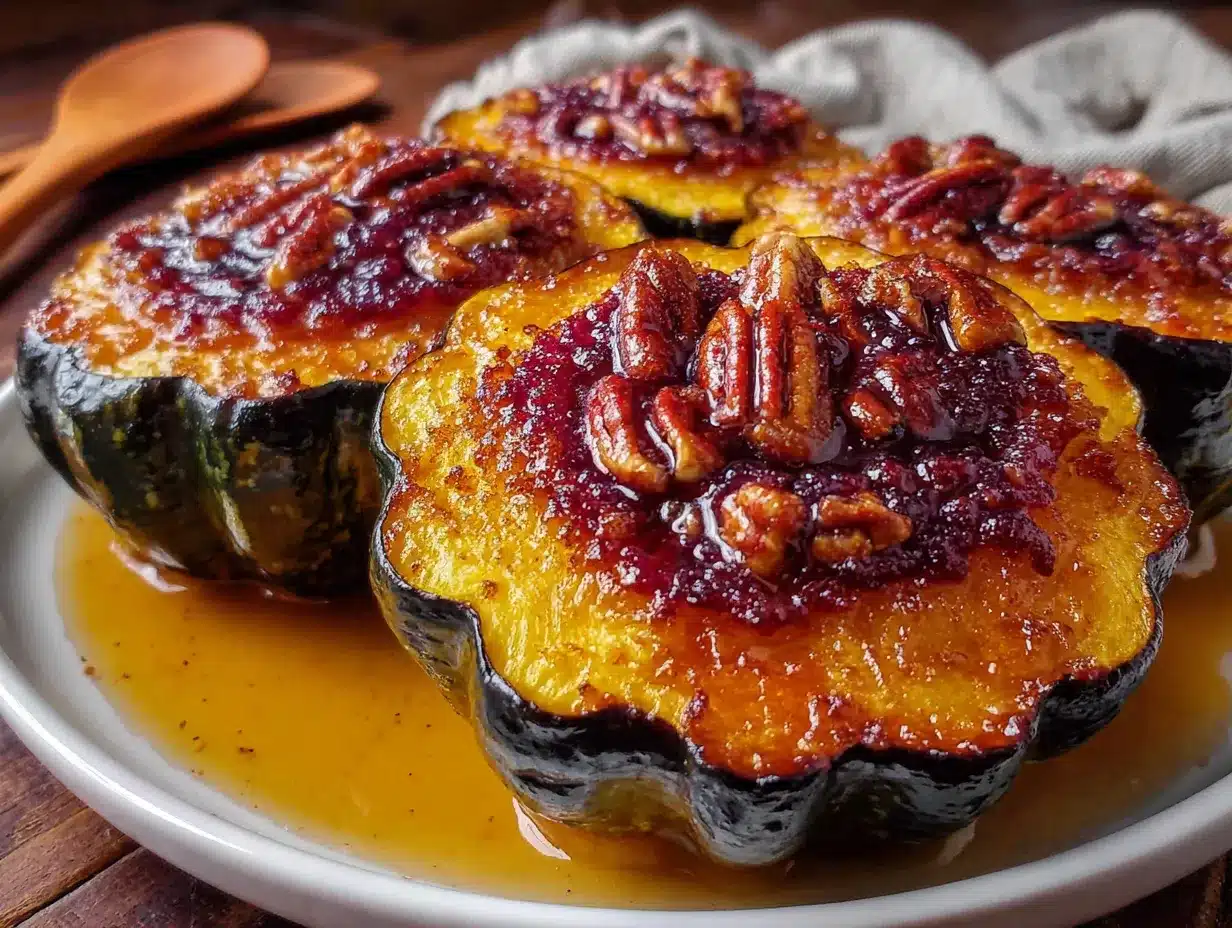
Alright, let’s get cooking. This is straightforward, but I’ll walk you through every step so you get perfect results.
Step 1: Preheat your oven to 400°F (200°C). Position the rack in the middle of the oven. Line your baking sheet with parchment paper or aluminum foil. Don’t skip this step — trust me, you’ll thank me later when you’re not scrubbing caramelized sugar off your pan.
Step 2: Prepare the acorn squash. Using a sharp chef’s knife, carefully cut each acorn squash in half from stem to root end. Be careful here — acorn squash is dense and can be tricky to cut. If it’s rolling around on your cutting board, slice a thin piece off the bottom to create a flat surface first. Scoop out the seeds and stringy pulp with a large spoon or ice cream scoop. You can save the seeds and roast them separately if you want, but I usually just toss them.
Step 3: Slice the squash into rings or half-moons. For even cooking, I like to cut each half into 1-inch thick slices. You’ll get about 4-5 slices per half. If you prefer, you can leave the halves intact and just roast them as boats. But slicing them into pieces gives more surface area for the glaze to caramelize, and that’s where the magic happens.
Step 4: Make the glaze. In a small bowl, combine the melted butter, packed brown sugar, maple syrup, cinnamon, salt, and vanilla extract. Whisk until smooth and well combined. Taste it — it should be sweet, buttery, and slightly spiced. If it tastes too sweet, add another pinch of salt to balance it.
Step 5: Arrange the squash on the baking sheet. Lay the squash slices in a single layer on your prepared baking sheet. Don’t overcrowd them — they need space to caramelize properly. If they’re too close together, they’ll steam instead of roast. Use two sheets if you need to.
Step 6: Brush the glaze onto the squash. Using your pastry brush, generously coat each slice with the butter-brown sugar mixture. Make sure to get it into all the nooks and crannies. Don’t be shy — this is where the flavor comes from. Reserve about 2 tablespoons of the glaze for later.
Step 7: Roast for 20 minutes. Place the baking sheet in the preheated oven and roast for 20 minutes. The squash should be starting to soften and the glaze should be bubbling.
Step 8: Add the pecans. After 20 minutes, remove the baking sheet from the oven. Sprinkle the chopped pecans evenly over the squash slices. Drizzle the remaining glaze over the top. Return to the oven and roast for another 15-20 minutes.
Step 9: Check for doneness. The squash is done when it’s fork-tender and the edges are caramelized and slightly browned. The pecans should be toasted and fragrant. If you want more caramelization, you can broil for 1-2 minutes at the end, but watch it carefully — sugar burns fast.
Step 10: Rest and serve. Let the squash rest on the baking sheet for 5 minutes before serving. This allows the glaze to set slightly. Transfer to a serving platter and garnish with fresh thyme leaves or a sprinkle of flaky sea salt if desired.
A few sensory cues to watch for: when the squash is ready, it should smell like a bakery — warm, sweet, and buttery. The glaze should be bubbling and thick, almost like caramel. The pecans should look golden and smell toasty. If you see any black spots on the pecans, they’re burning, so pull them out immediately.
One personal tip: I always set a timer for the second roasting stage. I’ve gotten distracted too many times and ended up with burnt pecans. It’s heartbreaking to ruin a beautiful dish because you got sucked into a phone call. Set the timer. Your future self will thank you.
Cooking Tips & Techniques
I’ve made this brown sugar roasted acorn squash with pecans at least thirty times, and I’ve learned a few things along the way. Let me save you from my mistakes.
Cut the squash evenly. This is the most important tip I can give you. If your slices are different thicknesses, some will be mushy while others are still crunchy. Aim for 1-inch thick slices and try to keep them uniform. I use a ruler the first time or two until I get the hang of it.
Don’t skip the salt. I know it seems counterintuitive to add salt to a sweet dish, but it makes a huge difference. Salt balances the sweetness and brings out the squash’s natural flavor. Without it, the dish tastes flat and one-dimensional.
Toast the pecans separately if you’re nervous. If you’ve had bad experiences with burning nuts, you can toast the pecans in a dry skillet over medium heat for 3-4 minutes before adding them to the squash. Then just sprinkle them on during the last 10 minutes of roasting. This gives you more control over the toasting process.
Use room temperature butter. Cold butter doesn’t mix well with brown sugar. Let your butter sit out for 15-20 minutes before starting. If you forget, you can microwave it in 5-second bursts, but be careful not to melt it completely — you want it soft, not liquid.
Line your pan. I already mentioned this, but I’m saying it again because it’s that important. The sugar will caramelize and stick to everything. Parchment paper makes cleanup a breeze. Aluminum foil works too, but spray it with nonstick spray first.
Watch the oven like a hawk at the end. Every oven runs differently. Your 400°F might be my 425°F. Start checking the squash at the 30-minute mark. The difference between perfectly caramelized and burnt is about two minutes. I learned this the hard way when I walked away to fold laundry and came back to smoking pecans.
Make extra glaze. I always double the glaze recipe and keep half aside. Sometimes I brush it on during the last 5 minutes for extra shine and flavor. It also works beautifully drizzled over the finished dish right before serving.
Variations & Adaptations
This recipe is wonderfully flexible. Here are some ways I’ve adapted it over the years.
Savory-Sweet Version: Add 1/4 teaspoon of cayenne pepper or red pepper flakes to the glaze. The heat cuts through the sweetness beautifully. I made this version for a dinner party once and it was the first thing to disappear. My friend Mark, who claims to hate sweet dishes, asked for the recipe.
Maple-Bourbon Twist: Replace the vanilla extract with 1 tablespoon of bourbon and increase the maple syrup to 3 tablespoons. The bourbon adds a smoky depth that pairs perfectly with the pecans. This is my go-to for Thanksgiving. Just be aware that the alcohol won’t completely cook off, so skip it if you’re serving kids.
Dairy-Free Version: Substitute the butter with coconut oil or a high-quality vegan butter. I’ve used both and they work well. Coconut oil adds a slight tropical note that’s actually pretty nice with the brown sugar. Miyoko’s vegan butter is my favorite for this.
Air Fryer Method: Cut the squash into smaller, 1/2-inch thick slices. Toss with the glaze and cook at 375°F for 12-15 minutes, shaking the basket halfway through. Add the pecans for the last 5 minutes. This method is faster and gives you extra crispy edges. I use this on busy weeknights when I don’t want to heat up the whole oven.
Different Nuts: Walnuts, almonds, or even hazelnuts work beautifully instead of pecans. Each brings its own personality. Walnuts are earthier, almonds are crunchier, and hazelnuts are sweeter. I’ve made it with all three and honestly can’t pick a favorite.
Spice It Up: Try adding 1/4 teaspoon of nutmeg, ginger, or cardamom to the glaze. Cardamom is especially lovely — it adds a floral, slightly citrusy note that feels very sophisticated. I discovered this combination by accident when I grabbed the wrong jar, and it was a happy accident.
Serving & Storage Suggestions
This dish is incredibly versatile when it comes to serving. Here’s how I like to do it.
Serving temperature: Serve it warm, straight from the oven. That’s when the glaze is at its most luscious and the pecans are at their crunchiest. It’s also delicious at room temperature, which makes it perfect for potlucks and buffets. I’ve even eaten it cold from the fridge the next day, and honestly? Still good.
Presentation: Arrange the squash slices on a platter in a single layer or slightly overlapping. Drizzle any remaining glaze from the pan over the top. Sprinkle with fresh thyme leaves or a pinch of flaky sea salt. The green thyme against the orange squash and brown pecans is gorgeous.
What to serve with it: This pairs beautifully with roasted chicken, pork chops, or a holiday turkey. I often serve it alongside a simple green salad with a vinaigrette to cut through the sweetness. It’s also amazing with honey glazed ham for Easter or Christmas dinner. For a vegetarian meal, try it with stuffed acorn squash for a double squash situation that nobody will complain about.
Storage: Store leftovers in an airtight container in the refrigerator for up to 4 days. The squash will soften more as it sits, and the pecans will lose some crunch, but the flavor actually gets better. I sometimes make this a day ahead for holidays just for that reason.
Reheating: The best way to reheat is in the oven at 350°F for 5-7 minutes. This helps restore some of the caramelization and crunch. The microwave works in a pinch, but the squash will be softer and the pecans will be chewy rather than crunchy. If you’re microwaving, only do 30-second intervals to avoid turning it into mush.
Freezing: I don’t recommend freezing this dish. The squash gets watery and the pecans turn soggy. If you absolutely must freeze it, leave the pecans off and add them fresh after reheating. But honestly, it’s so quick to make that freezing isn’t really necessary.
Flavor development: Here’s something interesting — the flavors actually meld and deepen overnight. The brown sugar and maple syrup soak into the squash, making it even more tender and sweet. The pecans soften, but the flavor becomes more integrated. My husband actually prefers this dish on day two. I like it fresh, but I get his point.
Nutritional Information & Benefits
Let’s talk about what’s actually in this dish, beyond the deliciousness.
Estimated nutritional values per serving (1/6 of recipe):
- Calories: 220
- Total Fat: 12g
- Saturated Fat: 5g
- Cholesterol: 20mg
- Sodium: 120mg
- Total Carbohydrates: 28g
- Dietary Fiber: 3g
- Sugars: 18g
- Protein: 3g
- Vitamin A: 45% DV
- Vitamin C: 20% DV
- Potassium: 10% DV
Health benefits of key ingredients: Acorn squash is packed with vitamin A (great for eye health), vitamin C (immune support), and fiber (digestive health). It’s also relatively low in calories for how satisfying it is. The pecans add healthy fats, protein, and magnesium. Even the butter and brown sugar have their place — a little bit of fat helps your body absorb the fat-soluble vitamins in the squash.
Dietary considerations: This recipe is vegetarian and can be made dairy-free with a simple substitution. It’s naturally gluten-free, which makes it a safe choice for guests with celiac disease or gluten sensitivity. The main allergen concerns are dairy (butter) and tree nuts (pecans).
My personal perspective: Look, this isn’t health food. It’s a vegetable dish that happens to be good for you. But I’ve found that when I make vegetables taste this good, my family actually eats them. And that’s a win in my book. A serving of this gives you a solid dose of vitamins and fiber, plus the satisfaction of eating something that feels like a treat. That’s a pretty good deal, if you ask me.
Conclusion
This brown sugar roasted acorn squash with pecans has become a staple in my kitchen for good reason. It’s simple enough for a Tuesday night, special enough for Thanksgiving, and delicious enough to convert even the most stubborn squash skeptics. My daughter went from “orange vegetables are for bunnies” to asking me to make this for her birthday dinner. That’s the kind of power this recipe has.
I hope you’ll try it and make it your own. Maybe you’ll add a little extra cinnamon, or swap the pecans for walnuts, or serve it alongside your favorite roast chicken. That’s the beauty of a good recipe — it gives you a solid foundation and then lets you play. Don’t be afraid to experiment. Cooking should be fun, not stressful.
I’d love to hear how it turns out for you. Did your kids eat it? Did you try a variation that blew your mind? Drop a comment below and let me know. And if you take a picture, tag me — I love seeing your creations. Until next time, happy cooking, and remember: sometimes the best dishes are the ones you make just for yourself that end up being for everyone.
Frequently Asked Questions
Can I use butternut squash instead of acorn squash?
Absolutely. Butternut squash works beautifully in this recipe. It’s a little sweeter and creamier than acorn squash, and it holds its shape well. Just peel it first and cut it into 1-inch cubes. The roasting time will be about the same, maybe 5 minutes less since cubes cook faster than rings.
How do I cut an acorn squash safely?
This is the part that makes people nervous, and I get it. First, microwave the whole squash for 2 minutes to soften it slightly. Let it cool, then slice off a thin piece from the bottom so it sits flat. Use a sharp chef’s knife and cut from top to bottom with steady pressure. If it’s really tough, you can tap the knife with a rubber mallet or your palm. Always cut away from your body. And please, for the love of all things good, keep your fingers curled under.
Can I make this ahead of time?
Yes, and I often do for holidays. Roast the squash completely, then let it cool and store it in the fridge. When you’re ready to serve, reheat it in a 350°F oven for 10-15 minutes. The pecans won’t be as crunchy, but the flavor will be even better. If you want extra crunch, add fresh toasted pecans right before serving.
Why did my pecans burn?
This happens when you add them too early or your oven runs hot. Pecans toast quickly, and the sugar in the glaze makes them burn even faster. Next time, add them during the last 10-12 minutes of roasting instead of the last 15-20. And check your oven temperature with an oven thermometer — you might need to reduce the heat by 25 degrees.
Can I leave out the brown sugar?
You can, but the dish won’t be the same. The brown sugar creates that caramelized glaze that makes this recipe special. If you’re reducing sugar, try using just maple syrup and a sugar substitute like monk fruit sweetener. Or you can skip the sweetener entirely and go for a savory version with olive oil, garlic, and herbs. It’s a completely different dish, but still delicious in its own way.
Pin This Recipe!
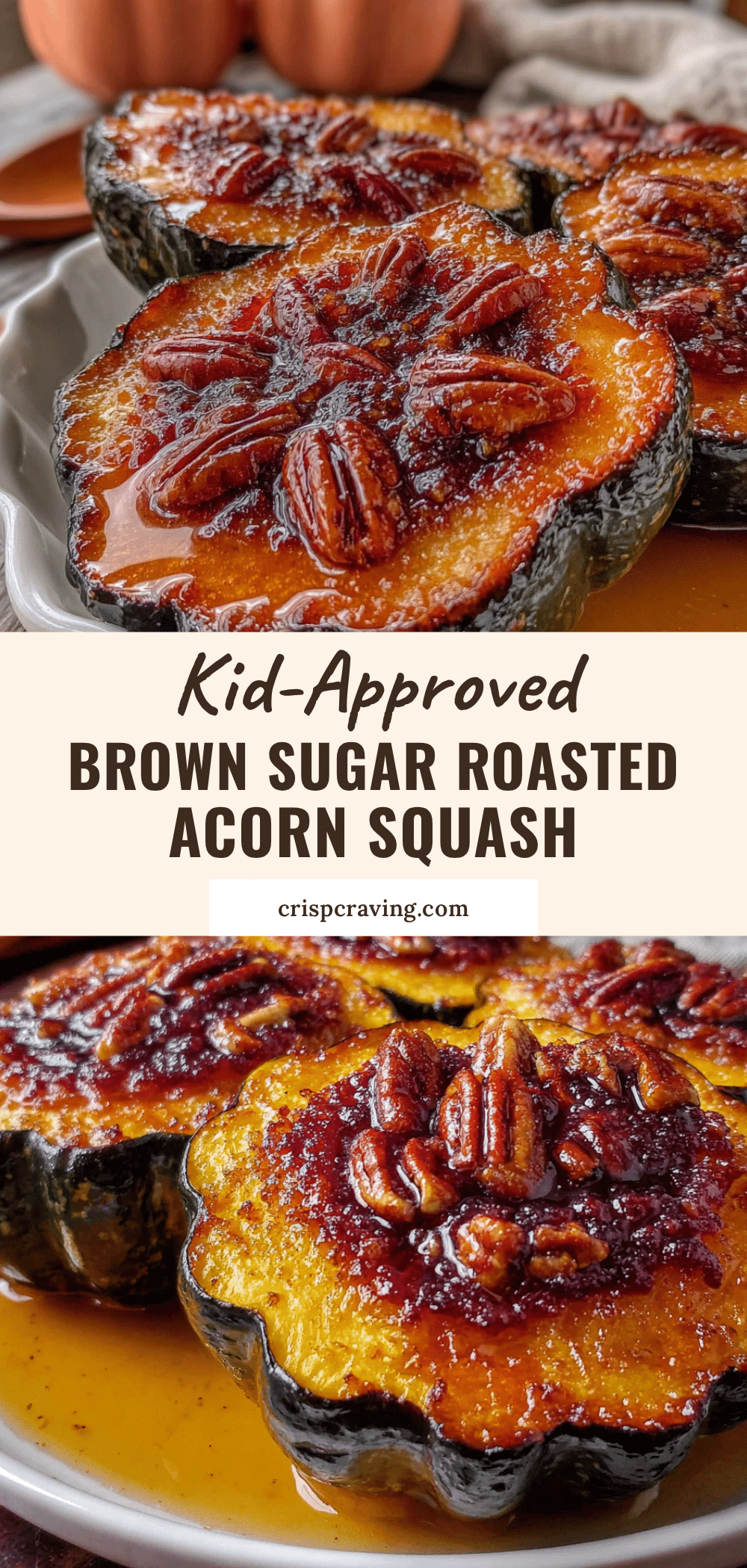
Best Easy Kid-Approved Brown Sugar Roasted Acorn Squash
Tender caramelized acorn squash with a buttery brown sugar glaze and crunchy toasted pecans. This easy side dish is so sweet and delicious that even picky eaters will ask for seconds.
- Prep Time: 10 minutes
- Cook Time: 35-40 minutes
- Total Time: 45-50 minutes
- Yield: 6 servings 1x
- Category: Side Dish
- Cuisine: American
Ingredients
- 2 medium acorn squash (about 2 pounds total)
- 4 tablespoons unsalted butter, melted
- 1/4 cup packed brown sugar (light or dark)
- 1/2 cup chopped pecans
- 2 tablespoons pure maple syrup
- 1/2 teaspoon ground cinnamon
- 1/4 teaspoon fine sea salt
- 1/2 teaspoon pure vanilla extract
- Optional garnish: fresh thyme leaves or flaky sea salt
Instructions
- Preheat oven to 400°F (200°C). Position rack in the middle. Line a large rimmed baking sheet with parchment paper or aluminum foil.
- Cut each acorn squash in half from stem to root end using a sharp chef’s knife. Scoop out seeds and stringy pulp with a large spoon or ice cream scoop.
- Slice each half into 1-inch thick rings or half-moons (about 4-5 slices per half).
- In a small bowl, whisk together melted butter, brown sugar, maple syrup, cinnamon, salt, and vanilla extract until smooth.
- Arrange squash slices in a single layer on the prepared baking sheet. Brush generously with the butter-brown sugar mixture, reserving about 2 tablespoons for later.
- Roast for 20 minutes until squash starts to soften and glaze is bubbling.
- Remove from oven. Sprinkle chopped pecans evenly over squash slices. Drizzle remaining glaze on top.
- Return to oven and roast for another 15-20 minutes until squash is fork-tender and edges are caramelized. Pecans should be toasted and fragrant.
- Optional: Broil for 1-2 minutes for extra caramelization, watching carefully to prevent burning.
- Let rest on baking sheet for 5 minutes before serving. Transfer to a platter and garnish with fresh thyme or flaky sea salt if desired.
Notes
For even cooking, cut squash slices uniformly about 1-inch thick. Don’t skip lining the pan—caramelized sugar is difficult to clean. Add pecans during the last 10-12 minutes if your oven runs hot to prevent burning. The flavors deepen overnight; leftovers taste even better the next day. For a dairy-free version, substitute coconut oil or vegan butter.
Nutrition
- Serving Size: 1/6 of recipe
- Calories: 220
- Sugar: 18
- Sodium: 120
- Fat: 12
- Saturated Fat: 5
- Carbohydrates: 28
- Fiber: 3
- Protein: 3
Keywords: roasted acorn squash, brown sugar squash, maple pecan squash, easy fall side dish, kid-friendly vegetables, Thanksgiving side dish, holiday squash recipe