Love this? Save it for later!
Share the inspiration with your friends
The woman at the next stall watched me squeeze every single butternut squash at the farmers’ market last October. She didn’t say anything at first, just leaned against her table piled high with the most gorgeous, knobby squash I’d ever seen. Then she picked one up, handed it to me, and said, “This one. It sat in the frost last week. It’ll be sweet as honey.”
Her name was Rosa, and she grew squash on a small patch of land about twenty miles outside the city. I told her I was on a mission to make a mac and cheese that didn’t feel like a compromise — you know, one that was creamy and indulgent but had a little something extra hidden inside. She laughed and said, “You’re overthinking it. Just roast it slow, don’t rush the cheese sauce, and for goodness’ sake, use real cheddar.”
So I did. Honestly, that conversation changed the way I think about cooking for a crowd. Rosa didn’t give me a recipe card or a list of measurements. She just talked about how the squash gets sweet and almost nutty when you let it caramelize in the oven, and how that sweetness plays off the sharpness of a good aged cheddar. I went home, roasted that squash she picked out, and started experimenting.
The first batch was good. The second was better. By the third, I had friends hovering around the stove with forks, asking what I’d done to make it taste so rich without being heavy. Maybe you’ve been there — trying to find that one dish that feels special enough for a dinner party but doesn’t have you sweating in the kitchen while your guests are arriving. This is that dish. It’s the one that made Rosa’s squash wisdom stick with me, and it’s the one I keep coming back to whenever I want to feed people something they’ll remember.
Why You’ll Love This Recipe
Let me tell you why this butternut squash mac and cheese has become my go-to for every gathering, from casual potlucks to more formal dinner parties. I’ve tested this recipe more times than I can count, and each time, I’m reminded why it works so beautifully.
- Quick & Easy : The active prep time is only about 20 minutes. The oven does the heavy lifting while you get everything else ready. It’s perfect for those evenings when you want something impressive but don’t have hours to spare.
- Simple Ingredients : No fancy grocery trips needed for obscure cheeses or hard-to-find spices. You likely already have most of these ingredients in your kitchen — pasta, butter, flour, milk, and cheddar. The butternut squash is the star, and it’s available at almost any grocery store during fall and winter.
- Perfect for Hosting : This dish was made for dinner parties and festive gatherings. It scales up beautifully for a crowd, and you can prep most of it before your guests arrive. I’ve brought this to Friendsgiving dinners, holiday potlucks, and casual Sunday suppers, and it always disappears first.
- Crowd-Pleaser : Here’s the thing — even people who claim they don’t like butternut squash love this mac and cheese. The squash blends into the sauce so seamlessly that it just tastes like the creamiest cheese sauce you’ve ever had. Kids and adults alike go back for seconds.
- Unbelievably Delicious : The texture is what gets me every time. The roasted squash creates this velvety, almost luscious sauce that coats every piece of pasta perfectly. It’s comfort food that feels a little bit elevated, but without any of the fussiness.
What makes this recipe different from all the other butternut squash mac and cheese recipes out there? It’s the technique. I roast the squash until it’s deeply caramelized — not just soft, but actually browned around the edges. That caramelization adds a depth of flavor that you just can’t get from boiling or steaming. The squash gets blended into a silky puree that melts into the cheese sauce, creating a creamy base that’s rich without being heavy. It’s comfort food reimagined — healthier, faster, but with the same soul-soothing satisfaction that makes mac and cheese the ultimate crowd-pleaser.
What Ingredients You Will Need
This recipe uses simple, wholesome ingredients that come together to create something truly special. The magic is in how they work together — the sweetness of the roasted squash balancing the sharpness of the cheddar, the creaminess of the sauce coating every piece of pasta.
For the Roasted Butternut Squash
- 1 medium butternut squash (about 2-2.5 pounds), peeled, seeded, and cut into 1-inch cubes — Look for squash that feels heavy for its size and has a creamy beige color. I’ve found that farmers’ market squash tends to be sweeter, but grocery store squash works perfectly too.
- 2 tablespoons olive oil — A good quality extra virgin olive oil adds a subtle fruity note, but regular olive oil works fine too.
- 1/2 teaspoon salt — I use kosher salt for its clean flavor and easy pinch-ability.
- 1/4 teaspoon black pepper — Freshly ground is always better, but pre-ground works in a pinch.
For the Pasta and Cheese Sauce
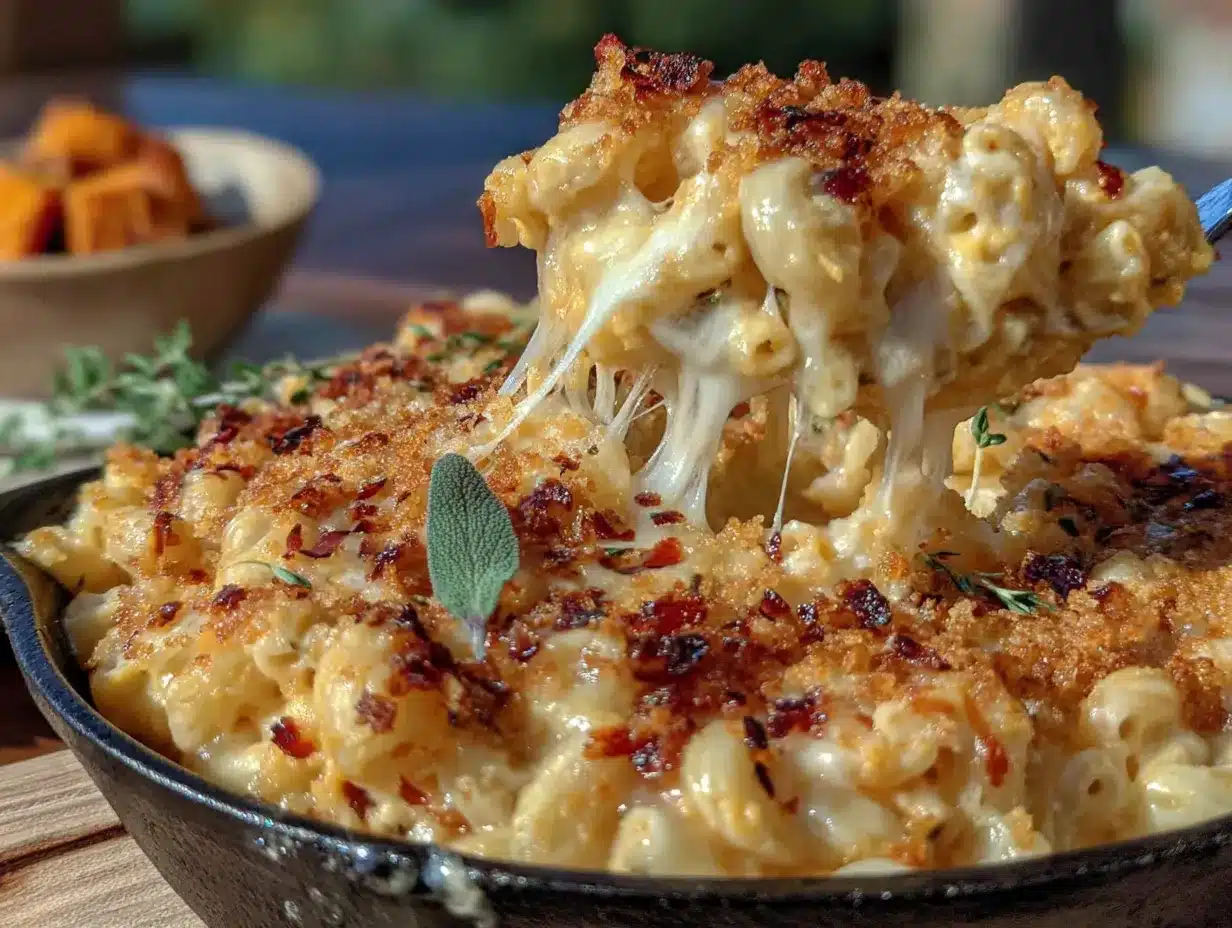
- 1 pound (16 ounces) elbow macaroni or cavatappi pasta — I love cavatappi for this recipe because the ridges catch all that creamy sauce. Elbow macaroni is classic and works beautifully too. Gluten-free pasta works well if you need it — just cook it al dente so it doesn’t get mushy in the bake.
- 4 tablespoons (1/2 stick) unsalted butter — I prefer unsalted so I can control the salt level. If you only have salted butter, just reduce the added salt by about 1/4 teaspoon.
- 1/4 cup all-purpose flour — This helps thicken the sauce. For a gluten-free version, use a 1:1 gluten-free flour blend.
- 2 cups whole milk — Whole milk gives the creamiest sauce, but 2% works well too. I don’t recommend skim milk — it won’t give you that luscious texture. For a dairy-free option, use unsweetened oat milk or cashew milk.
- 1 cup heavy cream — This adds richness, but you can substitute with an additional cup of whole milk if you want a lighter version.
- 2 cups (8 ounces) sharp cheddar cheese, freshly grated — Please, please grate your own cheese! Pre-shredded cheese has anti-caking agents that prevent it from melting smoothly. I recommend a good aged cheddar — the sharper, the better. Cabot and Kerrygold are my go-to brands for consistent quality.
- 1 cup (4 ounces) Gruyère or fontina cheese, freshly grated — This adds a nutty, melty quality that takes the sauce to another level. If you can’t find Gruyère, good quality Swiss cheese works too.
- 1/2 cup grated Parmesan cheese — For that salty, umami finish. I always use real Parmigiano-Reggiano when I can — it’s worth the splurge.
- 1 teaspoon Dijon mustard — This doesn’t make the sauce taste like mustard. It just brightens all the other flavors and helps the cheese melt more smoothly.
- 1/4 teaspoon nutmeg, freshly grated if possible — Nutmeg and butternut squash are a match made in heaven. A little goes a long way, so don’t overdo it.
- Salt and pepper to taste
For the Topping (Optional but Highly Recommended)
- 1/2 cup panko breadcrumbs — Regular breadcrumbs work, but panko gives a much crispier, crunchier topping.
- 2 tablespoons melted butter — To toast those breadcrumbs to golden perfection.
- 1/4 cup grated Parmesan cheese — Mixed into the breadcrumbs for extra flavor.
- Fresh thyme or sage leaves for garnish — Not just for looks — the herbs add a lovely aromatic note that complements the squash.
Equipment Needed
You don’t need a professional kitchen to make this recipe. Most of these tools are probably already in your kitchen drawers and cabinets.
- Baking sheet — A rimmed baking sheet works best for roasting the squash. I’ve used everything from a cheap nonstick sheet to a high-end half-sheet pan, and they all work fine. Just line it with parchment paper for easy cleanup.
- Large pot — For boiling the pasta. You want something big enough that the pasta has room to move around.
- Large saucepan or Dutch oven — For making the cheese sauce. A heavy-bottomed pan is ideal because it distributes heat evenly and prevents scorching. My Le Creuset Dutch oven is my favorite for this, but a good stainless steel saucepan works perfectly too.
- Blender or food processor — To puree the roasted squash into a silky sauce. An immersion blender works in a pinch, but a regular blender gives the smoothest results.
- Box grater or Microplane — For grating your cheese. Please don’t use pre-shredded cheese — I learned this the hard way after making a grainy sauce that never came together smoothly.
- 9×13 inch baking dish — For the final bake. A ceramic or glass dish works beautifully. If you’re feeding a smaller crowd, you can use an 8×8 inch dish and have slightly thicker portions.
- Whisk — For making the roux and stirring the cheese sauce. A good whisk helps prevent lumps.
- Wooden spoon or silicone spatula — For stirring everything together.
Budget-friendly tip: If you don’t have a baking dish, you can use a cast-iron skillet or even a disposable aluminum pan for the final bake. The cheese sauce can be made in any heavy-bottomed pot — it doesn’t have to be expensive.
Preparation Method
Let’s walk through this step by step. I’ve made this recipe dozens of times, and these are the exact steps I follow every time for consistent, perfect results.
Step 1: Roast the Butternut Squash
Preheat your oven to 400°F (200°C). While it’s heating, peel your butternut squash. I know peeling squash can feel like a workout, but here’s a trick: microwave the whole squash for 2-3 minutes first. It softens the skin just enough to make peeling much easier. Cut the squash in half lengthwise, scoop out the seeds (save them for roasting later if you’re feeling ambitious!), and cut the flesh into 1-inch cubes.
Toss the cubes with olive oil, salt, and pepper. Spread them in a single layer on your baking sheet — don’t overcrowd them, or they’ll steam instead of roast. Roast for 25-30 minutes, flipping halfway through. You want them tender and caramelized, with golden-brown edges. The smell in your kitchen at this point is absolutely incredible.
Step 2: Cook the Pasta
While the squash roasts, bring a large pot of generously salted water to a boil. Cook your pasta according to package directions, but aim for al dente — about 1-2 minutes less than the recommended time. The pasta will continue cooking in the oven, so you want it to be just firm to the bite. Reserve about 1 cup of pasta water before draining, then drain the pasta and set it aside.
Step 3: Make the Cheese Sauce
In your large saucepan or Dutch oven, melt the butter over medium heat. Once it’s foamy, whisk in the flour and cook for about 1-2 minutes, stirring constantly. This is your roux, and it should smell slightly nutty but not browned. Slowly pour in the milk and heavy cream, whisking continuously to prevent lumps. I like to add the liquid in a slow, steady stream while whisking vigorously.
Continue cooking the sauce over medium heat, stirring frequently, until it thickens enough to coat the back of a spoon — about 5-7 minutes. Don’t rush this step. If the heat is too high, the sauce can scorch on the bottom. I learned this the hard way when I was rushing for a dinner party and ended up with a slightly burnt sauce that I had to start over.
Step 4: Blend the Squash
Once your squash is roasted and slightly cooled, transfer it to a blender or food processor. Add about 1/2 cup of the milk mixture from the sauce and blend until completely smooth. The mixture should be velvety and thick. If it’s too thick to blend easily, add another splash of milk.
Step 5: Combine and Finish the Sauce
Reduce the heat on your sauce to low. Add the squash puree and whisk until fully incorporated. Now comes the cheese — add it gradually, a handful at a time, stirring constantly until each addition is melted before adding the next. This gradual addition is the secret to a smooth, non-grainy sauce. Stir in the Dijon mustard and nutmeg, then season with salt and pepper to taste. If the sauce seems too thick, thin it with a splash of your reserved pasta water.
Step 6: Assemble and Bake
Preheat your oven to 375°F (190°C). In a large bowl, combine the cooked pasta with the cheese sauce, stirring until every piece is coated. Transfer the mixture to your greased 9×13 inch baking dish and spread it evenly.
If you’re using the breadcrumb topping, mix the panko with melted butter and Parmesan cheese in a small bowl. Sprinkle this mixture evenly over the top of the mac and cheese. Bake for 20-25 minutes, until the sauce is bubbly and the top is golden brown. If you want an extra-crispy topping, switch to the broiler for the last 2-3 minutes — but watch it carefully, because breadcrumbs can burn quickly.
Let the dish rest for 5-10 minutes before serving. This allows the sauce to set slightly so it doesn’t run all over the plate. Trust me on this — I’ve served it immediately before, and it was more like soup than mac and cheese.
Cooking Tips & Techniques
Over the years, I’ve made just about every mistake you can imagine with this recipe. Here’s what I’ve learned so you don’t have to make the same errors.
Don’t skip roasting the squash. I know it’s tempting to boil or microwave the squash to save time, but roasting is non-negotiable. The caramelization is what gives the sauce its depth and sweetness. Boiled squash just tastes watery and flat. I tried it once when I was in a hurry, and the resulting sauce was bland and thin. Never again.
Grate your own cheese. I cannot stress this enough. Pre-shredded cheese is coated with cellulose and other anti-caking agents that prevent it from melting smoothly. You’ll end up with a grainy, clumpy sauce instead of the silky, creamy sauce you’re after. A block of good cheddar and a box grater take less than five minutes.
Low and slow for the sauce. When you’re melting the cheese, keep the heat low. High heat can cause the proteins in the cheese to seize up, leaving you with a stringy, separated mess. Patience is your friend here.
Season in layers. Don’t wait until the end to add all your salt. Season the pasta water (it should taste like the sea), season the squash before roasting, and season the sauce as you go. Layered seasoning creates a more complex, well-rounded flavor.
Make ahead for hosting. If you’re hosting a dinner party, this recipe is your best friend. You can assemble the entire dish (without the breadcrumb topping) up to two days in advance. Just cover it tightly and refrigerate. When you’re ready to bake, add the breadcrumb topping and bake for about 30-35 minutes (it’ll need a few extra minutes since it’s starting from cold).
Variations & Adaptations
One of the things I love most about this recipe is how adaptable it is. Here are some variations I’ve tried and loved.
Make it vegetarian (it already is!) or vegan. For a vegan version, use dairy-free butter, unsweetened oat milk or cashew milk for the sauce, and a good quality vegan cheddar shreds. I’ve had great results with the Violife brand. The squash puree helps create that creamy texture that vegan cheese sauces sometimes lack.
Add some protein. This mac and cheese is fantastic with shredded rotisserie chicken stirred in before baking. I also love it with crispy bacon bits sprinkled on top — the salty, smoky flavor is a perfect contrast to the sweet squash. For a vegetarian protein option, try adding sautéed mushrooms or caramelized onions.
Spice it up. Add 1/2 teaspoon of smoked paprika or chipotle powder to the cheese sauce for a subtle smoky heat. A pinch of cayenne pepper also works beautifully. I made a version with roasted jalapeños mixed in for a game day gathering, and it was a huge hit.
Seasonal swaps. While butternut squash is the star here, you can use other winter squashes too. Kabocha squash is particularly sweet and creamy. Acorn squash works, but it’s a bit more fibrous — just make sure to blend it really well. In the summer, try using roasted sweet potatoes or even carrots for a different flavor profile.
Gluten-free adaptation. Use gluten-free pasta (I like the Barilla or Jovial brands) and a 1:1 gluten-free flour blend for the roux. The rest of the ingredients are naturally gluten-free. Just be careful not to overcook the gluten-free pasta — it can get mushy quickly.
Serving & Storage Suggestions
This mac and cheese is incredibly versatile when it comes to serving. Here’s how I like to present it and store it.
Serving temperature and presentation. Serve the mac and cheese hot, straight from the oven. I like to garnish it with fresh thyme or sage leaves for a pop of green and a hint of freshness. If I’m serving it at a dinner party, I’ll sometimes sprinkle extra grated Parmesan and a crack of black pepper on top right before bringing it to the table. It looks beautiful in a white ceramic baking dish — the golden-orange color of the sauce really pops.
What to serve alongside. This dish pairs beautifully with a simple green salad dressed with a tangy vinaigrette — the acidity cuts through the richness of the cheese sauce. For a heartier meal, serve it alongside roasted chicken or pork chops. If you’re hosting a holiday gathering, it’s a wonderful side dish for roasted turkey or ham.
Storage instructions. Leftovers can be stored in an airtight container in the refrigerator for up to 4 days. The sauce will thicken as it cools, so don’t be alarmed if it seems more solid than it was fresh from the oven.
Reheating methods. The best way to reheat this mac and cheese is in the oven. Place it in a baking dish, add a splash of milk or cream to loosen the sauce, cover with foil, and bake at 350°F (175°C) for about 15-20 minutes. You can also reheat individual portions in the microwave — just add a splash of milk and stir halfway through. The texture won’t be quite as good as fresh, but it’s still delicious.
Freezer instructions. This mac and cheese freezes beautifully. Assemble the dish (without the breadcrumb topping) in a freezer-safe baking dish, cover tightly with plastic wrap and foil, and freeze for up to 3 months. When you’re ready to bake, thaw it overnight in the refrigerator, add the breadcrumb topping, and bake as directed. I’ve done this for several holiday gatherings, and it’s always a lifesaver.
Flavor development. Honestly, this mac and cheese tastes even better the next day. The flavors have time to meld together, and the sauce thickens to a perfect consistency. If you’re planning ahead, I actually recommend making it a day ahead and reheating it — it’s that good.
Nutritional Information & Benefits
While I wouldn’t call this a health food, it does have some nutritional perks compared to traditional mac and cheese.
Estimated nutritional values per serving (based on 8 servings): approximately 480 calories, 22g fat, 12g saturated fat, 55g carbohydrates, 6g fiber, 18g protein, and 680mg sodium. These values will vary based on the specific ingredients and brands you use.
Health benefits of key ingredients. Butternut squash is packed with vitamin A (one cup provides over 400% of your daily needs), vitamin C, potassium, and fiber. It’s also rich in antioxidants like beta-carotene, which supports eye health and immune function. The cheese provides calcium and protein, while the whole milk adds vitamin D. It’s not exactly a superfood, but it’s a more nutrient-dense version of a classic comfort dish.
Dietary considerations. This recipe can be made gluten-free and vegetarian with simple substitutions. It’s not low-carb (pasta is the main ingredient), but the squash does add some extra fiber that helps with blood sugar management compared to regular mac and cheese.
Potential allergens. This recipe contains dairy (butter, milk, cream, cheese) and gluten (pasta, flour). It also contains mustard, which is a potential allergen for some people. If you’re serving a crowd, it’s always a good idea to label the dish with allergen information.
Personal wellness perspective. I love that this recipe lets me serve a comforting, crowd-pleasing dish that also sneaks in some vegetables. It’s not about being healthy for the sake of being healthy — it’s about making a dish that tastes incredible and happens to have a little extra nutritional value. That’s a win in my book.
Conclusion
This cheesy butternut squash mac and cheese has become my signature dish for a reason. It’s the recipe that makes people ask for seconds, that gets requested for every potluck, that makes even the pickiest eaters clean their plates. It’s creamy without being heavy, indulgent without being over-the-top, and special without being complicated.
I love that this recipe lets me honor Rosa’s wisdom — that the best cooking comes from understanding your ingredients, not just following instructions. She taught me that a simple squash, treated with care and patience, can transform a classic dish into something extraordinary. Every time I make this mac and cheese, I think of that October morning at the farmers’ market, and I smile.
Now it’s your turn. I’d love to hear how this recipe turns out for you — did you add any fun variations? Did your guests go back for thirds? Drop a comment below and let me know. And if you’re looking for more crowd-pleasing recipes, these easy cheddar bay biscuits are the perfect side dish for this mac and cheese, and this one-pot creamy tuscan chicken would make a wonderful main course to serve alongside it. Happy cooking, friends!
Frequently Asked Questions
Can I use frozen butternut squash instead of fresh?
Yes, you can use frozen butternut squash in a pinch. Just thaw it completely and pat it dry before roasting. The texture won’t be quite as caramelized as fresh squash, but it will still work well in the sauce. You might need to roast it a little longer to get some browning.
Why did my cheese sauce turn out grainy?
Grainy cheese sauce is usually caused by one of two things: using pre-shredded cheese or overheating the sauce. Pre-shredded cheese contains anti-caking agents that prevent smooth melting. Also, if you heat the sauce too quickly or at too high a temperature, the proteins in the cheese can seize up and become grainy. Always melt cheese over low heat and add it gradually.
Can I make this recipe without a blender?
Absolutely. If you don’t have a blender, you can mash the roasted squash with a potato masher or fork until it’s as smooth as possible. It won’t be quite as silky as a blended puree, but it will still taste delicious. You can also use an immersion blender directly in the pot if you have one.
How do I prevent the mac and cheese from drying out when reheating?
The key to reheating mac and cheese without drying it out is to add a little liquid before reheating. A splash of milk, cream, or even pasta water will help restore the creamy texture. Cover the dish with foil while reheating in the oven, and stir halfway through if you’re using the microwave.
Can I double this recipe for a larger crowd?
Yes, this recipe doubles beautifully. Use a larger baking dish (a 9×13 inch dish works for a single batch; for a double batch, use a 12×16 inch dish or two 9×13 inch dishes). You may need to increase the baking time by about 5-10 minutes. Just keep an eye on it and look for bubbly edges and a golden top.
Pin This Recipe!
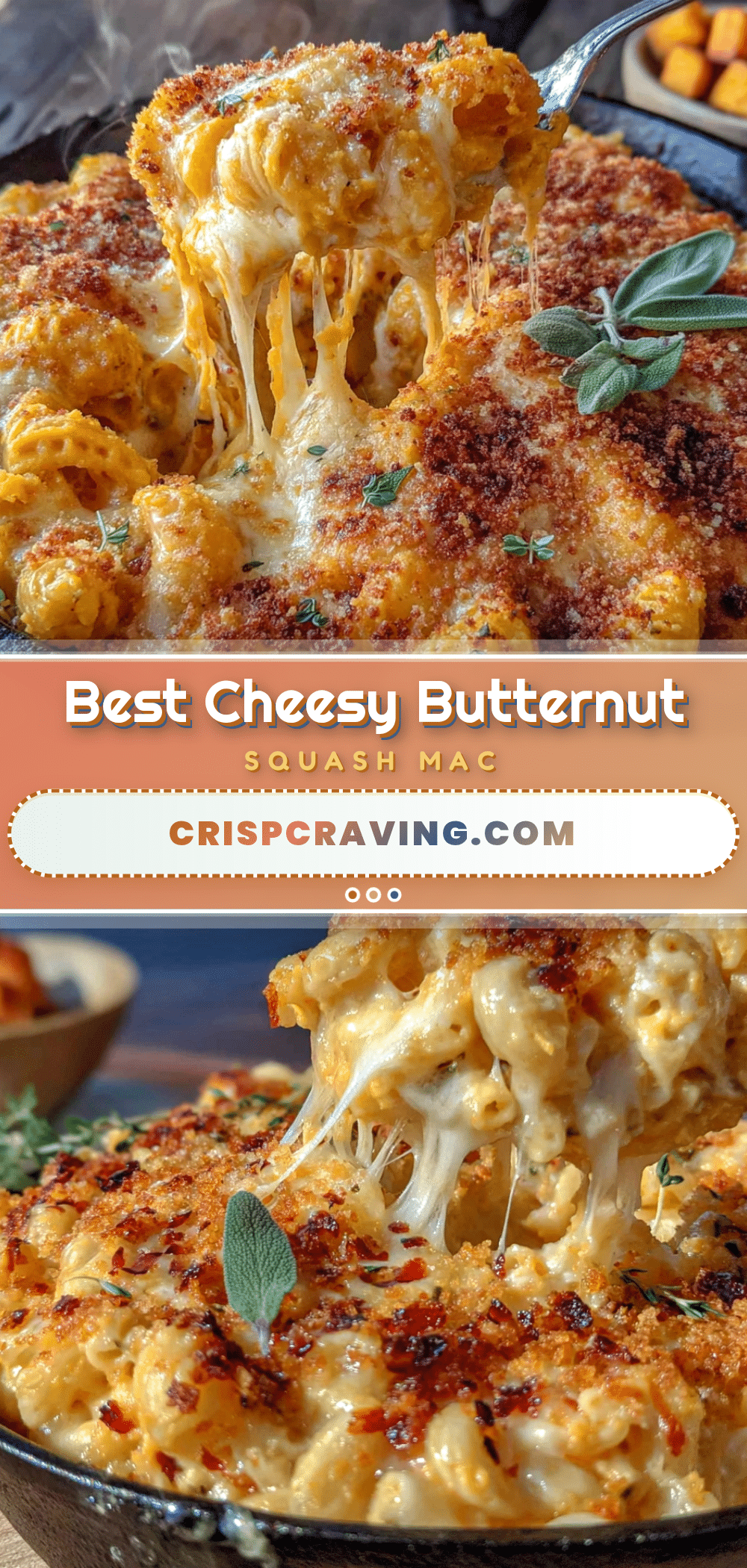
Best Cheesy Butternut Squash Mac and Cheese Recipe (Easy!)

This creamy, indulgent mac and cheese features roasted butternut squash blended into a velvety cheese sauce. It’s a crowd-pleasing dish that’s perfect for dinner parties, potlucks, and holiday gatherings, with a sweet and nutty flavor that even squash skeptics will love.
- Prep Time: 20 minutes
- Cook Time: 55 minutes
- Total Time: 1 hour 15 minutes
- Yield: 8 servings 1x
- Category: Main Course
- Cuisine: American
Ingredients
- 1 medium butternut squash (about 2–2.5 pounds), peeled, seeded, and cut into 1-inch cubes
- 2 tablespoons olive oil
- 1/2 teaspoon salt
- 1/4 teaspoon black pepper
- 1 pound (16 ounces) elbow macaroni or cavatappi pasta
- 4 tablespoons (1/2 stick) unsalted butter
- 1/4 cup all-purpose flour
- 2 cups whole milk
- 1 cup heavy cream
- 2 cups (8 ounces) sharp cheddar cheese, freshly grated
- 1 cup (4 ounces) Gruyère or fontina cheese, freshly grated
- 1/2 cup grated Parmesan cheese
- 1 teaspoon Dijon mustard
- 1/4 teaspoon nutmeg, freshly grated if possible
- Salt and pepper to taste
- 1/2 cup panko breadcrumbs (optional topping)
- 2 tablespoons melted butter (optional topping)
- 1/4 cup grated Parmesan cheese (optional topping)
- Fresh thyme or sage leaves for garnish (optional)
Instructions
- Preheat oven to 400°F (200°C). Peel butternut squash (microwave whole squash for 2-3 minutes to soften skin), cut in half lengthwise, scoop out seeds, and cut flesh into 1-inch cubes.
- Toss squash cubes with olive oil, salt, and pepper. Spread in a single layer on a baking sheet lined with parchment paper. Roast for 25-30 minutes, flipping halfway, until tender and caramelized with golden-brown edges.
- While squash roasts, bring a large pot of generously salted water to a boil. Cook pasta according to package directions until al dente (about 1-2 minutes less than recommended). Reserve 1 cup of pasta water, then drain pasta and set aside.
- In a large saucepan or Dutch oven, melt butter over medium heat. Whisk in flour and cook for 1-2 minutes, stirring constantly, until roux is slightly nutty but not browned.
- Slowly pour in milk and heavy cream, whisking continuously to prevent lumps. Cook over medium heat, stirring frequently, until sauce thickens enough to coat the back of a spoon (about 5-7 minutes).
- Transfer roasted squash to a blender or food processor. Add about 1/2 cup of the milk mixture and blend until completely smooth and velvety.
- Reduce heat on sauce to low. Whisk in squash puree until fully incorporated. Gradually add cheddar, Gruyère, and Parmesan cheese, a handful at a time, stirring constantly until each addition is melted before adding the next.
- Stir in Dijon mustard and nutmeg. Season with salt and pepper to taste. If sauce is too thick, thin with a splash of reserved pasta water.
- Preheat oven to 375°F (190°C). In a large bowl, combine cooked pasta with cheese sauce, stirring until every piece is coated. Transfer to a greased 9×13 inch baking dish and spread evenly.
- If using breadcrumb topping, mix panko with melted butter and Parmesan cheese in a small bowl. Sprinkle evenly over the mac and cheese.
- Bake for 20-25 minutes, until sauce is bubbly and top is golden brown. For extra-crispy topping, broil for 2-3 minutes, watching carefully to prevent burning.
- Let dish rest for 5-10 minutes before serving. Garnish with fresh thyme or sage leaves if desired.
Notes
For best results, grate your own cheese—pre-shredded cheese contains anti-caking agents that prevent smooth melting. Roast the squash until deeply caramelized for maximum flavor. The dish can be assembled (without breadcrumb topping) up to 2 days in advance and refrigerated; add topping and bake for 30-35 minutes when ready. Leftovers keep in the refrigerator for up to 4 days and freeze well for up to 3 months.
Nutrition
- Serving Size: 1 serving (about 1/8
- Calories: 480
- Sugar: 8
- Sodium: 680
- Fat: 22
- Saturated Fat: 12
- Carbohydrates: 55
- Fiber: 6
- Protein: 18
Keywords: butternut squash mac and cheese, easy mac and cheese, cheesy pasta, fall recipe, comfort food, vegetarian mac and cheese, holiday side dish