Love this? Save it for later!
Share the inspiration with your friends
My neighbor Karen wasn’t trying to impress anyone. I’d stopped by to borrow a ladder—a mundane Tuesday errand—and the smell hit me before I even knocked. It was sweet, but not dessert-sweet. Warm, but not spicy. It smelled like someone had bottled October itself and let it simmer on her stove.
She opened the door with oven-mitt-clad hands, a little flour smudged on her cheek, and waved me in like my ladder request was an inconvenience she was happy to have. “You’re staying for lunch,” she said. Not a question. And honestly, I wasn’t about to argue with whatever that smell was.
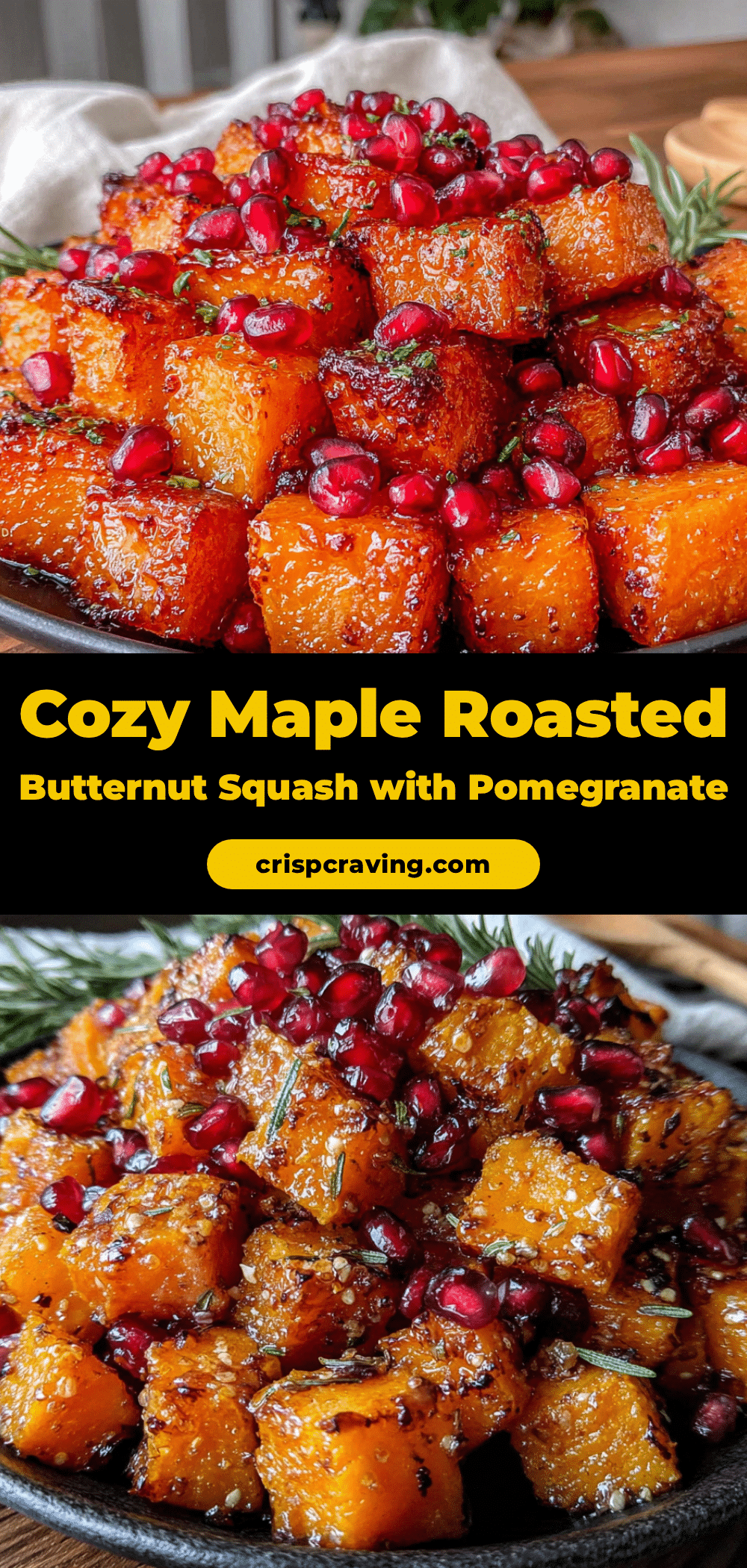
Twenty minutes later, I was sitting at her worn wooden kitchen table, a forkful of something I’d never tasted before halfway to my mouth. Maple-roasted butternut squash, studded with these little jewel-like pomegranate seeds that popped with every bite. She’d called it a “side dish” but let me tell you—I ate a bowl of it as my whole meal and didn’t regret a thing.
I asked for the recipe, and she shrugged. “It’s nothing. Toss it, roast it, throw some seeds on top.” That casual dismissal was the whole point. She’d made something extraordinary without breaking a sweat, without consulting a cookbook, without even thinking it was special. But it was. And I’ve been making it ever since, especially when the weather turns cold and I need something that feels like a hug on a plate.
Maybe you’ve been there—standing in someone’s kitchen, watching them casually create magic, and thinking, I need to learn how to do that. Well, here’s your chance. This cozy maple roasted butternut squash with pomegranate is that recipe. The one that makes people close their eyes when they take a bite. The one you’ll make on repeat all autumn long.
Why You’ll Love This Recipe
This isn’t just another roasted vegetable side dish. This cozy maple roasted butternut squash with pomegranate is the kind of recipe that makes you feel like you’ve discovered a secret. Here’s why it works so beautifully:
- Quick & Easy: Fifteen minutes of prep, forty minutes in the oven, and you’re done. Perfect for busy weeknights when you still want something that feels special.
- Simple Ingredients: You probably already have maple syrup in your pantry. Butternut squash is everywhere in the fall. Pomegranates are easy to find from September through December. No fancy grocery store runs required.
- Perfect for Cozy Nights: This is the dish you want when the wind is howling outside and you’re wrapped in a blanket on the couch. It’s comfort food that’s actually good for you.
- Crowd-Pleaser: I’ve brought this to Thanksgiving dinners, potlucks, and casual get-togethers. It disappears every single time. Kids love the sweet maple flavor, and adults appreciate the sophisticated pomegranate pop.
- Unbelievably Delicious: The combination of caramelized maple syrup, tender roasted squash, and tart pomegranate seeds is honestly next-level. The textures alone—soft, slightly crispy edges, and those little bursts of juice—make it unforgettable.
What makes this recipe different from all the others? It’s the balance. So many roasted squash recipes go too sweet or too savory. This one hits that perfect middle ground where the maple enhances the squash’s natural sweetness without overwhelming it, and the pomegranate cuts through with just enough acidity to keep every bite interesting. It’s not just another version—it’s the version I keep coming back to, year after year.
What Ingredients You Will Need
This cozy maple roasted butternut squash with pomegranate uses simple, wholesome ingredients that work together to create something genuinely magical. Most of these are pantry staples in the fall, and the ones that aren’t are worth seeking out.
- 1 medium butternut squash (about 2-3 pounds) – Look for one that feels heavy for its size with firm, unblemished skin. I prefer the pre-peeled cubed squash from the grocery store when I’m short on time, but whole squash tastes noticeably better. (Pro tip: if you’re cutting a whole squash, microwave it for 2 minutes first—it softens the skin just enough to make peeling easier.)
- 3 tablespoons pure maple syrup – Please, please use real maple syrup, not pancake syrup. The flavor difference is enormous. Grade A dark amber is my go-to for roasting—it has a richer, more caramelized flavor that stands up to the heat.
- 2 tablespoons olive oil – A good quality extra virgin olive oil works beautifully here. You could also use avocado oil if that’s what you have.
- 1 teaspoon kosher salt – Don’t skimp on the salt. It balances the sweetness and makes the squash taste more like itself.
- ½ teaspoon black pepper – Freshly ground is best, but pre-ground works in a pinch.
- ½ teaspoon cinnamon – This adds that warm, cozy undertone that makes the dish feel like autumn in a bowl.
- ¼ teaspoon nutmeg – Freshly grated if you have it, but ground is fine. Just a pinch—it’s subtle but important.
- ¼ teaspoon cayenne pepper (optional) – I know, I know, it sounds weird. But a tiny pinch of cayenne doesn’t make the dish spicy—it just wakes up all the other flavors. Trust me on this one.
- ½ cup pomegranate seeds – You can buy these pre-seeded in the produce section, which is a huge time-saver. But if you’re seeding a whole pomegranate yourself, do it in a bowl of water—the seeds sink and the pith floats. It’s a game-changer.
- 2 tablespoons fresh parsley or thyme (optional, for garnish) – A little green on top makes the dish look beautiful. I usually skip it when I’m just making this for myself, but it’s nice for company.
Ingredient Substitution Notes: If you’re out of maple syrup, honey works as a substitute—though the flavor will be slightly different and less caramelized. For a sugar-free version, try a monk fruit maple syrup alternative. And if pomegranates aren’t in season, dried cranberries make a decent substitute (though they don’t have that same satisfying pop).
Equipment Needed
You don’t need much for this cozy maple roasted butternut squash with pomegranate, which is part of its charm. Here’s what you’ll want to have on hand:
- Baking sheet – A standard half-sheet pan works perfectly. Line it with parchment paper for easy cleanup. Trust me, caramelized maple syrup is sticky business.
- Sharp chef’s knife – Butternut squash is tough. A dull knife makes the job harder and more dangerous. I use my 8-inch Wusthof and it handles squash like a dream.
- Vegetable peeler – A Y-shaped peeler is my preference for squash. It gets the skin off in satisfyingly long strips.
- Large mixing bowl – For tossing the squash cubes with the maple mixture. Any big bowl will do.
- Measuring spoons – For the maple syrup and spices. Eyeballing works, but measuring ensures consistency.
- Spatula or wooden spoon – For stirring the squash halfway through roasting.
If you don’t have a good knife, I get it—I used a cheap one for years. Just take your time cutting the squash, and consider microwaving it for 2 minutes to soften the skin. As for baking sheets, I’ve used everything from dollar-store pans to high-end Nordic Ware. The cheap ones work fine; they just might warp a little in the oven. No big deal.
Preparation Method
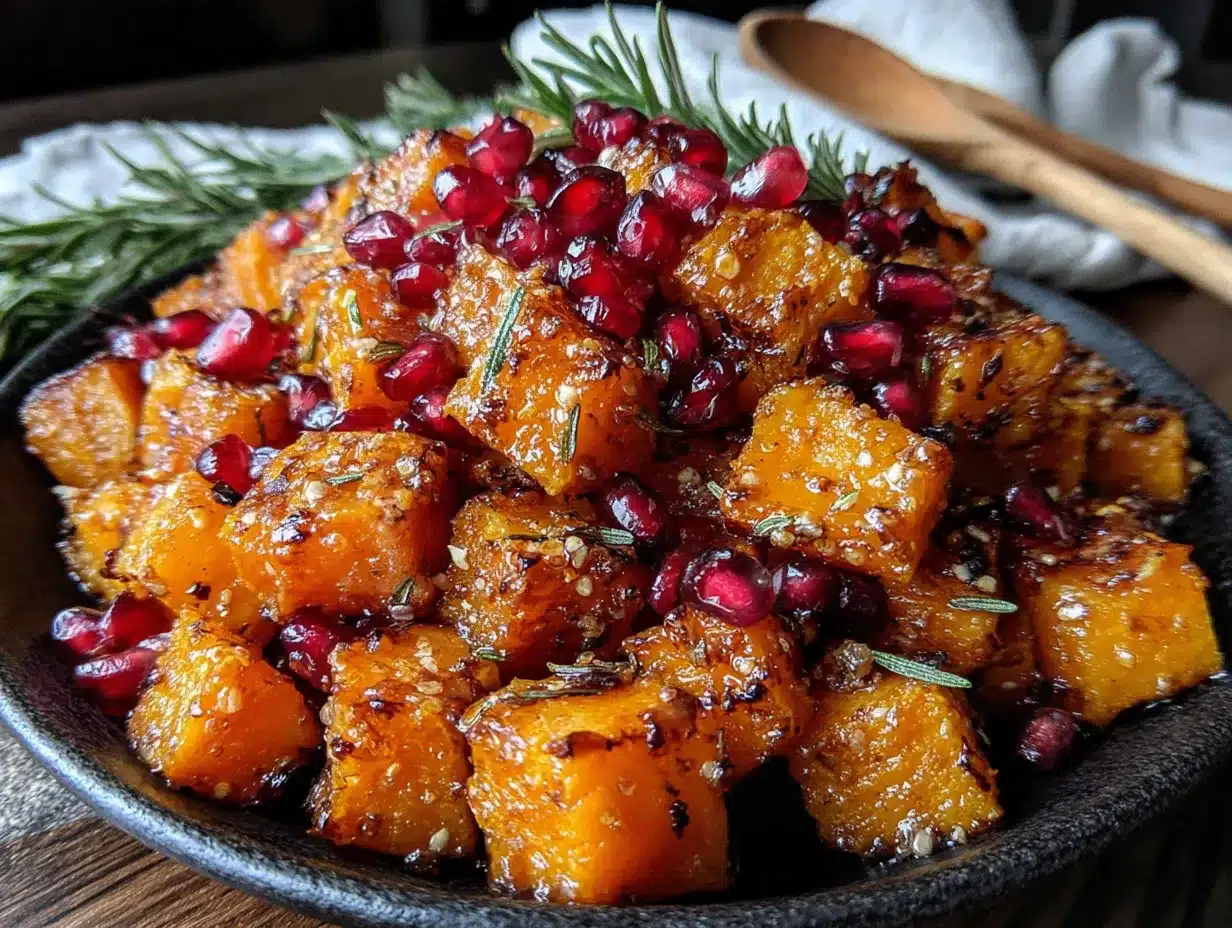
Making this cozy maple roasted butternut squash with pomegranate is straightforward, but a few details make the difference between good and unforgettable. Follow these steps, and you’ll nail it every time.
- Preheat your oven to 400°F (200°C). Give it a full 15-20 minutes to come to temperature. A properly hot oven is what creates those caramelized edges that make this dish so good.
- Prepare the butternut squash. If using a whole squash, cut off both ends with your sharpest knife. Stand it upright on a cutting board and slice down to remove the skin in strips. Cut the squash in half lengthwise and scoop out the seeds with a spoon. (Don’t throw those seeds away—roast them like pumpkin seeds for a snack!) Cut the flesh into 1-inch cubes. Aim for uniform size so everything cooks evenly. This should take about 10 minutes if you’re careful.
- Make the maple mixture. In your large mixing bowl, whisk together the maple syrup, olive oil, salt, pepper, cinnamon, nutmeg, and cayenne (if using). Taste it—it should be sweet, salty, and just a little warm from the spices. Adjust the salt if needed.
- Toss the squash. Add the cubed squash to the bowl and toss until every piece is evenly coated. Use your hands if you’re not squeamish—it’s the most efficient way to make sure everything’s covered. The maple mixture will be sticky, but that’s exactly what you want.
- Arrange on the baking sheet. Spread the squash in a single layer on your parchment-lined baking sheet. Don’t crowd the pan—if the pieces are touching too much, they’ll steam instead of roast. If you have too much squash for one pan, use two. It’s worth the extra cleanup.
- Roast for 20 minutes. Set a timer. Don’t open the oven to check too early—you’ll let out all the heat. After 20 minutes, pull the pan out and flip each piece with a spatula. The bottoms should be golden brown and starting to caramelize.
- Roast for another 15-20 minutes. Put the pan back in and roast until the squash is fork-tender and the edges are deeply caramelized—almost burnt-looking in spots. That’s where the flavor lives. Total roasting time is usually 35-40 minutes, but ovens vary, so start checking at 30 minutes.
- Let it rest for 5 minutes. This is important. The squash needs a minute to set so the caramelized coating firms up. Don’t skip this step.
- Add the pomegranate seeds. Sprinkle the seeds over the warm squash. Don’t toss them in while the squash is piping hot—the heat will make them release their juice and turn everything pink. Let the squash cool slightly, then scatter the seeds on top.
- Garnish and serve. If using fresh herbs, sprinkle them over the top now. Serve warm or at room temperature. Either way, it’s absolutely delicious.
Watch for this: If your squash is browning too quickly on the bottom but not cooking through, your oven might run hot. Tent the pan loosely with foil for the last 10 minutes of cooking. If the squash isn’t caramelizing at all, your oven might run cool—crank it up to 425°F for the last 5 minutes.
Cooking Tips & Techniques
I’ve made this cozy maple roasted butternut squash with pomegranate at least thirty times, and I’ve learned a few things the hard way. Here’s what I wish someone had told me:
Don’t overcrowd the pan. I know I said this already, but it bears repeating. When squash pieces are crammed together, they release steam instead of dry heat, and you end up with mushy, pale cubes instead of caramelized golden nuggets. Give them space to breathe. If that means using two pans, use two pans.
Cut the squash into even pieces. I learned this lesson after a batch where tiny pieces burned and giant pieces were still crunchy. Aim for 1-inch cubes, and try to make them as uniform as you can. It takes an extra minute but makes a world of difference.
Flip halfway through, but don’t fuss too much. One flip is enough. If you stir the squash every 10 minutes, you’ll break the caramelization and end up with sticky, messy pieces. Flip once, let them be, and trust the process.
Add the pomegranate seeds at the very end. I made the mistake of adding them too early once, and the heat made them burst and bleed into the squash. It still tasted good, but it looked like a crime scene. Cold pomegranate seeds on warm squash is the perfect contrast—don’t rush it.
Make extra for leftovers. This dish is even better the next day. The flavors meld together overnight, and the cold pomegranate seeds against the soft squash is a textural dream. I often double the batch just so I have leftovers for lunch.
If your maple syrup crystallizes or gets too thick, microwave it for 10 seconds before mixing. Cold maple syrup doesn’t coat the squash as evenly, and you’ll end up with patches of sticky sweetness instead of an even glaze.
Variations & Adaptations
This cozy maple roasted butternut squash with pomegranate is endlessly adaptable. Here are some of my favorite variations:
Savory Herb Version: Skip the cinnamon and nutmeg. Add 1 teaspoon of fresh rosemary and 1 teaspoon of fresh thyme to the maple mixture. The herbs add an earthy, savory note that pairs beautifully with roasted meats. I’ve made this for Christmas dinner and it was a hit.
Spicy Maple Version: Double the cayenne pepper and add ½ teaspoon of smoked paprika. The heat builds slowly and lingers in the best way. If you really like spice, toss in a finely chopped chipotle pepper in adobo sauce. It’s incredible.
Vegan & Gluten-Free: This recipe is already both, which is one of the reasons I love it. Just make sure your maple syrup is pure (most are) and you’re good to go.
Nutty Crunch Version: Add ¼ cup of toasted pecans or walnuts when you add the pomegranate seeds. The crunch is fantastic, and the nuts get a little toasty from the residual heat. I do this when I want the dish to feel more substantial.
Honey Roasted Version: Substitute honey for the maple syrup. The flavor is different—less caramelized, more floral—but still delicious. If you use honey, add a squeeze of lemon juice to balance the sweetness.
Air Fryer Adaptation: Cook the squash at 375°F for 15-18 minutes, shaking the basket halfway through. You might need to work in batches, but the results are even crispier than oven-roasted. I do this when I don’t want to heat up the whole kitchen.
Serving & Storage Suggestions
This cozy maple roasted butternut squash with pomegranate is incredibly versatile in how you serve it. Here are my favorite ways to enjoy it:
Serving Temperature: It’s best served warm, but it’s also delicious at room temperature. If you’re bringing it to a potluck or Thanksgiving dinner, you can make it a few hours ahead and let it sit out. The flavors actually improve as it cools.
Presentation: Serve it in a wide, shallow bowl or on a platter. Scatter the pomegranate seeds and herbs right before serving so they look fresh and vibrant. A drizzle of extra maple syrup on top makes it look restaurant-worthy.
Pairing Suggestions: This dish goes beautifully with roasted chicken, pork tenderloin, or a simple seared salmon. For a vegetarian meal, serve it over a bed of wild rice or quinoa with a dollop of Greek yogurt. It’s also incredible as a stuffing for acorn squash or as a topping for arugula salads.
Storage: Store leftovers in an airtight container in the refrigerator for up to 4 days. The pomegranate seeds will soften slightly over time, but the flavor only gets better. I actually prefer the leftovers cold straight from the fridge—the sweetness is more concentrated.
Reheating: Reheat in a 350°F oven for 5-7 minutes to restore some of the caramelized edges. The microwave works in a pinch, but the squash will be softer and less crisp. If you’re reheating, add fresh pomegranate seeds afterward to bring back that pop of freshness.
Freezing: You can freeze the roasted squash without the pomegranate seeds for up to 3 months. Thaw in the refrigerator overnight and reheat in the oven. Add fresh pomegranate seeds after reheating.
Nutritional Information & Benefits
This cozy maple roasted butternut squash with pomegranate isn’t just delicious—it’s genuinely good for you. Here’s a rough breakdown per serving (about 1 cup):
- Calories: Approximately 180-200
- Carbohydrates: 35g
- Fiber: 6g
- Sugar: 18g (naturally occurring)
- Fat: 7g
- Protein: 3g
- Vitamin A: Over 200% of your daily value
- Vitamin C: 35% of your daily value
Health Benefits: Butternut squash is packed with beta-carotene, which your body converts to vitamin A for healthy vision and immune function. Pomegranate seeds are loaded with antioxidants called punicalagins, which are great for heart health. The maple syrup provides quick energy, and the olive oil offers healthy monounsaturated fats. This is comfort food that actually nourishes you.
Dietary Considerations: This recipe is naturally gluten-free, dairy-free, and vegan. It’s also relatively low in calories for a side dish that feels so indulgent. If you’re watching your sugar intake, you can reduce the maple syrup to 2 tablespoons—it will still be delicious, just less caramelized.
Conclusion
This cozy maple roasted butternut squash with pomegranate has become my go-to dish for everything from quiet Tuesday dinners to holiday feasts. It’s the recipe I turn to when I need something that feels special but doesn’t require hours in the kitchen. It’s the dish I bring to potlucks when I want to impress without stress. And honestly, it’s the recipe I make for myself on cold nights when I need a little comfort.
The beauty of this dish is how forgiving it is. You can adjust the spices, swap the maple for honey, add nuts or not—it always turns out delicious. That’s the kind of recipe worth keeping in your back pocket.
I’d love to hear how yours turns out. Did you add the cayenne? Did you try the savory herb version? Drop a comment below and let me know your favorite variation. And if you share a photo on Pinterest, tag me—I love seeing your creations!
Go ahead, preheat that oven. Cozy nights are calling.
Frequently Asked Questions
Can I use frozen butternut squash for this recipe?
You can, but I don’t recommend it. Frozen squash releases a lot of water as it thaws, which prevents caramelization. If you’re in a pinch, thaw the squash completely, pat it very dry with paper towels, and toss it with the maple mixture right before roasting. It won’t be as crispy, but it’ll still taste good.
How do I seed a pomegranate without making a mess?
Cut the pomegranate in half horizontally, hold it cut-side down over a bowl of water, and hit the skin firmly with a wooden spoon. The seeds will fall into the water and the pith will float. Scoop out the pith, drain the seeds, and you’re done. It’s honestly life-changing.
Can I make this dish ahead of time?
Absolutely. Roast the squash up to 2 days ahead and store it in the refrigerator. Add the pomegranate seeds and herbs right before serving. Reheat in a 350°F oven for 5-7 minutes to restore the caramelized edges.
What if I don’t have maple syrup?
Honey is the best substitute, though the flavor will be different—more floral, less caramelized. Agave nectar works too, but it’s sweeter, so use about 2 tablespoons instead of 3. Brown sugar dissolved in 2 tablespoons of water can work in a pinch, but the texture won’t be quite the same.
How do I prevent the squash from being mushy?
Three things: don’t overcrowd the pan, flip only once during roasting, and make sure your oven is fully preheated to 400°F. Mushy squash is usually the result of steaming instead of roasting. Give those cubes space and heat, and you’ll get perfect caramelized edges every time.
Pin This Recipe!
Cozy Maple Roasted Butternut Squash with Pomegranate
This cozy maple roasted butternut squash with pomegranate is a simple yet stunning side dish that combines caramelized maple syrup, tender roasted squash, and tart pomegranate seeds for a perfect balance of sweet and savory. It’s quick to prepare, uses simple ingredients, and is perfect for cozy nights or holiday feasts.
- Prep Time: 15 minutes
- Cook Time: 35-40 minutes
- Total Time: 50-55 minutes
- Yield: 4 servings 1x
- Category: Side Dish
- Cuisine: American
Ingredients
- 1 medium butternut squash (about 2–3 pounds)
- 3 tablespoons pure maple syrup
- 2 tablespoons olive oil
- 1 teaspoon kosher salt
- ½ teaspoon black pepper
- ½ teaspoon cinnamon
- ¼ teaspoon nutmeg
- ¼ teaspoon cayenne pepper (optional)
- ½ cup pomegranate seeds
- 2 tablespoons fresh parsley or thyme (optional, for garnish)
Instructions
- Preheat your oven to 400°F (200°C).
- Prepare the butternut squash: cut off both ends, stand upright, slice off skin, cut in half lengthwise, scoop out seeds, and cut into 1-inch cubes.
- In a large mixing bowl, whisk together maple syrup, olive oil, salt, pepper, cinnamon, nutmeg, and cayenne (if using).
- Add cubed squash to the bowl and toss until evenly coated.
- Arrange squash in a single layer on a parchment-lined baking sheet. Do not overcrowd.
- Roast for 20 minutes, then flip each piece with a spatula.
- Roast for another 15-20 minutes until fork-tender and deeply caramelized.
- Let rest for 5 minutes.
- Sprinkle pomegranate seeds over the warm squash.
- Garnish with fresh herbs if desired. Serve warm or at room temperature.
Notes
Don’t overcrowd the pan to ensure caramelization. Add pomegranate seeds at the end to prevent them from bursting. Leftovers are even better the next day. For a savory version, skip cinnamon and nutmeg and add fresh rosemary and thyme. For a spicy version, double the cayenne and add smoked paprika.
Nutrition
- Serving Size: 1 cup
- Calories: 180200
- Sugar: 18
- Sodium: 500
- Fat: 7
- Saturated Fat: 1
- Carbohydrates: 35
- Fiber: 6
- Protein: 3
Keywords: maple roasted butternut squash, pomegranate, fall side dish, roasted squash, easy side dish, vegan, gluten-free