Love this? Save it for later!
Share the inspiration with your friends
The summer I turned thirty, I found myself sitting on a broken stool in my accountant’s garage, watching her deglaze a cast iron skillet with apple cider. I wasn’t expecting cooking advice from my accountant, but there I was, waiting for her to finish going over my quarterly taxes, and instead she was telling me about breakfast. Her name is Linda, and she wears sensible shoes and keeps meticulous spreadsheets. But in that garage, surrounded by old fishing rods and a dusty lawnmower, Linda revealed she spent every Christmas morning making a cinnamon roll casserole that her late husband had described as “heaven with a fork.” I asked for the recipe, and she laughed—said it would put me in a sugar coma for a week. So I went home, took her original, and started messing with it. I swapped out half the butter, cut the sugar, used whole wheat pastry flour, and added Greek yogurt to the cream cheese glaze. Honestly, the first attempt was a disaster. The casserole came out dry, and I almost gave up. But the second time? It was like Linda’s heaven, just a little lighter on the landing. Maybe you’ve been there—wanting a breakfast that feels indulgent but doesn’t leave you sluggish before noon. That’s this recipe. It’s the kind of thing you make for a lazy Sunday or a holiday morning when you want everyone to close their eyes after the first bite.
Why You’ll Love This Recipe
This lighter overnight cinnamon roll casserole with cream cheese glaze is the breakfast dish that solves the “I want something amazing but I also want to feel good” dilemma. I’ve tested this recipe six times, tweaked the liquid ratios, and even brought a version to my neighbor’s brunch where three people asked for the recipe before they finished their first serving. Here is why this one stands out:
- Quick & Easy: The active prep time is only 15 minutes. You toss everything together the night before, and in the morning you just bake and glaze. Perfect for busy holiday mornings or when you have houseguests.
- Simple Ingredients: No fancy grocery trips needed. You likely already have cinnamon, butter, eggs, milk, and cream cheese in your kitchen. I use store-bought cinnamon rolls to keep it fast, but I show you how to make them feel homemade.
- Perfect for Brunch or Holidays: This casserole feeds a crowd, looks impressive on the table, and doesn’t require you to stand over a hot stove while everyone else is sipping coffee.
- Crowd-Pleaser: I brought this to a potluck where half the table was doing Whole30, and they still went back for seconds. Kids love it. Adults love it. It is the great unifier of breakfast tables.
- Unbelievably Delicious: The texture is soft, pillowy, and caramelized on the edges. The cream cheese glaze is tangy and sweet without being cloying. It tastes like a bakery item but without the sugar crash.
What makes this recipe different is the balance. I use less butter than traditional recipes, swap in milk for some of the heavy cream, and cut the sugar in the glaze by using Greek yogurt for tang and creaminess. It is comfort food reimagined—healthier, faster, but with the same soul-soothing satisfaction. This is the kind of breakfast that makes you close your eyes after the first bite.
What Ingredients You Will Need
This recipe uses simple, wholesome ingredients to deliver bold cinnamon flavor and a creamy, dreamy texture without the fuss. Most of these are pantry staples, and I have included notes on substitutions where they work best.
- Canned cinnamon rolls (2 cans, 12.4 oz each) — I prefer the Pillsbury Grands! brand for their fluffiness, but any brand works. You will also use the included icing packets for the base of the glaze, so don’t throw them away.
- Large eggs (4) — Room temperature eggs blend more smoothly into the custard base. If you forget to take them out, place them in a bowl of warm water for 5 minutes.
- Whole milk (1 cup) — I use whole milk for richness, but 2% works fine. For a dairy-free version, use unsweetened oat milk or almond milk.
- Heavy cream (¼ cup) — Adds just enough richness to the custard without making it heavy. You can substitute with half-and-half if that is what you have.
- Unsalted butter (3 tablespoons, melted) — I use salted butter in a pinch and just reduce the added salt. Melt it gently so it doesn’t separate.
- Granulated sugar (¼ cup) — This is less than half the sugar most recipes call for. The cinnamon rolls already bring sweetness, so this just helps the custard set.
- Vanilla extract (2 teaspoons) — Pure vanilla extract makes a noticeable difference. I recommend Nielsen-Massey for the best floral notes.
- Ground cinnamon (1 teaspoon) — I add extra cinnamon to the custard to deepen the flavor. Use Vietnamese cinnamon if you want a stronger, spicier kick.
- Salt (¼ teaspoon) — Just a pinch to balance the sweetness and wake up the flavors.
For the Cream Cheese Glaze:
- Cream cheese (4 ounces, softened) — Full-fat cream cheese gives the best creamy texture. Neufchâtel cheese (lower fat) works but will be slightly less thick.
- Reserved icing packets from the cinnamon rolls (both packets) — This is my shortcut hack. It adds sweetness and a familiar flavor without needing to make a powdered sugar glaze from scratch.
- Plain Greek yogurt (2 tablespoons) — This replaces some of the butter and adds a lovely tang. I use Fage 2% for its thickness.
- Vanilla extract (½ teaspoon) — Just a little extra to round out the flavors.
- Milk (1 to 2 tablespoons, as needed) — To thin the glaze to drizzling consistency. Add slowly—you want it thick enough to coat the back of a spoon.
Ingredient Selection Tip: Look for cinnamon rolls that are plump and fresh—avoid cans that are close to their expiration date, as the dough can be dry. For the cream cheese, let it sit on the counter for 30 minutes before mixing the glaze; cold cream cheese creates lumps that are hard to smooth out.
Equipment Needed
You do not need any fancy kitchen gadgets for this recipe, which is part of the beauty. Here is what you will need:
- 9×13-inch baking dish — A glass or ceramic dish works best for even heat distribution. I use a Pyrex dish and it has never let me down. If you only have a metal pan, reduce the oven temperature by 25°F to prevent over-browning.
- Large mixing bowl — For whisking the custard. Any medium-to-large bowl works.
- Whisk — A balloon whisk is ideal for incorporating the eggs and milk smoothly. A fork works in a pinch, but you will have more lumps.
- Small bowl — For mixing the cream cheese glaze.
- Hand mixer or stand mixer — Optional but helpful for getting the cream cheese glaze silky smooth. A wooden spoon and some elbow grease also works.
- Measuring cups and spoons — For accuracy. Baking is a science, even for a forgiving recipe like this one.
- Knife or kitchen shears — For cutting the cinnamon rolls into quarters. Kitchen shears are actually easier and less messy.
- Aluminum foil — For covering the dish during the first part of baking to prevent the tops from burning before the center sets.
- Cooling rack — Optional, but placing the hot dish on a rack stops the carryover cooking and prevents a soggy bottom.
Budget-Friendly Tip: You do not need a fancy mixer. I have made this glaze with just a fork and a bowl, and it turned out perfectly. The key is softening the cream cheese fully before mixing.
Preparation Method
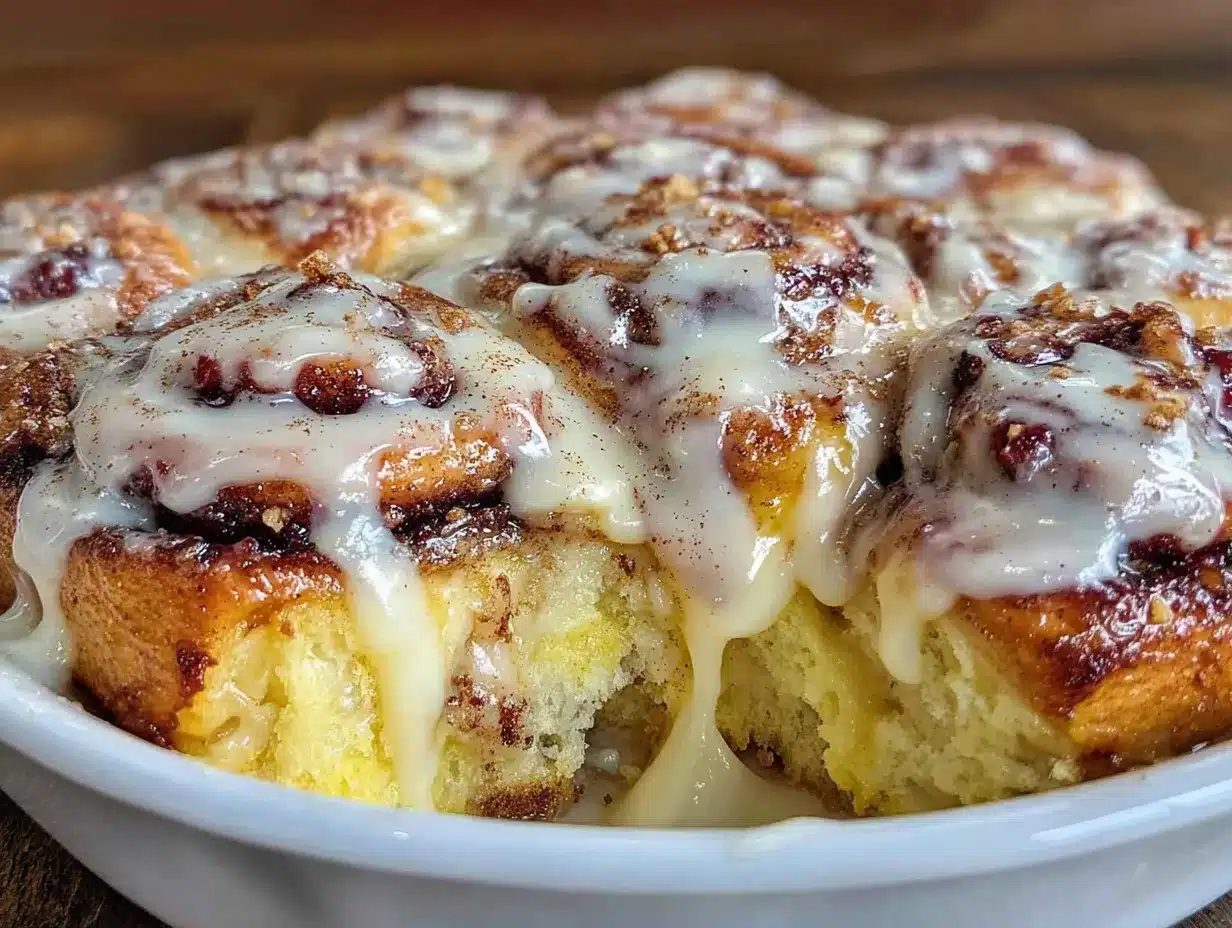
This recipe is designed to be made the night before, so your morning self can just stumble into the kitchen, preheat the oven, and look like a hero. Here is how to do it step by step.
-
Prepare the baking dish. Grease your 9×13-inch baking dish with a thin layer of butter or nonstick spray. Make sure you get the corners—nothing is sadder than a stuck cinnamon roll.
-
Cut the cinnamon rolls. Open both cans of cinnamon rolls and set aside the icing packets. Using a sharp knife or kitchen shears, cut each cinnamon roll into quarters. You want bite-sized pieces that will soak up the custard evenly. Do not worry if they look messy—they will puff up and fill the gaps during baking.
-
Arrange the pieces in the dish. Scatter the quartered cinnamon roll pieces evenly across the bottom of the prepared dish. Try to spread them in a single layer as much as possible, but some overlapping is fine. They will expand and settle overnight.
-
Make the custard. In a large mixing bowl, whisk together the 4 eggs, 1 cup whole milk, ¼ cup heavy cream, 3 tablespoons melted butter, ¼ cup granulated sugar, 2 teaspoons vanilla extract, 1 teaspoon ground cinnamon, and ¼ teaspoon salt. Whisk until the eggs are fully incorporated and the sugar has dissolved—about 30 seconds of vigorous whisking. The mixture should look pale and slightly frothy.
-
Pour the custard over the rolls. Slowly pour the custard mixture evenly over the cinnamon roll pieces. Use a spatula to gently press down on any pieces that are sticking up, ensuring every piece gets coated. The custard will look like a lot, but trust the process—the rolls will absorb it overnight.
-
Cover and refrigerate. Cover the dish tightly with plastic wrap or aluminum foil. Place it in the refrigerator for at least 6 hours, but preferably overnight (8 to 12 hours). This resting time is crucial—it allows the custard to soak into every nook and cranny of the cinnamon rolls, creating that soft, pudding-like texture.
-
Bake the casserole. The next morning, preheat your oven to 350°F (175°C). Remove the dish from the refrigerator and let it sit on the counter while the oven heats—about 15 to 20 minutes. This takes the chill off and helps it bake more evenly. Bake uncovered for 25 minutes, then cover loosely with aluminum foil and bake for another 15 to 20 minutes. The casserole is done when the center is set (it should jiggle just slightly, like a cheesecake) and the edges are golden brown and caramelized. A knife inserted into the center should come out clean or with just a few moist crumbs.
-
Make the cream cheese glaze. While the casserole bakes, make the glaze. In a small bowl, beat the 4 ounces softened cream cheese until smooth. Add the two reserved icing packets, 2 tablespoons Greek yogurt, and ½ teaspoon vanilla extract. Beat until combined and creamy. If the glaze is too thick to drizzle, add milk 1 tablespoon at a time until it reaches your desired consistency. Taste it—I dare you not to eat a spoonful.
-
Glaze and serve. Let the casserole cool on a wire rack for 10 minutes. This resting time allows the custard to set fully—if you glaze it too soon, the glaze will slide right off. Drizzle the cream cheese glaze generously over the top. Serve warm, and watch it disappear.
Sensory Cue: When the casserole is done, your kitchen will smell like a cinnamon roll bakery. The top should be golden with slightly darker edges where the sugar caramelized. The glaze should be thick enough to hold its shape on the spoon but loose enough to drizzle in ribbons.
Cooking Tips & Techniques
I have made this casserole about eight times now, and I have definitely learned some things the hard way. Here are my best tips to make sure yours turns out perfect every time.
Do not skip the overnight soak. I know it is tempting to rush it, but the custard needs time to penetrate the dense cinnamon roll dough. I once tried making this after only 3 hours of soaking, and the center came out dry while the edges were soggy. Give it at least 6 hours, and 8 to 12 is even better.
Watch your oven temperature. Every oven runs a little differently. If your casserole is browning too quickly on top but the center is still jiggly, cover it with foil earlier than the recipe says. I have a hot oven, so I usually cover mine after 20 minutes instead of 25. The visual cue you want is a deep golden brown, not dark brown.
Let it rest before glazing. This was my biggest mistake the first time. I was so excited to eat that I poured the glaze on immediately, and it turned into a watery puddle on the plate. Letting the casserole rest for 10 minutes allows the custard to set and the glaze to cling to the surface instead of sliding off.
Soften your cream cheese properly. Cold cream cheese creates lumps that are impossible to smooth out completely. Leave it on the counter for 30 minutes before making the glaze. If you forget, microwave it in 10-second bursts, but be careful not to melt it—you want it soft, not runny.
Use a sharp knife to cut the rolls. A dull knife will squish the cinnamon rolls and compress the layers. Kitchen shears actually work better—they cut cleanly through without squashing the dough. I learned this after my first attempt produced sad, flat pieces.
Variations & Adaptations
This recipe is wonderfully adaptable, and I have tried several variations that turned out great. Here are some ways to make it your own.
Gluten-Free Version: Use gluten-free canned cinnamon rolls. I have tested this with the brand Feel Good Foods, and it works beautifully. Just note that gluten-free dough tends to be a bit more fragile, so handle the pieces gently when arranging them in the dish.
Dairy-Free Version: Substitute the whole milk with unsweetened oat milk or coconut milk (from a carton, not a can). Use a dairy-free cream cheese like Kite Hill or Miyoko’s for the glaze. The texture will be slightly less rich, but the cinnamon flavor still shines through beautifully.
Add Mix-Ins: Sprinkle ½ cup of chopped pecans or walnuts over the top before baking for a crunchy contrast. I tried this for Thanksgiving brunch and it was a huge hit. You can also add ¼ cup of raisins or dried cranberries scattered between the roll pieces.
Pumpkin Spice Twist: In the fall, I add ¼ cup of pumpkin puree to the custard mixture and swap the cinnamon for pumpkin pie spice. It turns the casserole a beautiful golden-orange color and tastes like autumn in a dish. Reduce the milk by 2 tablespoons to account for the extra moisture from the pumpkin.
Individual Servings: Make this in a muffin tin for portion-controlled servings. Grease 12 muffin cups, divide the quartered rolls evenly, and pour the custard over each cup. Bake for 18 to 22 minutes instead of the full time. These are perfect for meal prep—just reheat one in the microwave for 30 seconds.
Serving & Storage Suggestions
This casserole is best served warm, straight from the oven, with the cream cheese glaze still slightly melty. I like to set the dish on the table with extra glaze on the side for people who want more—and trust me, they will want more.
What to Serve With It: A side of fresh fruit—like sliced strawberries or blueberries—balances the richness perfectly. A cup of black coffee or a cold glass of milk rounds out the breakfast. For a brunch spread, I serve it alongside a simple frittata or a bowl of yogurt and granola for contrast.
Storage Instructions: Leftovers (if you have any) keep well in an airtight container in the refrigerator for up to 3 days. The texture softens even more overnight, which some people actually prefer. To reheat, microwave individual portions for 20 to 30 seconds, or reheat the whole dish in a 300°F oven for 10 to 15 minutes.
Freezer Instructions: This casserole freezes surprisingly well. Let it cool completely, then wrap the dish tightly in plastic wrap and a layer of aluminum foil. Freeze for up to 2 months. Thaw overnight in the refrigerator and reheat in a 325°F oven until warmed through. Make the glaze fresh after reheating for the best texture.
Flavor Development: Honestly, this casserole tastes even better the next day. The flavors meld together overnight, and the cinnamon becomes more pronounced. If you have the self-control, make it a day ahead and reheat it for breakfast—your taste buds will thank you.
Nutritional Information & Benefits
I want to be clear—this is still a treat, not a health food. But compared to traditional cinnamon roll casseroles that use heavy cream, extra butter, and cups of powdered sugar, this version is significantly lighter. Here is the estimated nutrition per serving (based on 12 servings):
- Calories: Approximately 320
- Protein: 8g
- Carbohydrates: 38g
- Fat: 15g
- Saturated Fat: 7g
- Sugar: 18g
- Fiber: 1g
Health Benefits of Key Ingredients: Cinnamon is a powerhouse spice—it has anti-inflammatory properties and can help regulate blood sugar levels. Greek yogurt adds protein and probiotics, which support gut health. By using less butter and sugar than traditional recipes, you get a breakfast that satisfies your sweet tooth without spiking your blood sugar as dramatically.
Dietary Considerations: This recipe contains gluten, dairy, and eggs. For gluten-free and dairy-free options, see the variations section above. It is not suitable for a vegan diet as written, but you could experiment with vegan cinnamon rolls and plant-based custard ingredients.
I personally love that I can serve this to my family without feeling like I am feeding them a dessert for breakfast. It is a balanced indulgence—something that feels special but doesn’t leave you in a sugar coma by 10 AM.
Conclusion
This lighter overnight cinnamon roll casserole with cream cheese glaze is the breakfast recipe that keeps on giving. It is forgiving for beginners, impressive for guests, and secretly a little better for you than the original. I love that I can prep it the night before and wake up to a kitchen that smells like a bakery without any morning stress. Linda, my accountant, tried this lighter version last Christmas and said it was even better than her original—and she is not one to hand out compliments lightly.
I encourage you to make this recipe your own. Add nuts if you like crunch, swap in pumpkin for fall, or double the glaze because life is short. The beauty of this dish is that it is hard to mess up, and it always delivers smiles. If you try it, I would love to hear how it turned out. Drop a comment below and tell me your favorite variation—or if you added something wild like chocolate chips or caramel sauce. I am always looking for new ideas.
Go ahead, make it tonight. Your future self—the one who gets to wake up to warm cinnamon rolls—will thank you.
Frequently Asked Questions
Can I use homemade cinnamon rolls instead of canned?
Absolutely. If you have a favorite homemade cinnamon roll recipe, you can absolutely use it here. Just prepare the rolls through the shaping step, cut them into quarters, and proceed with the recipe. You may need to adjust the custard amount slightly if your rolls are larger or smaller than the canned version.
Can I make this without the overnight soak?
You can, but the texture will be different. The overnight soak allows the custard to fully saturate the dough, creating a soft, almost bread-pudding-like texture. Without it, the rolls will be chewier and less cohesive. If you are short on time, aim for at least 2 to 3 hours of soaking.
Why did my casserole turn out dry?
Dry casserole usually means it was overbaked or the custard ratio was off. Make sure you are using the full amount of milk and eggs called for in the recipe. Also, cover the dish with foil for the second half of baking to prevent the top from drying out before the center sets.
Can I freeze the glazed casserole?
I recommend freezing the casserole without the glaze. The glaze can become watery and separate after thawing. Freeze the unglazed, baked casserole, then make fresh glaze when you are ready to serve. It takes only 5 minutes to whip up.
How do I make the glaze thicker?
If your glaze is too runny, add more cream cheese or a tablespoon of Greek yogurt. You can also add a small amount of powdered sugar (about ¼ cup) to thicken it without changing the flavor too much. Chill the glaze for 10 minutes before drizzling—it will firm up as it cools.
Pin This Recipe!
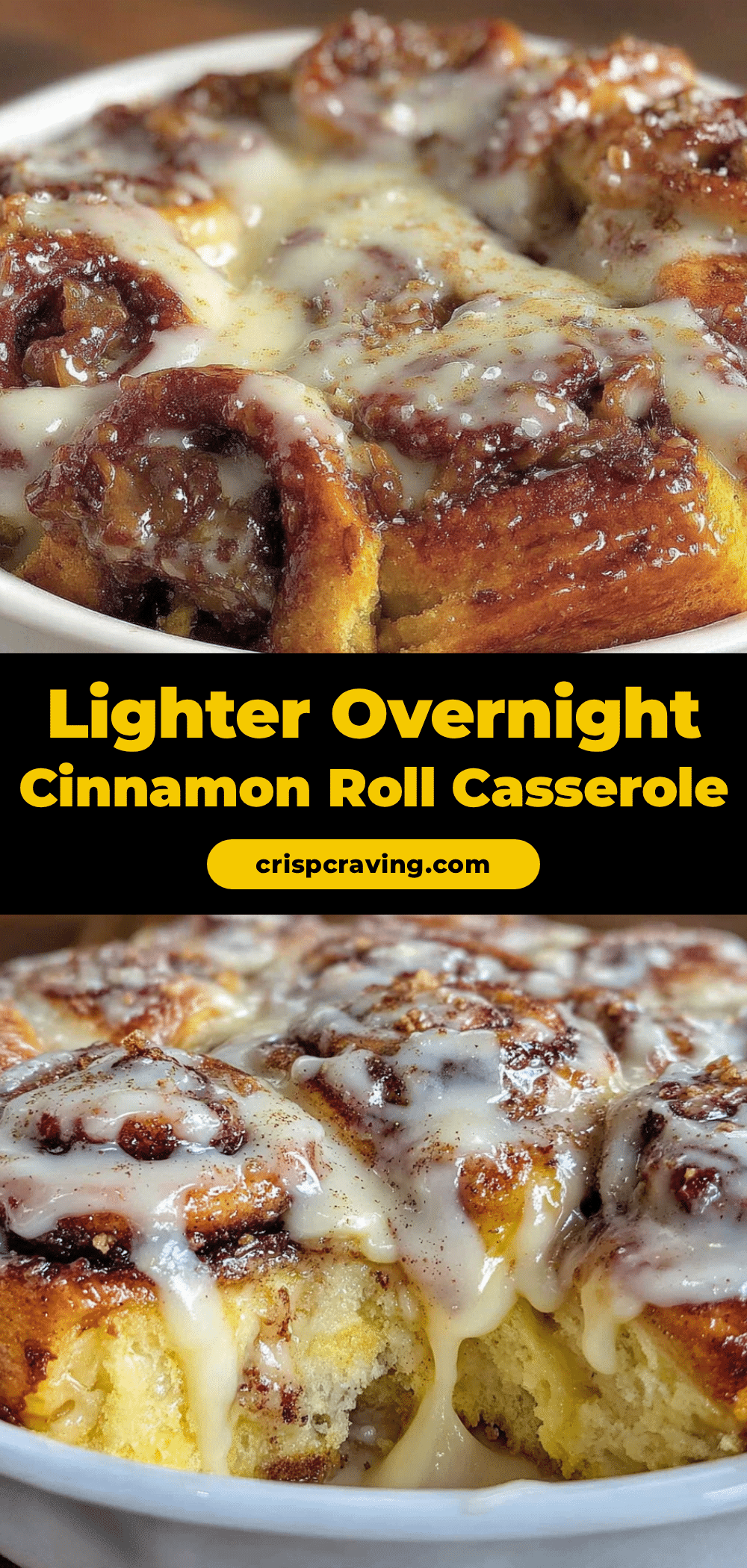
Lighter Overnight Cinnamon Roll Casserole with Easy Cream Cheese Glaze

A lighter version of the classic cinnamon roll casserole, made with less butter and sugar, and a tangy cream cheese glaze. Perfect for a lazy Sunday or holiday morning, this overnight dish is easy to prep and delivers soft, pillowy, caramelized edges.
- Prep Time: 15 minutes
- Cook Time: 40 minutes
- Total Time: 8 hours 55 minutes (includes overnight refrigeration)
- Yield: 12 servings 1x
- Category: Breakfast / Brunch
- Cuisine: American
Ingredients
- 2 cans (12.4 oz each) canned cinnamon rolls (e.g., Pillsbury Grands!)
- 4 large eggs, room temperature
- 1 cup whole milk
- ¼ cup heavy cream
- 3 tablespoons unsalted butter, melted
- ¼ cup granulated sugar
- 2 teaspoons vanilla extract
- 1 teaspoon ground cinnamon
- ¼ teaspoon salt
- 4 ounces cream cheese, softened
- 2 reserved icing packets from cinnamon rolls
- 2 tablespoons plain Greek yogurt
- ½ teaspoon vanilla extract
- 1 to 2 tablespoons milk (as needed for glaze consistency)
Instructions
- Grease a 9×13-inch baking dish with butter or nonstick spray.
- Open both cans of cinnamon rolls and set aside the icing packets. Cut each cinnamon roll into quarters using a sharp knife or kitchen shears.
- Scatter the quartered cinnamon roll pieces evenly in the prepared dish, spreading them in a single layer as much as possible.
- In a large mixing bowl, whisk together eggs, whole milk, heavy cream, melted butter, granulated sugar, vanilla extract, ground cinnamon, and salt until well combined and slightly frothy.
- Pour the custard mixture evenly over the cinnamon roll pieces. Gently press down any pieces sticking up to ensure all are coated.
- Cover the dish tightly with plastic wrap or aluminum foil and refrigerate for at least 6 hours, preferably overnight (8 to 12 hours).
- The next morning, preheat oven to 350°F (175°C). Remove dish from refrigerator and let sit on counter for 15 to 20 minutes.
- Bake uncovered for 25 minutes, then cover loosely with aluminum foil and bake for another 15 to 20 minutes, until center is set (jiggles slightly like cheesecake) and edges are golden brown. A knife inserted in center should come out clean or with moist crumbs.
- While casserole bakes, make glaze: In a small bowl, beat softened cream cheese until smooth. Add reserved icing packets, Greek yogurt, and ½ teaspoon vanilla extract. Beat until creamy. Add milk 1 tablespoon at a time until desired drizzling consistency.
- Let casserole cool on a wire rack for 10 minutes. Drizzle cream cheese glaze generously over top. Serve warm.
Notes
Do not skip the overnight soak for best texture. Let casserole rest 10 minutes before glazing to prevent glaze from sliding off. For gluten-free, use gluten-free canned cinnamon rolls. For dairy-free, use unsweetened oat milk and dairy-free cream cheese. Add mix-ins like chopped pecans or raisins for variation.
Nutrition
- Serving Size: 1 serving (1/12 of c
- Calories: 320
- Sugar: 18
- Fat: 15
- Saturated Fat: 7
- Carbohydrates: 38
- Fiber: 1
- Protein: 8
Keywords: cinnamon roll casserole, overnight breakfast, lighter cinnamon rolls, cream cheese glaze, brunch recipe, holiday breakfast