Love this? Save it for later!
Share the inspiration with your friends
I was standing in line at the hardware store last spring, holding a bag of soil amendments and a new trowel, when the woman behind me—a retired postal worker named Phyllis who I’d only ever exchanged nods with—started talking about orzo. Not the weather, not the long line, not the price of mulch. Orzo. “The secret,” she said, tapping my shoulder with a garden-gloved hand, “is lemon. Lots of it. And garlic. Don’t be shy with the garlic.” She told me she’d been making this side dish for forty years, ever since a Greek neighbor brought it to a block party. I was so caught off guard—I mean, who expects cooking advice from a stranger in the hardware store?—that I almost forgot to ask for the proportions. She scribbled them on the back of a receipt. I still have that receipt tucked in my cookbook.
Honestly, I almost didn’t try it. The recipe seemed too simple. Orzo, lemon juice, garlic, butter, parsley. That’s it. But the first time I made it, I understood why Phyllis had been making it for four decades. That bright, sunny flavor—it tastes like spring in a bowl. The lemon cuts through the richness of the butter, the garlic adds this warm backbone, and the orzo gives you that satisfying, slightly chewy bite. It’s the kind of dish that makes you close your eyes after the first forkful. I’ve tweaked it over the years—added a pinch of red pepper flakes, swapped in fresh dill when I had it—but the heart of it is exactly what Phyllis wrote on that crumpled receipt.
Maybe you’ve been there—standing in an unexpected place, getting a recipe from the most unlikely person. That’s how the best recipes happen, isn’t it? This lemon garlic orzo has become my go-to spring side dish. It’s the first thing I make when the farmers’ market starts filling up with fresh herbs and the days get longer. And every time I make it, I think of Phyllis and her garden gloves and that random Tuesday at the hardware store. You just never know where you’ll find your next favorite recipe.
Why You’ll Love This Recipe
Let me tell you why this lemon garlic orzo has earned a permanent spot in my weekly rotation. It’s not just another side dish—it’s the side dish that makes everything else on the plate taste better. I’ve tested this recipe at least a dozen times, tweaking the lemon-to-garlic ratio, trying different cooking methods, and serving it alongside everything from grilled salmon to roasted chicken. Here’s what makes it special:
- Quick & Easy: This comes together in exactly 15 minutes. I’m not exaggerating. By the time your main dish is resting, this orzo is ready to serve. Perfect for those spring evenings when you want something fresh but don’t have hours to spend in the kitchen.
- Simple Ingredients: You probably have everything in your kitchen right now. Orzo, lemons, garlic, butter, parsley, salt, and pepper. No fancy grocery trips needed. No obscure ingredients you’ll use once and forget about.
- Perfect for Spring: This dish was made for this season. The bright citrus pairs beautifully with spring vegetables, fresh herbs, and lighter proteins. It’s the side dish that says “spring is here” without being complicated.
- Crowd-Pleaser: I’ve served this at potlucks, Easter dinners, and casual weeknight meals. It disappears every single time. Kids love it, adults love it, and people always ask for the recipe.
- Unbelievably Delicious: The texture is what gets me—tender orzo coated in this silky, garlicky, lemony sauce that clings to every grain. It’s comfort food that feels light and fresh. That’s a hard balance to strike, and this recipe nails it.
What makes this version different from all the other lemon orzo recipes out there? It’s the technique. Most recipes have you toss the orzo with lemon and garlic after cooking. But I’ve found that cooking the garlic briefly in butter first—just until it’s fragrant—releases its sweetness and takes the edge off. Then you add the orzo and let it soak up that flavored butter before adding the broth. It’s a small step, but it makes a huge difference. This isn’t just another version. It’s the best version.
This recipe is the kind that makes you close your eyes after the first bite. It’s comfort food reimagined—lighter, brighter, but with the same soul-soothing satisfaction. Perfect for impressing guests without stress, or turning a simple spring meal into something memorable.
What Ingredients You Will Need
This recipe uses simple, wholesome ingredients to deliver bold flavor and satisfying texture without the fuss. Most of these are pantry staples, which is exactly what you want in a go-to side dish. Here’s what you’ll need and why each ingredient matters:
For the Orzo
- 1 cup (200g) orzo pasta – Orzo is a rice-shaped pasta that cooks quickly and absorbs flavors beautifully. I prefer De Cecco or Barilla for consistent texture. Look for orzo in the pasta aisle—it’s not the same as rice, so don’t substitute directly.
- 2 cups (480ml) low-sodium chicken or vegetable broth – Using broth instead of water adds depth of flavor. Low-sodium is important so you can control the salt level. If you only have regular broth, reduce the added salt.
- 3 tablespoons (45g) unsalted butter – Butter gives the orzo richness and helps carry the garlic and lemon flavors. I use unsalted to control the sodium. For a dairy-free version, use a good-quality vegan butter or olive oil.
- 4 cloves garlic, minced – Fresh garlic is non-negotiable here. Don’t use the pre-minced stuff from a jar—it won’t give you the same bright, pungent flavor. I recommend using a microplane or garlic press for the finest mince.
- 1 large lemon (zest and juice) – You’ll need about 2 tablespoons of fresh lemon juice and 1 teaspoon of zest. Roll the lemon on the counter before juicing to get the most juice. Never use bottled lemon juice—it tastes flat and metallic.
- 1/4 cup (15g) fresh parsley, finely chopped – Parsley adds freshness and color. Flat-leaf (Italian) parsley has more flavor than curly. Wash and dry it thoroughly before chopping.
- 1/2 teaspoon salt – I use fine sea salt. Adjust to taste depending on your broth.
- 1/4 teaspoon black pepper – Freshly ground is best. It makes a noticeable difference.
Optional Add-Ins
- Pinch of red pepper flakes – Adds a subtle heat that plays nicely with the lemon. Start with 1/4 teaspoon and adjust.
- 1/4 cup (25g) grated Parmesan cheese – Stir in at the end for extra savory depth. Use real Parmesan, not the stuff in the green can.
- Fresh dill or chives – Swap in for parsley or use in combination. Dill is especially good with lemon.
Ingredient Selection Tips
For the best results, use a lemon that feels heavy for its size—that means it’s juicy. Look for firm, bright yellow lemons without soft spots. For the garlic, choose heads that feel firm and have tight, unbroken skins. If your garlic has green sprouts in the center, remove them—they can be bitter. When it comes to orzo, I’ve tested this with whole wheat orzo and it works well, though the cooking time increases by about 2 minutes. Gluten-free orzo also works, but check the package for cooking times as they vary by brand.
Equipment Needed
You don’t need much for this recipe, which is part of its charm. Here’s what you’ll need:
- Medium saucepan or pot – A 2- to 3-quart saucepan works perfectly. I use my favorite All-Clad stainless steel pot, but any heavy-bottomed pan will do. The key is even heat distribution to prevent the orzo from sticking.
- Wooden spoon or silicone spatula – For stirring the orzo and scraping up any bits that stick to the bottom. I prefer a wooden spoon because it doesn’t scratch my pots.
- Microplane or zester – For getting the lemon zest without the bitter white pith. A fine grater works too. If you don’t have one, use a vegetable peeler to remove strips of zest, then mince them finely.
- Citrus juicer or reamer – Makes juicing lemons much easier. I have a simple handheld reamer that cost about $5 and works perfectly.
- Chef’s knife and cutting board – For mincing garlic and chopping parsley. A sharp knife makes the job faster and safer.
- Measuring cups and spoons – For accurate measurements. I know experienced cooks often eyeball it, but for this recipe, the ratios matter.
- Fine-mesh strainer – Optional, but useful if you want to rinse the orzo after cooking. I usually don’t bother, but some people prefer it.
If you don’t have a microplane, don’t worry—I made this recipe for years using just a box grater. And if you don’t have a citrus juicer, you can squeeze the lemon by hand. Just roll it firmly on the counter first to break up the membranes. The only tool I really consider essential is a good sharp knife for the garlic. Dull knives make mincing frustrating and uneven.
Preparation Method
This recipe moves fast, so I like to have everything prepped before I start. Mince the garlic, juice and zest the lemon, chop the parsley, and measure out the broth. Trust me—once you start cooking, there’s no time to stop and chop. Here’s how it comes together:
- Melt the butter. Place your saucepan over medium heat and add the butter. Let it melt slowly—don’t rush this. You want the butter to foam slightly but not brown. Swirl the pan occasionally to help it melt evenly. This takes about 1 minute.
- Cook the garlic. Add the minced garlic to the melted butter. Stir constantly for 30 to 45 seconds, until the garlic is fragrant but not browned. The moment you smell that amazing garlic aroma, you’re done. Burnt garlic tastes bitter and will ruin the dish. If your garlic starts to brown, remove the pan from the heat immediately.
- Toast the orzo. Add the dry orzo to the pan and stir to coat it with the garlic butter. Cook for 1 to 2 minutes, stirring frequently. The orzo will start to look slightly translucent at the edges and smell nutty. This toasting step adds depth that you can’t get from just boiling the pasta.
- Add the broth. Pour in the broth, add the salt and pepper, and give everything a good stir. Scrape the bottom of the pan to release any bits of garlic that might have stuck. Bring the liquid to a boil over high heat—this should take about 2 minutes.
- Simmer the orzo. Once boiling, reduce the heat to low, cover the pan, and let it simmer gently. Set a timer for 9 minutes. Don’t lift the lid to check too often—you want the steam to stay in the pan. After 9 minutes, remove the lid and check the orzo. It should be tender but still have a slight bite (al dente). If it’s still too firm, cover and cook for another minute.
- Add the lemon. Remove the pan from the heat. Add the lemon juice and lemon zest. Stir everything together gently. The orzo will absorb the lemon flavor immediately. Taste and adjust—if you want more brightness, add another squeeze of lemon.
- Finish with parsley. Stir in the chopped parsley. If the orzo seems too thick, add a splash of warm water or extra broth to loosen it. The orzo will continue to absorb liquid as it sits, so a little extra moisture is fine.
- Rest and serve. Let the orzo sit covered for 2 minutes before serving. This allows the flavors to meld and the texture to settle. Fluff with a fork before transferring to a serving bowl.
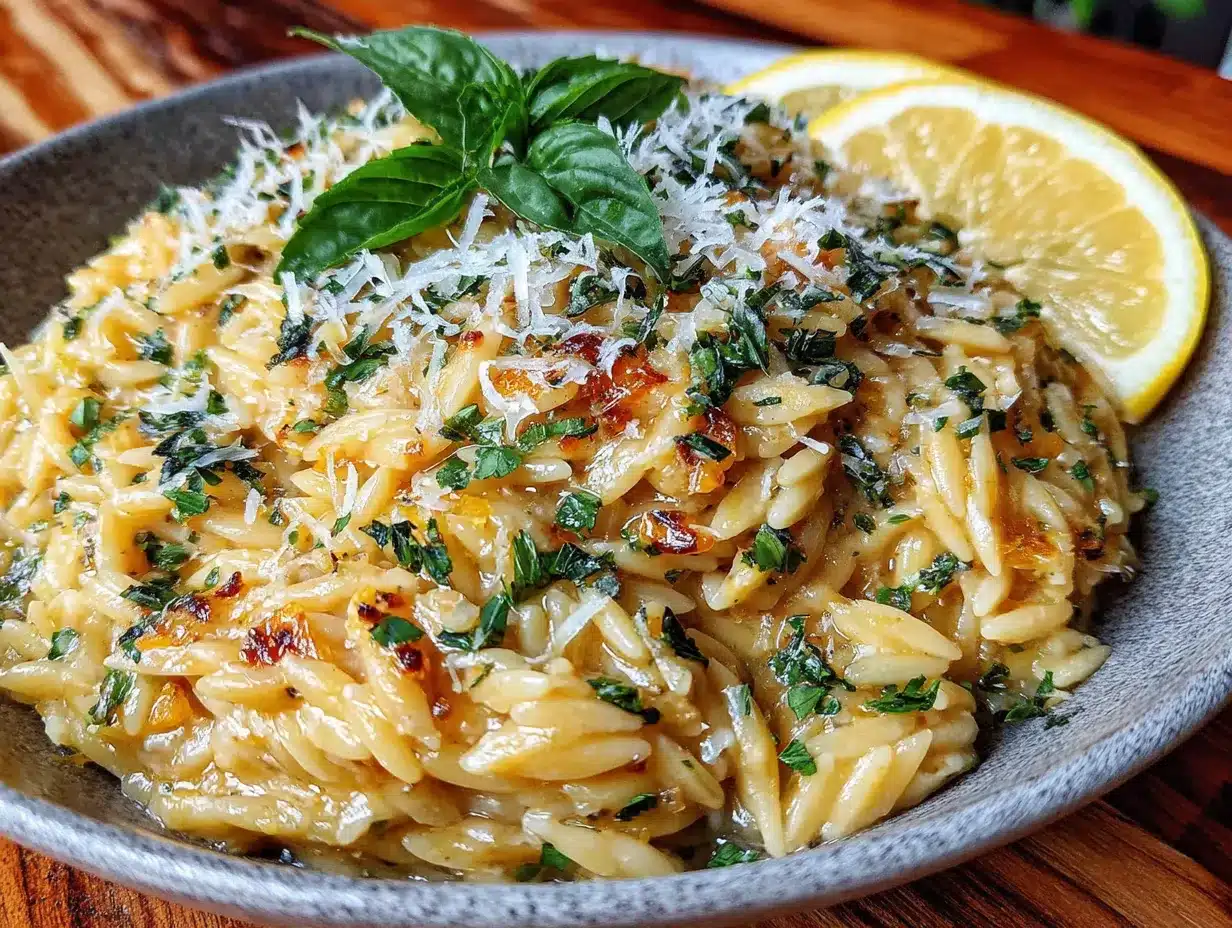
Visual cues to watch for: The orzo should look plump and tender, not mushy. The sauce should coat each grain lightly—you don’t want it swimming in liquid, but you also don’t want it dry and clumpy. The color should be pale golden from the butter and lemon, with bright green flecks of parsley. It should smell like garlic and sunshine.
Troubleshooting tip: If your orzo is still hard after the liquid is absorbed, add 1/4 cup more broth or water, cover, and cook for another 2 to 3 minutes. If your orzo is too soupy, remove the lid and cook over medium heat for 1 to 2 minutes, stirring constantly, until the excess liquid evaporates.
Cooking Tips & Techniques
After making this lemon garlic orzo more times than I can count, I’ve learned a few things the hard way. Let me save you some trouble.
Don’t skip the toasting step. I know it seems like an extra, unnecessary step. But toasting the orzo in the garlic butter before adding the liquid transforms the flavor. It adds a nuttiness that balances the bright lemon and prevents the dish from tasting one-dimensional. The first time I made this, I was in a hurry and skipped it. The result was fine, but forgettable. The toasting makes it memorable.
Watch your heat. Medium heat is your friend here. High heat will burn the garlic before the orzo has a chance to toast. Low heat won’t give you enough browning. Medium heat allows the butter to foam gently and the garlic to cook slowly. If you see the garlic starting to color, immediately reduce the heat and add the orzo—the orzo will absorb some of the heat and prevent further browning.
Let the orzo rest. Those 2 minutes after cooking are crucial. The orzo continues to absorb the flavorful liquid, and the lemon flavor mellows slightly and integrates with the other ingredients. I once served it immediately because I was starving, and it was good. But when I let it rest, it was great. Patience pays off.
One mistake I made repeatedly: Adding all the lemon juice at once. Some lemons are more acidic than others. Now I add about three-quarters of the juice, taste, and then decide if I need more. This gives you control over the final flavor. You can always add more lemon, but you can’t take it out.
Multitasking tip: While the orzo simmers, use that time to prep your main dish or set the table. The orzo needs about 10 minutes of unattended cooking, which is the perfect window to sear chicken, steam vegetables, or toss a simple salad. This recipe is designed to fit seamlessly into a busy meal prep.
For consistent results: Use the same pan every time. I know that sounds fussy, but different pans have different heat distribution. Once you find the pan that gives you perfect orzo, stick with it. Also, always use the same brand of orzo—different brands have slightly different cooking times, and consistency matters.
Variations & Adaptations
This lemon garlic orzo is a fantastic base for experimentation. Here are some variations I’ve tried and loved:
Spring Vegetable Version
Add 1 cup of chopped asparagus (woody ends removed) and 1/2 cup of frozen peas during the last 3 minutes of cooking. The residual heat will cook them perfectly. Top with fresh mint instead of parsley for a truly spring-forward dish. This is my favorite version when asparagus is in season.
Herb Garden Variation
Swap the parsley for a combination of fresh dill, chives, and mint. Use about 1 tablespoon of each, finely chopped. The dill pairs beautifully with the lemon, and the mint adds a surprising freshness. I made this version for a baby shower and got three recipe requests.
Creamy Lemon Orzo
Stir in 2 tablespoons of cream cheese or crème fraîche at the end, off the heat. This adds a tangy richness that makes the dish feel more indulgent. It’s perfect for when you want comfort food but still want that bright lemon flavor. I’ve also used Greek yogurt in a pinch—just make sure to temper it first by stirring a spoonful of hot orzo into the yogurt before adding it to the pan.
Protein-Packed Version
Add 1 cup of shredded rotisserie chicken or cooked shrimp at the end, along with the parsley. This turns the side dish into a complete meal. I do this on busy weeknights when I don’t have energy for anything complicated. It takes the same 15 minutes but feeds everyone.
Dairy-Free Adaptation
Replace the butter with 2 tablespoons of good olive oil. Use a high-quality extra virgin olive oil for the best flavor. The dish will be slightly lighter but still delicious. Add a splash of the pasta cooking water at the end to help create a silky sauce without the butter.
Spicy Lemon Garlic Orzo
Add 1/2 teaspoon of red pepper flakes along with the garlic. The heat builds slowly and complements the lemon beautifully. I also like to add a pinch of smoked paprika for extra depth. This version is excellent alongside grilled fish or roasted vegetables.
Serving & Storage Suggestions
This lemon garlic orzo is incredibly versatile when it comes to serving. Here’s how I like to enjoy it:
Serving temperature: Serve it warm, straight from the pan. The orzo is at its best when it’s still steaming, with the butter and lemon coating every grain. That said, it’s also surprisingly good at room temperature—I’ve packed it for picnics and lunchboxes, and it holds up beautifully. If serving cold, let it come to room temperature naturally rather than refrigerating it first.
Presentation: Transfer the orzo to a shallow serving bowl and spread it out slightly. Garnish with extra lemon zest, a sprinkle of fresh parsley, and a few thin lemon slices arranged artfully on top. A drizzle of good olive oil just before serving adds a beautiful sheen and extra flavor.
What to serve with it: This orzo is a natural partner for so many dishes. It’s perfect alongside grilled lemon-herb chicken, pan-seared salmon with dill, roasted lamb chops, or simple grilled shrimp. For a vegetarian meal, serve it with roasted spring vegetables—asparagus, artichokes, and cherry tomatoes work beautifully. It also makes a fantastic base for a grain bowl topped with roasted chickpeas, feta, and a drizzle of tahini.
Storage instructions: Store leftover orzo in an airtight container in the refrigerator for up to 4 days. The orzo will absorb more liquid as it sits, so it will be thicker when you reheat it. That’s normal. To reheat, add a splash of water or broth and warm it in a skillet over medium heat, stirring frequently, or microwave in 30-second bursts, stirring between each. The lemon flavor will mellow slightly overnight, so you might want to add a fresh squeeze of lemon juice after reheating.
Freezing: I don’t recommend freezing this dish. The texture of the orzo becomes mushy when thawed, and the lemon flavor fades significantly. If you have a large batch, it’s better to halve the recipe or plan to eat it within a few days.
Flavor development: Here’s something interesting—the flavors actually meld and deepen after a day in the fridge. The garlic becomes less sharp, and the lemon integrates more fully. I often make a double batch on purpose, knowing that day-old orzo is almost better than fresh. Just add a little extra lemon juice when reheating to bring back that brightness.
Nutritional Information & Benefits
This lemon garlic orzo is a balanced side dish that fits into a healthy eating pattern. Here’s the approximate nutritional breakdown per serving (based on 4 servings):
| Nutrient | Amount per Serving |
|---|---|
| Calories | 285 |
| Total Fat | 10g |
| Saturated Fat | 6g |
| Cholesterol | 25mg |
| Sodium | 520mg |
| Total Carbohydrates | 40g |
| Dietary Fiber | 2g |
| Sugars | 2g |
| Protein | 7g |
| Vitamin C | 15% DV |
| Iron | 8% DV |
Health benefits: This dish offers several nutritional perks. The lemon provides a good dose of vitamin C, which supports immune health and helps your body absorb iron from other foods. Garlic is known for its anti-inflammatory properties and may support heart health. Using broth instead of water adds minerals and flavor without extra calories. The parsley contributes vitamin K and antioxidants.
Dietary considerations: This recipe is vegetarian as written. To make it vegan, use olive oil instead of butter and vegetable broth. It’s not gluten-free, but gluten-free orzo is widely available and works well. For a lower-carb option, you can substitute cauliflower rice, though the texture and cooking time will be different. This dish is nut-free, egg-free, and soy-free, making it suitable for many common dietary restrictions.
Potential allergens: This recipe contains dairy (butter) and gluten (orzo). If you have celiac disease or a gluten sensitivity, be sure to use certified gluten-free orzo. Check your broth label as well—some broths contain gluten as a thickener.
From my perspective, this is the kind of dish that makes healthy eating feel effortless. It’s satisfying without being heavy, bright without being acidic, and simple without being boring. It proves that you don’t need complicated ingredients or techniques to eat well.
Conclusion
This lemon garlic orzo has become my signature spring side dish, and I think it deserves a spot in your recipe collection too. It’s the recipe that proves the best things often come from the most unexpected places—like a hardware store line, a retired postal worker, and a crumpled receipt. Every time I make it, I’m reminded that great cooking doesn’t have to be complicated. Sometimes it’s just about letting simple, quality ingredients shine.
I hope you’ll try this recipe and make it your own. Add your favorite spring vegetables, swap in different herbs, or turn it into a complete meal with protein. That’s the beauty of a recipe like this—it’s a foundation, not a rulebook. Experiment, taste as you go, and don’t be afraid to adjust the lemon or garlic to your liking. The best version of this dish is the one that makes you happy.
I’d love to hear how it turns out for you. Did you add something unexpected? Serve it with a particular dish? Did you, like me, get a recipe from a stranger in an unlikely place? Drop a comment below and share your story. And if you loved this recipe, please share it with someone who needs a little spring brightness on their plate. Happy cooking!
Frequently Asked Questions
Can I use long-grain rice instead of orzo?
Technically yes, but the cooking time and liquid ratio will be different. Orzo is pasta, not rice, so it cooks faster and has a different texture. If you want to use rice, I recommend using a separate recipe designed for rice. This particular method relies on orzo’s quick cooking time and ability to absorb flavors rapidly.
Can I make this lemon garlic orzo ahead of time?
Yes, you can make it up to 2 days ahead. The orzo will absorb more liquid as it sits, so when you reheat it, add a splash of broth or water and a fresh squeeze of lemon juice to revive the flavors. The texture won’t be quite as perfect as fresh, but it’s still delicious. I often make a double batch on Sunday for easy lunches during the week.
Why is my orzo mushy?
Mushy orzo usually means it was overcooked or cooked with too much liquid. Make sure you’re using the exact ratio of 2 cups liquid to 1 cup orzo. Also, don’t stir the orzo too much while it’s simmering—that can break the grains and release excess starch. Check for doneness at 9 minutes rather than trusting the package directions, which can vary.
Can I use dried herbs instead of fresh parsley?
I really recommend using fresh parsley for this recipe. Dried parsley doesn’t have the same bright flavor or color, and it won’t give you that fresh, vibrant finish. If you absolutely can’t find fresh parsley, try using fresh chives or dill instead. Or simply skip the herb garnish—the dish will still be delicious with just the lemon and garlic.
How do I prevent the garlic from burning?
The key is to keep the heat at medium and stir constantly once the garlic hits the butter. Garlic burns very quickly—in about 30 seconds, it can go from perfectly fragrant to acrid and bitter. If you see the garlic starting to brown, immediately add the orzo, which will cool the pan down. Also, make sure your garlic is minced evenly so it cooks at the same rate.
Pin This Recipe!

Easy 15-Minute Lemon Garlic Orzo Side Dish

This bright and flavorful lemon garlic orzo comes together in just 15 minutes, making it the perfect spring side dish. With simple ingredients and a quick cooking method, it’s a crowd-pleaser that pairs beautifully with any main course.
- Prep Time: 5 minutes
- Cook Time: 10 minutes
- Total Time: 15 minutes
- Yield: 4 servings 1x
- Category: Side Dish
- Cuisine: Mediterranean
Ingredients
- 1 cup (200g) orzo pasta
- 2 cups (480ml) low-sodium chicken or vegetable broth
- 3 tablespoons (45g) unsalted butter
- 4 cloves garlic, minced
- 1 large lemon (zest and juice)
- 1/4 cup (15g) fresh parsley, finely chopped
- 1/2 teaspoon salt
- 1/4 teaspoon black pepper
- Pinch of red pepper flakes (optional)
- 1/4 cup (25g) grated Parmesan cheese (optional)
- Fresh dill or chives (optional)
Instructions
- Melt the butter in a medium saucepan over medium heat. Let it melt slowly until it foams slightly but does not brown.
- Add the minced garlic and stir constantly for 30 to 45 seconds, until fragrant but not browned.
- Add the dry orzo and stir to coat with the garlic butter. Cook for 1 to 2 minutes, stirring frequently, until the orzo looks slightly translucent at the edges and smells nutty.
- Pour in the broth, add salt and pepper, and stir. Scrape the bottom of the pan to release any stuck bits. Bring to a boil over high heat (about 2 minutes).
- Reduce heat to low, cover the pan, and simmer gently for 9 minutes. Do not lift the lid often. Check for doneness; orzo should be tender but still al dente. If too firm, cover and cook another minute.
- Remove from heat. Add lemon juice and lemon zest, and stir gently.
- Stir in the chopped parsley. If the orzo seems too thick, add a splash of warm water or extra broth.
- Let the orzo sit covered for 2 minutes before serving. Fluff with a fork and transfer to a serving bowl.
Notes
For best results, use fresh garlic and lemon juice. Toast the orzo in butter before adding liquid for deeper flavor. Let the orzo rest for 2 minutes after cooking to allow flavors to meld. Adjust lemon juice to taste as some lemons are more acidic than others.
Nutrition
- Serving Size: 1 serving
- Calories: 285
- Sugar: 2
- Sodium: 520
- Fat: 10
- Saturated Fat: 6
- Carbohydrates: 40
- Fiber: 2
- Protein: 7
Keywords: lemon garlic orzo, quick side dish, spring recipe, easy pasta, 15 minute meal