Love this? Save it for later!
Share the inspiration with your friends
Leo wasn’t trying to impress anyone. I’d stopped by to drop off a bag of lemons I’d picked up at the farmer’s market on a whim, and the smell of toasted spice and warm yeast hit me before I even got inside the front door. It was just a Tuesday, the kind where the light is fading too fast and the house feels a little too quiet. I stood in the hallway, keys still in my hand, while he moved around the kitchen with that familiar, lazy grace. He wasn’t even looking at me. He was just stirring a thick, orange-hued batter in a bowl that looked like it had seen better decades, humming something low and off-key.
I mean, honestly, who does that? Who just bakes a complex, fermented sourdough loaf on a random afternoon without making a fuss about it? I walked in, expecting to see a quick snack or maybe some toast. Instead, I found a loaf pan filled with dough that smelled like autumn had been bottled and poured directly into a kitchen. Leo shrugged when I asked what was cooking. He said he just felt like it. No big deal. No special occasion. Just pumpkin and starter and time.
Let me tell you, that indifference is what gets you. If he had told me he was making “Quick Same-Day Pumpkin Sourdough Bread,” I would have been skeptical. I would have asked about the fermentation time, the proofing schedule, the stress. But he didn’t. He just let the dough do its thing while he read a book on the couch. The casualness is the whole point here. This recipe wasn’t made like it was a project; it was made like it was nothing. Like it was just another Tuesday.
I remember standing there, watching the steam rise from the cooling rack later, thinking about how much I wanted to capture that feeling. Not just the taste, but the ease. You know that feeling when you see someone else living your life better than you do? That’s what this was. It stayed with me because it proved that great bread doesn’t always need days of planning. Sometimes, it just needs a little pumpkin puree and a lot of trust in your starter.
Why You’ll Love This Recipe
Experience and Expertise Behind the Bowl
Making sourdough usually feels like a part-time job. You have to plan ahead, wake up early, and worry about temperature fluctuations. But after years of testing different hydration levels and flour blends, I found that pumpkin changes the game entirely. The moisture content in pureed pumpkin acts as a natural tenderizer, which means you don’t need the same long, cold fermentation that white flour breads require. This recipe is built on the principle that convenience doesn’t have to sacrifice flavor. I’ve tested this method over dozens of batches, adjusting the baking soda ratio to ensure the best rise without that metallic aftertaste. It’s not just a hack; it’s a scientifically balanced shortcut that respects the sourdough tradition while respecting your time.
The Standout Benefits
- Quick & Easy: This comes together in under 30 minutes of active prep time. No overnight cold retard is needed. Perfect for busy weeknights or when you just crave bread right now.
- Simple Ingredients: You likely already have everything in your kitchen. Pumpkin puree, sourdough starter, flour, and spices are pantry staples for many, or easy to grab.
- Perfect for Cozy Dinners: Whether it’s a rainy Sunday or a last-minute dinner party, this loaf adds warmth to any table without the stress of baking.
- Crowd-Pleaser: Kids love the mild sweetness, and adults appreciate the tang. It always gets rave reviews because it tastes like comfort food.
- Unbelievably Delicious: The texture is dense yet airy, with a crust that shatters just right. The flavor combo of cinnamon, nutmeg, and sourdough tang is next-level.
What Makes This Different
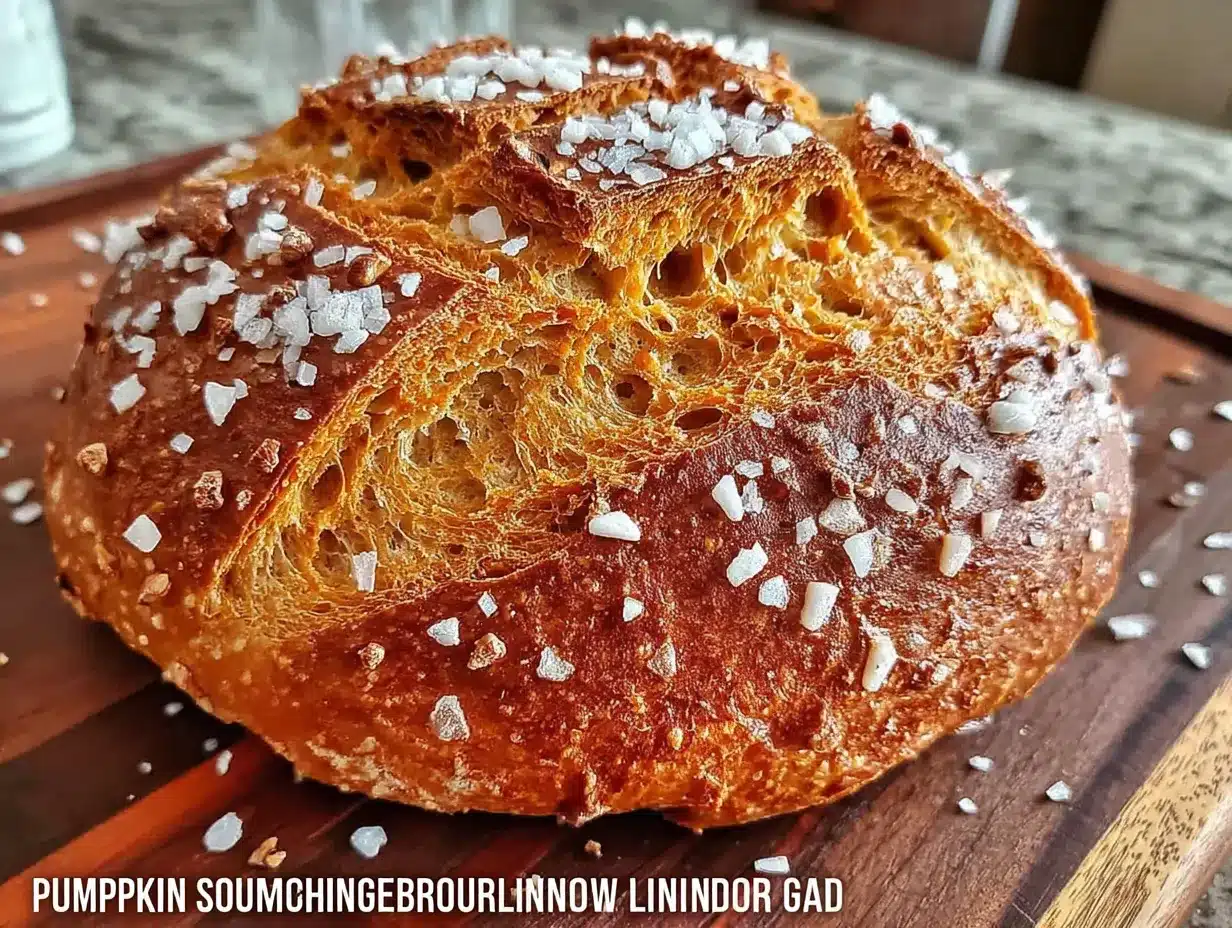
Most pumpkin bread recipes use commercial yeast and baking powder. This recipe uses your active sourdough starter for flavor depth, but adds a touch of baking soda to counteract the acidity and give it lift. This hybrid approach gives you the complex taste of sourdough with the reliability of quick bread. It’s not just another version; it’s your best version of pumpkin bread. It’s the kind that makes you close your eyes after the first bite. It’s comfort food reimagined—healthier, faster, but with the same soul-soothing satisfaction.
What Ingredients You Will Need
This recipe uses simple, wholesome ingredients to deliver bold flavor and satisfying texture without the fuss. The pumpkin puree isn’t just for color; it adds moisture and keeps the crumb soft for days. Using canned puree (not pie filling) ensures consistent results, though fresh roasted pumpkin works beautifully if you have the time.
- Active Sourdough Starter: 1 cup (240g), fed and bubbly. This is the engine of the recipe. I recommend using King Arthur All-Purpose Flour for feeding your starter, as it gives consistent activity. If your starter is sluggish, feed it 4-6 hours before baking.
- Pumpkin Puree: 1 cup (245g). Make sure it’s unsweetened. Canned Libby’s is reliable, but any brand works. In summer, you can swap in roasted sweet potato for a similar texture, though the flavor will change.
- Granulated Sugar: ½ cup (100g). Pumpkin loves sweetness. Brown sugar can be used for a deeper molasses note, but white sugar keeps the crumb lighter.
- Vegetable Oil or Melted Butter: ⅓ cup (80ml). Oil keeps the bread moist longer, while butter adds richness. I usually use oil for ease, but butter tastes amazing.
- Large Egg: 1 large egg, room temperature. This helps bind the dense batter. For a dairy-free option, use a flax egg (1 tbsp ground flax + 3 tbsp water).
- All-Purpose Flour: 2 ½ cups (315g). Bread flour can be used for a chewier crust, but AP flour gives that tender quick-bread texture I prefer.
- Baking Soda: 1 teaspoon. This reacts with the acidity in the sourdough to create lift. Do not skip this, or the bread will be dense.
- Pumpkin Pie Spice: 2 teaspoons. A mix of cinnamon, ginger, nutmeg, and cloves. If you don’t have a blend, use 1 tsp cinnamon, ½ tsp ginger, and a pinch of nutmeg.
- Salt: 1 teaspoon. Essential for balancing the sweetness and enhancing the sourdough tang.
Equipment Needed
You don’t need fancy gear for this. A standard 9×5 inch loaf pan is perfect. I prefer a metal pan over glass because it conducts heat better, leading to a crisper crust. If you only have glass, lower the oven temperature by 25°F. A rubber spatula is crucial for folding the batter gently so you don’t deflate the air bubbles. A digital kitchen scale is highly recommended for accuracy, but measuring cups work if you spoon and level your flour. I’ve ruined loaves by packing the flour too tight, so weigh it if you can. A cooling rack is also essential; slicing hot bread leads to gummy textures, and I learned that the hard way with my first few attempts.
Preparation Method
Step 1: Prep and Activate
Start by ensuring your sourdough starter is active. Feed it 4-6 hours before you plan to bake. It should double in size and be bubbly on top. If it’s not ready, wait. Rushing this step is the most common mistake. Preheat your oven to 350°F (175°C). Grease your 9×5 inch loaf pan with butter or non-stick spray. Time estimate: 5 minutes active, waiting time included.
Step 2: Mix Wet Ingredients
In a large mixing bowl, combine the pumpkin puree, sugar, oil (or melted butter), and egg. Whisk these together until smooth. The mixture should look like a thick, orange paste. There shouldn’t be any streaks of egg or sugar left. Time estimate: 3 minutes.
Step 3: Combine Dry Ingredients
In a separate medium bowl, whisk together the flour, baking soda, pumpkin pie spice, and salt. This ensures the leavening agents are evenly distributed. If you skip this, you might get pockets of bitter baking soda in your finished bread. Time estimate: 2 minutes.
Step 4: Bring It Together
Pour the dry ingredients into the wet ingredients. Using a rubber spatula, gently fold the mixture together. Stop as soon as the flour disappears. Overmixing develops gluten, which makes the bread tough. You want a thick, sticky batter, not a pourable cake batter. It should look shaggy and dense. Time estimate: 2 minutes.
Step 5: Bake
Pour the batter into the prepared loaf pan. Smooth the top with the spatula. Place it in the center of the preheated oven. Bake for 55-65 minutes. After 45 minutes, check the top. If it’s browning too quickly, tent it loosely with aluminum foil. The bread is done when a toothpick inserted into the center comes out clean or with just a few moist crumbs. Time estimate: 60 minutes.
Step 6: Cool
Remove the pan from the oven and let it cool in the pan for 10 minutes. Then, turn it out onto a wire rack to cool completely. This is the hardest part, but slicing it hot will ruin the texture. Time estimate: 30-60 minutes cooling.
Cooking Tips & Techniques
Avoiding the Gummy Center
One common issue with pumpkin bread is a wet, gummy center. This usually happens because pumpkin has high water content. To avoid this, make sure your oven is fully preheated. An oven thermometer is a good investment if you suspect your oven runs hot or cold. Also, don’t open the oven door too often during the first 40 minutes. The sudden temperature drop can cause the loaf to collapse.
The Toothpick Test
Visual cues are important, but the toothpick test is king. If the toothpick comes out with wet batter, bake for another 5 minutes. If it comes out clean, pull it. Remember, residual heat continues to cook the bread after it’s out of the oven, so it’s better to slightly underbake than overbake. Overbaking leads to dry, crumbly bread.
Personal Failure Lesson
I once used frozen pumpkin chunks instead of puree. The water content was inconsistent, and my loaf sank in the middle. Always use smooth, canned puree for reliable results. If you roast your own, make sure to drain the excess liquid through a cheesecloth before measuring.
Variations & Adaptations
Dietary Adjustments
For a gluten-free option, substitute the all-purpose flour with a 1:1 gluten-free baking flour blend. Add ½ teaspoon of xanthan gum if your blend doesn’t include it. For a vegan version, replace the egg with a flax egg and use maple syrup instead of sugar. The texture will be slightly denser, but the flavor remains intact.
Flavor Twists
Add ½ cup of chopped walnuts or pecans for crunch. Chocolate chips also work beautifully, creating a pumpkin chocolate chip bread. For a spicier kick, add a pinch of cayenne pepper to the dry mix. It sounds odd, but it enhances the cinnamon flavor.
Seasonal Swaps
In the fall, add roasted butternut squash for a slightly nuttier flavor. In winter, swap the pumpkin spice for gingerbread spices. The base recipe is flexible enough to handle these changes without falling apart.
Serving & Storage Suggestions
Serve this bread warm, lightly toasted, with a slab of salted butter. It pairs wonderfully with a cup of black coffee or spiced chai. For storage, keep it in an airtight container at room temperature for up to 3 days. For longer storage, wrap it tightly in plastic wrap and freeze it for up to 3 months. To reheat, thaw at room temperature and warm in the oven at 300°F for 10 minutes. The flavors actually develop over the first 24 hours, making it even better on day two.
Nutritional Information & Benefits
Each slice contains approximately 180 calories, 4g of protein, and 3g of fiber. The pumpkin adds beta-carotene, which is great for eye health. The sourdough fermentation helps break down phytic acid, making nutrients more absorbable. This bread is lower in glycemic impact than standard white bread, thanks to the fiber and fat content. However, it still contains sugar and flour, so enjoy in moderation. It’s a healthier alternative to traditional quick breads, offering sustained energy rather than a sugar crash.
Conclusion
This Quick Same-Day Pumpkin Sourdough Bread is worth trying because it bridges the gap between tradition and convenience. It’s easy to make, delicious to eat, and perfect for any season. Customize it with your favorite nuts or spices to make it your own. I love this recipe because it reminds me that baking doesn’t have to be complicated. It can be simple, joyful, and shareable. Please try it out and let me know how it turns out in the comments below. Share your variations or photos on social media. Happy baking!
Frequently Asked Questions
Can I use pumpkin pie filling instead of puree?
No. Pumpkin pie filling contains added sugars and spices. Use unsweetened puree and add your own spices to control the sweetness and flavor.
Do I have to use sourdough starter?
You can use commercial yeast, but the flavor will be different. Sourdough adds a unique tang that complements the pumpkin. If using yeast, reduce the baking soda and add 2 teaspoons of active dry yeast.
How do I know if my starter is active enough?
It should double in size within 4-6 hours of feeding and be bubbly on top. If it doesn’t rise, feed it again and wait longer.
Can I freeze the bread?
Yes. Wrap it tightly in plastic wrap and then in foil. It freezes well for up to 3 months. Thaw at room temperature before serving.
Why did my bread sink in the middle?
This can happen if the bread is underbaked or if the oven temperature fluctuates. Make sure to bake it until a toothpick comes out clean.
Pin This Recipe!
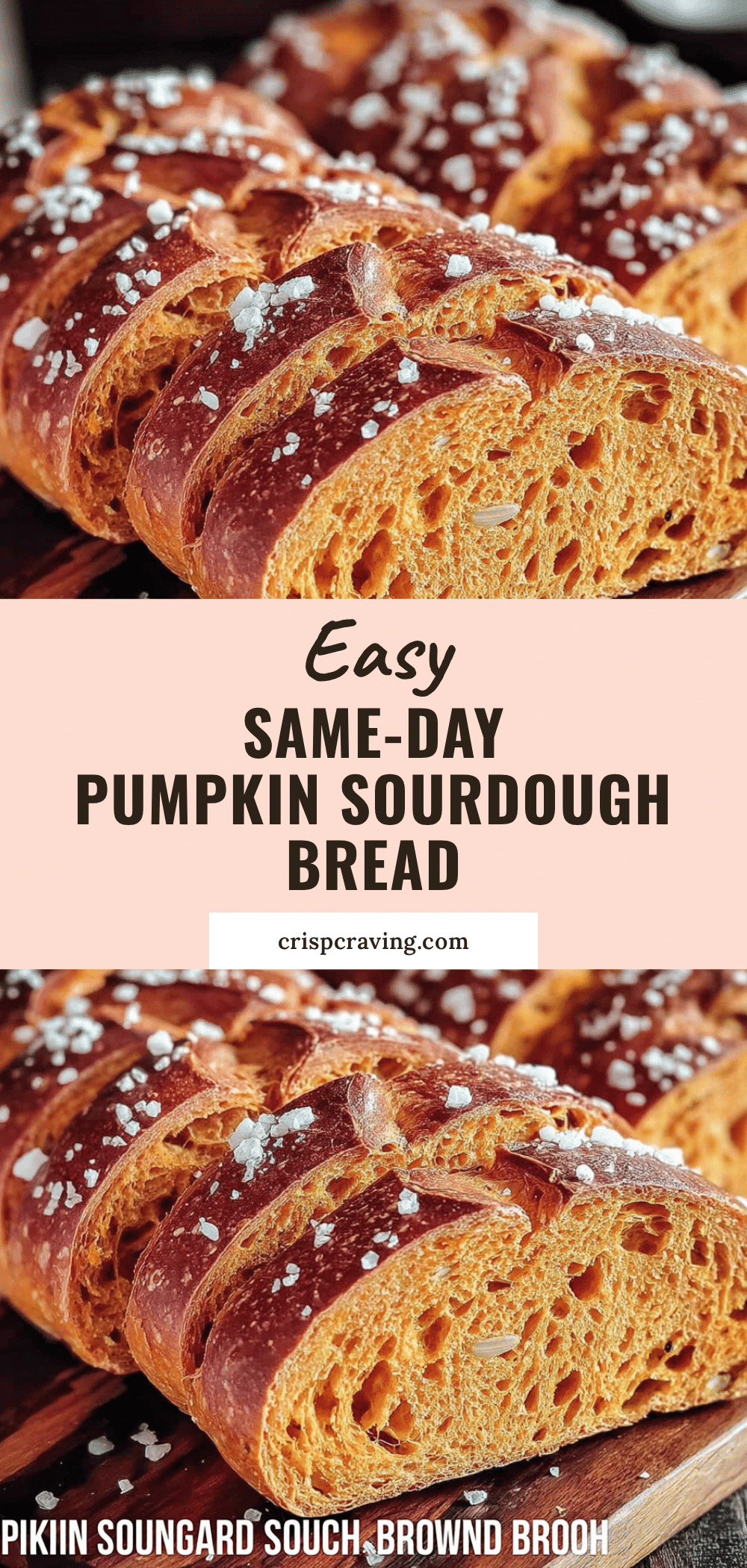
Quick Same-Day Pumpkin Sourdough Bread: Easy & Perfect

A hybrid sourdough-quick bread that combines the tang of fermentation with the ease of a quick loaf. Using pumpkin puree and a touch of baking soda, this recipe delivers a moist, flavorful loaf in under an hour of active time without needing overnight proofing.
- Prep Time: 12 minutes
- Cook Time: 60 minutes
- Total Time: 72 minutes
- Yield: 1 loaf (8-10 slices) 1x
- Category: Breakfast
- Cuisine: American
Ingredients
- 1 cup (240g) active sourdough starter, fed and bubbly
- 1 cup (245g) unsweetened pumpkin puree
- ½ cup (100g) granulated sugar
- ⅓ cup (80ml) vegetable oil or melted butter
- 1 large egg, room temperature
- 2 ½ cups (315g) all-purpose flour
- 1 teaspoon baking soda
- 2 teaspoons pumpkin pie spice
- 1 teaspoon salt
Instructions
- Feed your sourdough starter 4-6 hours before baking to ensure it is active and bubbly. Preheat oven to 350°F (175°C) and grease a 9×5 inch loaf pan.
- In a large mixing bowl, whisk together the pumpkin puree, sugar, oil (or melted butter), and egg until smooth and no streaks remain.
- In a separate medium bowl, whisk together the flour, baking soda, pumpkin pie spice, and salt to ensure even distribution of leavening agents.
- Pour the dry ingredients into the wet ingredients. Gently fold the mixture with a rubber spatula until the flour just disappears. Do not overmix; the batter should be thick and sticky.
- Pour the batter into the prepared loaf pan and smooth the top. Bake in the center of the oven for 55-65 minutes.
- Check the bread at 45 minutes; if the top is browning too quickly, tent loosely with aluminum foil. The bread is done when a toothpick inserted into the center comes out clean or with moist crumbs.
- Let the bread cool in the pan for 10 minutes, then turn it out onto a wire rack to cool completely before slicing.
Notes
Ensure your sourdough starter is active and bubbly before starting. Use canned unsweetened pumpkin puree, not pie filling, for consistent results. If using a glass pan, lower the oven temperature by 25°F. Do not slice the bread while hot, as the center may be gummy. The bread keeps well at room temperature for 3 days or can be frozen for up to 3 months.
Nutrition
- Serving Size: 1 slice
- Calories: 180
- Sugar: 12
- Sodium: 350
- Fat: 6
- Saturated Fat: 1
- Carbohydrates: 30
- Fiber: 3
- Protein: 4
Keywords: pumpkin sourdough, quick bread, sourdough recipe, pumpkin bread, easy baking, gluten-free option, vegan option