Love this? Save it for later!
Share the inspiration with your friends
I was standing in the produce aisle last Tuesday, honestly just staring at a bunch of carrots like they held the answers to the universe, when the smell hit me. It wasn’t the carrots themselves — it was the faint, earthy sweetness of the parsnips next to them, mixed with the clean scent of damp soil. And just like that, I was seven years old, sitting on a cold linoleum floor in my Aunt Lena’s tiny kitchen, watching her peel vegetables for Sunday dinner. She’d always hum this off-key tune while she worked, and the rhythm of the peeler against the parsnip skin was like a secret metronome. I can still see her hands, knobby-knuckled and flour-dusted, tossing everything with honey and mustard before sliding the pan into her ancient oven. She passed away a few years back, and I never got her exact recipe. I’ve been chasing that flavor ever since — that perfect balance of sweet, sharp, and earthy, all tangled up with the smell of roasting thyme. So there I was, in the middle of a grocery store, trying to recreate a memory I could almost taste. Maybe you’ve been there, you know? That feeling when a dish is tied to a person, and you’re terrified you’ll never get it right. Well, let me tell you — after a dozen attempts, a few burnt pans, and one memorable incident where I forgot the honey entirely, I finally cracked it. This honey Dijon roasted carrots and parsnips recipe is the one. It’s the one that makes me close my eyes and remember that kitchen floor.
Why You’ll Love This Recipe
This isn’t just another vegetable side dish. This honey Dijon roasted carrots and parsnips recipe is the kind of thing that makes people who claim they don’t like root vegetables suddenly ask for seconds. I’ve tested it on skeptics — my neighbor Rick, who swears by frozen pizza, ate half the pan before dinner even started. It’s that good.
- Quick & Easy: Comes together in under 40 minutes, with only about 10 minutes of active prep. Perfect for a busy Tuesday when you need something that feels fancy without the stress.
- Simple Ingredients: No chasing down obscure items at specialty stores. Carrots, parsnips, honey, Dijon mustard, thyme — you probably have most of this in your kitchen right now.
- Perfect for Holidays or Weeknights: It’s elegant enough for Thanksgiving dinner but simple enough for a random Wednesday roast chicken. This recipe works for any occasion.
- Crowd-Pleaser: Honestly, I’ve served this at potlucks, family dinners, and even a brunch once. It gets rave reviews every single time. Kids love the sweetness, adults love the savory balance.
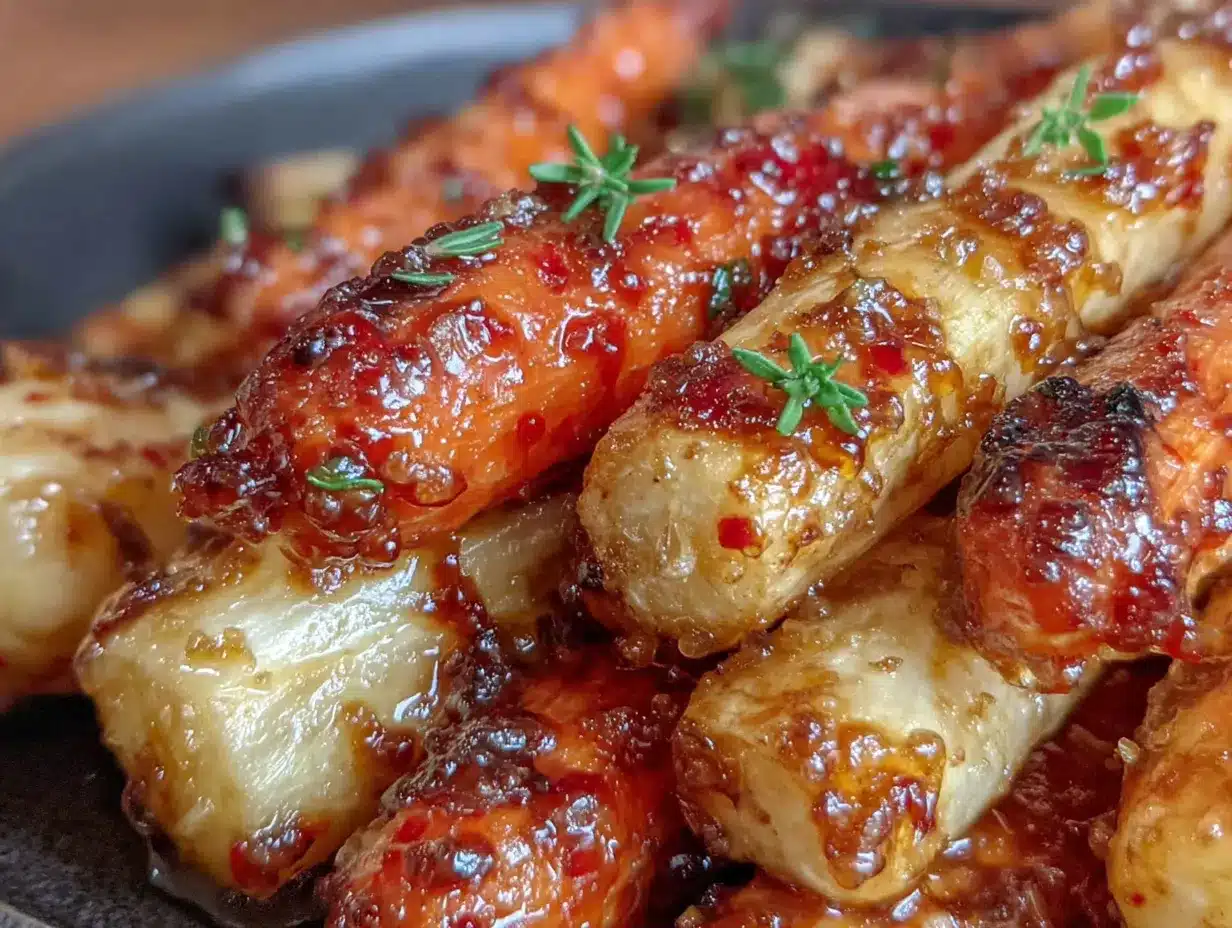
- Unbelievably Delicious: The magic here is in the roasting. The honey caramelizes into a sticky glaze, the Dijon adds a subtle tangy kick, and the thyme brings this warm, almost woodsy aroma that fills your whole kitchen. The parsnips get tender and sweet, the carrots develop those gorgeous caramelized edges — it’s next-level comfort food.
What makes this recipe different from the rest? It’s the balance. So many honey-roasted vegetable recipes end up too sweet, like dessert masquerading as dinner. Others go heavy on the mustard and it’s all you can taste. This version hits that sweet spot — the honey and Dijon work together, not against each other. The thyme ties it all together, and the roasting technique ensures every piece is perfectly tender with those irresistible crispy edges. It’s comfort food reimagined — healthier, faster, but with the same soul-soothing satisfaction. Perfect for impressing guests without stress, or turning a simple meal into something memorable.
What Ingredients You Will Need
This recipe uses simple, wholesome ingredients to deliver bold flavor and satisfying texture without the fuss. Most of these are pantry staples, but a few notes will help you pick the best ones.
- Carrots: 1 pound, peeled and cut into 2-inch sticks. Look for medium-sized carrots — not too thin or they’ll burn, not too thick or they won’t cook through. I prefer organic carrots for their sweeter flavor, but any will work. If you can find rainbow carrots, they make a beautiful presentation!
- Parsnips: 1 pound, peeled and cut into 2-inch sticks. Parsnips can be tricky — the thicker ends are tender, but the thin, wispy tails can get woody. Trim those off and use only the thick parts. Look for firm, medium-sized parsnips without any soft spots.
- Honey: 3 tablespoons. Use a good quality honey — the flavor really comes through here. I love using local wildflower honey for its complex sweetness. Avoid honey that’s crystallized or too thick; it won’t coat the vegetables evenly.
- Dijon Mustard: 2 tablespoons. This is not the place for yellow mustard! Dijon has that perfect tangy, slightly sharp flavor that balances the honey. I recommend Grey Poupon for consistent results, but any quality Dijon works.
- Olive Oil: 2 tablespoons. Extra virgin olive oil adds a lovely fruity note, but regular olive oil works fine too. Don’t use vegetable oil — you’ll miss out on flavor.
- Fresh Thyme: 1 tablespoon leaves, plus extra sprigs for garnish. Fresh thyme is non-negotiable here. Dried thyme just doesn’t have the same aromatic punch. Run your fingers down the stems to strip the leaves easily.
- Salt: 1 teaspoon. I use flaky sea salt for finishing, but kosher salt for the initial seasoning. The flaky salt adds a nice little crunch at the end.
- Black Pepper: 1/2 teaspoon, freshly ground. Don’t skip this — it helps balance the sweetness.
- Garlic: 2 cloves, minced (optional, but highly recommended). Adds a savory depth that makes the dish even more addictive.
Substitution Guidance: For a vegan version, swap the honey with maple syrup — it’s equally delicious and adds a slightly different caramel note. If you don’t have fresh thyme, you can use 1 teaspoon of dried thyme, but honestly, fresh makes a huge difference. For a lower-carb option, replace the honey with a sugar-free maple syrup substitute, though the texture will be slightly different.
Equipment Needed
You don’t need a lot of fancy equipment for this honey Dijon roasted carrots and parsnips recipe, which is part of its charm. Here’s what you’ll need:
- Large Baking Sheet: A half-sheet pan (18×13 inches) is perfect. Make sure it’s rimmed — the honey glaze can get sticky and you don’t want it dripping into your oven. I’ve used cheap non-stick pans and heavy-duty aluminum ones; the heavier pans give better, more even browning.
- Parchment Paper or Silicone Baking Mat: Highly recommended for easy cleanup. The honey caramelizes and can stick to the pan — parchment makes it a breeze.
- Chef’s Knife: A sharp one is crucial for cutting the carrots and parsnips into uniform sticks. Dull knives make uneven cuts, which means uneven cooking.
- Vegetable Peeler: A standard Y-peeler works great. I prefer a swivel peeler for carrots, but use whatever you’re comfortable with.
- Mixing Bowl: Large enough to toss the vegetables with the glaze. A glass or stainless steel bowl works best.
- Measuring Spoons: For the honey, Dijon, oil, and seasonings. Honey is sticky — lightly spray your measuring spoon with cooking spray first for easy release.
- Small Whisk or Fork: To mix the glaze ingredients together before tossing with the vegetables.
Budget-Friendly Options: Don’t have a baking sheet? A large oven-safe skillet or even a 9×13 baking dish will work in a pinch — you might need to stir the vegetables halfway through for even browning. No parchment? Grease the pan well with butter or oil. It’s not as easy to clean, but it works.
Preparation Method
- Preheat your oven to 400°F (200°C). Getting the oven hot is crucial — it needs to be screaming hot to caramelize the honey and get those beautiful brown edges. While it’s heating, line your baking sheet with parchment paper for easy cleanup.
- Prep the vegetables. Peel 1 pound of carrots and 1 pound of parsnips. Trim off the tops and the thin, woody tails of the parsnips. Cut both into sticks about 2 inches long and 1/2 inch thick. Try to make them uniform in size — this is key for even cooking. I usually aim for pieces that are roughly the same thickness as my thumb.
- Make the glaze. In a large mixing bowl, whisk together 3 tablespoons honey, 2 tablespoons Dijon mustard, 2 tablespoons olive oil, 1 tablespoon fresh thyme leaves, 1 teaspoon salt, and 1/2 teaspoon black pepper. If you’re using the minced garlic, add that now. The mixture should be smooth and slightly thick. Taste it — you should get a balance of sweet and tangy. Adjust if needed.
- Toss the vegetables. Add the carrot and parsnip sticks to the bowl with the glaze. Use your hands or a spatula to toss everything together until every piece is well coated. Don’t be shy — really work the glaze into the vegetables. The honey can be stubborn, so make sure there are no dry spots.
- Arrange on the baking sheet. Spread the vegetables in a single layer on the prepared baking sheet. Don’t overcrowd them — if they’re piled on top of each other, they’ll steam instead of roast. If your baking sheet is too small, use two sheets. Leave a little space between each piece for air circulation.
- Roast for 20 minutes. Place the sheet in the preheated oven and set a timer. Don’t open the oven door during this time — you want to keep the heat steady.
- Flip and rotate. After 20 minutes, remove the pan from the oven. Use a spatula to flip each piece over. The bottoms should be golden brown and starting to caramelize. If they’re not, give them another 5 minutes before flipping. Rotate the pan (front to back) for even cooking.
- Roast for another 10-15 minutes. Return the pan to the oven. Keep an eye on them — honey can go from perfectly caramelized to burnt quickly. The vegetables are done when they’re tender enough to pierce easily with a fork and have deep golden-brown edges. The parsnips should be soft and almost creamy inside.
- Finish and serve. Remove from the oven and let rest for 2-3 minutes. Sprinkle with a pinch of flaky sea salt and some fresh thyme leaves for garnish. Serve warm, straight from the pan or transferred to a serving dish.
Sensory Cues: At the 20-minute mark, your kitchen should smell incredible — sweet honey, sharp mustard, and earthy thyme. The vegetables should look glossy and starting to brown on the bottoms. When they’re done, the edges will be dark golden and slightly crispy, and you’ll hear a faint sizzle when you pull them from the oven. The parsnips will feel soft but not mushy when pierced.
Troubleshooting: If your vegetables are browning too quickly but aren’t tender yet, cover loosely with foil and continue roasting. If they’re not browning at all, your oven might be running cool — increase the temperature to 425°F for the last 10 minutes. If the honey is burning on the pan, reduce the temperature to 375°F next time and roast a little longer.
Cooking Tips & Techniques
I’ve made this honey Dijon roasted carrots and parsnips recipe probably thirty times now, and I’ve learned a few things the hard way. Let me save you some trouble.
Cut evenly, cook evenly. This is the single most important tip. I once got lazy and cut the carrots and parsnips into random sizes. The thin pieces burned, the thick ones were still crunchy. Aim for sticks that are all roughly the same thickness — about 1/2 inch. It takes an extra minute of prep, but it makes all the difference.
Don’t skip the flipping. I know, it’s tempting to just toss everything in and forget about it. But flipping the vegetables halfway through ensures they caramelize evenly on all sides. If you’re in a rush, you can skip it, but you’ll end up with one side that’s beautifully browned and one side that’s pale and sad. Trust me, the flip is worth it.
Watch the honey. Honey burns faster than sugar because it has a lower smoke point. Keep an eye on your vegetables in the last 10 minutes. If you see dark spots forming, pull them out immediately. The line between perfectly caramelized and burnt is thin — like, 2 minutes thin. I’ve crossed it more times than I’d like to admit.
Use room temperature ingredients. If your honey is cold and thick, it won’t coat the vegetables well. Let it sit at room temperature for 10 minutes before mixing. Same with the Dijon mustard — cold mustard is harder to whisk into a smooth glaze.
Double the batch for meal prep. These roasted vegetables reheat beautifully. Make a double batch on Sunday and use them throughout the week — tossed into salads, alongside grilled chicken, or even chopped up and added to frittatas. They keep well in the fridge for up to 4 days.
My biggest failure: The first time I made this, I used dried thyme because I thought it wouldn’t matter. Big mistake. The dried thyme turned bitter during roasting and overwhelmed the honey and mustard. Fresh thyme is absolutely worth the extra cost. It’s more aromatic, more delicate, and it complements the vegetables instead of fighting them.
Variations & Adaptations
One of the best things about this honey Dijon roasted carrots and parsnips recipe is how flexible it is. Here are some variations I’ve tried and loved:
- Maple Balsamic Version: Swap the honey with maple syrup and replace 1 tablespoon of the Dijon with balsamic vinegar. The result is deeper, richer, and slightly tangier. I made this for a potluck and someone asked me if it was a restaurant dish. It’s that good.
- Spicy Honey Version: Add 1/2 teaspoon of red pepper flakes or a dash of cayenne pepper to the glaze. The heat cuts through the sweetness beautifully. My spice-loving friend Sarah requests this version every time she comes over.
- Herb Garden Version: Can’t find fresh thyme? Use fresh rosemary or sage instead. Rosemary gives a piney, aromatic note that pairs wonderfully with the honey. Sage adds an earthy, almost buttery flavor. Both are excellent.
- Roasted Vegetable Medley: Add other root vegetables to the mix — sweet potatoes, beets, or turnips work great. Just cut them to the same size as the carrots and parsnips. Beets will stain everything pink, so keep that in mind if presentation matters.
- Garlic Lovers Version: Roast a whole head of garlic alongside the vegetables. Squeeze the soft, roasted cloves over the finished dish. It adds a sweet, mellow garlic flavor that’s completely different from raw minced garlic.
- Air Fryer Adaptation: Cook at 375°F for 12-15 minutes, shaking the basket halfway through. You’ll need to work in batches to avoid overcrowding. The air fryer gives even crispier edges, which is amazing.
Dietary Adaptations: For a vegan version, use maple syrup instead of honey. For a paleo-friendly version, stick with honey (it’s technically not paleo, but many people include it). For Whole30, use date syrup or omit the sweetener entirely — the carrots will still caramelize naturally.
Serving & Storage Suggestions
These honey Dijon roasted carrots and parsnips are best served warm, straight from the oven. The honey glaze is at its most glorious when it’s still glossy and slightly sticky. I like to transfer them to a warm serving platter and sprinkle with a little extra fresh thyme and flaky sea salt. The contrast of the warm, tender vegetables with the cool, fresh herbs is perfect.
What to serve with them: These vegetables are incredibly versatile. They’re a natural side dish for roasted chicken, baked salmon, or grilled steak. I love serving them alongside a simple roast chicken with lemon and garlic — the flavors complement each other beautifully. For a vegetarian meal, pair them with a hearty grain like farro or quinoa, and add a dollop of Greek yogurt or tahini sauce on top. They also work well with pork chops, lamb, or even as part of a holiday spread.
Storage: Let the vegetables cool completely before storing. Transfer to an airtight container and refrigerate for up to 4 days. The flavors actually meld together overnight, so leftovers can taste even better the next day. I’ve been known to eat them cold, straight from the fridge, as a snack.
Reheating: The best way to reheat is in the oven at 350°F for 5-7 minutes. This restores some of the crispy edges. You can also reheat in a skillet over medium heat for 3-4 minutes, stirring occasionally. Avoid the microwave — it makes the vegetables soggy and the glaze turns watery. If you’re in a rush, the microwave works, but the texture won’t be the same.
Freezing: I don’t recommend freezing these. The texture of the parsnips changes dramatically after freezing — they become mushy and watery when thawed. If you absolutely must freeze them, blanch the vegetables first, then roast them fresh after thawing. It’s more work, but the results are better.
Flavor development: These vegetables taste best within the first 24 hours. After that, the honey glaze starts to lose its shine and the vegetables soften. Still delicious, but not as spectacular as fresh from the oven.
Nutritional Information & Benefits
This honey Dijon roasted carrots and parsnips recipe isn’t just delicious — it’s packed with nutrients too. Here’s a rough breakdown per serving (about 1 cup):
- Calories: Approximately 180-200
- Carbohydrates: 35g
- Fiber: 7g
- Sugar: 18g (mostly natural from the vegetables and honey)
- Fat: 7g
- Protein: 3g
- Vitamin A: Over 300% of daily value (from carrots)
- Vitamin C: 25% of daily value
- Potassium: 600mg
Health Benefits: Carrots are famously rich in beta-carotene, which supports eye health and immune function. Parsnips are an excellent source of fiber, which aids digestion and helps maintain stable blood sugar levels. The honey provides quick energy and has antimicrobial properties. Thyme is packed with antioxidants and has anti-inflammatory benefits. This dish is naturally gluten-free, dairy-free, and vegetarian. For a lower-carb option, reduce the honey to 2 tablespoons or use a sugar-free substitute.
Dietary Considerations: This recipe is naturally gluten-free, dairy-free, and vegetarian. For vegans, swap honey with maple syrup. It’s also nut-free and soy-free, making it safe for most common allergies. The only potential allergen is honey (for those with bee allergies).
Personal Wellness Perspective: I love that this recipe lets me eat a generous portion of vegetables without feeling like I’m depriving myself. The honey and Dijon make it feel indulgent, but it’s still a nutrient-dense dish. It’s the kind of food that makes you feel good — satisfied, energized, and nourished.
Conclusion
This honey Dijon roasted carrots and parsnips recipe is more than just a side dish — it’s a memory, a comfort, and a celebration of simple, honest ingredients. It’s the recipe I turn to when I need something that feels special but doesn’t require hours in the kitchen. It’s the dish that makes people stop and say, “Wow, what’s in this?” And it’s the recipe that finally let me recreate that elusive taste from my Aunt Lena’s kitchen.
I hope you make this your own. Experiment with the herbs, try different root vegetables, adjust the sweetness to your liking. That’s the beauty of cooking — every batch is a little different, and every batch tells your story. Leave a comment below and let me know how yours turned out. Did you add a twist? Did your family love it? I read every comment and I love hearing about your kitchen adventures.
Now go preheat that oven. Your taste buds are about to be very, very happy.
Frequently Asked Questions
Can I use baby carrots instead of whole carrots?
Absolutely! Baby carrots work great and save you the peeling step. Just keep in mind they’re already small, so they’ll cook a little faster — check them at the 25-minute mark instead of 30. You might also want to pat them dry before tossing with the glaze, as bagged baby carrots can be a bit wet.
How do I prevent the honey from burning?
This is a common concern! The key is to keep an eye on your oven temperature — 400°F is the sweet spot. If your oven runs hot, drop it to 375°F and roast a few minutes longer. Also, make sure your vegetables are cut into uniform pieces so they cook evenly. And don’t skip the flipping step — it helps distribute the heat and prevents burning on one side.
Can I make this recipe ahead of time?
You can prep the vegetables and make the glaze up to 24 hours in advance. Store them separately in the fridge, then toss and roast when you’re ready. The vegetables might release a little moisture overnight, so pat them dry before adding the glaze. I don’t recommend roasting them fully ahead of time — they’re best fresh from the oven.
What can I use instead of fresh thyme?
Fresh thyme really is best here, but I understand it’s not always available. You can substitute with 1 teaspoon of dried thyme, though the flavor will be less aromatic. Fresh rosemary or sage are excellent alternatives — use about 1 tablespoon of fresh leaves, chopped. If you’re using dried rosemary, use only 1/2 teaspoon as it’s very potent.
Are parsnips necessary, or can I use only carrots?
You can absolutely use only carrots! The recipe will still be delicious. The parsnips add a slightly sweet, nutty, almost peppery flavor that complements the carrots, but it’s not essential. If you’re skipping the parsnips, use 2 pounds of carrots total. You can also substitute with sweet potatoes, turnips, or even butternut squash for a different flavor profile.
Pin This Recipe!
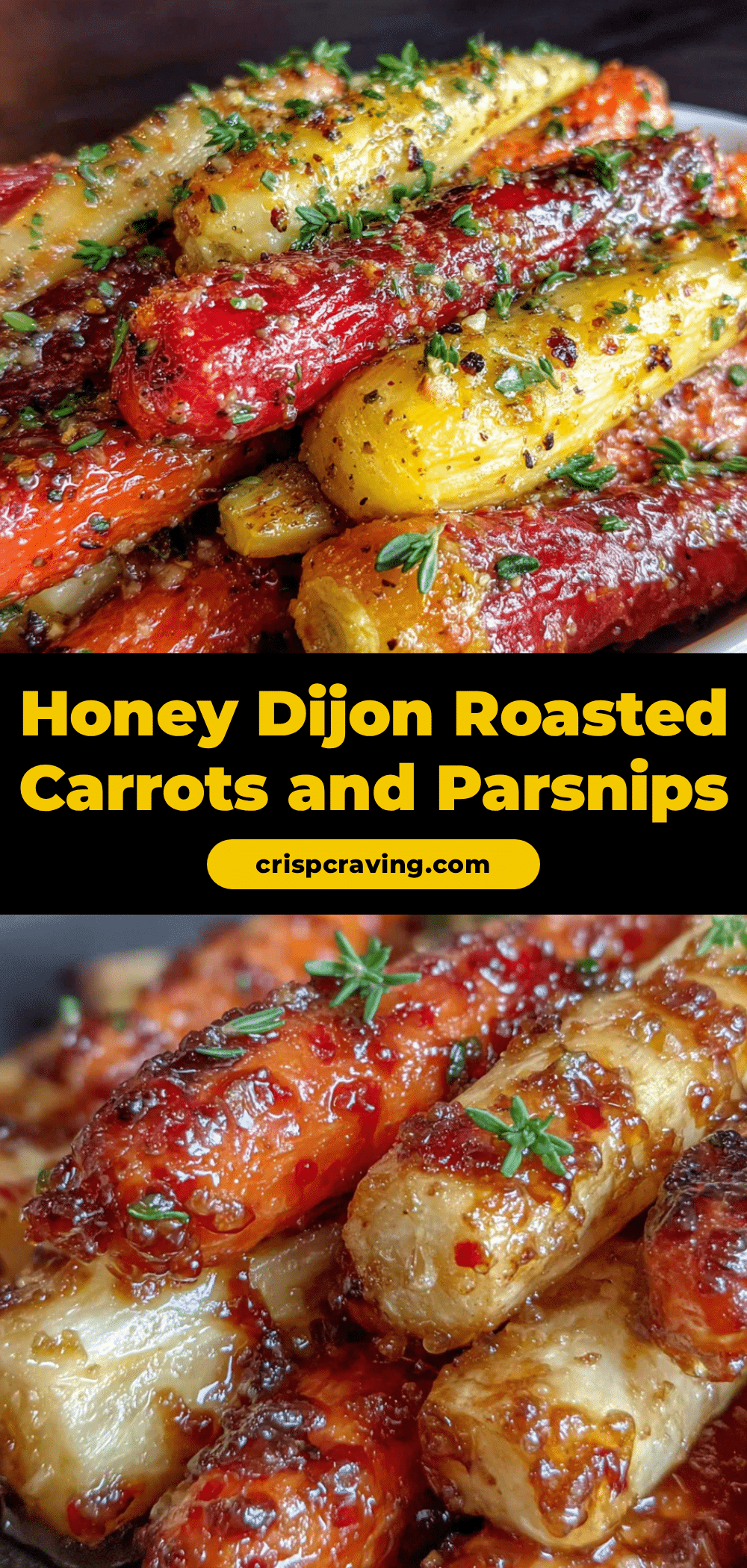
Best Honey Dijon Roasted Carrots and Parsnips Recipe

This honey Dijon roasted carrots and parsnips recipe is the perfect balance of sweet, sharp, and earthy, with tender caramelized edges. It’s quick, easy, and elegant enough for holidays but simple enough for weeknights.
- Prep Time: 10 minutes
- Cook Time: 30 minutes
- Total Time: 40 minutes
- Yield: 4 servings 1x
- Category: Side Dish
- Cuisine: American
Ingredients
- 1 pound carrots, peeled and cut into 2-inch sticks
- 1 pound parsnips, peeled and cut into 2-inch sticks
- 3 tablespoons honey
- 2 tablespoons Dijon mustard
- 2 tablespoons olive oil
- 1 tablespoon fresh thyme leaves, plus extra for garnish
- 1 teaspoon salt
- 1/2 teaspoon black pepper, freshly ground
- 2 cloves garlic, minced (optional)
Instructions
- Preheat your oven to 400°F (200°C). Line a baking sheet with parchment paper.
- Peel 1 pound of carrots and 1 pound of parsnips. Trim off the tops and the thin, woody tails of the parsnips. Cut both into sticks about 2 inches long and 1/2 inch thick.
- In a large mixing bowl, whisk together 3 tablespoons honey, 2 tablespoons Dijon mustard, 2 tablespoons olive oil, 1 tablespoon fresh thyme leaves, 1 teaspoon salt, and 1/2 teaspoon black pepper. Add minced garlic if using.
- Add the carrot and parsnip sticks to the bowl with the glaze. Toss until every piece is well coated.
- Spread the vegetables in a single layer on the prepared baking sheet. Do not overcrowd.
- Roast for 20 minutes. Do not open the oven door during this time.
- Remove the pan from the oven. Flip each piece over. Rotate the pan for even cooking.
- Roast for another 10-15 minutes, until the vegetables are tender and have deep golden-brown edges.
- Remove from the oven and let rest for 2-3 minutes. Sprinkle with flaky sea salt and fresh thyme leaves. Serve warm.
Notes
For a vegan version, swap honey with maple syrup. If using dried thyme, use 1 teaspoon. Watch the honey in the last 10 minutes to prevent burning. Cut vegetables uniformly for even cooking. Leftovers keep in the fridge for up to 4 days; reheat in the oven at 350°F for 5-7 minutes.
Nutrition
- Serving Size: 1 cup
- Calories: 190
- Sugar: 18
- Sodium: 600
- Fat: 7
- Saturated Fat: 1
- Carbohydrates: 35
- Fiber: 7
- Protein: 3
Keywords: honey Dijon roasted carrots and parsnips, roasted root vegetables, honey mustard carrots, easy vegetable side dish, holiday side dish, gluten-free, vegetarian