Love this? Save it for later!
Share the inspiration with your friends
I was digging through the back of my pantry last Tuesday, looking for a can of diced tomatoes I was sure I had bought, when my fingers brushed against a small, sticky bottle of molasses. And just like that, I was eight years old, standing on a step stool in my neighbor Mrs. Kowalski’s kitchen, watching her pour a dark, glossy stream of it into a bowl of brown sugar. She called it her “secret weapon.” The air in her tiny kitchen was thick with the smell of sautéed onions and something deeply savory, and I remember thinking how grown-up and mysterious it all seemed. I didn’t even know what meatloaf was back then—I just knew that whatever she was making, I wanted to be near it. Honestly, I think I was more fascinated by the way she worked, all quiet confidence and no recipe card, than by the food itself. But when she finally pulled that loaf pan out of the oven, and the glaze on top had caramelized into a sticky, crackly crust, I understood. This wasn’t just dinner. It was a feeling. Maybe you’ve had that moment, where a single smell or taste unlocks a whole room from your past. That’s what this Classic Meatloaf with Brown Sugar Glaze is for me—a way to hold onto a little piece of that afternoon, even if I can’t quite remember the pattern on her apron. I’ve been making my own version for years now, tweaking and testing, and I think I’ve finally got it right. It’s the one I keep coming back to.
Why You’ll Love This Recipe
Let’s be honest—meatloaf can be a gamble. It’s either incredibly comforting or a dry, flavorless brick that leaves you reaching for the ketchup bottle. This recipe is firmly in the first camp. I’ve tested it more times than I care to admit, tweaking the ratio of meats, the moisture level, and that all-important glaze until it was just right. It’s the kind of recipe a food blogger makes for a potluck and then has to pretend she doesn’t mind giving away the last slice.
- Quick & Easy: It comes together in about 15 minutes of active prep time. The oven does the rest of the work, making it perfect for a busy weeknight when you still want a real, home-cooked meal.
- Simple Ingredients: No fancy grocery trips are needed. You likely have everything—or a very close substitute—already in your pantry and fridge.
- Perfect for a Sunday Supper: This is the meal you make when you want the house to smell amazing and everyone to gather around the table. It’s a true crowd-pleaser.
- Unbelievably Delicious: The texture is moist and tender, not dense. The flavor is savory, slightly tangy, and finished with a sweet, caramelized brown sugar glaze that is, I’m not exaggerating, the best part.
- Leftovers Are a Gift: Cold meatloaf sandwiches the next day? Absolute perfection. This recipe is practically a gift that keeps on giving.
This isn’t just another meatloaf recipe. The secret is a combination of a “panade” (a paste of breadcrumbs and milk) for moisture and a glaze that bakes into a sticky, sweet-tangy crust that locks all the juices in. It’s comfort food reimagined—familiar, but with that little extra something that makes you close your eyes after the first bite.
What Ingredients You Will Need
This recipe uses simple, wholesome ingredients to deliver big flavor and a perfect texture. Most of these are pantry staples, which is part of what makes this recipe so dependable.
- For the Meatloaf:
- Ground Beef (2 lbs / 900g): I recommend using an 80/20 blend. The 20% fat is crucial for keeping the meatloaf moist and flavorful. Using leaner meat like 93/7 will result in a drier loaf. If you want to mix it up, you can use 1 lb of ground beef and 1 lb of ground pork for a richer flavor.
- Yellow Onion (1 medium, finely chopped): Don’t skip this. Sautéing the onion first in a little oil softens its bite and releases its sweetness. It’s a non-negotiable step for the best flavor.
- Garlic (3 cloves, minced): Because garlic makes everything better.
- Breadcrumbs (1 cup / 120g): Plain or Italian-style work great. I’ve used panko in a pinch, and it works, but traditional breadcrumbs give a more tender, less crumbly texture. Gluten-free breadcrumbs are a perfect 1:1 swap.
- Whole Milk (½ cup / 120ml): This is what makes the “panade” with the breadcrumbs. The milk adds moisture and keeps the meatloaf tender. You can substitute with unsweetened almond milk or oat milk.
- Large Eggs (2): These act as a binder, holding the loaf together so it doesn’t fall apart when you slice it. Let them come to room temperature for the best incorporation.
- Ketchup (¼ cup / 60ml): Adds a touch of tangy sweetness and color to the meat mixture itself.
- Worcestershire Sauce (2 tablespoons): This is the umami bomb. It adds a deep, savory, slightly tangy flavor that you can’t quite identify but would miss terribly.
- Dried Thyme (1 teaspoon): An earthy, slightly floral herb that pairs beautifully with beef.
- Salt (1 ½ teaspoons) and Black Pepper (1 teaspoon): Essential for seasoning. Don’t be shy.
- Fresh Parsley (¼ cup, chopped): For a fresh, bright finish. Optional, but highly recommended.
- For the Brown Sugar Glaze (The Star):
- Brown Sugar (½ cup / 100g, packed): Light or dark brown sugar works, but dark brown sugar will give you a deeper, more molasses-like flavor. I prefer dark brown sugar for this.
- Ketchup (½ cup / 120ml): This is the base of the glaze, providing tanginess to balance the sweet sugar.
- Apple Cider Vinegar (1 tablespoon): A little splash of acid to cut through the sweetness and add complexity. You can use white vinegar or even a little lemon juice.
- Dijon Mustard (1 teaspoon): Adds a subtle warmth and tang that elevates the whole glaze.
Equipment Needed
You don’t need a ton of fancy gear for this one. It’s a very forgiving recipe.
- Large Mixing Bowl: You need a big bowl to get your hands in there and mix everything together evenly. I have a big, heavy ceramic one that I love.
- 9×5-inch Loaf Pan: This is the classic shape. If you don’t have one, you can form the meatloaf into a free-form loaf on a lined baking sheet. I actually prefer the baking sheet method sometimes because it allows more of the glaze to caramelize on the sides.
- Small Skillet: For sautéing the onion and garlic. A non-stick skillet makes cleanup a breeze.
- Small Bowl: For whisking together the glaze ingredients.
- Measuring Cups and Spoons: Accuracy is your friend.
- Chef’s Knife and Cutting Board: For dicing the onion and mincing the garlic.
- Meat Thermometer: This is the single most important tool for a perfect meatloaf. It takes the guesswork out of “is it done?” and guarantees you won’t overbake it. A simple instant-read thermometer is a great, budget-friendly investment.
Preparation Method
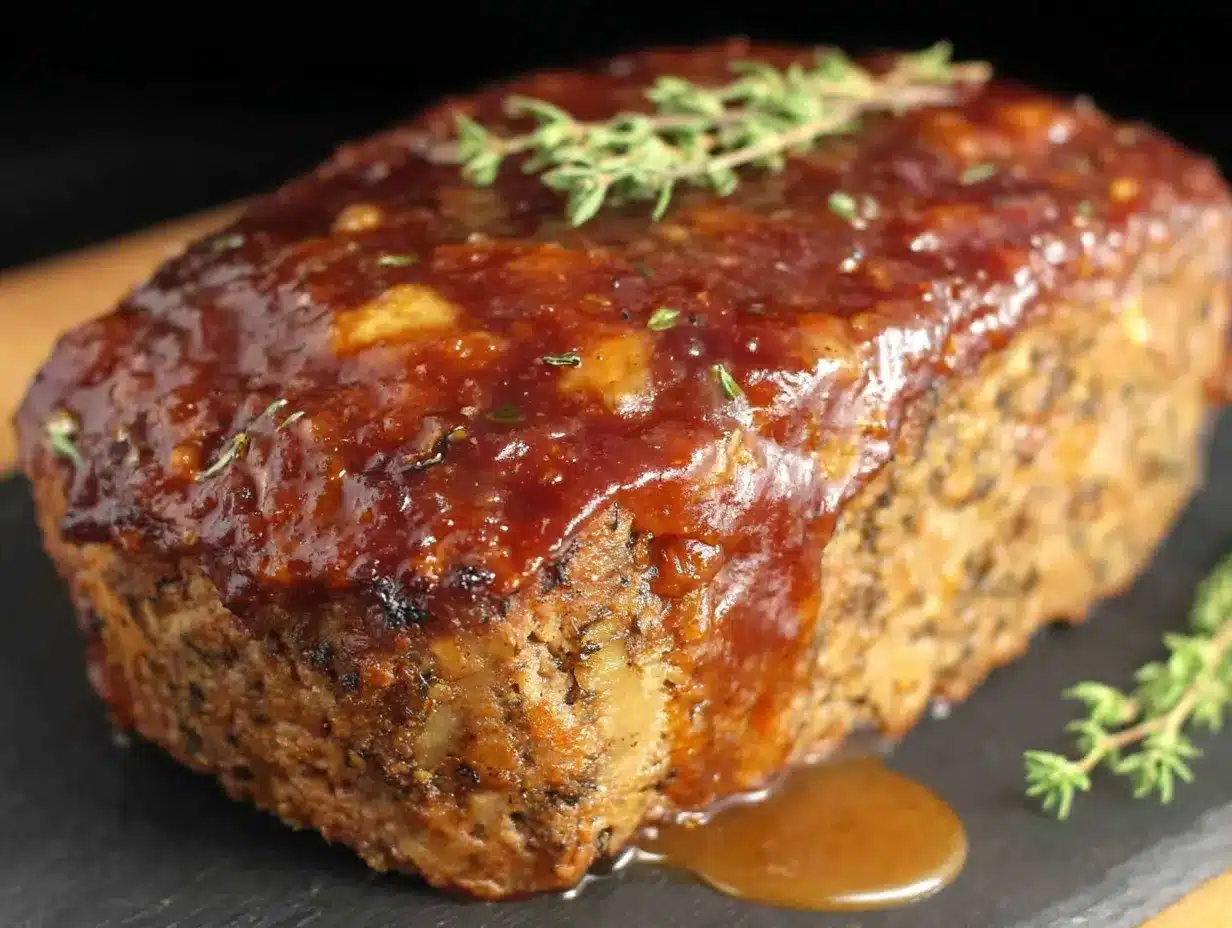
Alright, let’s get cooking. This is a straightforward recipe, but I’ll walk you through every step so you feel confident.
- Preheat and Prep: Preheat your oven to 350°F (175°C). If you’re using a loaf pan, lightly grease it with a little oil or non-stick spray. If you’re using a baking sheet, line it with parchment paper for easy cleanup.
- Sauté the Aromatics: Heat a drizzle of olive oil in your small skillet over medium heat. Add the finely chopped onion and cook for 4-5 minutes, until it becomes soft and translucent. Add the minced garlic and cook for another 30 seconds until fragrant, stirring constantly so the garlic doesn’t burn. Remove from the heat and let it cool slightly.
- Make the Panade: In your large mixing bowl, combine the breadcrumbs and the milk. Stir them together and let them sit for about 5 minutes. The breadcrumbs will absorb the milk and form a thick, pasty mixture. This is the “panade,” and it’s your secret weapon against a dry meatloaf.
- Combine the Meatloaf Mixture: To the bowl with the panade, add the cooled onions and garlic, the eggs, ketchup, Worcestershire sauce, dried thyme, salt, pepper, and fresh parsley. Give it a good stir with a fork or a spatula until everything is combined. Now, add the ground beef. Here’s the most important tip: mix gently. Use your hands (it’s the best way) to lightly combine the meat with the other ingredients. Mix just until everything is incorporated—overmixing will make the meatloaf tough and dense. You want to be gentle, like you’re handling a delicate dough.
- Shape the Loaf: Transfer the meat mixture to your prepared loaf pan, pressing it in gently and evenly. If you’re using a baking sheet, shape the mixture into a loaf shape about 8 inches long and 4 inches wide. Don’t pack it too tightly. A gentle hand is key.
- Make the Glaze: In your small bowl, whisk together the packed brown sugar, ketchup, apple cider vinegar, and Dijon mustard until smooth. It should look like a glossy, thick sauce.
- First Bake (Before Glazing): Place the meatloaf in the preheated oven and bake for 40 minutes. This initial bake allows the meatloaf to set and start cooking through before we add the glaze, which prevents the sugar from burning.
- Glaze and Finish Baking: After 40 minutes, carefully remove the meatloaf from the oven. Spoon or brush about half of the glaze over the top of the meatloaf, spreading it in an even layer. Reserve the rest for later. Return the meatloaf to the oven and bake for another 20 minutes. Then, apply the remaining glaze and bake for a final 10-15 minutes. The total cooking time is about 70-75 minutes.
- Check for Doneness: The most reliable way to know your meatloaf is done is with a meat thermometer. Insert it into the center of the loaf. It should read 160°F (71°C). The glaze should be dark, sticky, and bubbly.
- Rest, Then Slice: This is a crucial step. Remove the meatloaf from the oven and let it rest in the pan on a wire rack for at least 10-15 minutes. Resting allows the juices to redistribute throughout the loaf, making it much more moist and easier to slice without it falling apart. If you cut into it immediately, the juices will run out all over the cutting board.
Cooking Tips & Techniques
I’ve made a lot of meatloaf in my day, and I’ve learned a few things the hard way. Here are my best tips for a perfect result every time.
- Don’t Overmix! I cannot stress this enough. Overworking the meat mixture develops the protein in the beef, leading to a tough, dense loaf. Mix with a light hand until everything is just combined. A few streaks of breadcrumb mixture are fine.
- The “Meatloaf Mound” Method: For the best crust-to-inside ratio, I almost always skip the loaf pan now. Forming the meatloaf into a free-form loaf on a parchment-lined baking sheet allows the glaze to drip down the sides and caramelize, creating a delicious crust all around. It also cooks a little faster.
- Use a Thermometer: I once made a meatloaf that looked perfect on the outside but was still raw in the middle. Don’t be me. A meat thermometer is your best friend. It takes the guesswork out of cooking times, which can vary based on your oven and the shape of your loaf.
- Let It Rest: I know it’s hard to wait when the house smells this good, but the resting period is non-negotiable. If you skip it, you’ll have a crumbly, dry meatloaf. The rest time allows the fibers to relax and reabsorb the juices.
- Line Your Pan: If you do use a loaf pan, lining it with two overlapping pieces of parchment paper (like a sling) makes it incredibly easy to lift the whole meatloaf out after it’s rested.
Variations & Adaptations
One of the best things about meatloaf is how adaptable it is. Don’t be afraid to make it your own.
- Turkey Meatloaf: For a lighter version, you can substitute ground turkey for the beef. Be sure to use ground turkey with some fat (93/7) and add an extra tablespoon of olive oil to the mixture to keep it from drying out. The cooking time may be slightly shorter.
- Gluten-Free: This is an easy swap. Simply use gluten-free breadcrumbs or even crushed gluten-free crackers (like Rice Chex or Schar table crackers) in the same quantity. The rest of the ingredients are naturally gluten-free.
- Cheesy Stuffed Meatloaf: For a decadent twist, flatten the meat mixture into a 1-inch thick rectangle on a piece of parchment. Sprinkle 1 cup of shredded mozzarella or cheddar cheese down the center. Use the parchment to help you roll it up into a log, pinching the seams to seal it. Bake as directed—the cheesy center is incredible.
- Spicy Kick: Add 1-2 tablespoons of finely chopped chipotle peppers in adobo sauce to the meat mixture. The smoky heat pairs beautifully with the sweet brown sugar glaze.
- Add Veggies: Finely grate a carrot or a zucchini and squeeze out the excess moisture before adding it to the meat mixture. It adds moisture, nutrients, and is a great way to sneak in some extra veggies.
Serving & Storage Suggestions
This meatloaf is a complete meal in itself, but the right sides make it a feast.
- Serving: Serve the meatloaf warm, sliced into thick, hearty pieces. Spoon any extra glaze from the pan over the top. It’s a beautiful, rustic presentation.
- What to Serve With It: The classic pairings are the best. Creamy mashed potatoes are a must to soak up any extra glaze. A side of simple steamed green beans or roasted broccoli adds a fresh, green element. A crisp, simple salad with a tangy vinaigrette cuts through the richness perfectly.
- Storage: Leftover meatloaf is a treasure. Let it cool completely, then wrap it tightly in plastic wrap or store it in an airtight container in the refrigerator. It will keep well for 3-4 days. The flavors actually meld and deepen overnight, making leftovers even better.
- Reheating: For the best texture, reheat slices in a skillet over medium-low heat with a splash of water or broth, covered, until warmed through. This helps retain moisture. You can also reheat it in the microwave, but the glaze may become a little less sticky. For a whole loaf, reheat it in a 300°F (150°C) oven, covered with foil, for about 20 minutes.
- Freezing: You can freeze the meatloaf either before or after baking. To freeze an unbaked loaf, wrap it tightly in plastic wrap and then in a layer of foil. It will keep for up to 3 months. Thaw it overnight in the refrigerator before baking. To freeze a baked meatloaf, let it cool completely, then wrap it tightly and freeze. Thaw in the fridge and reheat as directed above.
Nutritional Information & Benefits
While this is a comfort food classic, it’s made with whole, recognizable ingredients. Here’s a rough estimate per serving (based on 8 servings).
- Calories: Approximately 450-500
- Protein: 30-35g (A great source of protein for muscle health and satiety)
- Fat: 25-30g
- Carbohydrates: 25-30g
- Fiber: 1-2g
- Sugar: 15-20g (mostly from the glaze)
Health Benefits: Ground beef is a rich source of iron and B vitamins, which are important for energy levels. The onions and garlic provide prebiotic fiber and antioxidants. By using a panade, we can use a fattier, more flavorful cut of meat without it feeling greasy. This recipe is a great example of how you can eat a satisfying, delicious meal that also nourishes you. I always feel good about serving this to my family—it’s real food, made with care.
Conclusion
This Classic Meatloaf with Brown Sugar Glaze is more than just a recipe; it’s a reliable, comforting presence in the kitchen. It’s the meal you make when you want to fill your home with warmth and your table with happy people. It’s forgiving, adaptable, and always, always delicious. From the savory, tender meat to that unforgettable sticky-sweet glaze, every bite is a little piece of nostalgia. I truly hope you give it a try and make it your own. Maybe you’ll add a little extra garlic, or swap the thyme for rosemary. That’s the beauty of it. So go ahead, preheat that oven, and get ready to create your own delicious memory. I’d love to hear how it turns out for you!
Frequently Asked Questions
Can I make this meatloaf ahead of time?
Absolutely! You can assemble the meatloaf (without the glaze) up to 24 hours in advance. Keep it covered in the refrigerator. When you’re ready to bake, add the glaze and follow the baking instructions. You may need to add 5-10 minutes to the total baking time since you’re starting from a cold loaf.
Why is my meatloaf falling apart?
The most common reason is not enough binder (the eggs and breadcrumbs) or slicing it too soon. Make sure you have the correct ratio of ingredients. The most likely culprit is not letting it rest for at least 10-15 minutes after baking. The resting time allows the proteins to set and the loaf to hold its shape.
Can I use a different type of meat?
Yes! A mix of ground beef and ground pork is a classic combination for a richer flavor. You can also use all ground pork, ground turkey, or even ground chicken. Just remember that leaner meats like turkey or chicken may require a little extra moisture, so you can add a tablespoon of olive oil or an extra splash of milk to the panade.
How do I know when the meatloaf is done without a thermometer?
While a meat thermometer is the most reliable method, you can check for doneness by looking for clear juices running from the center. The meatloaf should also be pulling away from the sides of the pan (if using one), and an instant-read thermometer is the best investment you can make. If you don’t have one, you can make a small cut in the center—if the juices run clear and there’s no pinkness, it’s likely done.
Can I make the glaze spicier or less sweet?
Definitely! For a spicier glaze, add a pinch of cayenne pepper or a few dashes of hot sauce to the glaze mixture. For a less sweet version, reduce the brown sugar to ⅓ cup and add an extra tablespoon of apple cider vinegar for more tang. You could also add a teaspoon of soy sauce for a savory kick.
Pin This Recipe!
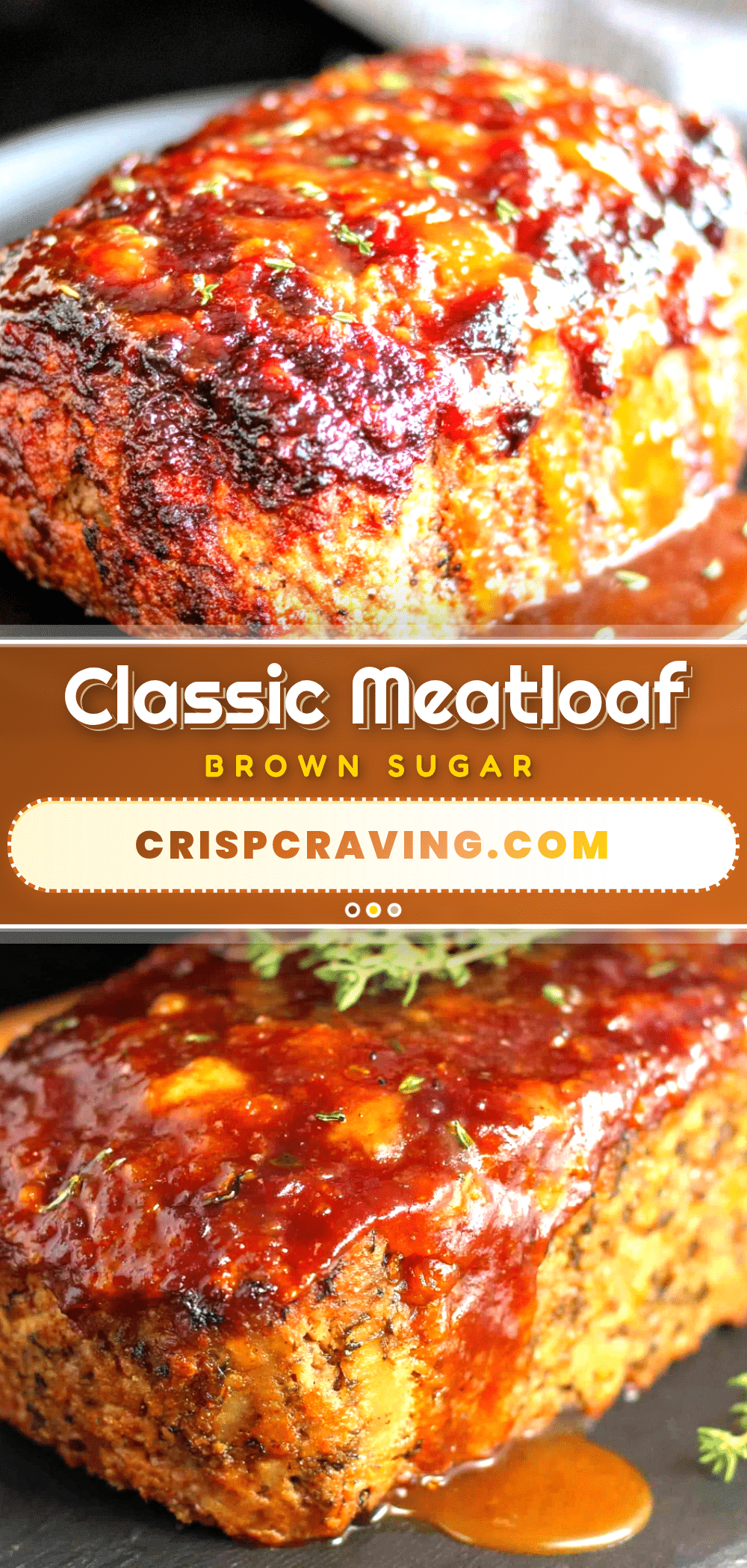
Classic Meatloaf with Brown Sugar Glaze
This Classic Meatloaf with Brown Sugar Glaze is a comforting, reliable recipe that delivers a moist, tender loaf with a sweet and tangy caramelized crust. It’s the perfect weeknight dinner that fills your home with warmth and your table with happy people.
- Prep Time: 15 minutes
- Cook Time: 70-75 minutes
- Total Time: 85-90 minutes
- Yield: 8 servings 1x
- Category: Main Course
- Cuisine: American
Ingredients
- 2 lbs (900g) ground beef (80/20 blend)
- 1 medium yellow onion, finely chopped
- 3 cloves garlic, minced
- 1 cup (120g) plain or Italian-style breadcrumbs
- ½ cup (120ml) whole milk
- 2 large eggs, room temperature
- ¼ cup (60ml) ketchup
- 2 tablespoons Worcestershire sauce
- 1 teaspoon dried thyme
- 1 ½ teaspoons salt
- 1 teaspoon black pepper
- ¼ cup chopped fresh parsley (optional)
- ½ cup (100g) packed brown sugar (light or dark)
- ½ cup (120ml) ketchup (for glaze)
- 1 tablespoon apple cider vinegar
- 1 teaspoon Dijon mustard
Instructions
- Preheat oven to 350°F (175°C). Lightly grease a 9×5-inch loaf pan or line a baking sheet with parchment paper.
- Heat a drizzle of olive oil in a small skillet over medium heat. Add the finely chopped onion and cook for 4-5 minutes until soft and translucent. Add the minced garlic and cook for 30 seconds until fragrant. Remove from heat and let cool slightly.
- In a large mixing bowl, combine the breadcrumbs and milk. Stir and let sit for 5 minutes to form a panade.
- To the panade, add the cooled onions and garlic, eggs, ¼ cup ketchup, Worcestershire sauce, dried thyme, salt, pepper, and fresh parsley. Stir until combined.
- Add the ground beef to the bowl. Using your hands, gently mix until just combined. Do not overmix.
- Transfer the mixture to the prepared loaf pan, pressing gently and evenly. If using a baking sheet, shape into an 8×4-inch loaf.
- In a small bowl, whisk together the brown sugar, ½ cup ketchup, apple cider vinegar, and Dijon mustard until smooth.
- Bake the meatloaf for 40 minutes. Remove from oven and spoon half of the glaze over the top. Return to oven and bake for 20 minutes.
- Apply the remaining glaze and bake for another 10-15 minutes, until the internal temperature reaches 160°F (71°C).
- Let the meatloaf rest in the pan on a wire rack for 10-15 minutes before slicing.
Notes
For the best crust, form the meatloaf into a free-form loaf on a baking sheet instead of using a loaf pan. Let the meatloaf rest for at least 10-15 minutes before slicing to allow juices to redistribute. Leftovers can be stored in the refrigerator for 3-4 days or frozen for up to 3 months.
Nutrition
- Serving Size: 1 slice (based on 8
- Calories: 475
- Sugar: 18
- Sodium: 780
- Fat: 28
- Saturated Fat: 10
- Carbohydrates: 28
- Fiber: 1.5
- Protein: 32
Keywords: meatloaf, brown sugar glaze, comfort food, classic meatloaf, easy dinner, ground beef recipe