Love this? Save it for later!
Share the inspiration with your friends
It was 11:47 PM on a random Tuesday, and I was staring into my mini-fridge like it held the secrets to the universe. The craving was real—salty, savory, something with a little crunch—but my kitchen situation was, let’s be honest, pathetic. I didn’t have fresh veggies or any fancy sauces, but I had a couple of packets of instant ramen, a sad half-bag of frozen mixed vegetables, and a bottle of soy sauce that had been sitting there since move-in day. And then the idea arrived, fully formed, like a gift from the broke-college-student gods: what if I just… stir-fried the ramen?
Now, I’m not saying this was a eureka moment that changed the culinary world. But in my tiny dorm room, with a single electric hot plate and a non-stick pan that had seen better days, it felt like pure genius. I crumbled the dry noodles, tossed them in the hot pan with a splash of oil, and watched them turn golden and crispy. Then I threw in the frozen veggies, a beaten egg, and a drizzle of soy sauce. The whole thing took maybe ten minutes, and the smell—honestly, it was enough to make my roommate poke her head out from under her blankets and ask, “Is there enough for me?”
That night, sitting cross-legged on my floor with a bowl of this impromptu stir-fry, I realized something. You don’t need a full kitchen or a pantry full of exotic ingredients to make something genuinely delicious. You just need a little creativity and the willingness to break the rules. This Easy One-Pan Dorm Room Ramen Stir-Fry is the result of that late-night experiment, and I’ve been making it ever since. Maybe you’ve been there too—stuck with limited options and a rumbling stomach. Trust me, this one’s a game-changer.
Why You’ll Love This Recipe
Let me tell you why this Easy One-Pan Dorm Room Ramen Stir-Fry has become my go-to, even now that I have a “real” kitchen. It’s not just about convenience—though that’s a huge part of it. This recipe is proof that you can make something incredible with almost nothing.
- Quick & Easy: From start to finish, this comes together in under 15 minutes. Perfect for late-night study sessions, lazy Sundays, or when you just can’t be bothered to cook a full meal.
- Simple Ingredients: You probably already have everything you need. Ramen packets, frozen veggies, eggs, soy sauce—these are dorm room staples. No fancy grocery trips required.
- Perfect for Budget Meals: We’re talking less than $2 per serving. This is the kind of recipe that keeps your wallet happy and your stomach full.
- Crowd-Pleaser: I’ve made this for friends in the dorm common room, and it always gets devoured. Even the picky eaters come back for seconds.
- Unbelievably Delicious: The texture is what gets me every time. The crispy, toasted noodles with the soft scrambled egg and tender veggies—it’s comfort food at its finest.
What makes this recipe different from the hundred other ramen hacks out there? It’s the technique. Instead of boiling the noodles, you toast them dry in the pan first. This gives them a nutty, crunchy texture that soaks up the sauce without getting mushy. It’s a small twist that makes a huge difference. And honestly, it’s the kind of recipe that makes you close your eyes after the first bite. It’s simple, it’s satisfying, and it’s yours.
What Ingredients You Will Need
This recipe uses simple, humble ingredients to create something surprisingly delicious. Most of these are pantry staples, and the beauty is that you can swap things in and out based on what you have on hand.
- Instant Ramen Noodles (2 packets): The star of the show. I prefer the classic Maruchan or Top Ramen brand for their texture. Discard the seasoning packets (or save them for another use—they’re great for seasoning rice). You want the dry, crinkly noodles.
- Frozen Mixed Vegetables (1 cup, thawed): Peas, carrots, corn, and green beans work perfectly. No need to thaw them fully—just run them under warm water for a minute to break them apart. Fresh veggies work too, but frozen is more dorm-friendly.
- Eggs (2 large): These add protein and richness. Use at room temperature if possible, but cold works fine in a pinch.
- Soy Sauce (2 tablespoons): The main seasoning. I like Kikkoman or San-J for their balanced flavor. Low-sodium works if you’re watching your salt intake.
- Vegetable Oil (1 tablespoon): For toasting the noodles and stir-frying. Canola, peanut, or avocado oil all work. Avoid olive oil—it has a low smoke point and can burn.
- Sesame Oil (1 teaspoon, optional): This adds a lovely nutty aroma. If you don’t have it, no worries—just skip it or add a splash of toasted sesame seeds instead.
- Garlic (2 cloves, minced): Fresh garlic is best, but garlic powder (1/2 teaspoon) works in a pinch.
- Green Onions (2, sliced): For garnish and a fresh, mild onion flavor. You can substitute with chives or even a sprinkle of dried onion flakes.
- Red Pepper Flakes (1/4 teaspoon, optional): For a little heat. Adjust to your spice tolerance.
Substitution Guidance: If you’re gluten-free, use rice noodles or gluten-free ramen. For a vegan version, swap the eggs for cubed tofu or edamame, and use a vegan oyster sauce or extra soy sauce. You can also add any leftover protein—cooked chicken, shrimp, or even canned tuna works great.
Equipment Needed
You don’t need much for this recipe, which is exactly the point. Here’s what I use, along with some alternatives if you’re working with limited tools.
- Large Non-Stick Skillet or Frying Pan (10-12 inches): This is essential for even cooking and easy cleanup. If you don’t have non-stick, a well-seasoned cast iron or stainless steel pan works—just use a little extra oil to prevent sticking.
- Spatula or Wooden Spoon: For stirring and breaking up the noodles. I prefer a silicone spatula to avoid scratching non-stick surfaces.
- Cutting Board and Knife: For mincing garlic and slicing green onions. A small paring knife is fine.
- Measuring Spoons: Not strictly necessary—I often eyeball it—but helpful for consistency.
- Small Bowl: For beating the eggs before adding them to the pan. A mug works in a pinch.
Personal Note: I once made this using only a microwave-safe bowl and a hot plate. I toasted the noodles in the bowl by microwaving them in 30-second bursts, then stir-fried everything in the same bowl. It wasn’t perfect, but it worked. The point is, don’t let missing equipment stop you.
Preparation Method
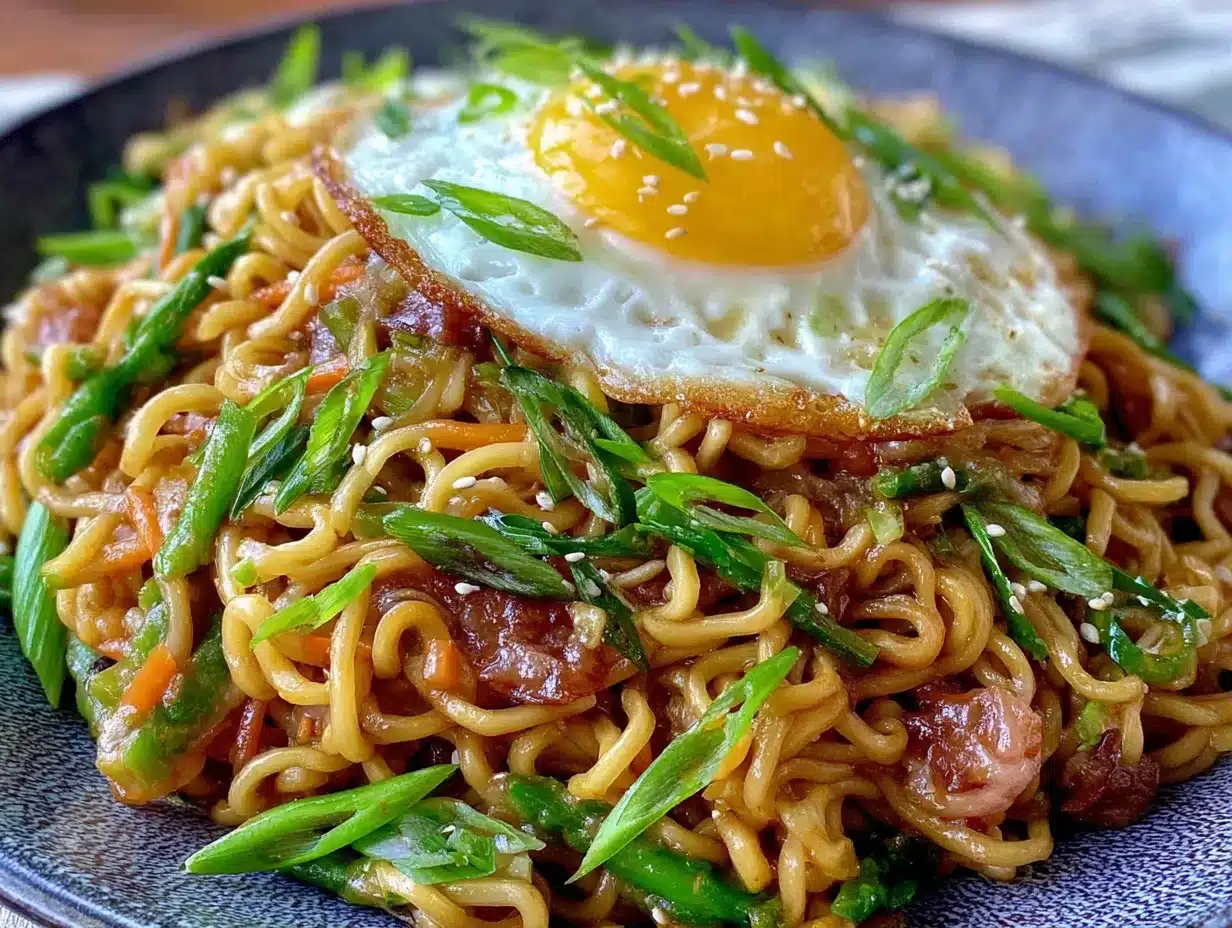
Let’s get cooking. This is a fast recipe, so have everything prepped and ready before you start. Trust me on this—once the pan is hot, things move quickly.
- Prep Your Ingredients: Mince the garlic, slice the green onions, and beat the eggs in a small bowl with a pinch of salt. Thaw the frozen vegetables by running them under warm water in a colander. Set everything within arm’s reach of your stove.
- Toast the Noodles: Place your large non-stick skillet over medium-high heat. Add 1 tablespoon of vegetable oil and swirl to coat the pan. Crumble the dry ramen noodles into the pan—break them into roughly 1-inch pieces. Spread them in an even layer. Let them toast undisturbed for 2-3 minutes, until they turn golden brown and smell nutty. Stir once and toast for another minute. This step is crucial—it gives the noodles their signature crunch.
- Add the Aromatics: Push the toasted noodles to one side of the pan. Add the minced garlic to the empty space and cook for 30 seconds, stirring constantly, until fragrant. Don’t let it burn—burnt garlic turns bitter.
- Cook the Vegetables: Add the thawed frozen vegetables to the pan. Stir everything together—noodles, garlic, and veggies—and cook for 2-3 minutes, until the vegetables are heated through and starting to brown slightly. You should hear a nice sizzle.
- Scramble the Eggs: Push the noodle-vegetable mixture to the sides of the pan, creating a well in the center. Pour the beaten eggs into the well. Let them set for about 30 seconds, then scramble them with your spatula, breaking them into small curds. Once the eggs are mostly cooked (still slightly soft), stir them into the noodle mixture. This ensures every bite has a little bit of egg.
- Season the Stir-Fry: Drizzle 2 tablespoons of soy sauce and 1 teaspoon of sesame oil (if using) over the entire mixture. Toss everything together until the sauce is evenly distributed. Taste and adjust—add more soy sauce for saltiness, or a pinch of sugar if it’s too salty.
- Finish and Garnish: Remove the pan from heat. Sprinkle the sliced green onions and red pepper flakes (if using) over the top. Give it one final toss. Serve immediately while the noodles are still crispy.
Visual Cue: The noodles should be deeply golden with some darker brown spots—that’s where the toasting magic happens. The vegetables should be bright and tender-crisp, not mushy. The eggs should be soft and fluffy, folded into the mix.
Cooking Tips & Techniques
I’ve made this recipe dozens of times, and I’ve learned a few things the hard way. Here are my top tips for getting it right every time.
- Don’t Skip the Toasting: I know it’s tempting to just boil the noodles like normal, but toasting them dry is what makes this dish special. It adds a crunchy texture that holds up against the sauce. If you skip this step, you’ll end up with mushy noodles.
- Use High Heat: This is a stir-fry, so high heat is your friend. It gives you that nice char on the noodles and vegetables without making them soggy. Just keep things moving so nothing burns.
- Prep Everything First: I cannot stress this enough. Once you start cooking, there’s no time to chop garlic or beat eggs. Have everything measured, chopped, and ready to go. This is called mise en place, and it’s the secret to stress-free cooking.
- Don’t Overcrowd the Pan: If you’re doubling the recipe, cook it in two batches. Overcrowding lowers the pan temperature and steams the food instead of frying it. You want sizzle, not steam.
- My Biggest Failure: The first time I made this, I added the soy sauce too early. The noodles absorbed it all and turned into a salty, sticky mess. Always add the sauce at the very end, after everything is cooked. This way, it coats the noodles without making them soggy.
Variations & Adaptations
One of the best things about this Easy One-Pan Dorm Room Ramen Stir-Fry is how customizable it is. Here are a few variations I’ve tried and loved.
- Spicy Peanut Ramen: Add 1 tablespoon of peanut butter and 1 teaspoon of sriracha to the soy sauce before drizzling it over the stir-fry. The peanut butter melts into a creamy, spicy sauce that’s absolutely addictive. Top with crushed peanuts and cilantro.
- Teriyaki Veggie Ramen: Swap the soy sauce for store-bought teriyaki sauce. Add 1/2 cup of broccoli florets and 1/4 cup of sliced bell peppers along with the frozen veggies. The teriyaki glaze caramelizes beautifully on the toasted noodles.
- Breakfast Ramen: Omit the frozen vegetables and add an extra egg. Cook the ramen as directed, then top with a fried egg (runny yolk is key) and a sprinkle of everything bagel seasoning. It’s weirdly perfect for breakfast.
- Protein-Packed Version: Add 1/2 cup of cooked, shredded chicken or 1/2 cup of cubed firm tofu along with the vegetables. For tofu, press it dry first, then pan-fry it until golden before adding the noodles.
- Low-Carb Option: Replace the ramen with 2 cups of shredded cabbage or cauliflower rice. Toast the cabbage in the pan until it starts to brown, then proceed with the recipe. It’s not the same, but it scratches the itch.
Serving & Storage Suggestions
This dish is best served immediately, while the noodles are still crispy and the eggs are fluffy. Here’s how I like to serve and store it.
Serving: Pile the stir-fry into a bowl and garnish with extra sliced green onions, a sprinkle of sesame seeds, and a drizzle of sriracha or chili oil if you like heat. It’s a complete meal on its own, but you can serve it with a side of steamed edamame or a simple cucumber salad for a more rounded dinner.
Storage: Leftovers can be stored in an airtight container in the refrigerator for up to 3 days. The noodles will soften as they sit, so don’t expect the same crunch. To reheat, I recommend using a hot skillet over medium heat with a tiny splash of water or soy sauce. Toss until heated through. Avoid the microwave—it makes the noodles rubbery.
Freezing: I don’t recommend freezing this dish. The texture of the noodles and eggs changes too much upon thawing. It’s best made fresh.
Flavor Development: Honestly, the flavors meld together beautifully overnight. If you don’t mind softer noodles, this is actually great cold or at room temperature the next day—like a ramen salad. I’ve eaten it straight from the fridge during a late-night study session, and it hit the spot.
Nutritional Information & Benefits
This recipe is surprisingly balanced for a dorm room meal. Here’s the approximate nutritional breakdown per serving (based on 2 servings).
| Nutrient | Amount Per Serving |
|---|---|
| Calories | 385 |
| Protein | 16g |
| Carbohydrates | 42g |
| Fat | 17g |
| Fiber | 5g |
| Sodium | 980mg |
Health Benefits: The eggs provide high-quality protein and choline, which is great for brain function (perfect for studying). The frozen vegetables add fiber, vitamins A and C, and antioxidants. The garlic offers immune-boosting properties. To reduce sodium, use low-sodium soy sauce or cut the amount in half.
Dietary Considerations: This recipe is dairy-free and nut-free (unless you add peanut butter). For a gluten-free version, use rice noodles or gluten-free ramen. For a vegan version, swap the eggs for tofu or chickpeas.
From a wellness perspective, I love that this recipe proves you don’t need expensive ingredients to eat well. It’s a reminder that nourishing food can come from the most humble beginnings.
Conclusion
This Easy One-Pan Dorm Room Ramen Stir-Fry is more than just a recipe—it’s a survival skill. It’s the meal you make when you’re broke, tired, and hungry, and it never lets you down. I’ve made it in actual dorm rooms, in shared apartments with mismatched pans, and even in a hotel room with a coffee maker (don’t ask). Every time, it delivers.
I hope you take this recipe and make it your own. Add your favorite veggies, crank up the spice, or throw in whatever leftover protein you have. There are no rules here—just good food made with what you’ve got. That’s the beauty of it.
If you try this recipe, I’d love to hear about it. Leave a comment below and tell me how it turned out, or share your own variation. Did you add something unexpected? Did you make it for a crowd? Let me know! And if you’re looking for more easy, budget-friendly meals, check out my Easy 5-Ingredient Pasta Bake or my No-Knead Skillet Bread. Happy cooking, friends!
Frequently Asked Questions
Can I use the ramen seasoning packet?
Technically yes, but I don’t recommend it. The seasoning packets are very high in sodium and often contain MSG, which can make the dish taste one-dimensional. You’re better off using soy sauce and building flavor from scratch. That said, if you’re in a pinch, use half the packet and skip the soy sauce.
Can I make this in a microwave?
Yes, but the texture will be different. Toast the dry noodles in a microwave-safe bowl in 30-second bursts until they’re lightly browned (about 2-3 minutes total). Then add the vegetables, beaten egg, and soy sauce, and microwave in 1-minute intervals, stirring between each, until the egg is cooked through. It won’t be as crispy, but it’s still tasty.
What if I don’t have frozen vegetables?
No problem! Use any fresh vegetables you have on hand. Broccoli florets, bell peppers, shredded carrots, snap peas, or even leftover roasted vegetables work great. Just chop them into small pieces so they cook quickly.
How do I make this spicier?
Add 1-2 teaspoons of sriracha, gochujang (Korean chili paste), or chili garlic sauce along with the soy sauce. You can also toss in fresh sliced chili peppers (like bird’s eye or serrano) with the garlic. For a smoky heat, add a pinch of chipotle powder.
Can I use fresh ramen instead of instant?
Absolutely! Fresh ramen noodles (the kind you find in the refrigerated section) will work beautifully. Skip the toasting step and cook them according to package directions first (usually 1-2 minutes in boiling water). Drain them well, then add them to the pan with the vegetables and sauce. The texture will be softer and more like traditional lo mein.
Pin This Recipe!
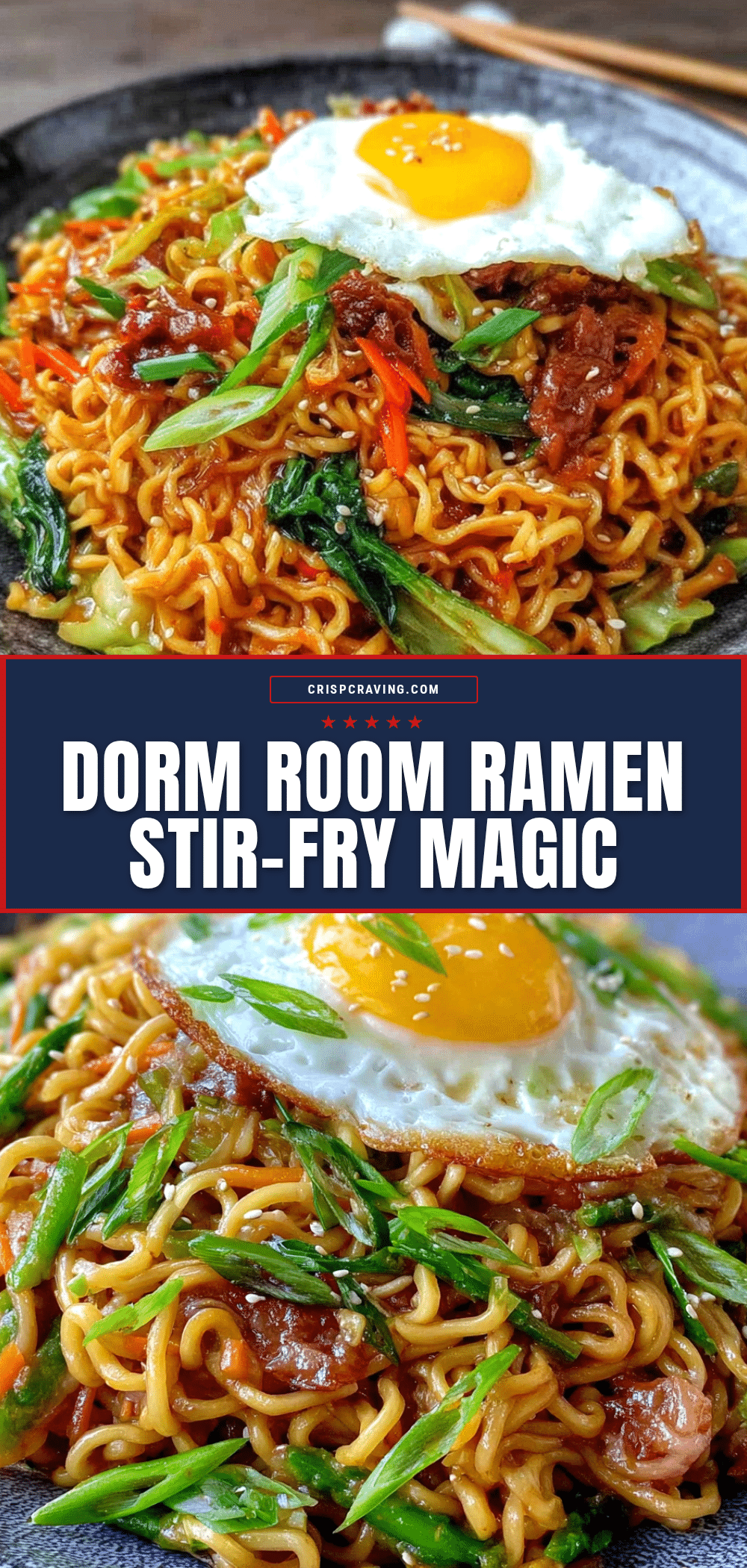
Easy One-Pan Dorm Room Ramen Stir-Fry
A quick and easy stir-fry made with instant ramen, frozen vegetables, and eggs, all cooked in one pan. Perfect for dorm rooms or budget-friendly meals.
- Prep Time: 5 minutes
- Cook Time: 10 minutes
- Total Time: 15 minutes
- Yield: 2 servings 1x
- Category: Main Course
- Cuisine: Asian-inspired
Ingredients
- 2 packets instant ramen noodles (seasoning packets discarded)
- 1 cup frozen mixed vegetables, thawed
- 2 large eggs
- 2 tablespoons soy sauce
- 1 tablespoon vegetable oil
- 1 teaspoon sesame oil (optional)
- 2 cloves garlic, minced
- 2 green onions, sliced
- 1/4 teaspoon red pepper flakes (optional)
Instructions
- Prep your ingredients: mince garlic, slice green onions, beat eggs with a pinch of salt, and thaw frozen vegetables by running under warm water.
- Heat a large non-stick skillet over medium-high heat. Add 1 tablespoon vegetable oil and swirl to coat. Crumble dry ramen noodles into the pan in 1-inch pieces. Toast undisturbed for 2-3 minutes until golden brown, then stir and toast for another minute.
- Push noodles to one side. Add minced garlic to the empty space and cook for 30 seconds until fragrant.
- Add thawed vegetables to the pan. Stir everything together and cook for 2-3 minutes until heated through and slightly browned.
- Push noodle-vegetable mixture to the sides, creating a well in the center. Pour beaten eggs into the well. Let set for 30 seconds, then scramble until mostly cooked. Stir into the noodle mixture.
- Drizzle 2 tablespoons soy sauce and 1 teaspoon sesame oil (if using) over the mixture. Toss to combine. Taste and adjust seasoning.
- Remove from heat. Sprinkle with sliced green onions and red pepper flakes (if using). Serve immediately.
Notes
Toast the dry noodles for a crunchy texture. Add soy sauce at the end to avoid sogginess. For a vegan version, swap eggs for tofu or edamame and use gluten-free ramen if needed.
Nutrition
- Serving Size: 1 serving
- Calories: 385
- Sugar: 4
- Sodium: 980
- Fat: 17
- Saturated Fat: 3
- Carbohydrates: 42
- Fiber: 5
- Protein: 16
Keywords: ramen stir-fry, dorm room recipe, easy ramen, one-pan meal, budget-friendly, quick dinner