Love this? Save it for later!
Share the inspiration with your friends
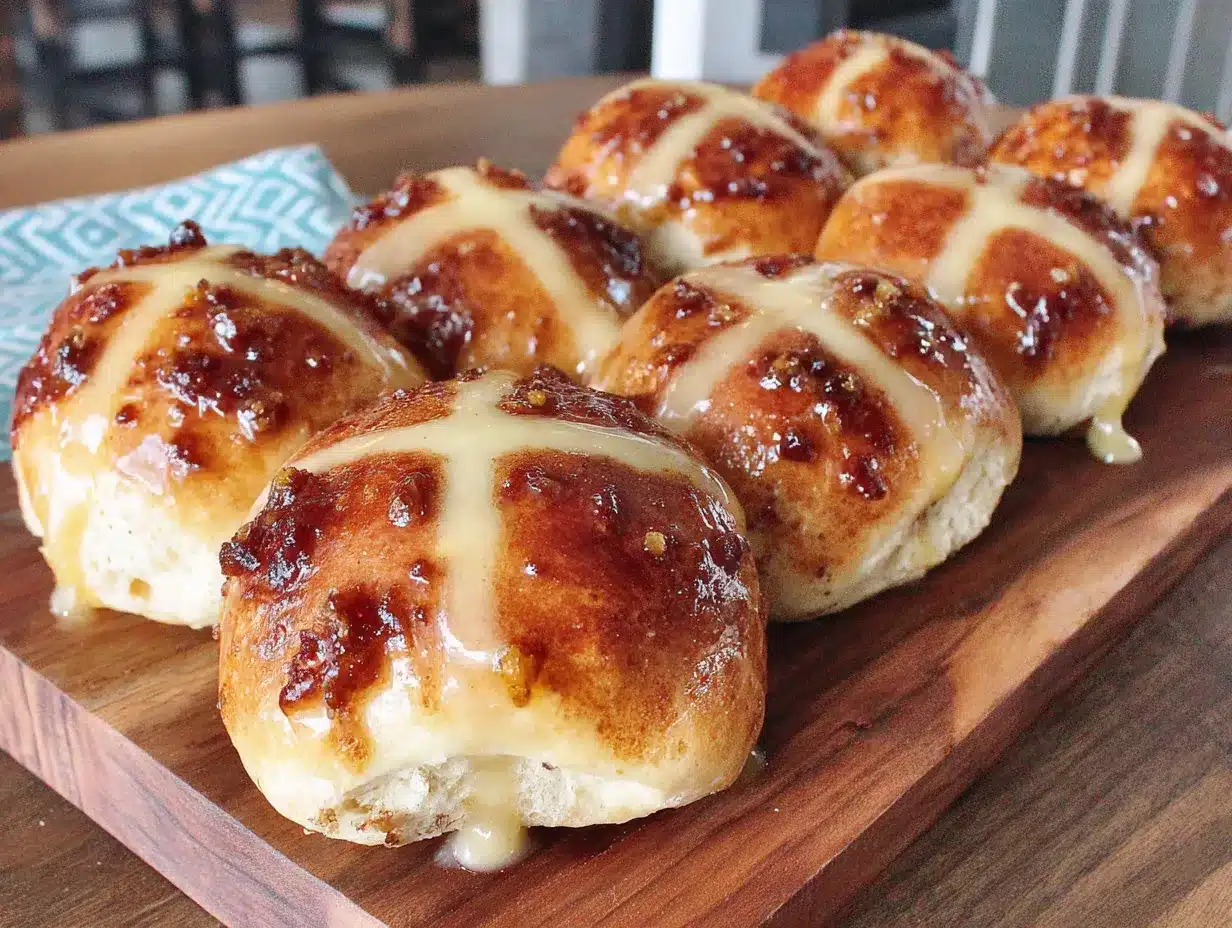
There used to be a tiny bakery tucked behind a dry cleaner’s on the corner of Elm and 4th that made hot cross buns that felt like a hug from the inside. When they closed suddenly two years ago—a “For Lease” sign taped in the window before I could grab one last batch—I honestly felt a little lost. Easter mornings haven’t been the same since. After about six tries—some were bricks, some were just sad dinner rolls with crosses drawn on top—I finally cracked the code. This easy overnight orange glazed hot cross buns recipe is the exact recreation of that memory, and let me tell you, it was worth every failed batch to get here.
You know that feeling when you bite into something and it tastes exactly like a moment you thought was gone forever? That’s what these buns do for me. They’re soft, spiced, and kissed with fresh orange zest, then topped with a simple glaze that soaks into the warm rolls just right. The best part? You do most of the work the night before, so Easter morning (or any morning, honestly) is just about shaping, baking, and glazing. No stress, no early wake-up call—just the smell of cinnamon and orange filling your kitchen.
I remember the first time I got it right. It was a rainy Tuesday, and I had given up on the recipe about four times already. I was out of currants, so I used dried cranberries. I forgot to soften the butter and just microwaved it a little too long. The dough felt sticky and I almost tossed it. But I let it rise overnight anyway, shaped it the next morning, and when those buns came out of the oven—golden, fragrant, with that cross piping perfect for once—I actually teared up. It sounds dramatic, but that first bite was like walking into that bakery again. This is that recipe. And I think you’re going to love it.
Why You’ll Love This Recipe
These orange glazed hot cross buns aren’t just another Easter tradition—they’re the kind of recipe that makes you look forward to waking up. Here’s why they’ve earned a permanent spot in my kitchen:
- Quick & Easy : The active prep time is only about 30 minutes. The overnight rest does all the heavy lifting, so you can focus on the fun part: glazing and eating.
- Simple Ingredients : You likely have most of these in your pantry already. No specialty flours or hard-to-find spices—just good, honest baking staples.
- Perfect for Easter Morning : These buns are a showstopper on the brunch table without requiring you to wake up at 5 AM. Shape them, bake them, and serve them warm.
- Crowd-Pleaser : The orange glaze is bright and not too sweet, and the soft, spiced dough wins over kids and adults alike. I’ve seen picky eaters ask for seconds.
- Unbelievably Delicious : That combination of warm cinnamon, nutmeg, and fresh orange zest is pure comfort. The glaze adds just enough sweetness without being cloying.
What makes these different from the rest is the overnight method. Instead of rushing the rise, you let the dough develop flavor slowly in the fridge. It makes the buns lighter, the spices more pronounced, and the texture almost pillowy. Plus, that orange glaze isn’t just a drizzle—it’s brushed on warm so it seeps into every crevice. This is my best version, and I’ve tested it until it was just right.
Honestly, this recipe is the one that makes you close your eyes after the first bite. It’s comfort food reimagined—faster, easier, but with the same soul-soothing satisfaction. Perfect for impressing guests without stress, or turning a simple Saturday morning into something memorable.
What Ingredients You Will Need
This recipe uses simple, wholesome ingredients to deliver bold flavor and satisfying texture without the fuss. Most are pantry staples, and the fresh orange zest is the star that ties it all together.
For the Dough
- 3 ½ cups (440g) all-purpose flour – I prefer Gold Medal for consistent results, but any standard brand works. Spoon and level for accuracy.
- ¼ cup (50g) granulated sugar – Just enough to feed the yeast and add a touch of sweetness.
- 2 ¼ teaspoons (7g) instant yeast – One packet. No need to proof it first, which saves time.
- 1 teaspoon salt – Balances the sweetness and strengthens the dough.
- 1 teaspoon ground cinnamon – Use fresh for the best fragrance.
- ½ teaspoon ground nutmeg – Freshly grated is amazing if you have it.
- ¼ teaspoon ground cloves – Optional, but it adds that classic warm spice note.
- ¾ cup (180ml) whole milk, warmed – Warm to about 110°F (43°C). Too hot will kill the yeast.
- ¼ cup (60g) unsalted butter, melted – Adds richness and softness.
- 2 large eggs, room temperature – Cold eggs can shock the dough. Let them sit out for 30 minutes.
- Zest of 1 large orange – This is non-negotiable. It gives the buns their signature bright flavor.
- ¾ cup (120g) dried currants or raisins – Currants are traditional, but raisins work perfectly. Chop larger raisins a bit.
For the Cross Paste
- ½ cup (65g) all-purpose flour – For the paste that forms the cross on top.
- 5-6 tablespoons (75-90ml) water – Add slowly until you get a smooth, pipeable consistency.
For the Orange Glaze
- 1 cup (120g) powdered sugar, sifted – Sifting prevents lumps.
- 2-3 tablespoons (30-45ml) fresh orange juice – Use the orange you zested. Fresh makes a difference.
- 1 teaspoon orange zest – Extra for the glaze, because why not?
Ingredient Notes & Substitutions: If you’re out of currants, dried cranberries or chopped dried apricots work beautifully. For a dairy-free version, use oat milk and vegan butter—just warm the milk gently. I’ve tested this with bread flour too, and it gives a slightly chewier crumb, which some folks prefer. Avoid using non-fat milk; the fat is important for tenderness.
Equipment Needed
You don’t need a professional bakery setup for these buns. Here’s what you’ll actually use:
- Large mixing bowl – Glass or stainless steel works best. Plastic can hold onto odors.
- Wooden spoon or dough whisk – For combining the dough. A stand mixer with a dough hook also works (and is faster).
- 9×13-inch baking dish – Glass or ceramic is ideal. Metal works too, but watch the baking time.
- Piping bag or zip-top bag – For the cross paste. A small offset spatula works in a pinch.
- Pastry brush – For the glaze. Silicone brushes are easy to clean.
- Plastic wrap or a clean kitchen towel – For covering the dough during rising.
- Kitchen scale (optional but helpful) – For accurate flour measurements.
Budget-Friendly Tip: No stand mixer? No problem. You can knead this dough by hand in about 8 minutes. It’s actually pretty therapeutic. Just use a bit of oil on your hands to prevent sticking.
Preparation Method
This overnight method makes the process feel almost effortless. Here’s how to do it, step by step.
- Make the dough (evening, 15 minutes): In a large bowl, whisk together the flour, sugar, yeast, salt, cinnamon, nutmeg, and cloves. In a separate small bowl or measuring cup, mix the warmed milk, melted butter, eggs, and orange zest. Pour the wet ingredients into the dry and stir with a wooden spoon until a shaggy dough forms. Add the currants and mix until evenly distributed.
- Knead the dough (8-10 minutes): Turn the dough onto a lightly floured surface. Knead by pushing the dough away with the heel of your hand, then folding it back. It should feel soft and slightly tacky but not sticky. If using a stand mixer, use the dough hook on medium-low speed for 6-7 minutes. The dough is ready when it springs back when poked gently.
- First rise (overnight, 8-12 hours): Place the dough in a lightly greased bowl, cover tightly with plastic wrap, and refrigerate overnight. The slow rise develops flavor and makes the dough easier to handle in the morning. Don’t skip this—it’s the secret to that bakery-quality texture.
- Shape the buns (morning, 10 minutes): The next morning, take the dough out of the fridge. It will have doubled. Turn it onto a lightly floured surface and divide it into 12 equal pieces (about 75g each). Shape each piece into a smooth ball by tucking the edges underneath. Place them in a greased 9×13-inch baking dish, spacing them evenly—they’ll grow together as they rise.
- Second rise (45-60 minutes): Cover the dish with a clean towel and let the buns rise in a warm spot until they’re puffy and touching each other. This takes about an hour. While they rise, preheat your oven to 375°F (190°C).
- Make the cross paste: In a small bowl, mix the flour and water until smooth. It should be thick enough to pipe but not stiff. Transfer to a piping bag or a zip-top bag with a tiny corner snipped off.
- Pipe the crosses: Pipe a line of paste down the center of each row of buns, then repeat perpendicularly to form crosses. Don’t worry about perfection—rustic looks charming.
- Bake (20-25 minutes): Bake the buns until golden brown on top and the internal temperature reaches 190°F (88°C). If the tops brown too quickly, tent loosely with foil halfway through. Let them cool in the dish for 5 minutes.
- Glaze while warm: Whisk together the powdered sugar, orange juice, and extra zest. Brush the glaze generously over the warm buns. It will melt into the cracks and form a thin, shiny coating. Serve warm or at room temperature.
Troubleshooting Tip: If your dough feels too dry during kneading, add a teaspoon of warm milk at a time. If it’s too sticky, dust your hands with flour, not the dough. And if the buns don’t rise much overnight, your yeast might be old—always check the expiration date.
Cooking Tips & Techniques
Here are the little things I’ve learned from making these buns more times than I can count:
- Don’t skip the overnight rise. I tried a same-day version once, and the flavor was flat. The cold fermentation is what makes the spices bloom and the texture tender. Trust the process.
- Use a kitchen scale for the flour. Measuring by volume can lead to too much flour, which makes dense buns. If you don’t have a scale, fluff your flour with a spoon before scooping.
- Warm the milk gently. If it’s too hot, it kills the yeast. If it’s too cold, the yeast stays sleepy. Aim for bathwater temperature—warm to the wrist but not hot.
- Let the eggs come to room temperature. Cold eggs can make the dough stiff and harder to knead. Set them out when you start, or place them in a bowl of warm water for 5 minutes.
- Brush the glaze twice. For a thicker, glossier finish, brush the buns once right after baking, then again 10 minutes later. It soaks in beautifully.
- My biggest failure: I once forgot the salt entirely. The buns rose like crazy, then collapsed in the oven. Salt isn’t just for flavor—it controls yeast activity. Don’t skip it.
Variations & Adaptations
This recipe is endlessly flexible. Here are a few ways to make it your own:
- Chocolate Chip Orange Buns: Swap the currants for ¾ cup semi-sweet chocolate chips. The orange and chocolate combo is incredible—think chocolate orange candy in bun form.
- Gluten-Free Version: Use a 1:1 gluten-free baking flour blend. Add an extra tablespoon of milk, as gluten-free doughs tend to be drier. The texture will be a bit more cake-like, but still delicious.
- Vegan Adaptation: Replace the butter with vegan butter, the eggs with 2 flax eggs (2 tablespoons flaxseed meal + 6 tablespoons water), and use oat milk. The buns will be slightly less rich, but the orange glaze still shines.
- Spice It Up: Add ½ teaspoon cardamom or allspice to the dough for a more complex flavor profile. I tried this for a holiday brunch and got rave reviews.
- No Cross? No Problem: Skip the cross paste entirely and just glaze the buns. They become sticky orange rolls—perfect for anyone who finds the cross fussy.
Serving & Storage Suggestions
These buns are best served warm, when the glaze is still slightly sticky and the dough is soft. Here’s how to make the most of them:
- Serving Temperature: Warm them in a 300°F (150°C) oven for 5-7 minutes if they’ve cooled. Microwaving works too, but the oven keeps the texture better.
- Pairings: Serve with a cup of strong coffee, a latte, or a glass of cold milk. For a brunch spread, pair them with scrambled eggs and fresh fruit—the sweetness balances the savory.
- Storage: Keep leftover buns in an airtight container at room temperature for up to 2 days. The glaze may soften, but they’re still delicious.
- Freezing: Freeze unglazed buns in a single layer on a baking sheet, then transfer to a freezer bag. They keep for up to 3 months. Thaw at room temperature, then warm and glaze before serving.
- Reheating: For best results, reheat in a 350°F (175°C) oven for 5 minutes. The glaze will re-melt and the buns will taste freshly baked.
- Flavor Development: These buns actually taste even better the next day—the spices and orange flavor meld together. If you can resist eating them all, save a few for tomorrow.
Nutritional Information & Benefits
Per bun (based on 12 servings):
- Calories: 290
- Fat: 7g
- Carbohydrates: 52g
- Fiber: 2g
- Sugar: 22g
- Protein: 6g
Health Highlights: Currants are a good source of iron and fiber. Orange zest provides vitamin C and antioxidants. The whole milk and butter add calcium and vitamin A. While these are a treat, the simple ingredients mean no artificial preservatives or additives.
Dietary Considerations: This recipe contains gluten, dairy, and eggs. For gluten-free or vegan options, see the variations section above. The sugar content is moderate for a sweet bun, but you can reduce the glaze sugar by a tablespoon if desired.
From a wellness perspective, I believe in enjoying real food in moderation. These buns are a celebration—Easter, a special breakfast, or just a Tuesday—and they’re worth every bite. Pair them with a protein-rich breakfast to balance the carbs.
Conclusion
This easy overnight orange glazed hot cross buns recipe is the one I keep coming back to, and I think you will too. It’s forgiving enough for a beginner baker, yet the results are impressive enough to serve to guests. The orange glaze is bright and cheerful, the spices are warm and familiar, and the overnight method makes the whole process feel like a breeze.
I love that you can customize it—swap the fruit, change the spices, or skip the cross entirely. It’s your kitchen, your rules. But honestly, I hope you try it exactly as written at least once. That first bite, warm from the oven, with the glaze melting into the dough? That’s the moment this recipe became mine, and I hope it becomes yours too.
If you make these buns, I’d love to hear about it. Leave a comment below, tag me in your photos, or tell me how you made them your own. Happy baking, friend—you’ve got this.
Frequently Asked Questions
Can I make these the same day instead of overnight?
Yes, you can. Skip the refrigeration and let the dough rise at room temperature for about 1 ½ hours, or until doubled. Then proceed with shaping and the second rise. The flavor won’t be as developed, but they’ll still be tasty.
My dough didn’t rise overnight. What went wrong?
Your yeast might be expired, or the milk was too hot and killed it. Always check the yeast date and warm the milk to 110°F (43°C)—no hotter. If the dough didn’t rise, you can still bake it, but the buns will be dense.
Can I use orange juice instead of zest in the dough?
I don’t recommend it. Orange juice adds liquid that will throw off the dough’s hydration. Stick to zest for the dough and save the juice for the glaze. You’ll get a brighter, more concentrated flavor.
How do I get the cross paste to look neat?
Use a piping bag with a small round tip, or snip a tiny corner off a zip-top bag. Pipe steady lines, and don’t worry if they’re not perfect—they’ll spread slightly during baking. A toothpick can help guide the paste if needed.
Can I double this recipe?
Absolutely. Double all ingredients and divide the dough into two 9×13-inch dishes. The baking time stays about the same, but check for doneness earlier, as larger batches can cook unevenly.
Pin This Recipe!
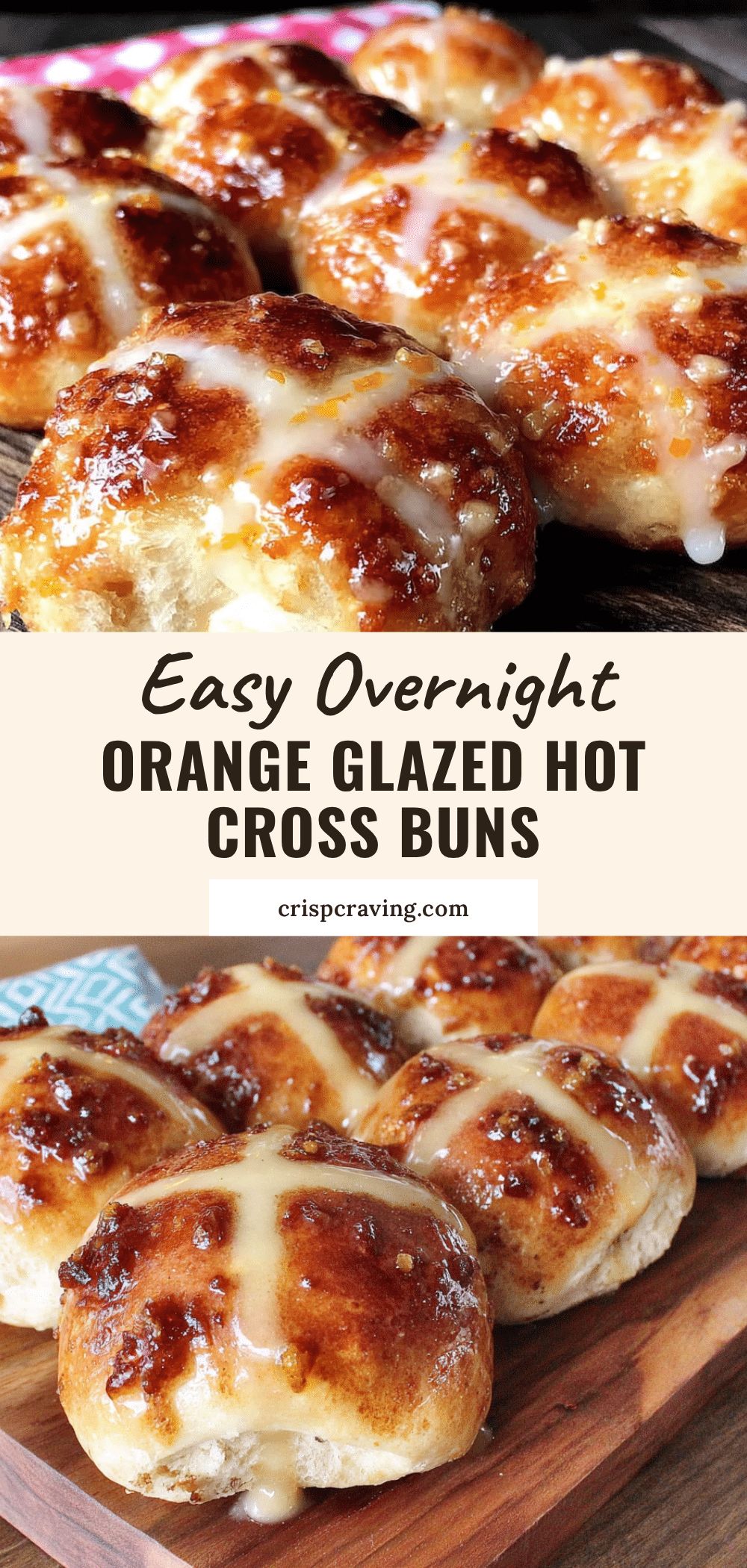
Easy Overnight Orange Glazed Hot Cross Buns Recipe

These soft, spiced hot cross buns are kissed with fresh orange zest and topped with a simple glaze that soaks into the warm rolls. The overnight method makes the process effortless, so you can enjoy bakery-quality buns on Easter morning without the stress.
- Prep Time: 30 minutes
- Cook Time: 25 minutes
- Total Time: 8 hours 55 minutes (includes overnight rise)
- Yield: 12 servings 1x
- Category: Bread
- Cuisine: British
Ingredients
- 3 ½ cups (440g) all-purpose flour
- ¼ cup (50g) granulated sugar
- 2 ¼ teaspoons (7g) instant yeast
- 1 teaspoon salt
- 1 teaspoon ground cinnamon
- ½ teaspoon ground nutmeg
- ¼ teaspoon ground cloves
- ¾ cup (180ml) whole milk, warmed to 110°F (43°C)
- ¼ cup (60g) unsalted butter, melted
- 2 large eggs, room temperature
- Zest of 1 large orange
- ¾ cup (120g) dried currants or raisins
- ½ cup (65g) all-purpose flour (for cross paste)
- 5–6 tablespoons (75-90ml) water (for cross paste)
- 1 cup (120g) powdered sugar, sifted (for glaze)
- 2–3 tablespoons (30-45ml) fresh orange juice (for glaze)
- 1 teaspoon orange zest (for glaze)
Instructions
- Make the dough (evening, 15 minutes): In a large bowl, whisk together the flour, sugar, yeast, salt, cinnamon, nutmeg, and cloves. In a separate small bowl or measuring cup, mix the warmed milk, melted butter, eggs, and orange zest. Pour the wet ingredients into the dry and stir with a wooden spoon until a shaggy dough forms. Add the currants and mix until evenly distributed.
- Knead the dough (8-10 minutes): Turn the dough onto a lightly floured surface. Knead by pushing the dough away with the heel of your hand, then folding it back. It should feel soft and slightly tacky but not sticky. If using a stand mixer, use the dough hook on medium-low speed for 6-7 minutes. The dough is ready when it springs back when poked gently.
- First rise (overnight, 8-12 hours): Place the dough in a lightly greased bowl, cover tightly with plastic wrap, and refrigerate overnight. The slow rise develops flavor and makes the dough easier to handle in the morning.
- Shape the buns (morning, 10 minutes): The next morning, take the dough out of the fridge. It will have doubled. Turn it onto a lightly floured surface and divide it into 12 equal pieces (about 75g each). Shape each piece into a smooth ball by tucking the edges underneath. Place them in a greased 9×13-inch baking dish, spacing them evenly.
- Second rise (45-60 minutes): Cover the dish with a clean towel and let the buns rise in a warm spot until they’re puffy and touching each other. While they rise, preheat your oven to 375°F (190°C).
- Make the cross paste: In a small bowl, mix the flour and water until smooth. It should be thick enough to pipe but not stiff. Transfer to a piping bag or a zip-top bag with a tiny corner snipped off.
- Pipe the crosses: Pipe a line of paste down the center of each row of buns, then repeat perpendicularly to form crosses.
- Bake (20-25 minutes): Bake the buns until golden brown on top and the internal temperature reaches 190°F (88°C). If the tops brown too quickly, tent loosely with foil halfway through. Let them cool in the dish for 5 minutes.
- Glaze while warm: Whisk together the powdered sugar, orange juice, and extra zest. Brush the glaze generously over the warm buns. Serve warm or at room temperature.
Notes
For best flavor, don’t skip the overnight rise. Use a kitchen scale for accurate flour measurement. Warm milk gently to 110°F (43°C) to avoid killing the yeast. Let eggs come to room temperature before using. Brush glaze twice for a thicker, glossier finish.
Nutrition
- Serving Size: 1 bun
- Calories: 290
- Sugar: 22
- Sodium: 210
- Fat: 7
- Saturated Fat: 4
- Carbohydrates: 52
- Fiber: 2
- Protein: 6
Keywords: hot cross buns, orange glaze, Easter, overnight, spiced buns, breakfast, brunch