Love this? Save it for later!
Share the inspiration with your friends
My husband had refused to eat beef stew for eleven years. Eleven years. Every time I suggested it, he’d make a face like I’d proposed boiling a shoe. “Too watery,” he’d say. “The meat is always dry.” Or my personal favorite: “It smells like dog food.” I stopped asking. Then last February, on a particularly miserable Tuesday when the rain hadn’t stopped for three days straight, I made this red wine version strictly for myself. I figured I’d eat it all week for lunch. The moment he walked through the door, dripping wet and exhausted, he froze. “What is that smell?” he asked, sniffing the air like a cartoon character. I told him it was beef stew. He grabbed a bowl without saying a word. Then another. He didn’t apologize, but honestly, watching him scrape that pot clean was better than any apology I could have imagined.
You know that feeling when you find a recipe that just works? The kind where you don’t have to babysit it, where the slow cooker does all the heavy lifting, and the result tastes like you spent hours stirring over a hot stove? That is this stew. The red wine does something magical in the slow cooker. It tenderizes the beef in a way that broth alone just can’t. And the vegetables get this silky texture that makes you wonder why you ever bothered with stovetop stews. I mean, I say that as someone who used to be a total stovetop snob. I thought slow cookers were for people who didn’t know how to build flavor properly. Turns out, I was the one who didn’t know what I was talking about.
This recipe came together on a whim. I had half a bottle of Cabernet Sauvignon leftover from a dinner party, some chuck roast that needed using, and a fridge full of sad-looking root vegetables. I threw everything in the slow cooker at noon, went back to work, and by six o’clock, that stew had transformed into something genuinely special. The meat was fork-tender. The broth was rich and glossy. The carrots had soaked up all that wine and beef flavor until they were practically candy. I texted my mom a photo, and she called me immediately. “That doesn’t look like stew,” she said. “That looks like something you’d pay thirty dollars for at a restaurant.” She wasn’t wrong. This is the recipe that changed my husband’s mind, and honestly, it might change yours too.
Why You’ll Love This Recipe
Let me tell you why this slow cooker beef stew with red wine has become my go-to comfort meal. I’ve tested this recipe at least eight times to get it exactly right. The first batch was good. The third batch was better. By the fifth, I knew I had something special. Here is what makes it stand out:
- Absolutely Foolproof: You literally just chop vegetables and sear the meat. The slow cooker handles the rest. No stirring, no worrying about burning, no last-minute panic.
- Rich, Deep Flavor: The red wine reduces into this velvety sauce that coats every piece of beef and every vegetable. You get that complex, slow-cooked taste without standing over the stove.
- Budget-Friendly: Chuck roast is one of the most affordable cuts of beef, and the slow cooker turns it into something luxurious. You don’t need expensive ingredients for incredible results.
- Perfect for Meal Prep: This stew actually tastes better the next day. Make it Sunday, and you have lunches or dinners ready for half the week.
- Crowd-Pleasing Magic: My wine-skeptic husband devours this. My picky nephew asks for seconds. Even my mother-in-law, who claims she doesn’t like red meat, went back for thirds.
What makes this recipe different from every other beef stew out there? It is the technique of searing the beef in batches before it hits the slow cooker, and the careful balance of red wine to broth. The wine adds acidity that cuts through the richness of the beef, while the broth keeps everything from becoming too heavy. I also add a splash of balsamic vinegar at the end, which sounds weird, but trust me, it brightens the whole dish. This isn’t just another stew. It is the kind of meal that makes you slow down and actually taste what you’re eating. The kind that warms you from the inside out on a cold night. The kind that feels like a hug in a bowl.
What Ingredients You Will Need
This recipe uses mostly pantry staples and a few fresh ingredients. The key is choosing the right beef and the right wine. Here is everything you need and why each ingredient matters.
For the Beef and Marinade
- 2 pounds beef chuck roast, cut into 1.5-inch cubes – Chuck roast is the hero here. It has enough marbling to stay tender during the long cook time. Avoid lean cuts like sirloin, which will turn dry and stringy. I buy my chuck from the local butcher, but any grocery store cut works fine.
- 1 teaspoon salt – I use kosher salt for better flavor distribution. Don’t skip salting the beef before searing. It draws out moisture and helps create that beautiful brown crust.
- 1/2 teaspoon black pepper – Freshly ground is best. Pre-ground pepper loses its punch.
- 2 tablespoons all-purpose flour – This helps thicken the stew and gives the beef a light coating that browns beautifully.
For the Aromatics and Vegetables
- 2 tablespoons olive oil – Use a good quality olive oil for searing. Avocado oil works too if that is what you have.
- 1 large yellow onion, diced – Yellow onions have the best balance of sweetness and sharpness for stew. Red onions are too mild, white onions too harsh.
- 4 cloves garlic, minced – Fresh garlic is non-negotiable here. The jarred stuff just doesn’t deliver the same punch.
- 4 large carrots, peeled and cut into 1-inch chunks – I prefer thicker chunks so they don’t disintegrate during the long cook time. Baby carrots work in a pinch, but they lack flavor.
- 3 celery stalks, sliced – Celery adds that subtle savory note that rounds out the broth.
- 1 pound Yukon Gold potatoes, cut into 1-inch chunks – Yukon Golds hold their shape better than Russets and have a creamy texture. Red potatoes work well too.
- 8 ounces cremini mushrooms, halved – Mushrooms add an earthy depth that complements the red wine. White button mushrooms are fine, but creminis have more flavor.
For the Liquid Base
- 1 1/2 cups dry red wine – This is crucial. Use a wine you would actually drink. I recommend Cabernet Sauvignon, Merlot, or a bold Zinfandel. Never use cooking wine, which is loaded with salt and preservatives. My go-to is a $12 bottle of Cabernet from Trader Joe’s.
- 2 cups beef broth – Low-sodium is best so you can control the salt level. I prefer Swanson or Kitchen Basics brand. Homemade is even better if you have it.
- 2 tablespoons tomato paste – This adds richness and helps thicken the broth. It also adds a touch of umami.
- 1 tablespoon Worcestershire sauce – A little goes a long way. It adds depth and a slight tang that brightens the whole dish.
- 1 teaspoon dried thyme – Thyme and beef are a classic pairing. Fresh thyme works too, just use 1 tablespoon and add the sprigs whole, removing them before serving.
- 2 bay leaves – These add a subtle herbal note. Remove them before serving, please. Nobody wants to bite into a bay leaf.
For the Finish
- 1 tablespoon balsamic vinegar – This is my secret ingredient. Add it right before serving to brighten the flavors and cut through the richness.
- 2 tablespoons fresh parsley, chopped – For garnish. It adds a pop of color and freshness.
Equipment Needed
You don’t need a fancy kitchen to make this stew. Here is what you will need:
- Slow cooker (6-quart or larger) – I use a 6-quart Crock-Pot brand slow cooker. It is big enough for this recipe without being overcrowded. If your slow cooker is smaller, just reduce the recipe by a third.
- Large skillet or Dutch oven – For searing the beef. A cast-iron skillet works beautifully because it holds heat well. I have a Lodge 12-inch skillet that cost me thirty bucks and works perfectly.
- Sharp chef’s knife – You will be chopping a lot of vegetables and beef. A dull knife makes this miserable. I recommend a Victorinox Fibrox, which is affordable and stays sharp.
- Cutting board – Any sturdy board works. I prefer wood because it is gentler on knives.
- Measuring cups and spoons – Standard set. Nothing fancy.
- Wooden spoon or spatula – For stirring and scraping up the browned bits from the pan.
- Tongs – For turning the beef while searing. Metal tongs with silicone tips are my favorite.
- Mixing bowl – For tossing the beef with flour and seasonings.
If you don’t have a slow cooker, you can make this in a Dutch oven on the stovetop or in the oven at 325°F for about 2.5 to 3 hours. The results are slightly different but still delicious. I’ve done it both ways, and honestly, the slow cooker version is more forgiving and hands-off.
Preparation Method
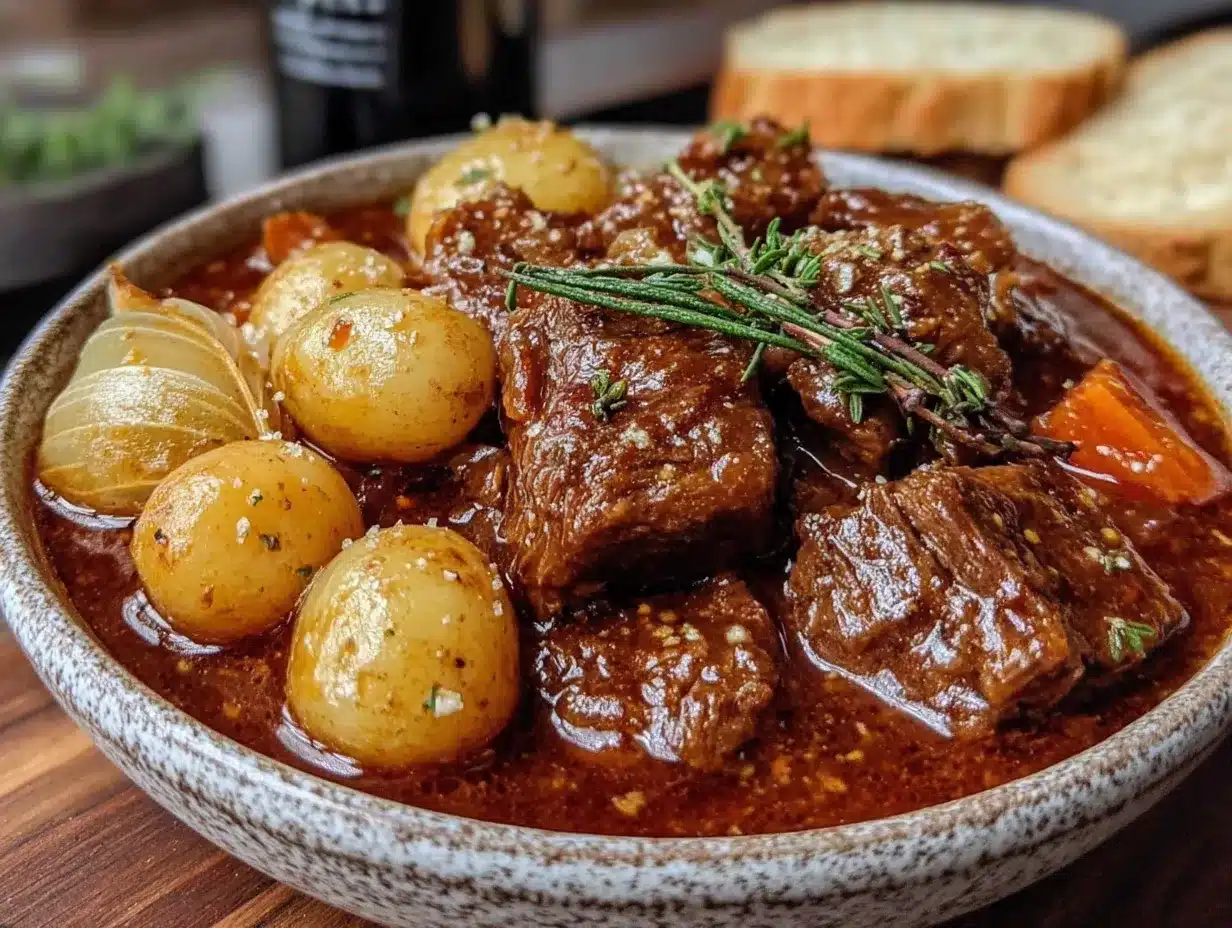
Let me walk you through this step by step. I’ve organized it so you can prep everything in advance and just let the slow cooker work its magic.
- Prep the beef (5 minutes) – Pat the beef cubes dry with paper towels. This is important. Wet beef won’t sear properly. In a mixing bowl, combine the beef with salt, pepper, and flour. Toss until each piece is lightly coated. Set aside while you prep the vegetables.
- Prep the vegetables (10 minutes) – Dice the onion, mince the garlic, chop the carrots and celery, cut the potatoes, and halve the mushrooms. Keep them separate because they go into the slow cooker at different times. I like to put the potatoes in a bowl of cold water so they don’t brown.
- Sear the beef (15 minutes) – Heat 1 tablespoon of olive oil in your large skillet over medium-high heat. Add half the beef in a single layer. Don’t crowd the pan or the beef will steam instead of searing. Let it cook undisturbed for 3-4 minutes until a deep brown crust forms. Flip with tongs and brown the other side for 2-3 minutes. Transfer the seared beef to the slow cooker. Repeat with the remaining oil and beef. This step is non-negotiable. Searing creates the Maillard reaction, which is responsible for that deep, savory flavor.
- Cook the aromatics (5 minutes) – Reduce the heat to medium. Add the diced onion to the same skillet. Cook for 3 minutes, scraping up the browned bits from the bottom of the pan. Those bits are pure flavor. Add the minced garlic and cook for 30 seconds until fragrant. Transfer the onion and garlic to the slow cooker on top of the beef.
- Deglaze the pan (1 minute) – Pour about 1/2 cup of the red wine into the hot skillet. Use your wooden spoon to scrape up every last browned bit from the bottom. This is called deglazing, and it transfers all that flavor into your stew. Pour the wine and scrapings into the slow cooker.
- Assemble in the slow cooker (5 minutes) – Add the carrots, celery, and mushrooms to the slow cooker. Do not add the potatoes yet. They cook faster and can turn mushy if added too early. Pour in the remaining 1 cup of red wine, the beef broth, tomato paste, Worcestershire sauce, dried thyme, and bay leaves. Stir everything gently to combine. The tomato paste will dissolve as the stew cooks.
- Cook low and slow (6-8 hours on low, or 4-5 hours on high) – Cover and cook on low for 6-8 hours or on high for 4-5 hours. Low and slow is better for the beef. It gives the connective tissue time to break down, resulting in melt-in-your-mouth meat. I always choose low if I have the time.
- Add the potatoes (2 hours before serving) – About 2 hours before you want to eat, add the potato chunks to the slow cooker. Stir them in gently. If you are cooking on high, add them after 2.5 hours of cooking. This ensures they are tender but not falling apart.
- Finish and serve (5 minutes) – Once the potatoes are tender and the beef is fork-tender, turn off the slow cooker. Remove the bay leaves. Stir in the balsamic vinegar. Taste and adjust seasoning with additional salt and pepper if needed. Ladle into bowls and garnish with fresh parsley.
One thing I learned the hard way: don’t lift the lid to check on the stew too often. Every time you lift that lid, you release heat and add 20-30 minutes to the cooking time. Trust the process. Your kitchen will start smelling incredible around hour four, and that is your cue that everything is working.
Cooking Tips & Techniques
After making this stew more times than I can count, I have picked up a few tricks that make a real difference. Here are the ones I swear by.
Dry the beef thoroughly before searing. This is the number one mistake people make. If the beef is wet, it will steam instead of sear, and you will lose all that beautiful brown crust. I pat each piece with paper towels and then let them sit on a plate for a few minutes to air-dry. It makes a huge difference.
Sear in batches, not all at once. I know it is tempting to dump all the beef in the pan at once to save time. Don’t do it. The pan cools down, and the beef releases moisture, and suddenly you are boiling meat instead of browning it. Take the extra five minutes to sear in two batches. Your taste buds will thank you.
Use a good quality red wine. I cannot stress this enough. The wine is a major flavor component in this stew. If you wouldn’t drink it, don’t cook with it. I once used a cheap cooking wine because I was in a hurry, and the stew had this weird, metallic aftertaste. Never again. A $10-15 bottle of Cabernet Sauvignon is perfect.
Don’t add the potatoes too early. I made this mistake the first time I made the recipe. I threw everything in the slow cooker at once, including the potatoes. By the time the beef was tender, the potatoes had turned into mush. Now I add them in the last two hours, and they come out perfectly tender with a little bite left.
Taste and adjust at the end. Slow cookers can vary wildly in temperature and evaporation. Your stew might need more salt, more pepper, or even a splash more vinegar depending on how much liquid has cooked off. Always taste before serving and adjust accordingly. That final splash of balsamic vinegar wakes everything up.
Let it rest before serving. If you can wait, let the stew sit for 10-15 minutes after cooking. The flavors meld together even more, and the broth thickens slightly as it cools. I know it is hard to wait when your house smells this good, but it is worth it.
Variations & Adaptations
One of the best things about this stew is how adaptable it is. Here are some variations I have tried and loved.
Low-Carb Version – Skip the potatoes and add extra mushrooms, turnips, or cauliflower florets instead. Turnips are surprisingly good in stew. They absorb the broth and have a mild, slightly sweet flavor that works beautifully with the red wine. I made this version for my keto friend, and she asked for the recipe twice.
Gluten-Free Adaptation – Replace the all-purpose flour with a gluten-free all-purpose blend or use arrowroot powder. If using arrowroot, mix 2 tablespoons with 3 tablespoons of cold water to make a slurry, and stir it in during the last 30 minutes of cooking. It thickens the broth without any gluten.
Herb Variations – I have made this with fresh rosemary instead of thyme, and it was fantastic. Just add a couple of sprigs to the slow cooker and remove them before serving. You can also add a teaspoon of smoked paprika for a subtle smoky flavor that pairs beautifully with the wine.
Vegetarian Version – Swap the beef for 2 pounds of hearty vegetables like butternut squash, parsnips, and extra mushrooms. Use vegetable broth instead of beef broth, and add a can of drained chickpeas for protein. The red wine still provides that rich, complex base. I made this for my vegetarian sister, and she said it was the best stew she had ever had.
Spicy Twist – Add 1/2 teaspoon of red pepper flakes along with the thyme, or stir in a diced chipotle pepper in adobo sauce for a smoky heat. The spice cuts through the richness of the beef and wine beautifully. I tried this on a whim one night, and now I make it this way half the time.
Serving & Storage Suggestions
This stew is incredibly versatile when it comes to serving. Here is how I like to enjoy it.
Serving Temperature – Serve this stew piping hot. Ladle it into deep bowls so the broth stays warm. I like to serve it with a chunk of crusty bread for dipping. A good sourdough or a rustic French loaf is perfect for soaking up every last drop of that wine-infused broth.
Perfect Pairings – This stew pairs beautifully with a simple green salad dressed with a sharp vinaigrette to cut through the richness. For drinks, a glass of the same red wine you used in the stew is a natural choice. A bold Cabernet or a Zinfandel works wonderfully. If you prefer beer, a dark stout or a brown ale complements the deep flavors.
Storage Instructions – Let the stew cool completely before storing. Transfer it to an airtight container and refrigerate for up to 4 days. The flavors actually improve after a day in the fridge. I often make this stew on a Sunday and eat it for lunches throughout the week. It gets better each day.
Freezing Tips – This stew freezes beautifully. Portion it into freezer-safe containers or zip-top bags. Leave a little room for expansion. It will keep for up to 3 months. To thaw, transfer to the refrigerator overnight. Reheat gently on the stovetop or in the microwave. You may need to add a splash of broth or water when reheating, as the stew thickens as it sits.
Reheating Methods – The best way to reheat this stew is on the stovetop over medium-low heat. Stir occasionally until heated through. If you are in a hurry, the microwave works fine. Just cover the bowl and heat in 1-minute intervals, stirring between each. The texture remains excellent either way.
Flavor Development – One thing I love about this stew is how the flavors deepen over time. The wine mellows, the beef becomes even more tender, and the vegetables soak up all that goodness. If you can, make this stew a day ahead and reheat it. It is even better the next day.
Nutritional Information & Benefits
This stew is not just delicious, it is also packed with nutrients. Here is a rough breakdown per serving (based on 6 servings).
| Nutrient | Amount per Serving |
|---|---|
| Calories | 420 |
| Protein | 35g |
| Fat | 18g |
| Carbohydrates | 28g |
| Fiber | 5g |
| Sugar | 8g |
| Sodium | 680mg |
Health Benefits – Beef chuck is an excellent source of protein, iron, and B vitamins, which support energy levels and red blood cell production. The carrots provide beta-carotene, which is great for eye health. Potatoes offer potassium and vitamin C. Mushrooms are one of the few natural food sources of vitamin D. And red wine, in moderation, contains antioxidants like resveratrol, which may support heart health. This is comfort food that actually nourishes you.
Dietary Considerations – This recipe is dairy-free and nut-free. For a gluten-free version, use the arrowroot slurry mentioned in the variations section. For a lower-sodium option, use low-sodium beef broth and reduce the added salt. The Worcestershire sauce and balsamic vinegar add plenty of flavor without extra salt.
Allergen Note – This recipe contains wheat (from the flour used to coat the beef) and sulfites (from the red wine). If you have sensitivities, use the gluten-free adaptation and choose a sulfite-free wine.
Conclusion
This slow cooker beef stew with red wine has become a staple in my kitchen for good reason. It is the kind of recipe that delivers every single time, no matter how tired or rushed I am. The beef turns out impossibly tender, the broth is rich and complex, and the vegetables are perfectly cooked. It is comfort food at its finest, and it requires almost no effort.
I love that this recipe proves you don’t need fancy techniques or expensive ingredients to make something truly special. Just good beef, a decent bottle of wine, and a little patience. The slow cooker does the rest. This stew has converted my husband, impressed my in-laws, and become my go-to meal for cold nights, bad days, and any time I need a little warmth.
I would love to hear how this turns out for you. Did you try any variations? Did your family love it as much as mine does? Drop a comment below and let me know. And if you share a photo on social media, tag me so I can see your beautiful bowls of stew. Happy cooking, friends. You have got this.
Frequently Asked Questions
Can I use a different cut of beef for this stew? Yes, you can use beef brisket or bottom round, but chuck roast is the best choice because of its marbling. Leaner cuts will be less tender. If you use a lean cut, consider reducing the cooking time by 1-2 hours.
Do I have to sear the beef first? Technically no, but I strongly recommend it. Searing adds a depth of flavor that you simply cannot get from just dumping raw beef in the slow cooker. It takes 15 minutes and makes a huge difference in the final taste.
Can I make this stew in an Instant Pot? Yes. Use the sauté function to sear the beef and cook the aromatics. Then pressure cook on high for 35 minutes with a natural release. Add the potatoes after the pressure cooking, and cook for another 5 minutes under pressure. The results are slightly different but still delicious.
Why did my stew turn out watery? This usually happens if you added too much liquid or if you lifted the lid too often during cooking. Next time, reduce the broth to 1 1/2 cups and keep the lid on. You can also remove the lid during the last 30 minutes to let some liquid evaporate and thicken the stew.
Can I add frozen vegetables to this stew? Yes, but add them during the last 30 minutes of cooking. Frozen vegetables are already blanched, so they cook much faster than fresh ones. If you add them too early, they will turn mushy and lose their texture.
Pin This Recipe!
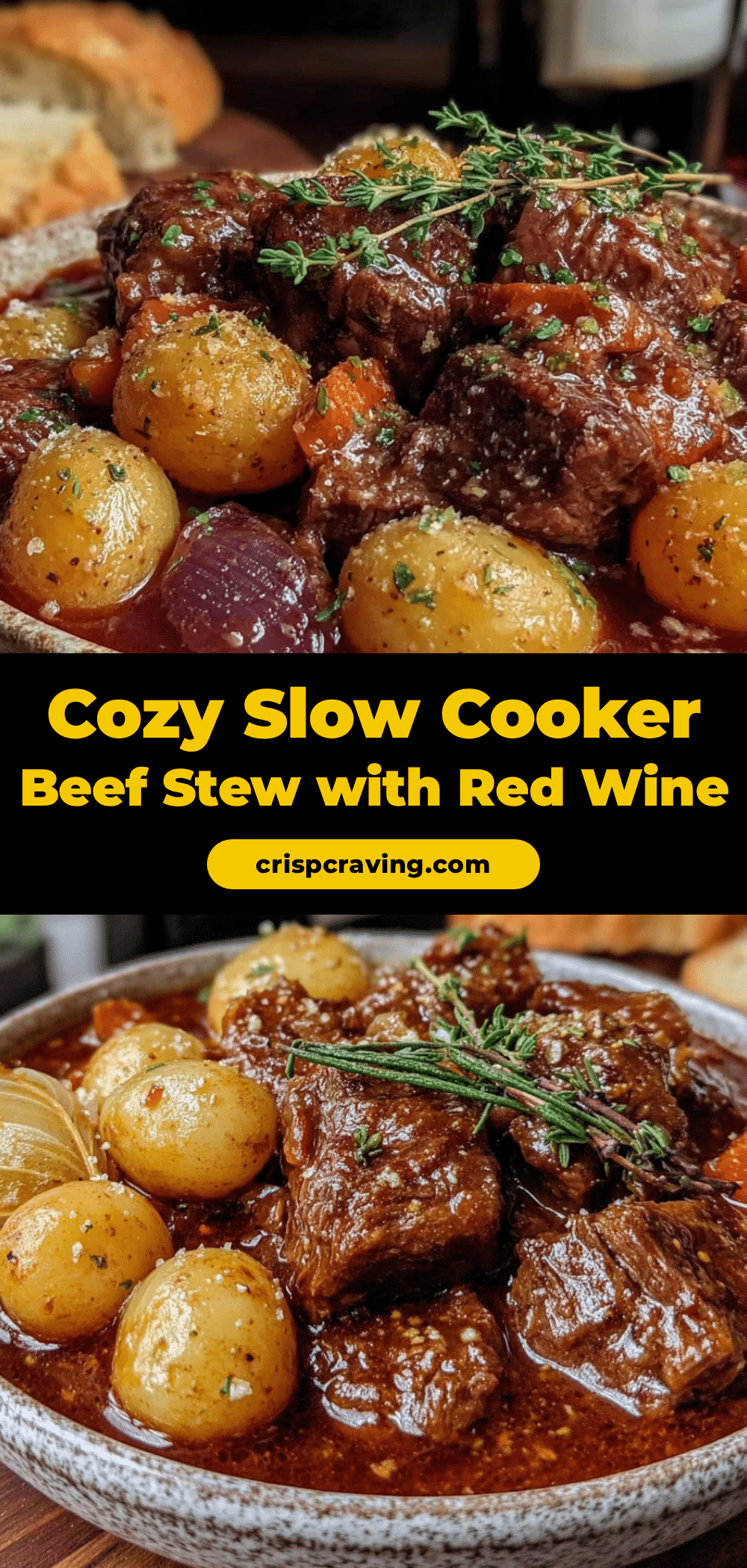
Easy Slow Cooker Beef Stew with Red Wine Recipe
A rich, deeply flavorful beef stew made in the slow cooker with red wine, tender chuck roast, and hearty vegetables. This foolproof recipe delivers melt-in-your-mouth beef and a velvety broth with minimal effort.
- Prep Time: 20 minutes
- Cook Time: 6-8 hours (low) or 4-5 hours (high)
- Total Time: 6 hours 20 minutes to 8 hours 20 minutes
- Yield: 6 servings 1x
- Category: Main Course
- Cuisine: American
Ingredients
- 2 pounds beef chuck roast, cut into 1.5-inch cubes
- 1 teaspoon salt
- 1/2 teaspoon black pepper
- 2 tablespoons all-purpose flour
- 2 tablespoons olive oil
- 1 large yellow onion, diced
- 4 cloves garlic, minced
- 4 large carrots, peeled and cut into 1-inch chunks
- 3 celery stalks, sliced
- 1 pound Yukon Gold potatoes, cut into 1-inch chunks
- 8 ounces cremini mushrooms, halved
- 1 1/2 cups dry red wine (Cabernet Sauvignon, Merlot, or Zinfandel)
- 2 cups beef broth, low-sodium
- 2 tablespoons tomato paste
- 1 tablespoon Worcestershire sauce
- 1 teaspoon dried thyme
- 2 bay leaves
- 1 tablespoon balsamic vinegar
- 2 tablespoons fresh parsley, chopped
Instructions
- Pat the beef cubes dry with paper towels. In a mixing bowl, combine the beef with salt, pepper, and flour. Toss until each piece is lightly coated. Set aside.
- Dice the onion, mince the garlic, chop the carrots and celery, cut the potatoes, and halve the mushrooms. Keep them separate.
- Heat 1 tablespoon of olive oil in a large skillet over medium-high heat. Add half the beef in a single layer. Cook undisturbed for 3-4 minutes until a deep brown crust forms. Flip and brown the other side for 2-3 minutes. Transfer to the slow cooker. Repeat with remaining oil and beef.
- Reduce heat to medium. Add the diced onion to the same skillet. Cook for 3 minutes, scraping up browned bits. Add the minced garlic and cook for 30 seconds until fragrant. Transfer to the slow cooker.
- Pour about 1/2 cup of the red wine into the hot skillet. Scrape up every browned bit from the bottom. Pour the wine and scrapings into the slow cooker.
- Add the carrots, celery, and mushrooms to the slow cooker. Do not add the potatoes yet. Pour in the remaining 1 cup of red wine, beef broth, tomato paste, Worcestershire sauce, dried thyme, and bay leaves. Stir gently to combine.
- Cover and cook on low for 6-8 hours or on high for 4-5 hours.
- About 2 hours before serving, add the potato chunks to the slow cooker. Stir gently. If cooking on high, add after 2.5 hours.
- Once potatoes are tender and beef is fork-tender, turn off the slow cooker. Remove bay leaves. Stir in balsamic vinegar. Taste and adjust seasoning with additional salt and pepper if needed. Ladle into bowls and garnish with fresh parsley.
Notes
Searing the beef is non-negotiable for deep flavor. Don’t lift the lid too often during cooking. The stew tastes even better the next day. For a gluten-free version, use arrowroot powder instead of flour.
Nutrition
- Serving Size: 1 serving (about 1.5
- Calories: 420
- Sugar: 8
- Sodium: 680
- Fat: 18
- Saturated Fat: 6
- Carbohydrates: 28
- Fiber: 5
- Protein: 35
Keywords: slow cooker beef stew, red wine beef stew, easy beef stew, comfort food, winter recipe, slow cooker recipe