Love this? Save it for later!
Share the inspiration with your friends
I was standing in the frozen food aisle of our local grocery store last March, staring at a pile of corned beef briskets that had been marked down to practically nothing. The day after St. Patrick’s Day, you know how it is—the whole store is practically giving away the stuff. And suddenly, this specific smell hit me. Not from the store, but from my memory. That peppery, slightly sour aroma of corned beef simmering all day, mixed with the faint bleach-and-oatmeal scent of my grandmother’s tiny kitchen in Queens. I was seven years old again, sitting on a wobbly stool at her counter, watching her fish a bay leaf out of the pot with her fingers because she never bothered with a spoon. She passed away about ten years ago, and honestly, I haven’t thought about that kitchen in ages. But there I was, crying a little bit over discounted brisket. Maybe you’ve been there—some random trigger that pulls you right back to a person and a place you didn’t realize you were missing so much. I grabbed three packages, threw them in my cart, and decided right then that I was going to figure out how to make her version in a slow cooker. Because let’s face it, my life doesn’t allow for standing over a stovetop for four hours on a Tuesday. This Easy Slow Cooker Corned Beef and Cabbage is my attempt to bottle that memory into something practical for a busy family. And I think she’d approve.
Why You’ll Love This Recipe
Let me tell you, this isn’t just another corned beef recipe you’ll find floating around the internet. I tested this thing six times before I got it right—the first batch came out tough as a boot, the second was so salty we couldn’t eat it, and the third? Well, let’s just say the cabbage turned into unidentifiable green mush. But I kept at it because I knew there was a perfect version hiding in there somewhere. Here’s why this one works for real families on a real budget:
- Set It and Forget It: Fifteen minutes of prep in the morning, and dinner is ready when you walk in the door. No hovering, no stirring, no stress.
- Budget-Friendly Ingredients: Corned beef brisket goes on deep discount after St. Patrick’s Day, but even at regular price, it stretches to feed a crowd. Plus, cabbage and potatoes cost next to nothing.
- Picky Eater Approved: My youngest, who swears she hates “weird meat,” cleaned her plate. Something about the slow cooking makes the beef so tender even skeptical kids go for seconds.
- Leftovers That Actually Get Better: This is one of those rare recipes where day two and three are even better than day one. The flavors meld together overnight, and the meat gets even more fork-tender.
- One-Pot Wonder: Minimal dishes. That alone is worth the price of admission on a busy weeknight.
What makes this version different from all the others? It’s the timing. Most recipes dump everything in at once and call it a day. But I figured out that adding the cabbage and potatoes later—about the last hour of cooking—keeps them from turning into a sad, watery mess. The beef gets all that low-and-slow love it needs, while the vegetables stay intact and flavorful. It’s a small tweak that makes a huge difference. This is the kind of meal that makes you close your eyes after the first bite, not because it’s fancy, but because it tastes like someone took care of you all day.
What Ingredients You Will Need
This recipe uses simple, honest ingredients that you can find at any grocery store. No fancy trips to a specialty market required. Most of these are pantry staples or easy to grab on a regular shopping run. Here’s what you’ll need:
- Corned beef brisket (3-4 pounds) — Look for a flat-cut brisket with the spice packet included. The point cut is fattier and can be a bit greasy for this recipe. I prefer the brand from Aldi or the store brand from Kroger—both have given me consistent results. If your brisket doesn’t come with a spice packet, you can make your own with peppercorns, mustard seeds, and bay leaves.
- Spice packet (included with brisket) — Don’t throw this away! It’s specifically formulated to complement the brined flavor of the beef. If you lose it, use 1 tablespoon pickling spice instead.
- Yellow onions (2 medium) — Roughly chopped. They melt into the cooking liquid and add sweetness without being overpowering.
- Garlic cloves (4-5) — Smashed but not minced. They’ll infuse the broth as they cook.
- Carrots (4-5 medium) — Peeled and cut into 2-inch chunks. They hold up well to long cooking and add a touch of natural sweetness.
- Yukon Gold potatoes (1.5 pounds) — Halved or quartered depending on size. These hold their shape better than Russets, which tend to fall apart. If you’re on a tight budget, red potatoes work great too.
- Green cabbage (1 medium head) — Cut into 8 wedges, keeping the core intact so the wedges don’t fall apart during cooking.
- Beef broth (2 cups) — Low-sodium if you can find it. The corned beef is already salty from the brine, so you don’t want to add extra. I use Swanson’s low-sodium beef broth and it works perfectly.
- Water (2 cups) — Just plain tap water. It helps dilute the saltiness of the cooking liquid.
- Bay leaves (2) — Adds a subtle herbal note that rounds out the flavor.
- Whole black peppercorns (1 teaspoon) — Even if your spice packet has peppercorns, adding a few more doesn’t hurt.
- Apple cider vinegar (2 tablespoons) — This is my secret weapon. A splash of vinegar brightens the whole dish and cuts through the richness of the beef. Trust me on this one.
Substitution notes: If you’re watching your sodium, you can rinse the brisket under cold water before cooking to remove some of the surface salt. For a gluten-free option, make sure your beef broth is certified gluten-free—most are, but it’s worth checking. And if you don’t have apple cider vinegar, white vinegar works in a pinch, though the flavor won’t be quite as mellow.
Equipment Needed
You don’t need a professional kitchen to pull this off. Here’s what you’ll actually use:
- 6-quart or larger slow cooker — This is non-negotiable. A 4-quart cooker will be too small for a 3-4 pound brisket plus all the vegetables. I use a Cuisinart 6-quart model that I picked up on sale for about forty bucks, and it’s been going strong for five years. If you don’t have a slow cooker, you can use a Dutch oven in a 300°F oven for about 3-4 hours, but you’ll need to watch the liquid level.
- Cutting board and sharp knife — A decent chef’s knife makes quick work of the onions and cabbage. Nothing fancy, just keep it sharp.
- Vegetable peeler — For the carrots. Or just scrub them well if you’re feeling lazy.
- Measuring cups and spoons — For the broth, water, and vinegar.
- Tongs — For removing the brisket from the slow cooker without it falling apart on you.
- Fork — To check if the meat is tender enough.
- Slotted spoon — For fishing out the vegetables.
That’s it. No immersion blender, no meat thermometer (though it helps), no special gadgets. If you have a slow cooker and a knife, you’re good to go.
Preparation Method
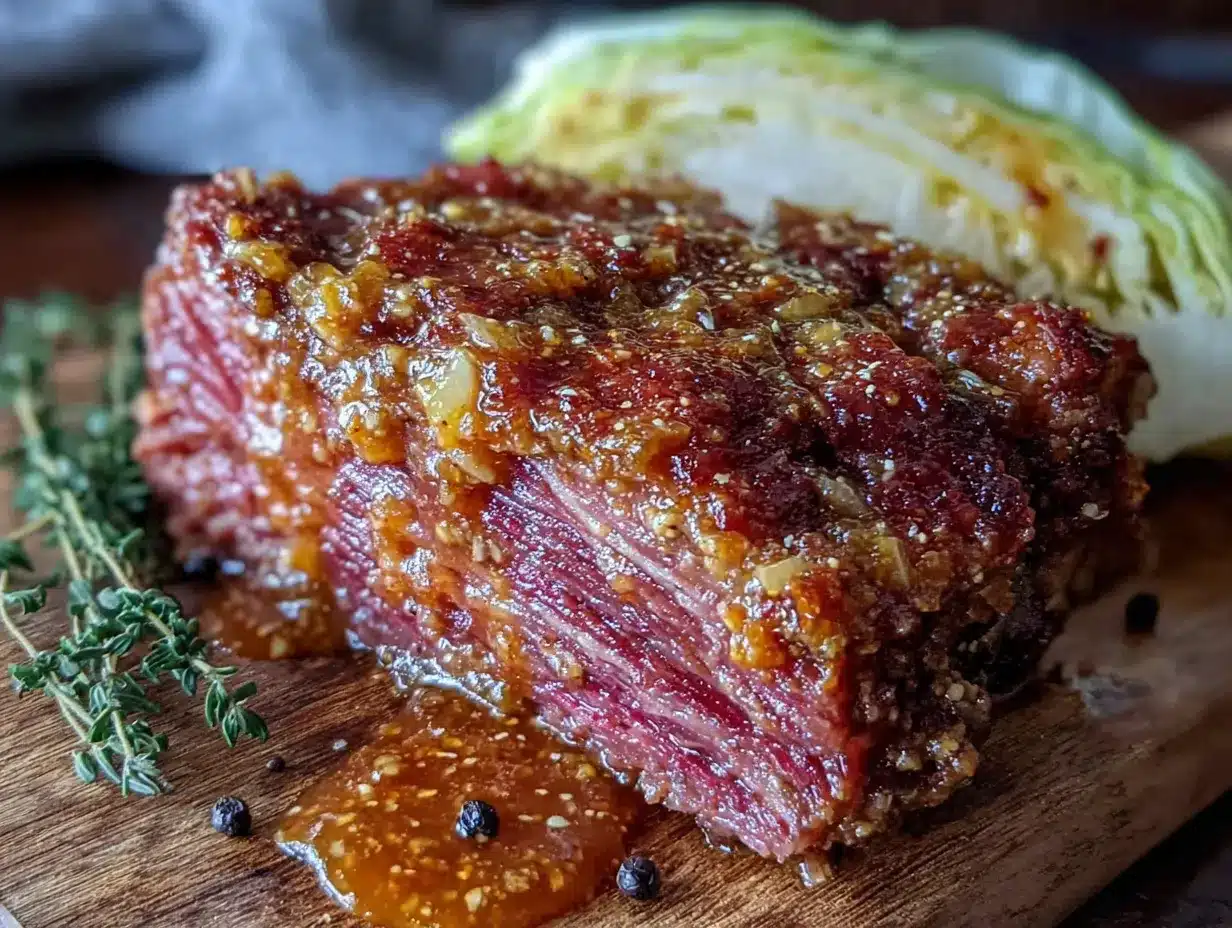
This is where the magic happens. Follow these steps, and you’ll have a dinner that tastes like you spent all day in the kitchen—even though you were at work, running errands, or folding laundry.
- Prep the brisket (5 minutes): Take the corned beef out of its packaging. Rinse it under cold water if you want to reduce some of the saltiness—I do this about half the time, depending on how salty the brand tends to be. Pat it dry with paper towels. If there’s a thick fat cap on top, leave it on. It renders down during cooking and keeps the meat moist. Place the brisket fat-side up in the slow cooker.
- Add the aromatics (5 minutes): Scatter the chopped onions and smashed garlic cloves around and on top of the brisket. Sprinkle the contents of the spice packet over everything. Drop in the bay leaves and the extra peppercorns if you’re using them.
- Pour in the liquid (2 minutes): In a measuring cup, combine the beef broth, water, and apple cider vinegar. Pour it around the brisket, not directly on top—you don’t want to wash off the spices. The liquid should come about halfway up the sides of the meat. If it doesn’t, add a bit more water.
- Cook on low (8-10 hours): Put the lid on and set your slow cooker to low. I know it’s tempting to use the high setting, but don’t. Low and slow is what breaks down the connective tissue in the brisket and makes it fork-tender. Go about your day. Seriously, walk away.
- Add the vegetables (last hour): About 60-90 minutes before you want to eat, carefully remove the lid. The brisket should be tender enough that a fork slides in with little resistance. Using tongs, lift the brisket out and set it on a cutting board, tenting it loosely with foil. Add the carrot chunks and potato halves to the cooking liquid. Nestle the cabbage wedges in on top. Don’t stir—just let them sit in the liquid. Replace the lid and cook on high for the remaining time.
- Check for doneness (last 10 minutes): After an hour, test the potatoes with a fork. They should be tender but not falling apart. The cabbage should be translucent at the thickest part of the wedge but still hold its shape. If everything looks good, you’re ready to serve.
- Slice and serve (5 minutes): Slice the brisket against the grain. This is important—slicing with the grain will give you tough, stringy meat. Slice it thin, about 1/4-inch thick. Arrange the slices on a platter with the vegetables around them. Spoon a little of the cooking liquid over the top to keep everything moist.
Pro tip from my fourth failed batch: Don’t skip the resting step when you take the brisket out to add the vegetables. Letting it rest for even 10 minutes helps the juices redistribute. I learned this the hard way when I sliced into it too early and ended up with a dry, crumbly mess. Patience, my friend.
Cooking Tips & Techniques
I’ve made enough mistakes with this recipe to fill a small notebook. Here are the lessons I learned so you don’t have to repeat them:
- The fat cap is your friend. I know it looks unappealing sitting there on top of the brisket, but it renders down during the long cooking time and bastes the meat as it goes. If you trim it off, you’ll end up with dry, stringy beef. Trust the process.
- Don’t peek. Every time you lift that lid, you lose heat and add about 20-30 minutes to the cooking time. I know it’s hard, especially when the house starts smelling amazing around hour six. But resist the urge. Your slow cooker knows what it’s doing.
- Low heat is non-negotiable. I made the mistake of using the high setting once because I was in a hurry. The meat came out tough and the vegetables were mushy. Low heat gives the collagen time to break down into gelatin, which is what makes the meat so tender.
- Slice against the grain. Look at the surface of the cooked brisket. You’ll see lines running through it—that’s the grain. Slice perpendicular to those lines. If you’re not sure, cut a small piece first and check. This one tip separates good corned beef from great corned beef.
- Save the cooking liquid. Don’t pour it down the drain! Strain it and use it as a base for soup, or reduce it on the stove for a sauce. It’s packed with flavor and would be a shame to waste.
Variations & Adaptations
This recipe is flexible, and I’ve tried a few twists over the years. Here are some that actually worked:
- Guinness Braised Version: Replace 1 cup of the beef broth with a bottle of Guinness stout. The beer adds a deep, malty richness that pairs beautifully with the corned beef. Just be aware that it will darken the cooking liquid and the meat slightly. I tried this for a St. Patrick’s Day party and it was a hit.
- Low-Carb Option: Skip the potatoes entirely and double up on the cabbage and carrots. You can also add rutabaga or turnips for a lower-carb root vegetable that holds up well to slow cooking. My sister-in-law, who does keto, swears by this version.
- Spicy Kick: Add a halved jalapeño or a teaspoon of red pepper flakes to the cooking liquid. The heat mellows out during the long cooking time but leaves a pleasant warmth in the background. I did this on a whim one winter and it became my husband’s favorite version.
- Honey Mustard Glaze: About 30 minutes before serving, brush the top of the brisket with a mixture of 2 tablespoons honey and 1 tablespoon Dijon mustard. Pop it under the broiler for 3-4 minutes until it’s bubbly and slightly caramelized. This adds a sweet-tangy crust that’s absolutely addictive.
- Vegetarian Twist: Use the same method but substitute the brisket with a large head of cauliflower, cut into thick steaks. Use vegetable broth instead of beef broth and add a tablespoon of liquid smoke for that smoky, savory flavor. It’s not the same, obviously, but it’s surprisingly good for a meatless Monday option.
Serving & Storage Suggestions
This dish is best served hot, straight from the slow cooker. Arrange the sliced brisket on a warm platter with the potatoes, carrots, and cabbage wedges around it. Spoon a little of the cooking liquid over everything to keep it moist. I like to serve it with a side of whole-grain mustard and some crusty bread to soak up the juices. A cold pint of stout or a crisp apple cider makes a perfect drink pairing.
For leftovers—and you will have leftovers unless you’re feeding a crowd—let everything cool completely before storing. Separate the meat from the vegetables and store them in separate airtight containers. The meat will keep in the fridge for 4-5 days, and the vegetables for about 3-4 days. The flavors actually get better overnight as they meld together.
To reheat, I recommend using a skillet with a splash of the reserved cooking liquid or some beef broth. Warm it over medium-low heat until heated through. The microwave works in a pinch, but it can make the meat tough. If you’re reheating the cabbage, do it gently—it can turn mushy fast.
This recipe also freezes beautifully. Slice the cooled brisket, wrap it tightly in plastic wrap and then foil, and freeze for up to 3 months. Thaw overnight in the fridge before reheating. The potatoes don’t freeze as well—they tend to get mealy—so I recommend freezing just the meat and making fresh vegetables when you’re ready to serve it again.
Nutritional Information & Benefits
Here’s a rough estimate per serving (based on 8 servings): approximately 450 calories, 28g protein, 22g fat, 35g carbohydrates, 5g fiber, and 1200mg sodium. The sodium is higher than some other recipes because of the brined brisket, so if you’re watching your salt intake, be mindful of portion sizes and consider rinsing the brisket before cooking.
On the plus side, this meal is packed with nutrients. Corned beef is a good source of iron, zinc, and B vitamins, especially B12. Cabbage is loaded with vitamin C and fiber, while carrots provide beta-carotene for eye health. Potatoes get a bad rap, but they’re actually a great source of potassium and vitamin C when you eat the skin. It’s not a health food by any stretch, but it’s a balanced meal that will leave you feeling satisfied and energized.
This recipe is naturally gluten-free (just check your broth) and can be made dairy-free with no modifications. It’s also relatively low in sugar—only about 5g per serving, mostly from the vegetables.
Conclusion
This Easy Slow Cooker Corned Beef and Cabbage has become a regular in our dinner rotation, not just in March but all year long. It’s the kind of meal that fills the house with a warm, welcoming aroma and brings everyone to the table without complaint. It’s budget-friendly, forgiving, and tastes like you fussed—even when you didn’t. I love that I can make it on a Sunday and have leftovers for quick lunches during the week. I love that my kids actually ask for it. And I love that every time I make it, I think of my grandmother’s kitchen and that wobbly stool, and I feel like she’s right there with me.
I’d love to hear how this recipe turns out for you. Did your family love it? Did you try one of the variations? Drop a comment below and let me know—I read every single one and I always learn something new from you all. And if you have a picky eater who surprised you, definitely tell me about that. Those are my favorite stories.
Now go grab that brisket and get cooking. Your slow cooker is waiting.
Frequently Asked Questions
Can I use a different cut of beef for this recipe?
Technically yes, but it won’t be the same. Corned beef is specifically brisket that’s been brined and cured. If you use a regular beef roast, you’ll miss that distinctive tangy, salty flavor. If you can’t find corned beef, you can make your own by brining a brisket for 5-7 days, but that’s a whole other project. Stick with the pre-brined stuff for this recipe.
Why did my meat come out tough?
Two most common reasons: you cooked it on high instead of low, or you didn’t cook it long enough. Corned beef needs time for the connective tissue to break down. If it’s tough after 8 hours on low, give it another hour or two. Also, make sure you’re slicing against the grain—that alone can make a tough piece of meat seem tender.
Can I add the cabbage at the beginning?
You can, but I wouldn’t recommend it. Cabbage cooked for 8 hours turns into a mushy, sulfurous mess. It will taste fine, but the texture will be unappealing. Adding it during the last hour keeps it tender but still intact. If you really want to set it and forget it, add the potatoes and carrots at the beginning and cook the cabbage separately on the stovetop.
How do I know when the corned beef is done?
The best test is the fork test. Insert a fork into the thickest part of the brisket. If it goes in with little to no resistance and the meat starts to pull apart slightly, it’s done. Internal temperature should be around 190-200°F if you’re using a meat thermometer. Don’t rely on the “165°F is safe” rule—that’s for food safety, not tenderness.
Can I make this in an Instant Pot or pressure cooker?
Absolutely. For a pressure cooker version, cook the brisket on high pressure for 90 minutes with a natural release. Add the potatoes and carrots and cook for another 5 minutes, then quick release. Add the cabbage and cook for 2-3 minutes more. The timing is tighter, and you lose some of that all-day aroma, but it works in a pinch when you’re short on time.
Pin This Recipe!
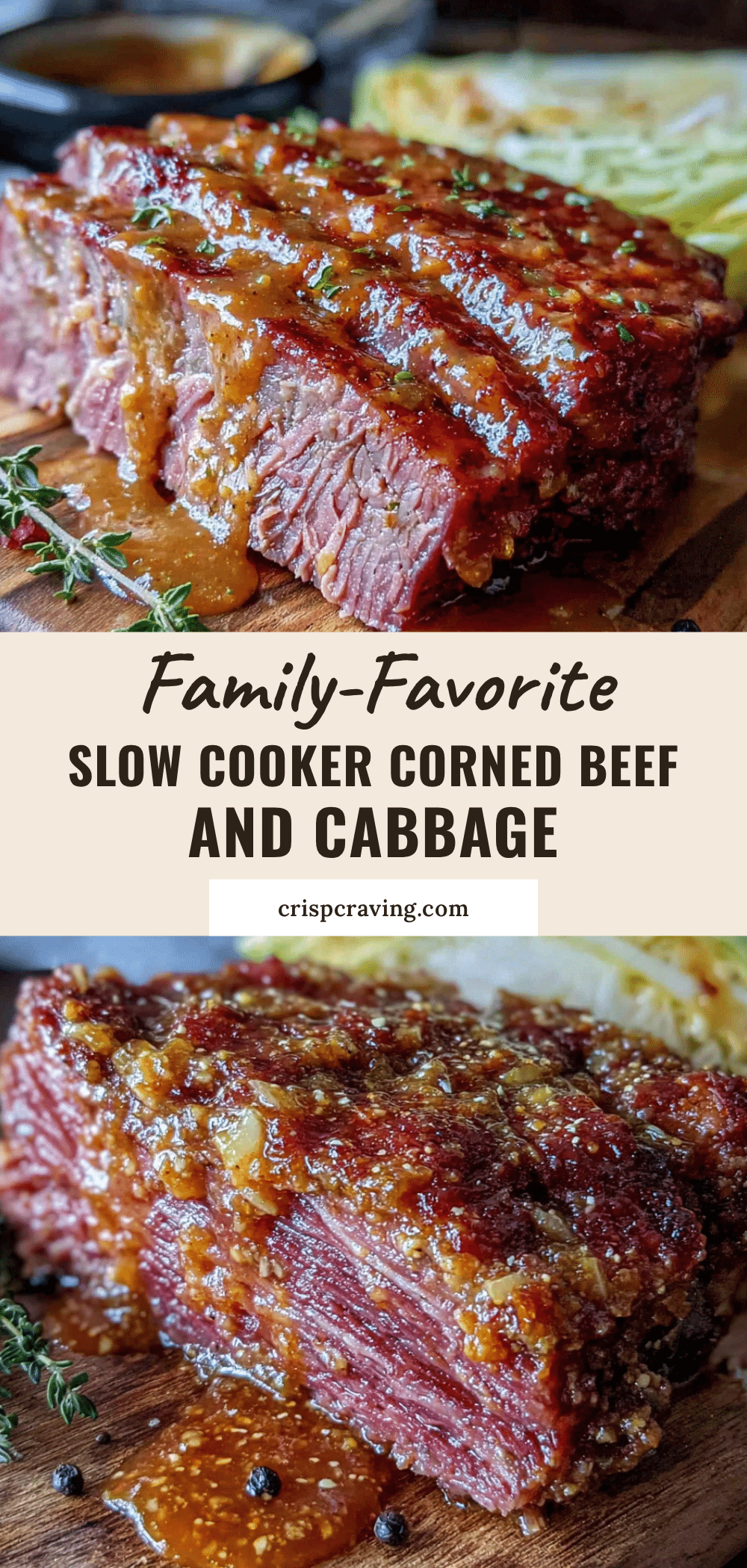
Easy Slow Cooker Corned Beef and Cabbage
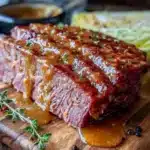
This Easy Slow Cooker Corned Beef and Cabbage is a budget-friendly, one-pot meal that fills your home with a warm, welcoming aroma. With just 15 minutes of prep, you can set it and forget it, coming home to tender, flavorful beef and perfectly cooked vegetables.
- Prep Time: 15 minutes
- Cook Time: 8-10 hours
- Total Time: 8 hours 15 minutes to 10 hours 15 minutes
- Yield: 8 servings 1x
- Category: Main Course
- Cuisine: Irish-American
Ingredients
- 3–4 pounds corned beef brisket (flat-cut, with spice packet)
- 1 spice packet (included with brisket)
- 2 medium yellow onions, roughly chopped
- 4–5 garlic cloves, smashed
- 4–5 medium carrots, peeled and cut into 2-inch chunks
- 1.5 pounds Yukon Gold potatoes, halved or quartered
- 1 medium head green cabbage, cut into 8 wedges (core intact)
- 2 cups low-sodium beef broth
- 2 cups water
- 2 bay leaves
- 1 teaspoon whole black peppercorns
- 2 tablespoons apple cider vinegar
Instructions
- Prep the brisket (5 minutes): Remove corned beef from packaging. Rinse under cold water if desired to reduce saltiness. Pat dry. Leave fat cap on. Place fat-side up in slow cooker.
- Add the aromatics (5 minutes): Scatter chopped onions and smashed garlic around and on top of brisket. Sprinkle spice packet over everything. Add bay leaves and extra peppercorns if using.
- Pour in the liquid (2 minutes): Combine beef broth, water, and apple cider vinegar. Pour around brisket (not directly on top) until liquid comes about halfway up sides. Add more water if needed.
- Cook on low (8-10 hours): Cover and cook on low. Do not use high setting. Do not lift lid during cooking.
- Add the vegetables (last hour): About 60-90 minutes before serving, carefully remove lid. Brisket should be fork-tender. Using tongs, lift brisket out and set on cutting board, tent loosely with foil. Add carrot chunks and potato halves to cooking liquid. Nestle cabbage wedges on top. Do not stir. Cover and cook on high for remaining time.
- Check for doneness (last 10 minutes): After an hour, test potatoes with fork—they should be tender but not falling apart. Cabbage should be translucent at thickest part but still hold shape.
- Slice and serve (5 minutes): Slice brisket against the grain into 1/4-inch thick slices. Arrange on platter with vegetables. Spoon some cooking liquid over top to keep moist.
Notes
Don’t skip the resting step when removing brisket to add vegetables—letting it rest for even 10 minutes helps juices redistribute. Save the cooking liquid for soup or sauce. For a Guinness braised version, replace 1 cup beef broth with Guinness stout. For low-carb, skip potatoes and double cabbage and carrots. For a spicy kick, add a halved jalapeño or 1 teaspoon red pepper flakes. For honey mustard glaze, brush brisket with mixture of 2 tablespoons honey and 1 tablespoon Dijon mustard 30 minutes before serving and broil 3-4 minutes.
Nutrition
- Serving Size: 1 serving (about 1/8
- Calories: 450
- Sugar: 5
- Sodium: 1200
- Fat: 22
- Saturated Fat: 8
- Carbohydrates: 35
- Fiber: 5
- Protein: 28
Keywords: slow cooker corned beef and cabbage, easy corned beef, St. Patrick's Day recipe, one-pot meal, budget-friendly dinner