Love this? Save it for later!
Share the inspiration with your friends
“I wasn’t expecting to fill my entire kitchen with the scent of ripe tomatoes on a random Saturday afternoon,” my neighbor chuckled as she handed me a humongous box packed with 20 pounds of juicy tomatoes from her garden. Honestly, it was a bit overwhelming—what does one do with that many tomatoes? I mean, you know that feeling when you get handed more fresh produce than you can handle, and suddenly your head is spinning with ideas (and a bit of panic)?
That day, with a cracked mixing bowl and a slightly stained apron, I set out to turn this mountain of tomatoes into something truly special. I forgot to buy extra jars for canning, spilled some juice on the counter, and got interrupted by a curious cat who wanted to help (or just eat the tomatoes). But by the end of the weekend, I had a collection of flavorful tomato recipes that kept my kitchen buzzing and my family coming back for more.
These recipes aren’t just about using up tomatoes—they’re about celebrating their vibrant flavor, their juicy texture, and the way they can transform everyday meals from “meh” to memorable. Whether you’ve got a similar bounty from a farmers market haul or just love cooking with tomatoes, let me tell you why these flavorful recipes for 20 pounds of juicy tomatoes became my go-to solution, and why they might just become yours too.
Why You’ll Love This Recipe
After testing countless ways to handle a whopping 20 pounds of juicy tomatoes, I can honestly say these recipes stand out for all the right reasons. From my kitchen to yours, here’s why you’ll want to try them:
- Quick & Easy: Most recipes come together in under an hour, perfect for busy weeknights or those last-minute cravings when you have tomatoes to spare.
- Simple Ingredients: These recipes rely on pantry staples and fresh herbs you probably already have, no special trips needed.
- Perfect for Any Occasion: Whether it’s a casual family dinner, a picnic, or a cozy brunch, these dishes fit right in.
- Crowd-Pleaser: From kids to adults, everyone loves the bright, fresh flavors that shine through.
- Unbelievably Delicious: The balance of acidity and sweetness in these tomato recipes makes each bite a comforting yet exciting experience.
What makes these recipes different? For starters, I’ve refined the seasoning to highlight the natural tomato flavor without overwhelming it. I also blend textures thoughtfully—from silky sauces to chunky salsas. You’ll notice a subtle twist here and there, like roasting the tomatoes before pureeing to deepen the flavor or adding fresh basil right at the end for that pop of freshness.
Honestly, these dishes aren’t just recipes—they’re like little tomato celebrations on your plate. They bring a sense of warmth and happiness that makes you want to close your eyes on the first bite and just savor the moment.
What Ingredients You Will Need
These flavorful recipes for 20 pounds of juicy tomatoes use straightforward, wholesome ingredients to bring out the best in every tomato. Whether you’re making sauces, salsas, or stews, here’s what you’ll typically gather:
- Fresh Tomatoes: About 20 pounds of ripe, juicy tomatoes—Roma, beefsteak, or vine-ripened work great. For best texture, I recommend firm but ripe tomatoes from a trusted local market.
- Olive Oil: A good quality extra virgin olive oil adds richness and depth (I usually go for California Olive Ranch).
- Garlic: Fresh cloves, minced—never underestimate what garlic can do for a tomato sauce.
- Onions: Yellow or sweet onions, finely chopped, provide a mellow sweetness.
- Fresh Herbs: Basil, oregano, and thyme are staples here. Fresh is best, but dried works in a pinch.
- Salt & Pepper: To taste. Sea salt and freshly ground black pepper bring out the natural tomato flavor.
- Optional Ingredients:
- Red pepper flakes for a spicy kick
- Fresh lemon juice or balsamic vinegar for acidity balance
- Parmesan cheese rind for simmering in sauces (adds umami)
- Bell peppers or jalapeños for salsa variations
- Substitutions: For dairy-free options, skip Parmesan or use nutritional yeast; swap olive oil with avocado oil if preferred.
These ingredients are mostly pantry staples or fresh garden picks, making the recipes super accessible. Plus, if you’re looking to tweak the flavor, swapping herbs or adjusting spice levels is easy and encouraged.
Equipment Needed
Here’s a quick rundown of the tools you’ll want handy for handling 20 pounds of juicy tomatoes and crafting these recipes:
- Large Stock Pot: Essential for simmering sauces or stews. I find a 6-quart pot perfect for this volume.
- Sharp Knife: For chopping tomatoes and herbs. A serrated knife can help with cutting through skins.
- Cutting Board: Preferably one with grooves to catch juices.
- Blender or Food Processor: For pureeing sauces or making smooth salsas. A high-speed blender like a Vitamix works beautifully but a basic food processor does the job too.
- Colander: For draining tomatoes if you’re blanching or prepping them.
- Measuring Cups and Spoons: For accurate seasoning and ingredient amounts.
- Glass Jars or Airtight Containers: For storing sauces or salsas. Mason jars are budget-friendly and reusable.
If you don’t have a blender, you can also use a potato masher for chunkier textures. For cleaning and maintaining your knives, a quick wipe with a damp cloth after each use keeps them sharp and safe.
Preparation Method
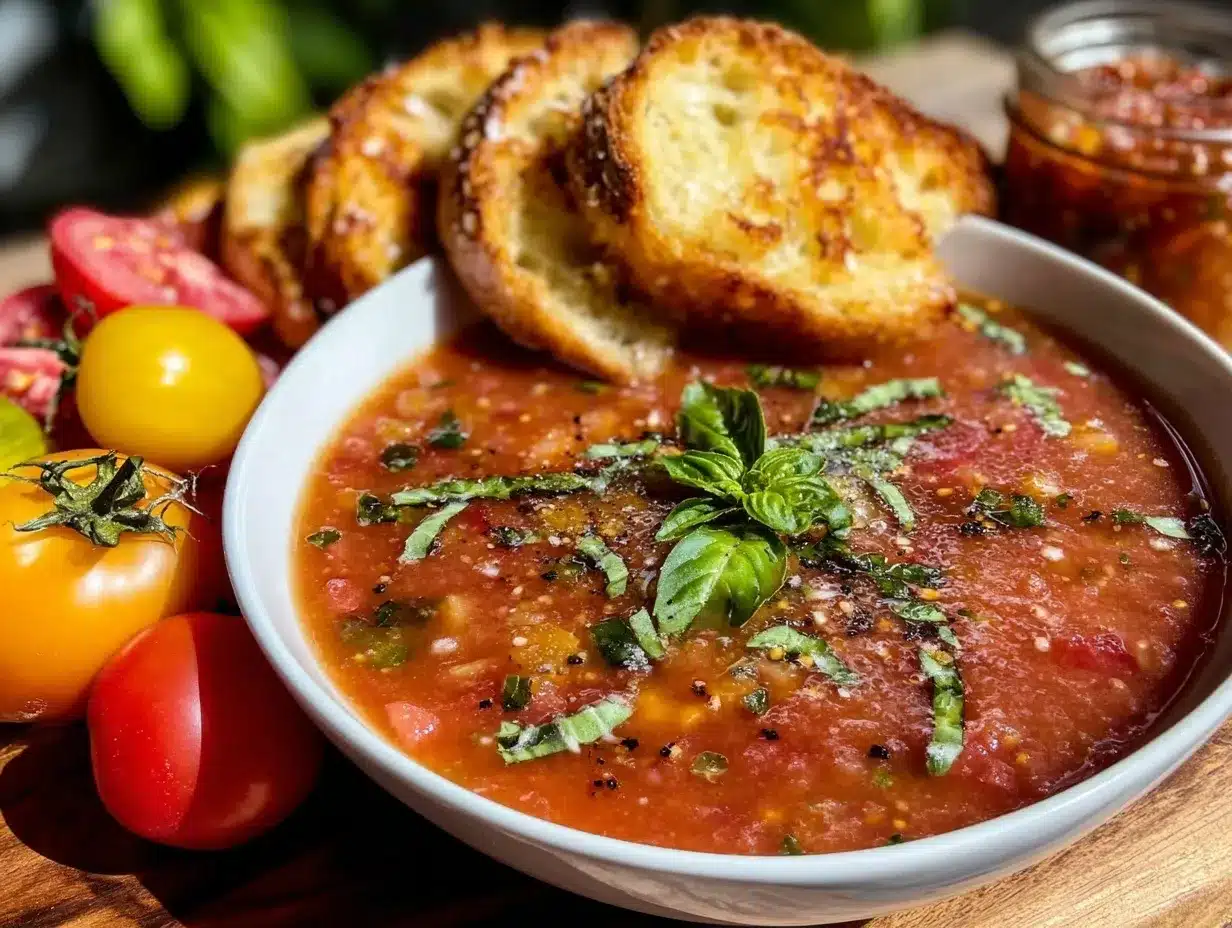
- Wash and Prep Tomatoes (15-20 minutes): Rinse all tomatoes under cold water. Remove any stems and rough spots. For easier peeling, score a small “X” on the bottom of each tomato.
- Blanch and Peel Tomatoes (10 minutes): Bring a large pot of water to boil. Drop tomatoes in batches for 30-60 seconds, or until skins start to loosen. Immediately transfer to an ice bath. Peel off skins starting from the scored “X” – this step is key for smooth sauces.
- Chop Tomatoes (10 minutes): Roughly chop peeled tomatoes, including seeds and juice, into a large bowl. The juice is flavor gold, so don’t discard it.
- Sauté Aromatics (5-7 minutes): Heat 2 tablespoons of olive oil in your stock pot over medium heat. Add chopped onions and garlic, sauté until translucent and fragrant, about 5 minutes. Avoid burning garlic—it gets bitter fast.
- Add Tomatoes to Pot (5 minutes): Pour chopped tomatoes and juice into the pot. Stir to combine with aromatics.
- Simmer Sauce (40-50 minutes): Lower heat, let sauce gently bubble. Stir occasionally, breaking down tomatoes with a wooden spoon. Add salt, pepper, and herbs halfway through simmering. The sauce should thicken and deepen in color.
- Blend (Optional, 2-3 minutes): For a smooth sauce, use an immersion blender directly in the pot or transfer to a blender in batches. For chunkier textures, skip this step or pulse briefly.
- Taste and Adjust Seasoning (2 minutes): Add a pinch of sugar if tomatoes are too acidic, or a splash of balsamic vinegar or lemon juice to brighten flavors.
- Cool and Store (10 minutes): Let the sauce cool before transferring to containers. Refrigerate up to 5 days or freeze for longer storage.
Pro tip: If you want a richer flavor, roasting the tomatoes at 400°F (200°C) for 20 minutes before chopping adds caramelized notes. Also, don’t rush the simmering step—it’s where the magic happens. I once tried to speed it up and ended with a watery, bland sauce. Patience is key!
Cooking Tips & Techniques
Cooking with a bounty of tomatoes can be both rewarding and tricky. Let me share some tips I’ve picked up along the way to make your tomato recipes shine:
- Choose Tomatoes Wisely: Ripe but firm tomatoes hold up better during cooking. Overripe ones can make sauces watery.
- Peeling Makes a Difference: Blanching and peeling remove bitterness and improve texture, especially for smooth sauces.
- Don’t Skip the Simmer: Slow cooking helps flavors meld and intensifies sweetness, so resist the urge to rush.
- Season Gradually: Add salt and herbs in stages. It’s easier to adjust seasoning than fix over-salted sauce.
- Use Fresh Herbs Last: Add fresh basil or parsley at the end to preserve their brightness.
- Watch Out for Burning: Garlic and onions burn quickly; keep the heat medium-low and stir often.
- Multitask Efficiently: While sauce simmers, prep garnishes or sides to save time.
Once, I forgot to stir the sauce and ended up with a scorched bottom layer that I had to carefully scrape off. Lesson learned: keep an eye on your pot and stir often for even cooking. Also, using a heavy-bottomed pot helps prevent hot spots that cause burning.
Variations & Adaptations
Tomatoes are incredibly versatile, and these recipes can be easily adjusted to suit different tastes and dietary preferences. Here are some tasty variations you might want to try:
- Spicy Tomato Salsa: Add diced jalapeños, cilantro, and a squeeze of lime for a fresh, zesty salsa perfect for chips or tacos.
- Tomato Basil Soup: Blend tomato sauce with vegetable broth and cream or coconut milk, then garnish with fresh basil and croutons.
- Roasted Tomato Pasta Sauce: Roast tomatoes with garlic and onions before simmering to bring out smoky, caramelized flavors. Toss with your favorite pasta.
- Low-Carb Option: Use this sauce as a base for zucchini noodles or cauliflower rice dishes.
- Allergen-Free Adjustments: Skip cheese or cream and use plant-based alternatives to keep recipes dairy-free and vegan-friendly.
I once swapped out oregano for smoked paprika in a batch of tomato sauce, and it gave the dish a unique smoky depth that my family couldn’t get enough of. Don’t hesitate to experiment with herbs and spices to find your own signature tomato recipes.
Serving & Storage Suggestions
Serving these flavorful tomato recipes is all about complementing their rich, fresh taste and preserving their texture:
- Serving Temperature: Tomato sauces and salsas are best served warm or at room temperature to let flavors shine.
- Presentation: Garnish with fresh herbs like basil or parsley and a drizzle of good olive oil for that finishing touch.
- Complementary Dishes: Pair with crusty bread, grilled meats, or simple pasta to round out the meal. I love serving my tomato sauce alongside crispy garlic chicken for a hearty dinner.
- Storage: Store in airtight containers in the fridge for up to 5 days. Freeze in portions for up to 3 months.
- Reheating: Warm gently on the stove or in the microwave to avoid breaking down the sauce too much.
Flavors often develop over time, so sauces taste even better the next day. I recommend making your tomato dishes a day ahead whenever possible—it’s worth the wait.
Nutritional Information & Benefits
Tomatoes are packed with nutrients and bring a lot to the table beyond flavor. Here’s a quick look at what you’re getting with these recipes:
- Calories: Approximately 40-60 calories per half-cup serving of sauce, depending on added oils and ingredients.
- Vitamins: Rich in vitamin C, vitamin A, and antioxidants like lycopene, which supports heart health.
- Low in Fat & Carbs: Naturally low-calorie and suitable for many diets including low-carb and gluten-free.
- Dietary Considerations: These recipes can be adapted for vegan, vegetarian, dairy-free, and gluten-free diets.
- Allergens: Generally allergen-friendly, but watch for added ingredients like cheese or nuts in variations.
From a wellness perspective, I appreciate how these tomato-based recipes bring fresh, whole-food ingredients to the forefront without unnecessary additives. They’re a delicious way to enjoy nutrition daily.
Conclusion
If you’ve ever wondered what to do with 20 pounds of juicy tomatoes, these flavorful recipes offer practical, tasty solutions that make the most of that bounty. They’re approachable, forgiving for beginner cooks, and flexible enough for you to make them your own.
I love these recipes because they remind me of those unexpected tomato-filled afternoons and the joy of turning abundance into something delicious. Give them a try, tweak them to suit your taste, and don’t forget to share how your kitchen adventure went—I’m always curious to hear your twists and stories!
So go ahead, roll up your sleeves, and let those tomatoes shine. Your taste buds will thank you.
FAQs
How do I store leftover tomato sauce made from fresh tomatoes?
Store leftover sauce in airtight containers in the refrigerator for up to 5 days. For longer storage, freeze in portions using freezer-safe containers or bags for up to 3 months.
Can I use canned tomatoes instead of fresh for these recipes?
You can substitute canned tomatoes if fresh aren’t available, but fresh tomatoes provide a brighter, fresher flavor. If using canned, opt for whole peeled tomatoes for best texture.
What’s the best way to peel large quantities of tomatoes quickly?
Blanch tomatoes in boiling water for about 30-60 seconds, then transfer to ice water. The skins will loosen and peel off easily starting from the scored “X” on the bottom.
Are these tomato recipes suitable for freezing?
Absolutely! Tomato sauces and salsas freeze well. Portion them out before freezing to make thawing and using easier.
How can I make my tomato sauce less acidic?
Add a pinch of sugar, a splash of balsamic vinegar, or a small amount of grated carrot during cooking to balance acidity without compromising flavor.
Pin This Recipe!
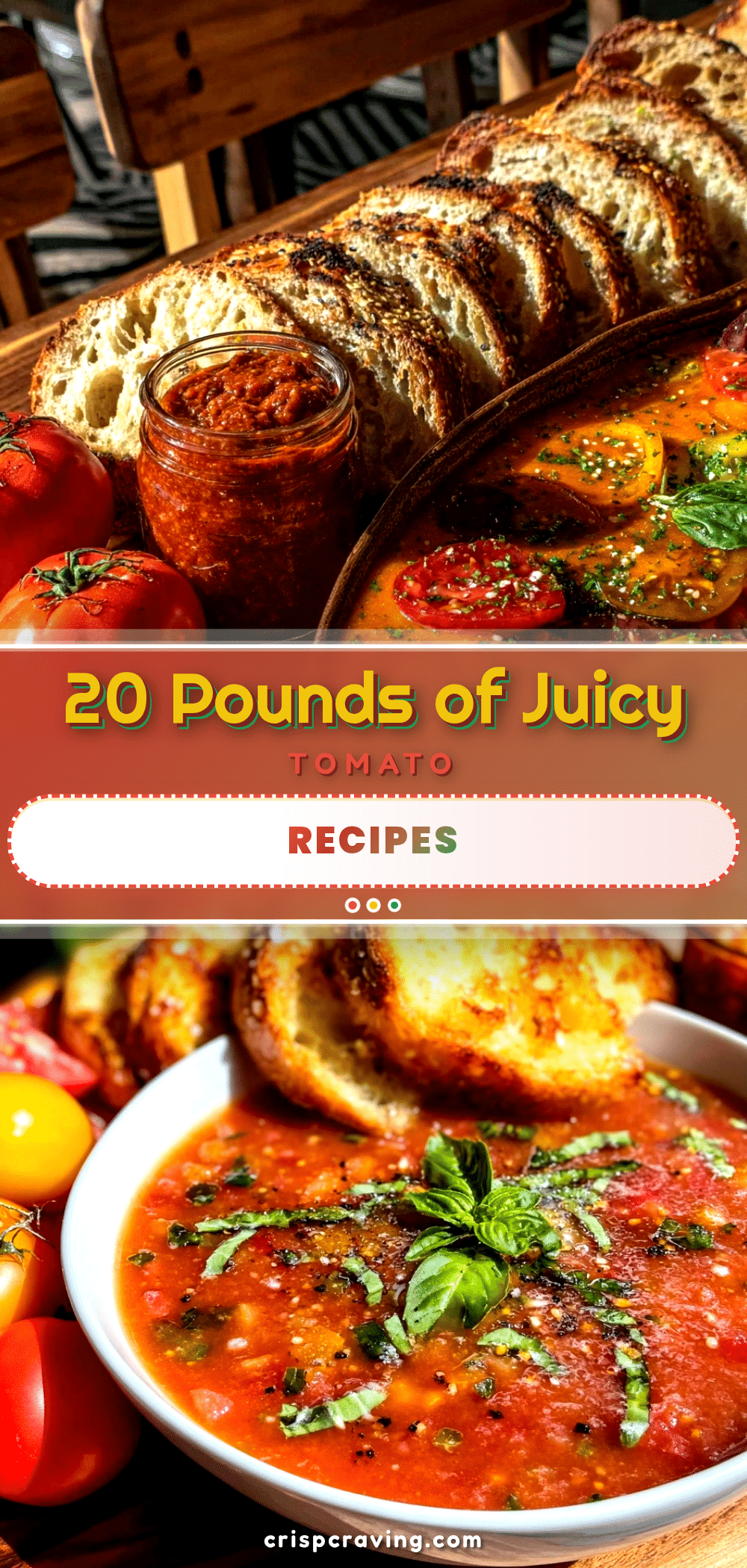
Flavorful Recipes for 20 Pounds of Juicy Tomatoes Easy and Delicious Ideas

A collection of easy and delicious recipes designed to make the most of 20 pounds of fresh, juicy tomatoes, celebrating their vibrant flavor and versatility in sauces, salsas, and stews.
- Prep Time: 35 minutes
- Cook Time: 50 minutes
- Total Time: 1 hour 25 minutes
- Yield: Approximately 8 cups of sauce (about 8 servings) 1x
- Category: Main Course
- Cuisine: American
Ingredients
- About 20 pounds of ripe, juicy tomatoes (Roma, beefsteak, or vine-ripened)
- 2 tablespoons extra virgin olive oil
- Fresh garlic cloves, minced
- Yellow or sweet onions, finely chopped
- Fresh herbs: basil, oregano, thyme (fresh preferred, dried acceptable)
- Salt to taste (sea salt recommended)
- Freshly ground black pepper to taste
- Optional: red pepper flakes
- Optional: fresh lemon juice or balsamic vinegar
- Optional: Parmesan cheese rind for simmering
- Optional: bell peppers or jalapeños for salsa variations
Instructions
- Wash and prep tomatoes by rinsing under cold water, removing stems and rough spots, and scoring a small ‘X’ on the bottom of each tomato (15-20 minutes).
- Blanch tomatoes in boiling water for 30-60 seconds until skins loosen, then transfer to an ice bath and peel skins starting from the scored ‘X’ (10 minutes).
- Roughly chop peeled tomatoes, including seeds and juice, into a large bowl (10 minutes).
- Heat 2 tablespoons olive oil in a large stock pot over medium heat. Add chopped onions and garlic and sauté until translucent and fragrant, about 5-7 minutes.
- Add chopped tomatoes and juice to the pot and stir to combine with aromatics (5 minutes).
- Lower heat and simmer sauce gently for 40-50 minutes, stirring occasionally and breaking down tomatoes with a wooden spoon. Add salt, pepper, and herbs halfway through simmering.
- Optional: Blend sauce with an immersion blender or in batches in a blender for a smooth texture (2-3 minutes).
- Taste and adjust seasoning by adding a pinch of sugar if too acidic, or a splash of balsamic vinegar or lemon juice to brighten flavors (2 minutes).
- Cool sauce before transferring to airtight containers. Refrigerate up to 5 days or freeze for up to 3 months (10 minutes).
Notes
Roasting tomatoes at 400°F (200°C) for 20 minutes before chopping adds caramelized, smoky flavor. Avoid rushing the simmering step to prevent watery sauce. Add fresh herbs like basil at the end to preserve brightness. Stir often to prevent burning. Use a heavy-bottomed pot to avoid hot spots.
Nutrition
- Serving Size: 1/2 cup sauce
- Calories: 50
- Sugar: 4
- Sodium: 150
- Fat: 3
- Saturated Fat: 0.4
- Carbohydrates: 6
- Fiber: 1.5
- Protein: 1
Keywords: tomato recipes, tomato sauce, fresh tomatoes, homemade sauce, easy tomato recipes, canning tomatoes, tomato salsa, tomato stew