Love this? Save it for later!
Share the inspiration with your friends
Introduction
“You really think you can make those iconic beignets at home?” my friend asked, eyebrows raised as I pulled out a little packet of yeast on a sleepy Sunday morning. I had just returned from a whirlwind trip to New Orleans, where the sweet scent of powdered sugar and fried dough from Café du Monde followed me through the French Quarter like a warm invitation. Honestly, I wasn’t sure if I could capture that same magic in my own kitchen — but I was determined to try.
See, the recipe wasn’t scribbled in some fancy cookbook or passed down from a seasoned Cajun chef. It actually came from a chat with a barista at a tiny coffee shop in the city, who swore by a few key tricks to get that perfect fluffy texture. I’ll admit, the first batch was a bit of a flop—dough sticking to the bowl, oil splattering everywhere, and a kitchen that looked like a flour bomb had exploded. But after a couple of tries, I finally nailed that airy, pillowy bite that makes Café du Monde beignets so unforgettable.
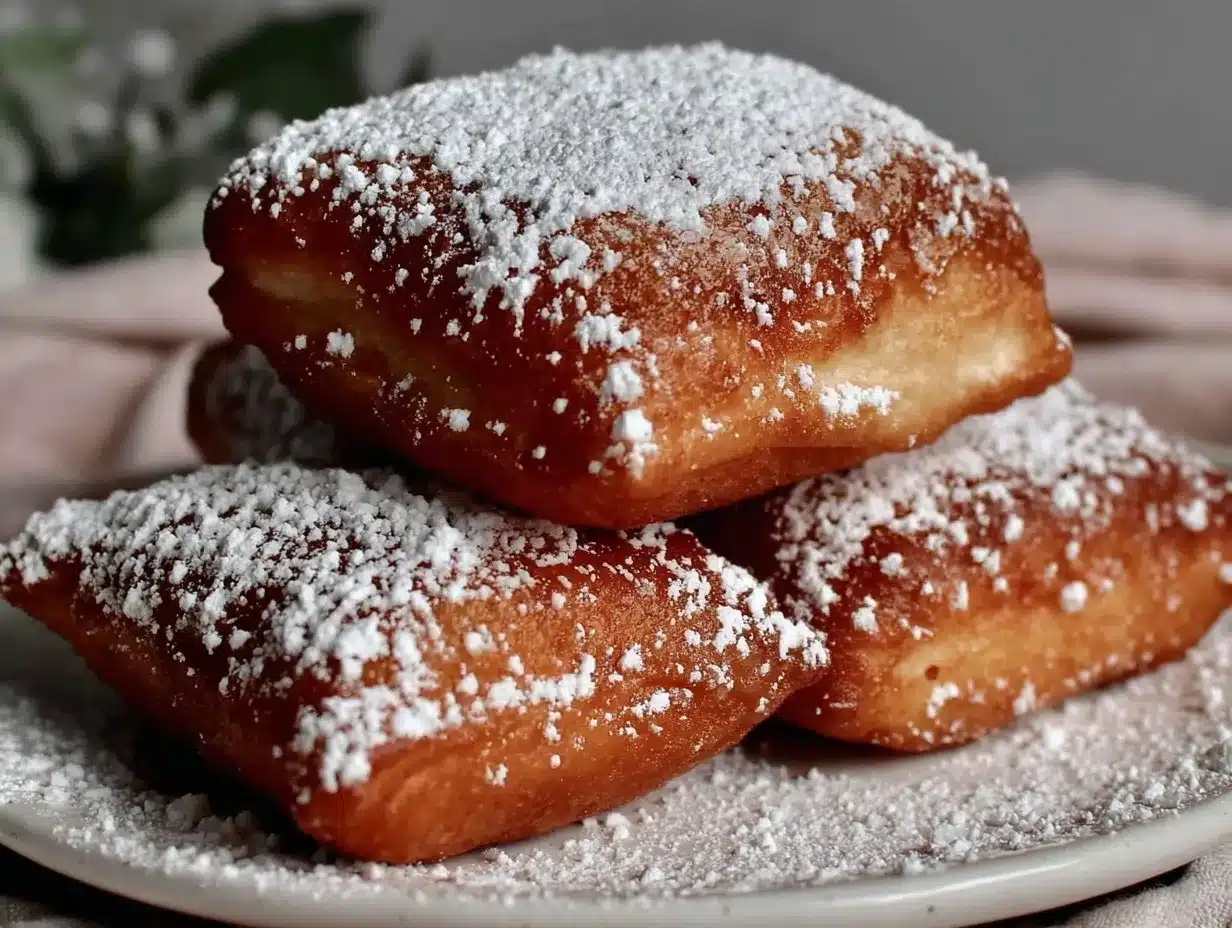
Maybe you’ve been there—craving those square pillows of fried dough dusted with snow-white powdered sugar, but not wanting to hop on a plane just for a snack. Well, stick around, because this fluffy Café du Monde copycat New Orleans beignets recipe is my best attempt at bringing that classic charm right into your kitchen. And trust me, it’s worth the little mess and wait. Let me tell you why these beignets have become a Sunday morning staple in my house—and why they might just become yours too.
Why You’ll Love This Recipe
After experimenting with countless doughs and frying temps, this recipe stands out for all the right reasons. It’s tried, tested, and loved by my circle of friends who swear it’s just like biting into the real deal at Café du Monde.
- Quick & Easy: The dough comes together in about 15 minutes with a simple rise time, perfect for weekend brunch or a spontaneous treat.
- Simple Ingredients: You won’t need any exotic items—just basic pantry staples like flour, yeast, and sugar.
- Perfect for Cozy Mornings: Whether it’s a lazy Saturday or a holiday breakfast, these beignets bring that festive New Orleans vibe home.
- Crowd-Pleaser: Kids, adults, and even picky eaters love the light texture and sweet finish.
- Unbelievably Delicious: The fluffy inside with a crisp outside, dusted with generous powdered sugar, is next-level comfort food that feels special but isn’t complicated.
What really sets this recipe apart is the attention to dough hydration and frying temperature, which I learned from that coffee shop barista (and a fair share of trial and error). The dough is soft but manageable, and the frying results in a golden puff that’s airy without being greasy. Plus, the sprinkle of powdered sugar isn’t just a topping—it’s a snow-like crown that melts into the dough, making every bite a little celebration.
What Ingredients You Will Need
This recipe uses simple, wholesome ingredients to deliver that bold, sweet flavor and the satisfying, fluffy texture without any fuss. Most of these are pantry staples, so you probably have them on hand right now.
- All-purpose flour: 2 ½ cups (315 grams) – I recommend a brand like King Arthur for consistent results.
- Active dry yeast: 1 packet (2 ¼ teaspoons or 7 grams) – essential for that light rise.
- Granulated sugar: ¼ cup (50 grams) – adds a touch of sweetness and helps with browning.
- Salt: ½ teaspoon – balances the sweetness.
- Warm water: 1 cup (240 ml), about 110°F (43°C) – activates the yeast.
- Whole milk: ½ cup (120 ml), warmed – adds richness to the dough.
- Unsalted butter: 2 tablespoons (28 grams), melted – for tenderness.
- Large eggs: 2, room temperature – contribute to the structure and fluffiness.
- Powdered sugar: For dusting generously after frying.
- Optional: A pinch of ground nutmeg or cinnamon for a subtle warm note in the dough.
For substitutions, you can swap whole milk with almond milk or oat milk if you want a dairy-free version, though the texture shifts slightly. Also, if you’re gluten-sensitive, try a gluten-free flour blend designed for baking; just note the dough may be less elastic.
Equipment Needed
- Large mixing bowl: For combining and proofing the dough. A glass or stainless steel bowl works best.
- Stand mixer with dough hook (optional): Makes kneading easier, but hand kneading is totally fine.
- Measuring cups and spoons: Accurate measurements make all the difference here.
- Deep heavy-bottomed pot or deep fryer: For frying the beignets. A Dutch oven works great.
- Thermometer: To monitor oil temperature precisely—crucial to avoid greasy or undercooked beignets.
- Slotted spoon or spider strainer: For safely pulling beignets out of hot oil.
- Baking sheet lined with paper towels: To drain excess oil.
- Sifter or fine mesh sieve: For dusting the powdered sugar evenly.
If you don’t have a thermometer, a wooden spoon test works: dip the handle into the oil, and if bubbles form steadily around it, the oil is ready. For budget options, a regular pot and a candy thermometer often serve just as well as pricier gadgets.
Preparation Method
- Activate the yeast (10 minutes): In your large mixing bowl, combine the warm water (about 110°F/43°C) with the packet of active dry yeast and 1 teaspoon of granulated sugar. Stir gently, then let it sit until foamy and bubbly, about 5 to 10 minutes. If it doesn’t foam, your yeast might be old—start over with fresh yeast.
- Mix the dry ingredients (5 minutes): While the yeast is activating, whisk together the flour, remaining sugar, salt, and optional nutmeg or cinnamon in a separate bowl.
- Combine wet ingredients (3 minutes): Warm your milk (not too hot!) and melt the butter. In a small bowl, beat the eggs lightly.
- Make the dough (10 minutes): Once the yeast is bubbly, add the warm milk, melted butter, and eggs to the yeast mixture. Slowly add the flour mixture, stirring until a sticky dough forms. If using a stand mixer, switch to the dough hook and knead on medium speed for about 5 minutes. If kneading by hand, turn the dough onto a floured surface and knead until smooth and elastic, about 8 minutes. The dough should be soft and slightly tacky but not overly sticky.
- First rise (1 hour): Place the dough in a lightly oiled bowl, cover with a clean kitchen towel or plastic wrap, and let it rise in a warm spot until doubled in size. I usually tuck mine in near the oven with the light on.
- Shape the beignets (10 minutes): Gently punch down the dough to release air. On a floured surface, roll the dough out to about ¼ inch (6 mm) thickness. Use a sharp knife or pizza cutter to cut into 2-inch (5 cm) squares. Don’t worry about perfect edges—rustic shapes add character!
- Second rise (30 minutes): Place the squares on a floured baking sheet, cover lightly, and let them puff up a bit.
- Heat the oil (5 minutes): Heat vegetable oil in your pot or fryer to 360°F (182°C). Use a thermometer to keep the temperature steady. If it’s too hot, beignets brown too fast; too cool, and they soak up oil.
- Fry the beignets (2-3 minutes per batch): Carefully drop 3-4 pieces at a time into the hot oil. Fry until puffed and golden brown on both sides, turning once (about 1 to 1½ minutes per side). Use your slotted spoon to flip and remove them, letting excess oil drip back into the pot.
- Drain and dust (5 minutes): Transfer beignets to paper towels to drain. While still warm, dust generously with powdered sugar using a sifter or fine mesh sieve. Don’t be shy here—powdered sugar is the signature touch.
- Serve immediately: Beignets are best fresh and warm, with a steaming cup of chicory coffee or your favorite hot drink.
Pro tip: If your dough feels too sticky during shaping, dust your hands with flour, but try not to add too much—too much flour can make the beignets dense. Also, keep an eye on the oil temp between batches and adjust heat as necessary to keep it consistent.
Cooking Tips & Techniques
The magic of fluffy beignets lies in mastering the dough and frying. Here are some things I learned the hard way:
- Yeast activation is key: Always proof your yeast in warm water with a pinch of sugar. If it doesn’t bubble, don’t proceed—your dough won’t rise well.
- Temperature control: Use a thermometer to keep your oil steady at 360°F (182°C). Too hot? Beignets brown on the outside but stay doughy inside. Too cool? They absorb oil and get greasy.
- Don’t overcrowd the fryer: Fry in small batches to keep the oil temperature steady and allow even cooking.
- Gentle handling: Be gentle when flipping to keep the airy pockets intact.
- Powdered sugar timing: Dust while still warm, or the sugar won’t stick properly.
Honestly, my first few attempts were messy (I once forgot to heat the milk!), but sticking with these tips really helped. The dough’s softness can feel intimidating, but a light touch leads to the best fluff. And multitasking? I usually prepare coffee or set the table while the dough rises, so the whole process feels less like a chore and more like a little celebration.
Variations & Adaptations
This recipe can be adjusted to suit different tastes and dietary needs:
- Gluten-Free Version: Use a gluten-free flour blend that works for baking. You might need to add a teaspoon of xanthan gum for elasticity.
- Vegan Adaptation: Replace eggs with flax eggs (1 tablespoon ground flaxseed + 3 tablespoons water per egg) and swap milk with almond or oat milk. Use coconut oil instead of butter.
- Flavor Twist: Add a teaspoon of vanilla or orange zest to the dough for a fragrant note. You can also sprinkle cinnamon sugar instead of powdered sugar for a warm flavor.
- Baking Instead of Frying: For a lighter take, bake at 400°F (204°C) for 10-12 minutes until puffed and golden, but they won’t have that exact crispy exterior.
- Personal Favorite: I once added a splash of bourbon to the dough for a grown-up twist. It was subtle but gave a delightful depth.
Serving & Storage Suggestions
Beignets really shine when served fresh and warm, ideally right out of the fryer. Dust them generously with powdered sugar—and if you’re feeling fancy, serve alongside a cup of dark roast coffee or chicory blend to mimic the Café du Monde experience.
If you have leftovers (which is rare!), store them in an airtight container at room temperature for up to 24 hours. They’re best reheated in a toaster oven or regular oven at 350°F (177°C) for 5-7 minutes to regain some crispness. Avoid microwaving, as that makes them chewy.
Flavors tend to mellow a bit over time, so if you make the dough ahead, refrigerate it after the first rise and shape/fry the next day—the beignets will have a slightly tangier flavor from slow fermentation, which some folks love.
Nutritional Information & Benefits
Each fluffy beignet (about 2-inch square) contains approximately:
| Calories | Fat | Carbohydrates | Protein |
|---|---|---|---|
| 120 kcal | 5 g | 17 g | 3 g |
The key ingredients like eggs and milk provide protein and some essential nutrients, while the frying adds fat and calories, so moderation is key. Using whole milk and real butter adds richness but also some saturated fat, so you can swap for lighter options if preferred.
This recipe is naturally free from nuts and soy, but contains gluten and dairy. For gluten-free or vegan diets, see the adaptations above.
Conclusion
If you’ve ever craved that iconic New Orleans treat but didn’t want to book a flight, this fluffy Café du Monde copycat New Orleans beignets recipe is your answer. It’s approachable, rewarding, and honestly, a little bit magical when you get that first steaming, sugar-dusted bite. I love how it brings a little piece of the French Quarter to my kitchen, no matter the season.
Feel free to tweak the recipe to your taste and kitchen setup—maybe you’ll add a personal twist that becomes your own signature. I’d love to hear how your beignet journey goes, so drop a comment or share your version. Now, roll up your sleeves, grab some powdered sugar, and treat yourself to a little New Orleans charm at home!
FAQs
What is the best oil to fry beignets?
Vegetable oil or peanut oil are great options because of their high smoke points and neutral flavor. Avoid olive oil, as it can burn and affect taste.
Can I make the dough ahead of time?
Yes! After the first rise, cover the dough tightly and refrigerate for up to 24 hours. Let it come to room temperature before shaping and frying.
Why are my beignets dense instead of fluffy?
Common reasons include inactive yeast, dough that wasn’t kneaded enough, or oil that’s too hot or too cold. Make sure to proof your yeast and keep oil at a steady 360°F (182°C).
How do I prevent beignets from absorbing too much oil?
Maintain the correct frying temperature and avoid overcrowding the pot. Also, drain them well on paper towels immediately after frying.
Can I freeze beignets?
Beignets are best enjoyed fresh, but you can freeze unfried dough squares. Freeze them on a baking sheet until solid, then transfer to a bag. Thaw before frying.
For more classic French-inspired treats, you might enjoy my classic French crepes or the indulgent chocolate éclairs recipe. And if you love fried delights, the crispy garlic chicken is another favorite that’s sure to please.
Pin This Recipe!
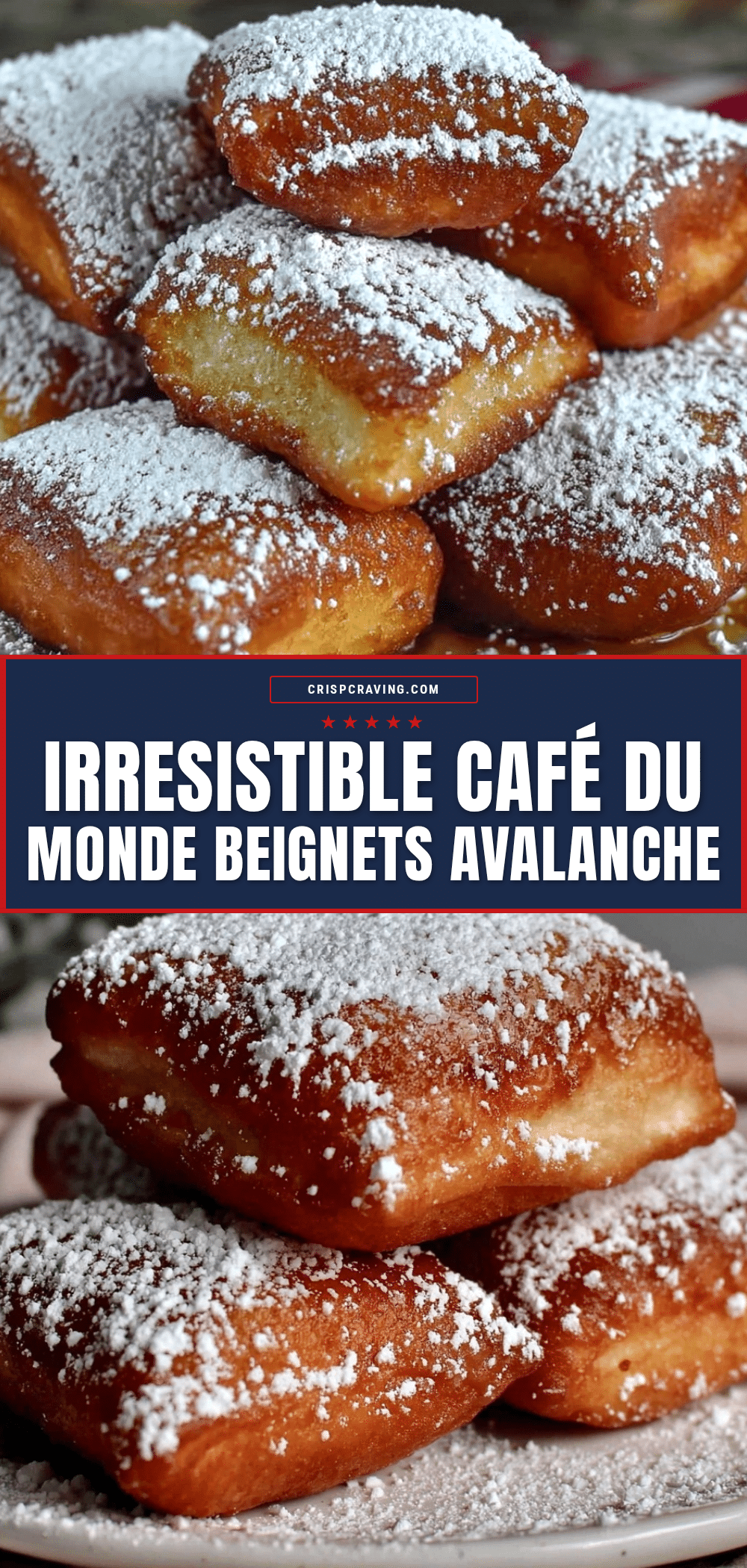
Fluffy Café du Monde Copycat New Orleans Beignets Recipe Easy Homemade Guide

This recipe recreates the iconic fluffy and airy beignets from Café du Monde in New Orleans, featuring a simple dough and frying method to achieve the perfect golden, pillowy treats dusted with powdered sugar.
- Prep Time: 15 minutes
- Cook Time: 15 minutes
- Total Time: 2 hours 10 minutes
- Yield: 16-20 beignets (about 4 servings) 1x
- Category: Dessert
- Cuisine: Creole, New Orleans
Ingredients
- 2 ½ cups (315 grams) all-purpose flour
- 1 packet (2 ¼ teaspoons or 7 grams) active dry yeast
- ¼ cup (50 grams) granulated sugar
- ½ teaspoon salt
- 1 cup (240 ml) warm water (about 110°F / 43°C)
- ½ cup (120 ml) whole milk, warmed
- 2 tablespoons (28 grams) unsalted butter, melted
- 2 large eggs, room temperature
- Powdered sugar for dusting
- Optional: pinch of ground nutmeg or cinnamon
Instructions
- Activate the yeast: In a large mixing bowl, combine warm water (about 110°F/43°C) with active dry yeast and 1 teaspoon of granulated sugar. Stir gently and let sit until foamy and bubbly, about 5 to 10 minutes.
- Mix the dry ingredients: While yeast activates, whisk together flour, remaining sugar, salt, and optional nutmeg or cinnamon in a separate bowl.
- Combine wet ingredients: Warm milk and melt butter. Lightly beat the eggs in a small bowl.
- Make the dough: Add warm milk, melted butter, and eggs to the yeast mixture. Slowly add flour mixture, stirring until sticky dough forms. Knead with stand mixer dough hook for 5 minutes or by hand on floured surface for 8 minutes until smooth and elastic.
- First rise: Place dough in lightly oiled bowl, cover, and let rise in warm spot until doubled in size, about 1 hour.
- Shape the beignets: Punch down dough, roll out on floured surface to ¼ inch thickness, and cut into 2-inch squares.
- Second rise: Place squares on floured baking sheet, cover lightly, and let puff up for 30 minutes.
- Heat oil: Heat vegetable oil in deep pot or fryer to 360°F (182°C), maintaining temperature with a thermometer.
- Fry the beignets: Fry 3-4 pieces at a time until puffed and golden brown, about 1 to 1½ minutes per side. Use slotted spoon to flip and remove.
- Drain and dust: Transfer beignets to paper towels to drain excess oil. While warm, dust generously with powdered sugar using a sifter.
- Serve immediately with coffee or favorite hot drink.
Notes
Proof yeast properly to ensure dough rises well. Maintain oil temperature at 360°F to avoid greasy or undercooked beignets. Fry in small batches and dust powdered sugar while beignets are still warm. For sticky dough during shaping, lightly dust hands with flour but avoid adding too much flour to keep beignets light.
Nutrition
- Serving Size: One 2-inch square be
- Calories: 120
- Sugar: 3
- Sodium: 120
- Fat: 5
- Saturated Fat: 2.5
- Carbohydrates: 17
- Fiber: 0.5
- Protein: 3
Keywords: beignets, New Orleans, Café du Monde, fried dough, powdered sugar, copycat recipe, fluffy beignets, homemade beignets, Cajun dessert