Love this? Save it for later!
Share the inspiration with your friends
Liz wasn’t trying to impress me. I’d stopped by her place on a drizzly Tuesday afternoon to return a book I’d borrowed months ago, and the scent of something savory and slightly sweet hit me before I even got through the door. She was standing at her tiny kitchen counter, pulling eggs out of a jar with a pair of chopsticks, completely nonchalant about the whole thing. “Oh, those? Just some eggs I threw together,” she said when I asked, as if she hadn’t just created the most beautiful thing I’d seen all week. The yolks were this deep, jammy amber, and the whites had taken on this gorgeous caramel color from whatever magic liquid they’d been sitting in. Honestly, I stood there staring at them like a weirdo while she offered me a cup of coffee. That afternoon, sitting on her slightly wobbly couch with a bowl of instant noodles topped with one of those eggs, I understood something important. You know that feeling when something simple completely resets your expectations? That’s what these soy sauce marinated ramen eggs did for me. I asked for the recipe before I left, and she shrugged and scribbled it on a sticky note. That sticky note is still taped inside my kitchen cabinet, a little stained, completely priceless. Every time I make these, I think about that rainy spring afternoon and how the best recipes never come from trying to show off. They come from someone who just knows what tastes good and doesn’t make a big deal about it.
Why You’ll Love This Recipe
I’ve tested this recipe more times than I can count, tweaking the marinade ratio, the boiling time, the peeling technique. After dozens of eggs and a few spectacular failures, I can tell you with confidence that this version is the one. Here’s why it works so well for spring:
- Quick & Easy : The active prep time is maybe 10 minutes. The marinade does all the heavy lifting while you go about your day.
- Simple Ingredients : Soy sauce, mirin, sake, sugar, and eggs. That’s it. No weird specialty items you’ll use once and forget about.
- Perfect for Spring Bowls : These eggs turn a simple bowl of noodles, rice, or greens into something special. They’re made for those cozy spring evenings when you want something satisfying but not heavy.
- Crowd-Pleaser : I’ve brought these to potlucks and watched people hover around the bowl. Kids love them. Adults love them. Everyone loves a good jammy egg.
- Unbelievably Delicious : The contrast between the savory, slightly sweet marinade and the rich, runny yolk is honestly next-level. It’s comfort food that feels a little fancy but requires almost no effort.
What makes this recipe different from the countless others out there is the balance. I spent time figuring out the exact ratio of soy sauce to mirin so the flavor penetrates the egg without making it too salty. The sake adds a depth that you can’t quite identify but would definitely miss if it weren’t there. This isn’t just another version of soy sauce eggs. It’s the version that makes you close your eyes after the first bite.
What Ingredients You Will Need
This recipe uses a handful of pantry-friendly ingredients that come together to create something genuinely special. The magic is in the simplicity. Here’s what you’ll need and why each ingredient matters:
For the Eggs
- 6 large eggs – Look for eggs that are as fresh as possible. Farm-fresh eggs have firmer whites and brighter yolks, which makes for a prettier finished product. Room temperature eggs cook more evenly, so take them out of the fridge about 15 minutes before you start.
For the Soy Sauce Marinade

- ½ cup soy sauce – I recommend using a good-quality soy sauce like Kikkoman or Yamasa. The flavor of your soy sauce matters here since it’s the star of the show. Avoid the low-sodium version for this recipe; you want the full flavor.
- ½ cup mirin – Mirin is a sweet Japanese rice wine that adds a gentle sweetness and beautiful shine to the marinade. It balances the saltiness of the soy sauce perfectly. Look for hon mirin (authentic mirin) if you can find it.
- ¼ cup sake – This adds a subtle complexity that rounds out the flavors. If you don’t have sake, you can substitute dry sherry or leave it out and add an extra tablespoon of water.
- 2 tablespoons sugar – A little extra sweetness helps the marinade penetrate the eggs and gives them that addictive sweet-savory balance. Regular white sugar works perfectly.
- ¼ cup water – This thins the marinade just enough so it’s not overwhelmingly salty. It also helps the marinade cover more surface area.
Optional Add-ins for the Marinade
- 2 cloves garlic, smashed – Adds a gentle aromatic note. Don’t slice the garlic; just smash the cloves so the flavor infuses slowly without becoming overpowering.
- 1 thumb-sized piece of ginger, sliced – A few slices of fresh ginger add warmth and a subtle kick that’s lovely for spring.
- 1 dried chili – If you want a little heat, toss in a dried chili. It won’t make the eggs spicy, just adds a background warmth.
I usually keep these optional add-ins in the marinade for no more than 6 hours. Any longer and the garlic can get a little sharp. Trust me on this one — I learned the hard way.
Equipment Needed
The equipment list for this recipe is refreshingly short. You probably already have everything you need:
- A medium saucepan – You’ll need a pot large enough to hold your eggs in a single layer. A 2-quart saucepan works perfectly.
- A bowl of ice water – This is crucial for stopping the cooking process and making peeling easier. Fill a medium bowl with cold water and add a handful of ice cubes.
- A jar or container with a tight-fitting lid – A wide-mouth mason jar works beautifully. You want something that allows the eggs to be fully submerged in the marinade without crowding them.
- A slotted spoon – For gently lowering the eggs into the boiling water and fishing them out again.
- Paper towels – For drying the eggs before they go into the marinade. This helps the marinade cling to the eggs better.
If you don’t have a slotted spoon, you can use a regular spoon and just be extra gentle. I’ve also used tongs in a pinch, but they can accidentally squeeze the eggs too hard. A slotted spoon is worth the small investment.
Preparation Method
Making perfect soy sauce marinated ramen eggs is all about timing and technique. Follow these steps and you’ll get consistently beautiful results every time.
- Bring a pot of water to a rolling boil. Fill your saucepan with enough water to cover the eggs by about an inch. Bring it to a full, vigorous boil over high heat. Don’t add salt or vinegar to the water — it’s not necessary for this recipe and can affect the texture of the whites.
- Gently lower the eggs into the water. Using your slotted spoon, carefully lower each egg into the boiling water. Do this one at a time to prevent the eggs from cracking against each other. If you’re nervous about cracking, you can poke a tiny hole in the wide end of each egg with a pin before boiling. This releases the air pocket and helps prevent cracking.
- Set a timer for exactly 6 minutes and 30 seconds. This is the sweet spot for jammy yolks — firm enough to hold their shape but still soft and slightly runny in the center. If you prefer a firmer yolk, go for 7 minutes. For a softer, more liquid yolk, try 6 minutes. I’ve tested all three, and 6:30 is my favorite for spring bowls where you want that yolk to slowly spill into your noodles.
- Prepare your ice bath while the eggs cook. Fill a medium bowl with cold water and a generous handful of ice. Have it ready next to the stove before the timer goes off.
- Transfer the eggs to the ice bath immediately. As soon as the timer goes off, use your slotted spoon to move the eggs from the boiling water to the ice bath. This stops the cooking process instantly and prevents the yolks from continuing to cook. Let them sit in the ice bath for at least 5 minutes.
- Peel the eggs under cold running water. This is the part that trips people up, but here’s the trick: gently crack the egg all over by tapping it on the counter, then peel under a thin stream of cold water. The water gets between the shell and the egg white, making peeling much easier. Start peeling from the wider end where the air pocket is. Fresh eggs are harder to peel, so if you’re struggling, try using eggs that are a week or two old.
- Prepare the soy sauce marinade. While the eggs are chilling, combine the soy sauce, mirin, sake, sugar, and water in a small saucepan. Add the smashed garlic and ginger slices if you’re using them. Warm the mixture over medium heat, stirring occasionally, until the sugar dissolves completely. Don’t let it boil. Remove from heat and let it cool to room temperature.
- Place the peeled eggs in your jar or container. Pat them dry gently with a paper towel first. This helps the marinade adhere to the egg whites and gives you that beautiful even color. Arrange the eggs in a single layer if possible.
- Pour the cooled marinade over the eggs. Make sure the eggs are completely submerged. If they float a little, you can place a small piece of crumpled parchment paper on top to keep them down. Seal the container and refrigerate.
- Marinate for at least 4 hours, but 8-12 hours is better. The eggs continue to absorb the marinade as they sit. After 4 hours, you’ll have a nice flavor on the outer edge of the white. After 8-12 hours, the flavor penetrates deeper and the color becomes that gorgeous deep caramel all the way through. I usually make these the night before I plan to use them.
One more thing: don’t marinate them for more than 24 hours. After that, the texture of the whites can start to get a little rubbery from the salt. They’re still edible, just not as nice. I learned this when I forgot about a batch for two days. Live and learn.
Cooking Tips & Techniques
Over the years, I’ve made plenty of mistakes with these eggs so you don’t have to. Here are the things I wish someone had told me:
The Ice Bath Is Non-Negotiable. I know it seems like an extra step, but skipping the ice bath means the eggs continue cooking from residual heat. You’ll end up with fully hard-boiled yolks instead of jammy ones. Don’t skip it.
Peeling Technique Makes or Breaks the Experience. The single biggest frustration people have with this recipe is peeling. Here’s my foolproof method: after the ice bath, gently roll the egg on the counter to crack the shell all over, then peel under running water. The water helps separate the membrane from the white. If you get a stubborn piece of shell, just hold that spot under the running water for a few seconds.
Room Temperature Eggs Cook More Evenly. If you boil eggs straight from the fridge, the cold egg shocks the boiling water and can cause cracking. Let your eggs sit on the counter for 15 minutes before cooking. It makes a real difference in consistency.
Don’t Overcrowd the Pot. If you’re making more than 6 eggs, do them in batches. Overcrowding drops the water temperature too much and messes with your timing. Six eggs in a 2-quart pot is perfect.
Save the Marinade. After you use the eggs, the marinade is still full of flavor. You can strain it and reuse it for another batch within a week. Just bring it to a boil first to kill any bacteria, let it cool, and use it again. I’ve reused the same marinade up to three times, adding a splash of fresh soy sauce and mirin each time to keep the flavor strong.
Variations & Adaptations
One of the best things about this recipe is how flexible it is. Here are some ways to make it your own:
Spicy Soy Sauce Eggs. Add a tablespoon of gochujang (Korean chili paste) or sriracha to the marinade. The heat pairs beautifully with the sweet soy base and gives the eggs a beautiful orange tint. I made a batch of these for a friend who loves spicy food, and she ate three in one sitting.
Tea-Marinated Eggs. Replace the water in the marinade with strong brewed black tea. Add a star anise and a cinnamon stick. This gives the eggs a completely different flavor profile — more savory and aromatic. It’s a classic Chinese preparation that works beautifully with the soy sauce base.
Low-Sodium Version. Use low-sodium soy sauce and reduce the sugar slightly. The eggs won’t be quite as deeply flavored, but they’ll still be delicious. Add a splash of rice vinegar to brighten things up.
Vegan Option. While you can’t really make a vegan version of an egg, you can absolutely use this marinade for tofu. Press a block of firm tofu, cut it into slabs, and marinate it for 24 hours. Pan-fry it before serving. It’s not the same thing, but it’s its own kind of delicious.
Different Spices. Experiment with the aromatics. I’ve made versions with lemongrass, kaffir lime leaves, and even a pinch of five-spice powder. Each one gives the eggs a slightly different character. My current favorite is a spring version with fresh dill and a little lemon zest in the marinade.
Serving & Storage Suggestions
These eggs are incredibly versatile. Here’s how to use them and keep them at their best:
In Noodle Bowls. This is the classic use. Halve the egg and place it on top of a bowl of ramen, udon, or soba noodles. The yolk creates a built-in sauce that coats the noodles. It’s pure magic.
Over Rice Bowls. A bowl of steamed rice, some sautéed greens, a protein of your choice, and one of these eggs is a perfect quick meal. I eat this at least once a week during spring.
On Toast. Smash an avocado on toast, top with a halved soy sauce egg, and sprinkle with sesame seeds and chili flakes. It’s an incredible breakfast or light lunch.
In Salads. These eggs add a punch of flavor to any green salad. Try them with mixed greens, pickled vegetables, and a simple sesame dressing.
Storage. Keep the eggs in the marinade in the refrigerator for up to 3 days. After that, remove them from the marinade and store them in a covered container. They’ll stay good for another 2-3 days. The texture is best within the first 48 hours.
Reheating. These eggs are best served cold or at room temperature. If you want them warm, place them in a bowl and pour hot (not boiling) water over them for about 30 seconds. This warms them through without cooking the yolk further.
Nutritional Information & Benefits
Per serving (1 egg): approximately 80 calories, 6g protein, 5g fat, 2g carbohydrates. These numbers will vary slightly depending on the exact ingredients you use.
Eggs are a fantastic source of high-quality protein and contain all nine essential amino acids. They’re also rich in choline, which supports brain health, and lutein, which is good for your eyes. The soy sauce marinade adds a small amount of sodium, so if you’re watching your salt intake, you can use low-sodium soy sauce or reduce the marinating time.
I like that these eggs feel indulgent but are actually quite nutritious. They add protein and healthy fats to whatever you’re eating, making a simple bowl of noodles or rice into a more balanced meal. For spring, when I’m craving lighter food but still want something satisfying, these eggs hit the perfect spot.
Note: This recipe contains eggs and soy. If you have allergies to either, this recipe isn’t suitable for you. The marinade also contains wheat if your soy sauce is traditionally brewed, so look for tamari if you need a gluten-free option.
Conclusion
These soy sauce marinated ramen eggs have become a spring staple in my kitchen for good reason. They’re simple to make, use ingredients you probably already have, and transform any bowl of noodles or rice into something special. The first time I made them after Liz’s offhand demonstration, I couldn’t believe how easy they were. I’d been overcomplicating it in my head for weeks.
What I love most is how forgiving they are. Even if your first batch isn’t perfect — maybe the yolk is a little too firm or the marinade is a touch salty — they’re still delicious. You’ll get better with practice, and before long, you’ll have your own preferred timing and your own favorite variations. That’s the beauty of a simple recipe done well.
I’d love to hear how yours turn out. Drop a comment below and let me know your favorite way to use these eggs. Do you put them on ramen, rice bowls, or something completely unexpected? Share your photos and tag me — I’m always looking for new ideas. Happy cooking, and here’s to many cozy spring bowls ahead.
Frequently Asked Questions
Can I use low-sodium soy sauce for this recipe?
You can, but the flavor won’t be as robust. The marinade needs the salt content to properly penetrate the eggs. If you’re watching your sodium, I recommend using regular soy sauce but marinating for a shorter time — around 4 to 6 hours instead of 8 to 12.
How do I know when the eggs are done marinating?
The color is your best guide. After 4 hours, you’ll see a light brown ring around the edge of the white. After 8 hours, the color deepens to a warm caramel shade. After 12 hours, the color is even and the flavor has penetrated about a third of the way into the white. Trust your eyes and your taste.
Can I reuse the marinade?
Yes, you can reuse it up to three times. After you remove the eggs, bring the marinade to a full boil to kill any bacteria, let it cool completely, and store it in the refrigerator. Add a splash of fresh soy sauce and mirin each time to replenish the flavor. After the third use, it’s best to start fresh.
Why did my eggs crack while boiling?
This usually happens for one of two reasons: the eggs were too cold when they hit the boiling water, or they were crowded in the pot. Let your eggs come to room temperature before cooking, and make sure they’re in a single layer with plenty of room. Poking a tiny hole in the wide end of the egg with a pin can also help release pressure and prevent cracking.
Can I make these eggs ahead of time for a party?
Absolutely. These are perfect for making ahead. Prepare them the day before your event and keep them in the marinade in the refrigerator. Remove them from the marinade about an hour before serving and let them come to room temperature. Halve them just before serving so the yolks stay nice and bright.
Pin This Recipe!
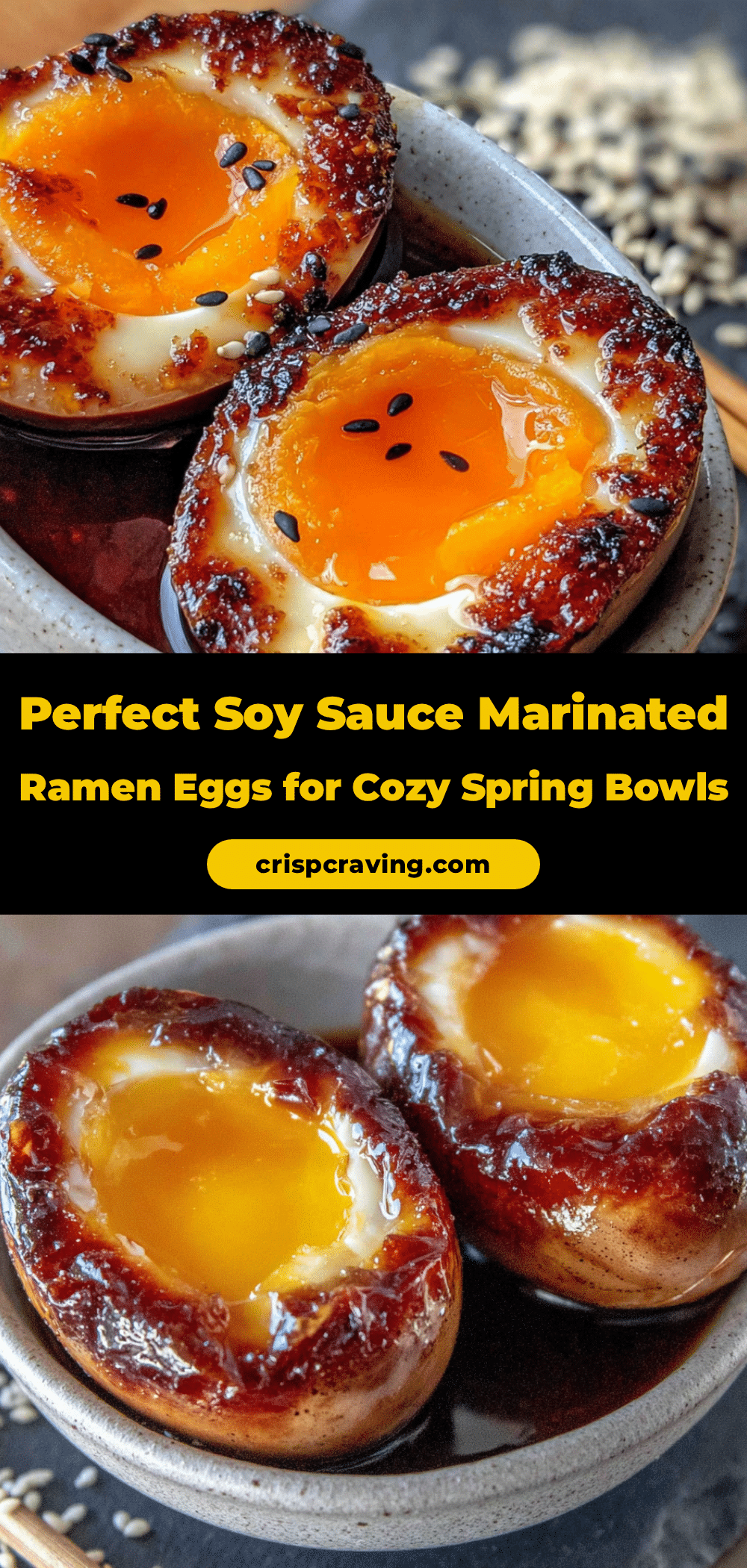
Perfect Soy Sauce Ramen Eggs for Cozy Spring Bowls

These soy sauce marinated ramen eggs are simple to make, use basic ingredients, and transform any bowl of noodles or rice into something special. The contrast between the savory, slightly sweet marinade and the rich, runny yolk is next-level comfort food that feels fancy but requires almost no effort.
- Prep Time: 10 minutes
- Cook Time: 7 minutes
- Total Time: 4 hours 17 minutes (minimum marinating time)
- Yield: 6 servings 1x
- Category: Appetizer
- Cuisine: Japanese
Ingredients
- 6 large eggs
- ½ cup soy sauce
- ½ cup mirin
- ¼ cup sake
- 2 tablespoons sugar
- ¼ cup water
- 2 cloves garlic, smashed (optional)
- 1 thumb-sized piece of ginger, sliced (optional)
- 1 dried chili (optional)
Instructions
- Bring a pot of water to a rolling boil. Fill your saucepan with enough water to cover the eggs by about an inch. Bring it to a full, vigorous boil over high heat. Don’t add salt or vinegar to the water.
- Gently lower the eggs into the water. Using your slotted spoon, carefully lower each egg into the boiling water one at a time to prevent cracking.
- Set a timer for exactly 6 minutes and 30 seconds for jammy yolks. For firmer yolks, go for 7 minutes; for softer, try 6 minutes.
- Prepare your ice bath while the eggs cook. Fill a medium bowl with cold water and a generous handful of ice.
- Transfer the eggs to the ice bath immediately. As soon as the timer goes off, use your slotted spoon to move the eggs from the boiling water to the ice bath. Let them sit for at least 5 minutes.
- Peel the eggs under cold running water. Gently crack the egg all over by tapping it on the counter, then peel under a thin stream of cold water, starting from the wider end.
- Prepare the soy sauce marinade. While the eggs are chilling, combine the soy sauce, mirin, sake, sugar, and water in a small saucepan. Add the smashed garlic and ginger slices if using. Warm the mixture over medium heat, stirring occasionally, until the sugar dissolves completely. Don’t let it boil. Remove from heat and let it cool to room temperature.
- Place the peeled eggs in your jar or container. Pat them dry gently with a paper towel first. Arrange the eggs in a single layer if possible.
- Pour the cooled marinade over the eggs. Make sure the eggs are completely submerged. If they float, place a small piece of crumpled parchment paper on top to keep them down. Seal the container and refrigerate.
- Marinate for at least 4 hours, but 8-12 hours is better. Don’t marinate for more than 24 hours.
Notes
The ice bath is non-negotiable for jammy yolks. Peel under running water for best results. Room temperature eggs cook more evenly. Don’t overcrowd the pot. Save and reuse the marinade up to three times (boil first).
Nutrition
- Serving Size: 1 egg
- Calories: 80
- Sugar: 2
- Sodium: 700
- Fat: 5
- Saturated Fat: 1.5
- Carbohydrates: 2
- Protein: 6
Keywords: soy sauce eggs, ramen eggs, marinated eggs, jammy eggs, spring bowls, Japanese eggs