Love this? Save it for later!
Share the inspiration with your friends
I wasn’t expecting cooking advice from my dentist, but there I was, standing in a sterile waiting room, listening to him describe exactly how to make crispy roasted acorn squash rings with brown butter. It’s a weird combination, I know. You picture him talking about flossing techniques or cavity prevention, not the Maillard reaction on winter squash. Yet, there he was, tapping his pen against a magazine and telling me that if I ever wanted to impress a date without looking like I tried too hard, I should forget the fancy risottos and master this one specific preparation.
The summer I turned thirty, I was struggling with the idea of hosting dinner parties. I wanted to serve something that looked sophisticated but required zero stress. My dentist, Dr. Aris, mentioned that he learned this technique from a chef in Lyon during a residency. He said the key wasn’t just the squash, but the patience to let the butter brown properly. I laughed at first, thinking he was joking about the culinary ambitions of a man who spends his days looking into people’s mouths. But honestly, his food was always the highlight of our conversations.
He told me to cut the squash into thick rings, almost like cookies, and roast them until they were tender inside and crisp at the edges. The brown butter part was non-negotiable. He emphasized that you have to watch it like a hawk because it goes from golden to burnt in seconds. I mean, seriously, who talks about nutty brown butter in a dental office? But I went home and tried it. I bought a small acorn squash from the grocer down the street, the one with the slightly bruised skin that I always avoided before.
That first bite was a revelation. The sweetness of the squash met the savory, nutty depth of the butter. It was simple, yet it tasted like I had spent hours in the kitchen. Maybe you’ve been there, staring at a recipe that seems too simple to be good, wondering if it’s actually worth the effort. This recipe changed my hosting game. It stayed with me because it proved that the best cooking tips often come from the most unlikely places. Now, whenever I see acorn squash, I think of Dr. Aris and that strange, perfect afternoon.
Why You’ll Love This Recipe
There is something magical about how a humble winter squash can transform into a dish that feels like it belongs on a high-end restaurant menu. I have tested this method dozens of times, adjusting the heat and timing, and I can confidently say that this is the definitive way to prepare acorn squash. It’s not just about the taste; it’s about the experience of eating it. The contrast between the caramelized, crisp exterior and the creamy, soft interior is what keeps me coming back to this recipe week after week.
Here is why this simple trio of ingredients becomes the star of your table:
- Quick & Easy: This comes together in under 45 minutes, perfect for busy weeknights when you want something better than takeout but don’t have hours to spare. The prep is minimal, mostly just cutting the squash.
- Simple Ingredients: No fancy grocery trips needed. You likely already have butter, squash, and basic seasonings in your kitchen. It relies on quality, not complexity.
- Perfect for Entertaining: Great for holiday gatherings, cozy dinners, or autumn potlucks. It travels well and looks beautiful on a platter.
- Crowd-Pleaser: Always gets rave reviews from kids and adults alike. The sweetness appeals to picky eaters, while the savory butter satisfies adults.
- Unbelievably Delicious: The texture and flavor combo is next-level comfort food. The brown butter adds a depth that regular melted butter just can’t achieve.
What makes this recipe different from the rest is the technique of browning the butter. Many people just melt butter over the squash, which is fine, but it lacks that nutty, toasted richness. By browning it separately, you unlock a whole new layer of flavor. I remember the first time I made this for my parents; my dad, who usually complains about “fancy food,” asked for the recipe immediately. It’s the kind of dish that makes you close your eyes after the first bite. It’s comfort food reimagined—healthy, fast, but with the same soul-soothing satisfaction as a heavy casserole, just lighter and brighter.
What Ingredients You Will Need
This recipe uses simple, wholesome ingredients to deliver bold flavor and satisfying texture without the fuss. The beauty of crispy roasted acorn squash rings with brown butter lies in its minimalism. You don’t need a pantry full of exotic spices. Instead, you rely on the natural sweetness of the squash and the rich, nutty depth of properly browned butter. Here is what you need to gather:
- Acorn Squash: Choose medium-sized squash that feel heavy for their size. Look for firm skin with no soft spots. One medium squash yields about 6 to 8 thick rings.
- Unsalted Butter: I recommend using high-quality European-style butter like Kerrygold or Plugra. The higher fat content helps create a richer brown butter sauce. You will need about 4 tablespoons.
- Sea Salt: Flaky sea salt is best for finishing, but kosher salt works well during the roasting process. It enhances the natural sweetness of the squash.
- Black Pepper: Freshly cracked black pepper adds a subtle heat that balances the sweet squash. Use it sparingly so it doesn’t overpower the delicate flavors.
- Optional Add-ins: While the three-ingredient version is classic, you can add a pinch of cayenne for heat or fresh thyme leaves for an herbal note. However, keep it simple to let the squash shine.
When selecting your squash, avoid those with cracks or bruises. The skin should be a deep, matte green or orange, depending on the variety. If you can’t find acorn squash, butternut squash cubes are a decent substitute, though the texture will be different. For the butter, don’t skimp on quality. Good butter makes a significant difference in the final flavor profile. If you are dairy-free, you can use ghee or a high-heat plant-based butter, but the nutty flavor profile will vary slightly.
Equipment Needed
You don’t need a professional kitchen to make this dish, but having the right tools makes a huge difference in the final result. The most important piece of equipment is a heavy-duty baking sheet. I prefer a rimmed half-sheet pan because it provides enough surface area for the squash rings to lie flat without overlapping. Overcrowding leads to steaming instead of roasting, which means you won’t get those crispy edges.
A large skillet is essential for browning the butter. A stainless steel or heavy-bottomed saucepan works best here. You need something with a wide surface area so the butter spreads out thinly. This allows the milk solids to brown evenly. If you use a deep pot, the butter might splatter and burn unevenly. I learned this the hard way when I first tried to brown butter in a small saucepan and ended up with a dark, bitter mess.
You will also need a sharp chef’s knife and a sturdy cutting board. Acorn squash can be tough to cut, so ensure your knife is sharp enough to handle the hard skin. A dull knife is dangerous and makes the job much harder. For serving, a large platter or individual shallow bowls work well. The brown butter sauce is best poured over the hot squash just before serving to maintain its aroma.
If you don’t have a heavy baking sheet, a cast-iron skillet is a great alternative for roasting the squash directly. It retains heat well and promotes browning. Just be mindful that cast iron can be heavier to handle when hot. For maintenance, always wash your skillet with hot water and dry it thoroughly to prevent rust. These tools are simple, but they are key to achieving that perfect crispness.
Preparation Method
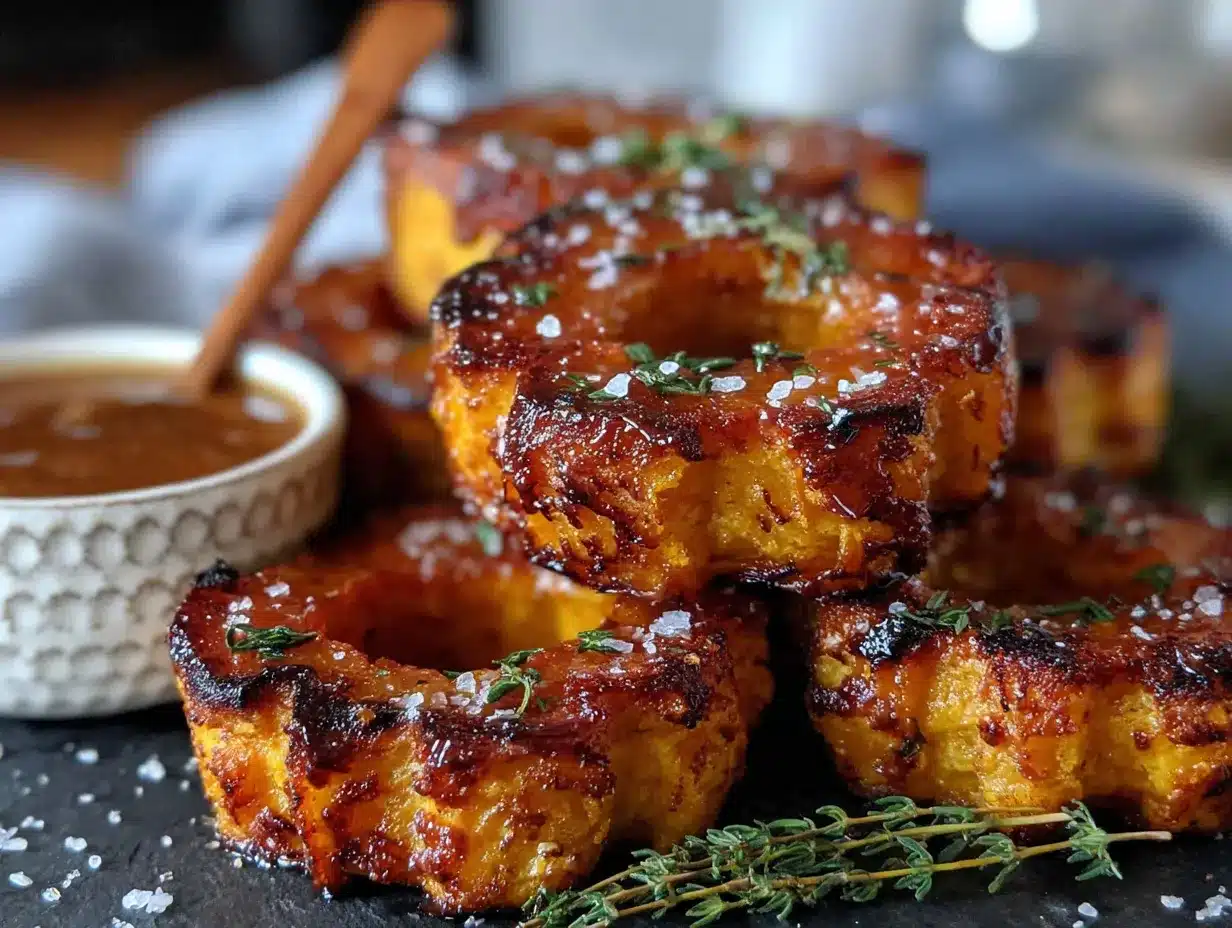
Making crispy roasted acorn squash rings with brown butter is straightforward, but it requires attention to detail. Follow these steps carefully to ensure the best results. The process is broken down into three main phases: prep, roasting, and saucing.
- Preheat the Oven: Start by preheating your oven to 400°F (200°C). This high heat is crucial for caramelizing the natural sugars in the squash. Make sure the oven rack is in the center position for even heat distribution.
- Prepare the Squash: Carefully cut the acorn squash in half lengthwise. Use a sturdy knife and apply steady pressure. Scoop out the seeds and stringy pulp with a spoon. Discard the seeds or save them for roasting later if you like. Then, slice each half into thick rings, about 1-inch thick. You want them thick enough to hold their shape but thin enough to cook through.
- Season the Rings: Arrange the squash rings on your prepared baking sheet. Drizzle lightly with a neutral oil if you prefer extra crispiness, though the butter will provide plenty of fat. Sprinkle with sea salt and black pepper. Toss gently to coat. Ensure the rings are not touching each other to allow for proper air circulation.
- Roast the Squash: Place the baking sheet in the preheated oven. Roast for 25 to 30 minutes. Check the squash halfway through. You want the edges to start turning golden brown and the flesh to become tender when pierced with a fork. If the edges are browning too quickly, cover them loosely with foil.
- Brown the Butter: While the squash is roasting, melt the butter in your skillet over medium heat. Watch it closely. The butter will foam and then settle. Small brown specks will appear at the bottom. The smell will change from milky to nutty. This takes about 3 to 5 minutes. Remove from heat immediately once it reaches a golden brown color to prevent burning.
- Combine and Serve: Remove the squash from the oven. Pour the hot brown butter over the hot rings. The sizzle will release the aroma. Toss gently to coat. Serve immediately while the squash is hot and the butter is fragrant.
The key here is timing. The butter browns quickly, so don’t get distracted. If you let it burn, it will taste bitter and ruin the dish. The squash should be tender but still hold its shape. If you prefer a softer texture, roast it for a few minutes longer. But for the “crispy” effect, you want those edges to caramelize.
Cooking Tips & Techniques
There are a few tricks to mastering this dish that separate the amateurs from the pros. First, dry your squash rings thoroughly after washing them. Moisture is the enemy of crispiness. If they are wet, they will steam in the oven instead of roasting. Pat them dry with a paper towel before seasoning. This small step makes a big difference in texture.
Second, do not walk away from the butter while it is browning. It can go from perfect to burnt in seconds. If you smell a slight burning scent, it’s too late. Start with cold butter and medium heat to give yourself more control. Swirl the pan frequently to ensure even browning. The color should be a deep amber, and the smell should be like hazelnuts.
I once made this dish for a holiday dinner and got distracted by the conversation, leaving the butter on the stove. It burned, and I had to start over. It was a stressful moment, but it taught me the importance of focus. Now, I set a timer or keep one eye on the pan at all times. Also, use unsalted butter so you can control the salt level. Salted butters vary in salt content, which can throw off the balance of the dish.
Another tip is to let the squash cool slightly before adding the brown butter. If the squash is too hot, the butter might separate or become greasy. Letting it rest for a minute allows the butter to emulsify slightly and cling to the surface better. This technique ensures every bite is flavorful and not just oily.
Variations & Adaptations
While the classic version is delicious, there are plenty of ways to adapt this recipe to suit different tastes or dietary needs. You can experiment with flavors to keep the dish interesting throughout the year.
- Spicy Kick: Add a pinch of cayenne pepper or red pepper flakes to the brown butter. This adds a subtle heat that pairs beautifully with the sweet squash. It’s a great option for those who like a little zing in their sides.
- Herbal Twist: Stir fresh thyme or sage leaves into the brown butter at the end. The herbs infuse the butter with an earthy aroma that complements the squash perfectly. This is especially nice in autumn.
- Gluten-Free Option: This recipe is naturally gluten-free, so no changes are needed. Just ensure your seasonings are certified gluten-free if you have sensitivities.
- Vegan Version: Use a high-heat plant-based butter or coconut oil. Coconut oil adds a slight tropical note, which can be interesting with the squash. You can also add nutritional yeast for a cheesy, savory flavor.
- Glazed Variation: Add a tablespoon of maple syrup or honey to the brown butter. This enhances the sweetness and creates a glossy glaze on the squash. It’s a favorite among children.
I often try adding a splash of balsamic vinegar to the brown butter for a tangy contrast. It cuts through the richness and adds complexity. You can also top the finished dish with toasted pepitas or pomegranate seeds for crunch and color. These variations allow you to customize the dish for any occasion.
Serving & Storage Suggestions
This dish is best served immediately while the squash is hot and the butter is fragrant. Arrange the rings on a large platter and drizzle any remaining brown butter over the top. Garnish with fresh herbs or a sprinkle of flaky salt for presentation. It pairs wonderfully with roasted chicken, grilled fish, or a simple green salad. A glass of white wine or cider complements the flavors nicely.
If you have leftovers, store them in an airtight container in the refrigerator for up to 3 days. The squash will soften slightly in the fridge, but the flavors remain good. To reheat, place the squash in a preheated oven at 350°F for 10 minutes to restore some crispiness. Avoid microwaving, as it will make the squash mushy. You can also freeze the roasted squash rings for up to 2 months. Thaw in the refrigerator and reheat in the oven. The brown butter is best made fresh, but you can store it in the fridge and reheat it gently before using.
Nutritional Information & Benefits
Acorn squash is a nutritional powerhouse. It is low in calories but high in fiber, which aids in digestion and keeps you feeling full. It is also rich in vitamins A and C, which support immune health and skin vitality. The brown butter adds healthy fats and vitamin E, which are essential for brain function. This dish is a balanced side that provides energy without feeling heavy. It is suitable for low-carb and gluten-free diets. Just be mindful of the butter content if you are watching your saturated fat intake. Overall, it’s a wholesome choice that nourishes the body while satisfying the palate.
Conclusion
Crispy roasted acorn squash rings with brown butter is a simple yet elegant dish that deserves a spot in your regular rotation. It’s easy to make, visually stunning, and incredibly delicious. I encourage you to try it and experiment with your own variations. Whether you add herbs, spices, or glazes, the base recipe is a fantastic canvas for creativity. I love this recipe because it brings warmth and comfort to any meal. Please share your creations in the comments below or tag me on social media. I’d love to see how you adapt this dish. Enjoy the process of cooking and sharing good food with loved ones.
Frequently Asked Questions
Can I use a different type of squash?
Yes, butternut or delicata squash work well, but the cooking time may vary. Acorn squash has a unique shape that makes rings easy to cut.
How do I prevent the butter from burning?
Use medium heat and watch it closely. Swirl the pan frequently. Remove from heat as soon as it smells nutty and turns amber.
Can I make this ahead of time?
You can roast the squash ahead of time and reheat it. Make the brown butter fresh for the best flavor and aroma.
Is this recipe gluten-free?
Yes, it is naturally gluten-free. Just ensure your seasonings are certified gluten-free if needed.
What wine pairs best with this dish?
A crisp white wine like Sauvignon Blanc or a light red like Pinot Noir complements the sweet and savory flavors beautifully.
Pin This Recipe!
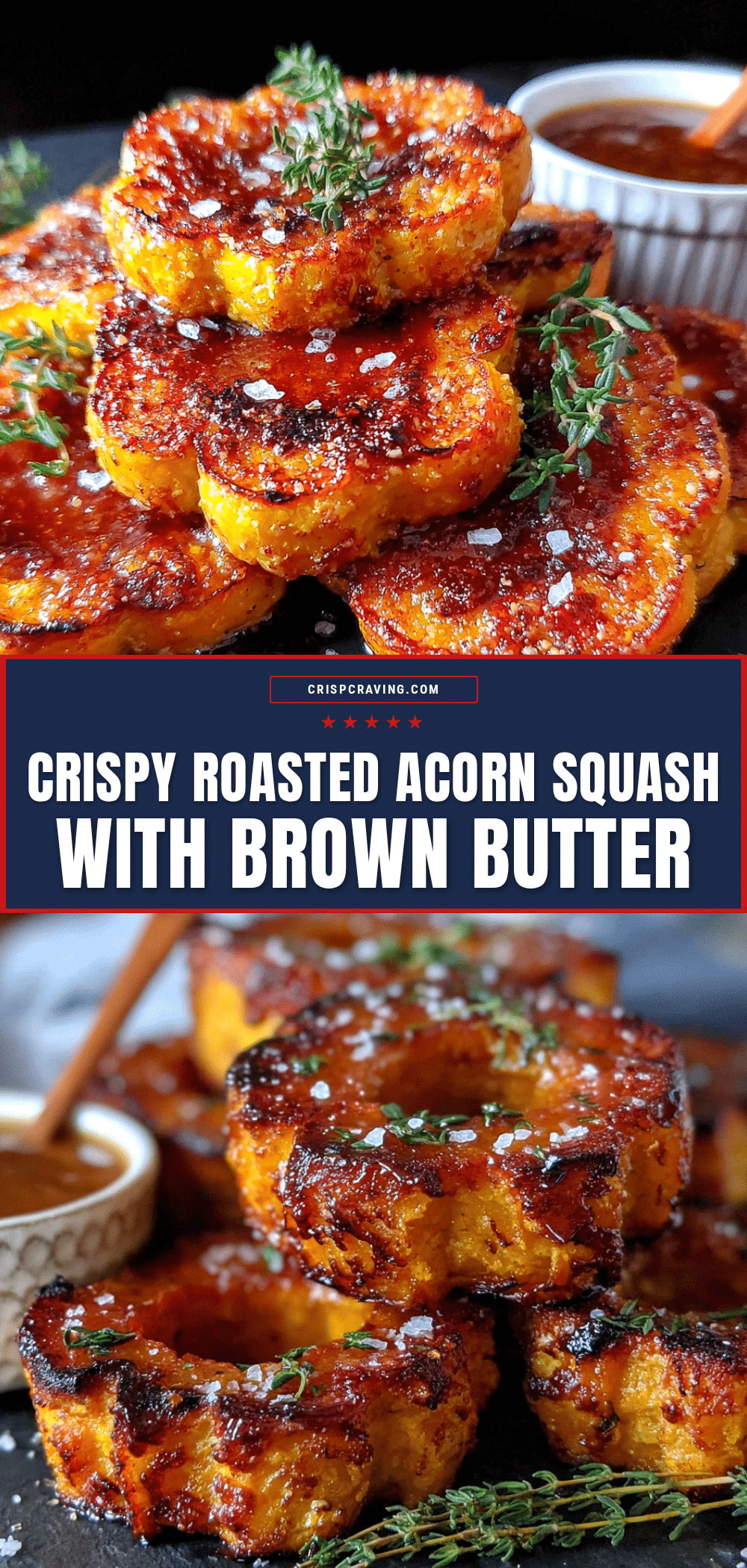
Crispy Roasted Acorn Squash Rings with Brown Butter

A simple yet elegant side dish featuring thick rings of acorn squash roasted until tender and crisp, finished with a nutty, savory brown butter sauce.
- Prep Time: 15 minutes
- Cook Time: 30 minutes
- Total Time: 45 minutes
- Yield: 4 servings 1x
- Category: Side Dish
- Cuisine: American
Ingredients
- 1 medium acorn squash (yields 6–8 thick rings)
- 4 tablespoons unsalted butter
- Sea salt (flaky for finishing, kosher for roasting)
- Freshly cracked black pepper
- Neutral oil (optional, for extra crispiness)
Instructions
- Preheat oven to 400°F (200°C) with the rack in the center position.
- Cut the acorn squash in half lengthwise, scoop out seeds and pulp, and slice into 1-inch thick rings.
- Pat squash rings dry thoroughly to ensure crispiness.
- Arrange squash rings on a rimmed half-sheet baking sheet, ensuring they are not touching.
- Season with sea salt and black pepper; toss gently to coat.
- Roast for 25-30 minutes, checking halfway through, until edges are golden and flesh is tender.
- While squash roasts, melt butter in a large skillet over medium heat.
- Watch butter closely as it foams and settles; swirl pan frequently until it turns deep amber and smells nutty (3-5 minutes).
- Remove butter from heat immediately to prevent burning.
- Remove squash from oven, pour hot brown butter over hot rings, and toss gently to coat.
- Serve immediately.
Notes
Ensure squash rings are dry before roasting to prevent steaming. Do not walk away from the butter while browning as it burns quickly. For a vegan version, substitute butter with high-heat plant-based butter or coconut oil. Leftovers can be stored in the fridge for 3 days and reheated in the oven.
Nutrition
- Serving Size: 1.5 to 2 squash ring
- Calories: 180
- Sugar: 6
- Sodium: 250
- Fat: 12
- Saturated Fat: 7
- Carbohydrates: 18
- Fiber: 4
- Protein: 2
Keywords: acorn squash, brown butter, roasted squash, side dish, gluten-free, vegetarian, easy recipe, autumn recipes, holiday sides