Love this? Save it for later!
Share the inspiration with your friends
This was supposed to be a straightforward roast beef dinner, nothing fancy, just a quick fix after a hectic Thursday at work. I grabbed what I thought was the usual prime rib roast from the butcher, the oven was preheating, and I was already juggling a phone call and a toddler’s meltdown. Honestly, the plan was to slap it in the oven at high heat and hope for the best. But—I ended up forgetting to set the oven to the right temperature, and the roast sat there, slowly warming in a barely warm oven for way too long. What came out was nothing like the plan—pale, unevenly cooked meat that looked more like a science experiment gone wrong rather than a holiday feast centerpiece.
I almost tossed it, thinking the whole thing was ruined. But then, on a whim, I decided to sear it hard and fast in a screaming hot pan to “rescue” it. That’s when the magic happened—the crust crisped up perfectly, the inside was tender and juicy, and the flavor? Honestly, it was better than any traditional roast I’d made before. Maybe you’ve been there—kitchen chaos, a recipe disaster looming, and then the unexpected result that surprises you. That’s how this perfect crispy reverse-sear prime rib roast recipe was born, and why it’s my go-to for holiday feasts now. It captures the mood of the season, with that cozy, celebratory vibe that says, “Yes, we’re doing something special tonight.”
Why You’ll Love This Recipe
Having tested this prime rib roast recipe over several holiday seasons, I can say it reliably delivers a crowd-pleaser that feels both indulgent and thoughtful. Here’s why it stands out:
- Quick & Easy: While the slow warming might sound time-consuming, the active prep and cooking time is under 30 minutes, perfect for holiday hustle.
- Simple Ingredients: No fancy add-ons or hard-to-find spices—just quality prime rib, salt, pepper, and a few pantry staples.
- Perfect for Holiday Feasts: This roast carries the kind of gravitas that makes any seasonal gathering feel elevated without stress.
- Crowd-Pleaser: I’ve never served this at a holiday table without people asking for seconds, including picky eaters who usually avoid beef.
- Unbelievably Delicious: The reverse-sear technique locks in juices and creates a crispy, flavorful crust—a texture and flavor combo that’s hard to beat.
This isn’t just another prime rib recipe. The secret is in the low-and-slow initial warming, which lets the roast cook evenly, then finishing with a high-heat sear that gives the outside that crave-worthy crispness. I’ve also swapped out traditional seasoning blends for a straightforward salt-and-pepper crust, which lets the meat’s natural flavor shine through. After a few trials, I realized this method saves stress on the big day—no guesswork about oven temps or slicing timing. And honestly, it gives you that proud “I nailed this” moment that makes all the holiday prep worth it.
What Ingredients You Will Need
This recipe uses a handful of straightforward, quality ingredients to bring out the prime rib’s best qualities. Nothing too fancy, but every element plays a key role in the final taste and texture. Most of these are pantry staples or easy to source during the holiday season.
- Prime Rib Roast (Bone-In, 4 to 6 pounds / 1.8 to 2.7 kg): Look for well-marbled meat at your local butcher or trusted grocery store. I prefer a USDA Choice grade for balance between flavor and cost.
- Coarse Kosher Salt (3 tablespoons): Essential for creating the crust and seasoning the roast evenly.
- Freshly Ground Black Pepper (2 tablespoons): Adds a robust, peppery bite to complement the savory meat.
- Garlic Powder (1 teaspoon): Optional but recommended for subtle aromatic depth.
- Fresh Herbs (Rosemary or Thyme, 2 tablespoons, chopped): Adds a seasonal herbal note—perfect for winter roasts.
- Olive Oil or High Smoke Point Oil (2 tablespoons): Helps achieve that crisp, caramelized crust during searing.
During the holidays, I often swap fresh rosemary for sage when it’s abundant in local markets. For a gluten-free option, this recipe works perfectly as is. If you want to experiment, smoked sea salt can add a festive twist, but keep it light to avoid overpowering the meat’s natural flavor. My go-to brands include Diamond Crystal Kosher Salt for consistent texture and fresh black pepper from a manual grinder to keep that lively aroma.
Equipment Needed
To pull off the perfect crispy reverse-sear prime rib roast, you don’t need much, but the right tools make a difference:
- Oven: A reliable oven with accurate temperature control is key for the slow warming phase.
- Cast Iron Skillet or Heavy-Bottomed Pan: Ideal for the high-heat sear—holds heat well and creates that delicious crust.
- Meat Thermometer (Instant-Read Recommended): Essential for monitoring internal temperature and avoiding overcooking.
- Roasting Rack: Keeps the roast elevated for even heat circulation during slow cooking.
- Sharp Carving Knife: For slicing with precision after resting.
I’ve tried this with a stainless steel pan, but honestly, the crust isn’t as consistent as with cast iron. If you don’t have a thermometer, an oven-safe probe with an alarm works wonders for hands-off timing. For budget-friendly setups, even a heavy-duty sheet pan with a wire rack can substitute for a roasting rack. Just make sure the pan is sturdy enough to handle the searing step if you decide to finish the roast in the same vessel.
Preparation Method
- Season the Roast (15 minutes prep + overnight resting): Pat your prime rib roast dry with paper towels. Generously rub the coarse kosher salt and black pepper all over the surface, followed by garlic powder and chopped herbs. Wrap it loosely in plastic wrap and refrigerate uncovered overnight. This dries out the surface, which helps form a better crust.
- Bring Roast to Room Temperature (1 hour): Remove the roast from the fridge about 1 hour before cooking. Letting it warm slightly ensures even cooking.
- Preheat Oven to 225°F (107°C): Place the roasting rack inside a roasting pan.
- Slow-Roast the Prime Rib (1.5 to 2 hours): Set the roast on the rack and insert an oven-safe thermometer probe if you have one. Cook until the internal temperature reaches 120°F (49°C) for medium-rare; this usually takes about 1.5 to 2 hours depending on roast size.
- Rest the Roast (20 minutes): Remove from oven, tent loosely with foil, and let rest. This step lets juices redistribute.
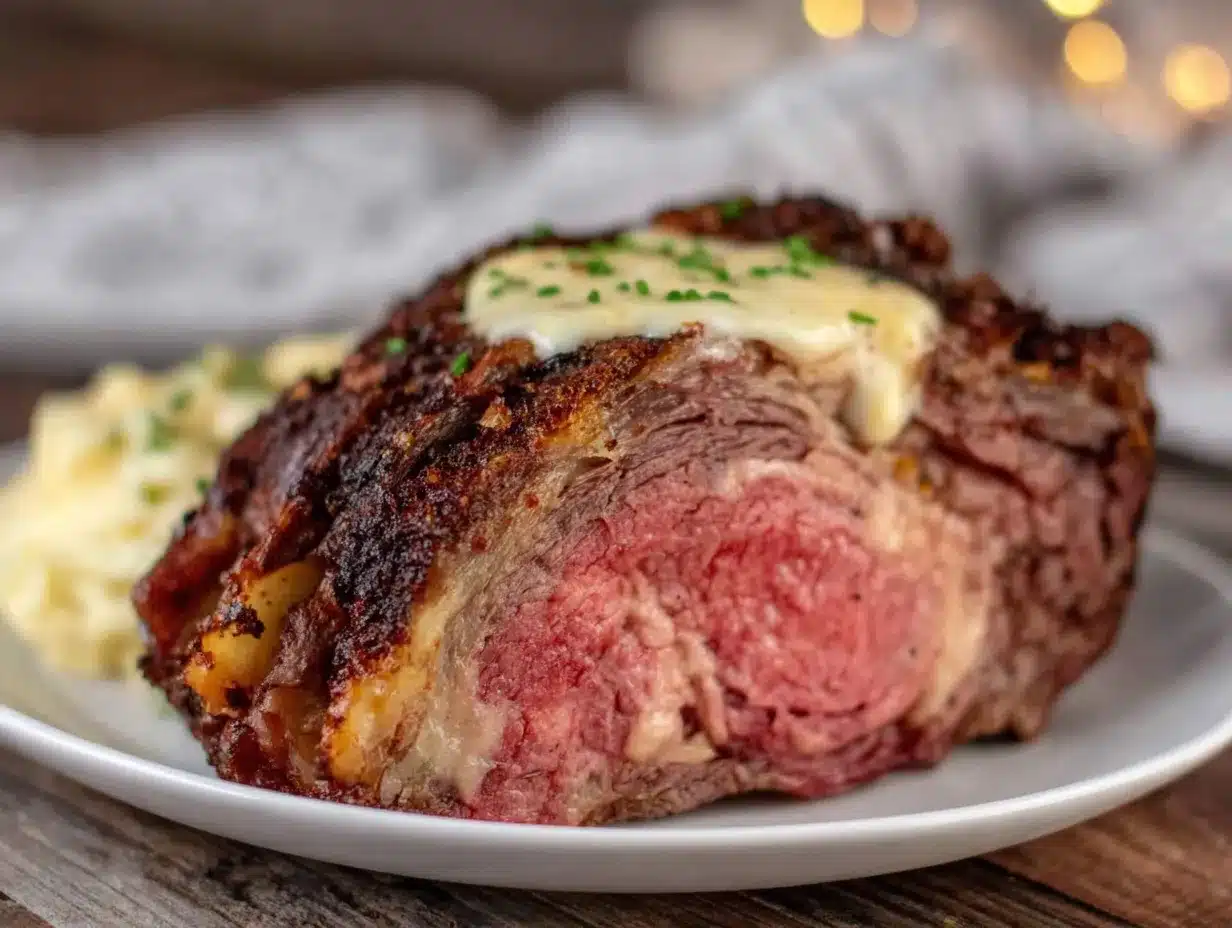
- Heat Skillet and Sear (10 minutes): Meanwhile, heat a cast iron skillet over high heat until smoking hot. Add olive oil. Carefully sear the roast on all sides for 1-2 minutes per side until a deep golden-brown crust forms.
- Final Temperature Check and Rest (10 minutes): The searing raises the internal temp to about 130°F (54°C). Let the roast rest again before slicing. This ensures a juicy, tender bite.
- Slice and Serve: Using a sharp carving knife, slice against the grain into ½-inch (1.25 cm) thick slices and serve immediately.
Common pitfalls include searing too early, which can cause uneven cooking, or skipping the rest periods, which leads to dry meat. The key is patience—low and slow first, then fast and hot. I learned this the hard way after a rushed holiday dinner, and now it’s my foolproof method for that perfect crispy prime rib every time.
Cooking Tips & Techniques
The reverse-sear technique is a game-changer, but it takes a bit of finesse. Here are some tips I’ve picked up:
- Don’t Skip the Overnight Dry Brine: It’s tempting to season and cook immediately, but resting the roast uncovered in the fridge enhances flavor and texture dramatically.
- Use an Instant-Read Thermometer: Guesswork is your enemy here. Checking the internal temperature precisely avoids overcooking.
- Searing at the End: The final sear creates that coveted crust. Make sure your pan is screaming hot before adding the roast to prevent sticking.
- Avoid Overcrowding the Pan: If your roast is large, sear one side at a time for even browning.
- Let It Rest Twice: Resting after slow roasting and again after searing keeps juices locked in.
Once, I tried skipping the second rest and the roast was noticeably drier. Lesson learned! Also, multitasking helps a lot—you can prepare your sides or sauces during the passive cooking time, making the whole process less stressful. Oh, and for the crust, a sprinkle of flaky sea salt right after searing adds that restaurant-quality finish.
Variations & Adaptations
If you want to tailor this perfect crispy reverse-sear prime rib roast for different tastes or dietary needs, here are some ideas:
- Herb Variations: Swap rosemary and thyme for sage and oregano in fall or winter for a different herbal aroma.
- Spice it Up: Add smoked paprika or a pinch of cayenne to the seasoning mix for a subtle heat.
- Cooking Method Adaptation: For smaller roasts, reverse-sear in a smoker or a charcoal grill for extra smoky flavor.
- Allergen-Friendly: This recipe is naturally gluten-free and dairy-free, but you can add a garlic butter herb sauce if dairy is fine for you.
- Personal Twist: I once added a coffee rub to the crust—odd at first, but it added a deep, earthy note that surprised everyone at a Christmas dinner.
These tweaks keep the recipe fresh and seasonal, fitting perfectly into different holiday moods and menus.
Serving & Storage Suggestions
Serve this prime rib roast warm, right after resting and slicing. It pairs beautifully with classic holiday sides like roasted root vegetables, creamy mashed potatoes, or a crisp winter salad. For drinks, a full-bodied red wine like Cabernet Sauvignon or a bold Malbec complements the rich flavors perfectly.
To store leftovers, wrap slices tightly in foil or an airtight container and refrigerate for up to 3 days. You can freeze cooked slices for up to a month, but the texture is best fresh. When reheating, gently warm slices in a low oven (250°F / 120°C) covered with foil to avoid drying out.
Flavors actually deepen after a day or two, making leftovers even more delightful—honestly, sometimes I look forward to the next day’s sandwich with horseradish mayo and arugula as much as the roast itself.
Nutritional Information & Benefits
Per serving (approximate, based on 6 servings from a 5-pound roast):
| Nutrient | Amount |
|---|---|
| Calories | 450 kcal |
| Protein | 45 g |
| Fat | 30 g |
| Carbohydrates | 0 g |
| Sodium | 500 mg |
Prime rib is an excellent source of high-quality protein and essential nutrients like iron and zinc, which are especially welcome during the colder months when hearty meals are comforting. This recipe is naturally low in carbs and free from gluten, making it suitable for many dietary preferences. Be mindful of sodium content if you’re watching salt intake, but the coarse kosher salt crust is key to the flavor.
Conclusion
The perfect crispy reverse-sear prime rib roast is truly a holiday game-changer. It’s got that special combination of deep, roasted flavor and a crisp crust that makes every bite memorable. I love this recipe because it’s forgiving—you can’t really mess it up badly—and it lets you enjoy the process instead of stressing over timing or temperatures. Plus, it fits the seasonal mood perfectly, turning any gathering into something cozy and celebratory.
Give it a try, customize the herbs or spices to your liking, and make it your own holiday tradition. If you do, don’t be shy—drop a comment to share your experience or any twists you tried. I’d love to hear how this roast becomes part of your festive table!
Frequently Asked Questions
What’s the advantage of reverse-searing a prime rib roast?
Reverse-searing allows for even cooking throughout the roast, preventing overcooked edges and undercooked centers. The final sear creates a crisp crust and intensifies flavor.
Can I use a boneless prime rib roast for this recipe?
Yes, but cooking times may be shorter. Use a meat thermometer to check internal temperature for best results.
How do I know when the prime rib is done?
Use an instant-read thermometer; 120°F (49°C) for medium-rare before searing, final temp around 130°F (54°C) after searing.
Can I prepare the roast ahead of time?
Seasoning overnight is recommended. You can also do the slow roast step ahead and sear just before serving for fresh crust.
What side dishes pair well with this prime rib roast?
Roasted vegetables, mashed potatoes, Yorkshire pudding, or a fresh green salad all complement the rich meat beautifully.
Pin This Recipe!
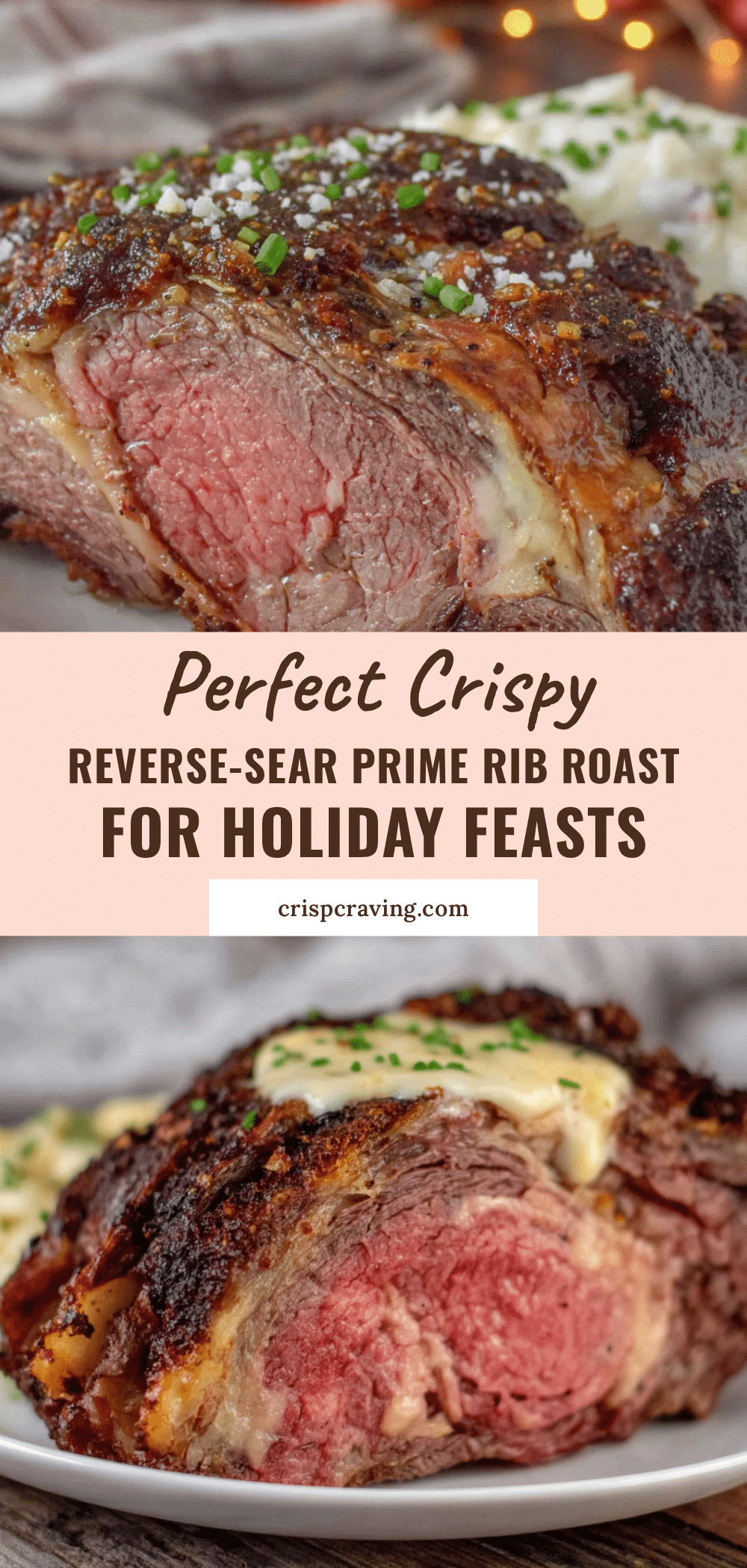
Perfect Crispy Reverse-Sear Prime Rib Roast Recipe for Holiday Feasts
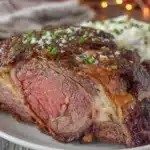
This prime rib roast recipe uses a reverse-sear technique to create a crispy crust and tender, juicy interior, perfect for holiday feasts. It features simple ingredients and a foolproof method that delivers consistent, delicious results.
- Prep Time: 15 minutes active prep + overnight resting
- Cook Time: 1.5 to 2 hours slow roasting + 10 minutes searing + 30 minutes resting
- Total Time: Approximately 2 hours 45 minutes plus overnight resting
- Yield: 6 servings 1x
- Category: Main Course
- Cuisine: American
Ingredients
- 4 to 6 pounds bone-in prime rib roast (USDA Choice grade preferred)
- 3 tablespoons coarse kosher salt
- 2 tablespoons freshly ground black pepper
- 1 teaspoon garlic powder (optional)
- 2 tablespoons fresh herbs (rosemary or thyme, chopped)
- 2 tablespoons olive oil or high smoke point oil
Instructions
- Pat your prime rib roast dry with paper towels. Generously rub the coarse kosher salt and black pepper all over the surface, followed by garlic powder and chopped herbs. Wrap it loosely in plastic wrap and refrigerate uncovered overnight to dry brine.
- Remove the roast from the fridge about 1 hour before cooking to bring it to room temperature.
- Preheat oven to 225°F (107°C). Place a roasting rack inside a roasting pan.
- Set the roast on the rack and insert an oven-safe thermometer probe if available. Slow-roast until the internal temperature reaches 120°F (49°C) for medium-rare, about 1.5 to 2 hours depending on size.
- Remove the roast from the oven, tent loosely with foil, and let rest for 20 minutes to redistribute juices.
- Heat a cast iron skillet over high heat until smoking hot. Add olive oil. Carefully sear the roast on all sides for 1-2 minutes per side until a deep golden-brown crust forms, about 10 minutes total.
- Check the internal temperature again; it should be about 130°F (54°C) after searing. Let the roast rest for another 10 minutes before slicing.
- Using a sharp carving knife, slice against the grain into ½-inch (1.25 cm) thick slices and serve immediately.
Notes
Do not skip the overnight dry brine for best crust and flavor. Use an instant-read thermometer to avoid overcooking. Sear only after slow roasting and resting to ensure even cooking and a crispy crust. Let the roast rest twice to keep it juicy. Avoid overcrowding the pan during searing. Flaky sea salt sprinkled after searing adds a restaurant-quality finish.
Nutrition
- Serving Size: 1 slice (approximate
- Calories: 450
- Sodium: 500
- Fat: 30
- Protein: 45
Keywords: prime rib roast, reverse sear, holiday roast, crispy crust, beef roast, holiday feast, easy prime rib