Perfect Crispy Reverse-Sear Prime Rib Roast Recipe for Holiday Feasts
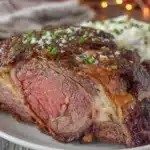
This prime rib roast recipe uses a reverse-sear technique to create a crispy crust and tender, juicy interior, perfect for holiday feasts. It features simple ingredients and a foolproof method that delivers consistent, delicious results.
- Prep Time: 15 minutes active prep + overnight resting
- Cook Time: 1.5 to 2 hours slow roasting + 10 minutes searing + 30 minutes resting
- Total Time: Approximately 2 hours 45 minutes plus overnight resting
- Yield: 6 servings 1x
- Category: Main Course
- Cuisine: American
Ingredients
Scale
- 4 to 6 pounds bone-in prime rib roast (USDA Choice grade preferred)
- 3 tablespoons coarse kosher salt
- 2 tablespoons freshly ground black pepper
- 1 teaspoon garlic powder (optional)
- 2 tablespoons fresh herbs (rosemary or thyme, chopped)
- 2 tablespoons olive oil or high smoke point oil
Instructions
- Pat your prime rib roast dry with paper towels. Generously rub the coarse kosher salt and black pepper all over the surface, followed by garlic powder and chopped herbs. Wrap it loosely in plastic wrap and refrigerate uncovered overnight to dry brine.
- Remove the roast from the fridge about 1 hour before cooking to bring it to room temperature.
- Preheat oven to 225°F (107°C). Place a roasting rack inside a roasting pan.
- Set the roast on the rack and insert an oven-safe thermometer probe if available. Slow-roast until the internal temperature reaches 120°F (49°C) for medium-rare, about 1.5 to 2 hours depending on size.
- Remove the roast from the oven, tent loosely with foil, and let rest for 20 minutes to redistribute juices.
- Heat a cast iron skillet over high heat until smoking hot. Add olive oil. Carefully sear the roast on all sides for 1-2 minutes per side until a deep golden-brown crust forms, about 10 minutes total.
- Check the internal temperature again; it should be about 130°F (54°C) after searing. Let the roast rest for another 10 minutes before slicing.
- Using a sharp carving knife, slice against the grain into ½-inch (1.25 cm) thick slices and serve immediately.
Notes
Do not skip the overnight dry brine for best crust and flavor. Use an instant-read thermometer to avoid overcooking. Sear only after slow roasting and resting to ensure even cooking and a crispy crust. Let the roast rest twice to keep it juicy. Avoid overcrowding the pan during searing. Flaky sea salt sprinkled after searing adds a restaurant-quality finish.
Nutrition
- Serving Size: 1 slice (approximate
- Calories: 450
- Sodium: 500
- Fat: 30
- Protein: 45
Keywords: prime rib roast, reverse sear, holiday roast, crispy crust, beef roast, holiday feast, easy prime rib